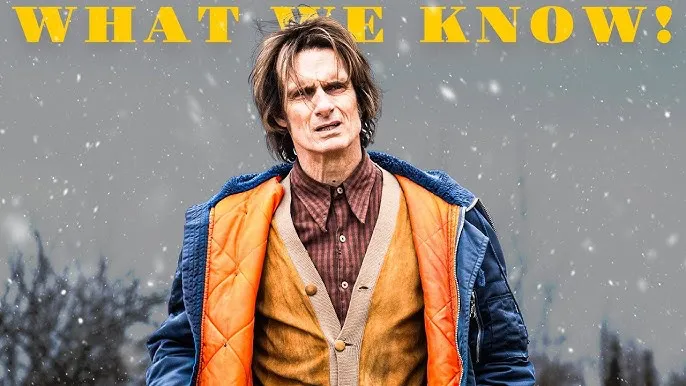

FROM Season 4 is officially confirmed and expected to premiere on MGM+ in early April 2026. The new season continues the story after the Season 3 finale, expanding the mythology of Fromville, the Man in Yellow, and the reincarnation cycle.
FROM Season 4 is officially set to premiere on MGM+ in early April 2026, marking the return of one of the most addictive horror mystery series on television. With filming wrapped in late 2025 and post-production well underway, fans won't have to wait much longer to uncover the mysteries left behind by that devastating Season 3 finale.
Key Season 4 Details
Premiere Window: Early April 2026 (specific date to be announced)
Platform: MGM+ (exclusive premiere)
Episode Count: 10 episodes
Production Status: Filming completed November 2025
Filming Location: Nova Scotia, Canada
Renewal Date: Announced November 21, 2024 (before Season 3 finale aired)
The speedy renewal demonstrates MGM+'s confidence in the series, which has become one of the streaming platform's flagship original programs alongside fellow horror hit The Institute.
What Happened in the Season 3 Finale? (Major Spoilers)
The Season 3 finale, "Revelations: Chapter Two," delivered some of the most shocking twists in the series' history while finally answering long-standing mysteries about Fromville.
The Major Revelations
Tabitha and Jade's True Identity
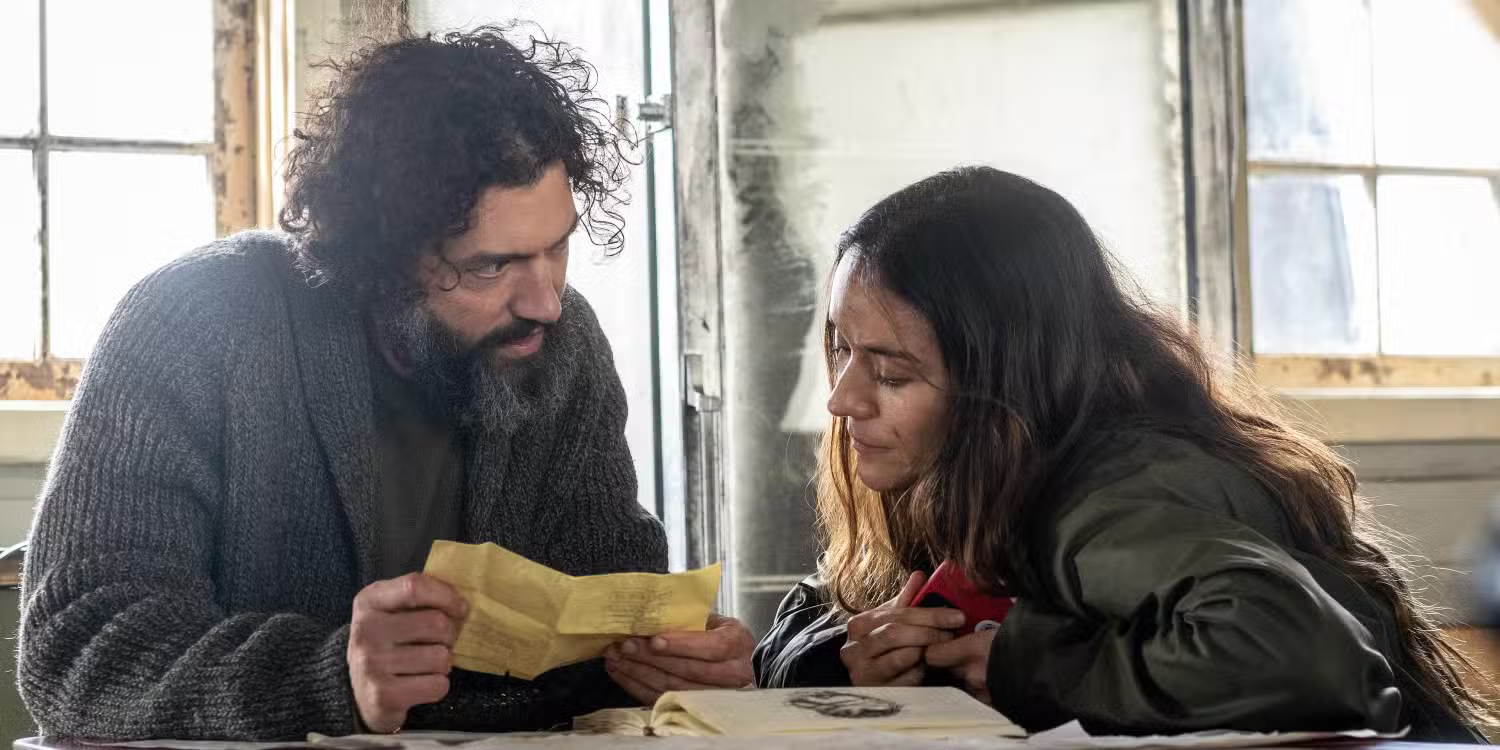
The series revealed that protagonist Boyd Stevens is the town's self-appointed sheriff who serves as its leader and beacon of hope, but Season 3's biggest revelation centered on Tabitha Matthews and Jade Herrera. The finale disclosed that they are reincarnations of Miranda and Christopher, two souls who have been returning to Fromville across multiple lifetimes attempting to save the murdered children.
The ghost children's repeated word "Anghkooey" wasn't a cryptic code—it simply meant "remember." They wanted Tabitha and Jade to remember their past lives and finally break the cycle.
The Origin of the Monsters
The monsters were once people who chose to sacrifice the town's children in exchange for eternal life. This revelation reframes the entire series, explaining why the nocturnal creatures behave with such calculated malice rather than animalistic instinct.
Smiley's Rebirth
Throughout Season 3, Fatima experienced a mysterious and horrifying pregnancy. The finale revealed she was carrying the reborn Smiley creature—the same monster Boyd supposedly killed in Season 1. The grotesque birth scene confirmed that these creatures cannot truly be destroyed through conventional means.
Jim's Death and The Man in Yellow
In the finale's most heartbreaking moment, Jim Matthews was killed by the Man in the Yellow Suit, a new supernatural figure who appears to be the leader of the monsters and can walk around in daylight. Before killing Jim, the entity warned: "Knowledge comes with a cost. Your wife shouldn't have dug that hole."
This connects back to Season 1 when an unknown voice warned Jim over the radio about Tabitha's digging. The Man in Yellow is revealed to be that voice—a secret-keeper who punishes those who learn too much about Fromville's true nature.
Julie's Time-Walking Ability
Julie Matthews discovered she is a "story walker" who can travel through time and witness past events. While her brother Ethan claims she cannot change what happens, Julie's interactions suggest otherwise—she previously threw a rope to Boyd when he was trapped, proving she can interact with different timelines.
FROM Season 4 Cast: Who's Returning?
Confirmed Returning Cast
Harold Perrineau as Boyd Stevens - The series stars Harold Perrineau as the self-appointed sheriff and de facto mayor who struggles with his estranged relationship with his son Ellis. Perrineau's acclaimed performance remains the emotional anchor of the series.
Catalina Sandino Moreno as Tabitha Matthews - Now aware of her true identity as a reincarnated soul trying to save the children, Tabitha's role becomes even more critical in Season 4.
David Alpay as Jade Herrera - The tech entrepreneur who discovered he shares Tabitha's past-life mission.
Hannah Cheramy as Julie Matthews - With her newly discovered time-walking abilities, Julie could be key to changing Fromville's fate.
Simon Webster as Ethan Matthews - The young boy whose imaginative insights often prove surprisingly accurate.
Ricky He as Kenny Liu - One of the town's longest-surviving residents.
Elizabeth Saunders as Donna Raines - Leader of Colony House.
Scott McCord as Victor Kavanaugh - The town's most mysterious long-term resident with crucial knowledge of Fromville's history.
Corteon Moore as Ellis Stevens - Boyd's son and Fatima's husband.
Pegah Ghafoori as Fatima Hassan - After giving birth to the Smiley creature, her fate remains uncertain.
Chloe Van Landschoot as Kristi Miller - The town's medical provider.
Avery Konrad as Sara Myers - The troubled resident who hears voices.
Nathan D. Simmons as Elgin Williams - After Season 3's torture scenes, his role going forward is unclear.
A.J. Simmons as Randall Kirkland - One of the bus passengers who arrived in Season 2.
Kaelen Ohm as Marielle Sinclair - Kristi's fiancée.
Who Won't Be Returning
Eion Bailey as Jim Matthews - Killed by the Man in Yellow in the Season 3 finale.
Elizabeth Moy as Tian-Chen Liu - Died in Season 3.
Cliff Saunders as Dale - Also killed in Season 3.
Shaun Majumder as Father Khatri - Appeared as a vision in Season 3 but died in Season 1.
New Cast Member
Julia Doyle as Sophia - Announced in August 2025, Doyle joins the cast as Sophia, described as a sheltered and vulnerable pastor's daughter. Her role in the story remains mysterious.
What to Expect in FROM Season 4
The Man in Yellow's Threat
The Man in Yellow appears to be the leader of the monsters, able to walk around in daylight unlike other creatures, and punishes characters for having too much knowledge about the town. Season 4 will likely explore his origins, powers, and true purpose in Fromville.
Fan theories suggest he could be:
- The entity who orchestrated the original child sacrifice
- The Boy in White's dark counterpart
- Martin (the chained man Boyd met) who somehow regained his powers
- The creator or architect of Fromville itself
Breaking the Cycle
With Tabitha and Jade now aware of their reincarnated identities and mission to save the sacrificed children, Season 4 should focus on their attempts to finally break Fromville's temporal loop. The question remains: can they succeed where they've failed across multiple lifetimes?
Julie's Time-Walking Powers
Julie's ability to interact with past events could be the key to changing Fromville's future. Season 3's finale showed her desperately trying to save her father, suggesting she might attempt to alter critical past events in Season 4.
The Monster Hierarchy
With Smiley reborn and the Man in Yellow revealed, Season 4 will likely explore the full hierarchy of Fromville's supernatural threats. Are there other entities beyond what we've seen? What is the full extent of their powers?
Consequences and Divisions
Season 4 may focus on deepening existing arcs rather than introducing many new cast members, going deeper into the lore of the town and its former citizens. Expect the community to fracture further as some residents lose hope while others become more desperate to escape.
FROM Series Overview: What Is Fromville?
The Premise
FROM is set in a nightmarish town in the United States that traps those who enter, where unwilling residents strive to remain alive while plagued by terrifying nocturnal creatures from the surrounding forest as they search for secrets hidden within the town.
The series follows various characters who find themselves unable to leave this mysterious location, forced to adapt to its deadly rules while searching for a way home.
The Rules of Survival
Talismans Provide Protection - Mysterious symbols carved into stone offer protection from the night creatures when hung in doorways.
Creatures Only Hunt at Night - The humanoid monsters cannot attack during daylight hours (except for the Man in Yellow).
The Forest is Dangerous - Strange pathways, time distortions, and supernatural phenomena plague the surrounding woods.
Fallen Trees Mark the Boundary - Those who try to leave find themselves driving in circles, always ending back at a fallen tree blocking the road.
Food is Scarce - The town has limited resources, creating tension and forcing difficult decisions about rationing.
Season-by-Season Breakdown
Season 1 (2022) - 10 Episodes
Premiere: February 20, 2022 on Epix
Season 1 introduced the Matthews family's arrival in the mysterious town and established the core survival mechanics. Key developments included the discovery of the talismans, Boyd's underground prison experience, and Tabitha's hole-digging that would prove significant later.
Critical Reception: 96% on Rotten Tomatoes
Season 2 (2023) - 10 Episodes
Premiere: April 23, 2023 on MGM+ (rebranded from Epix)
Season 2 expanded the world with the arrival of the bus passengers, introducing new characters like Randall, Marielle, and Elgin. The season explored the underground tunnels more deeply and ended with Tabitha mysteriously awakening in the real world.
Season 3 (2024) - 10 Episodes
Premiere: September 22, 2024
Season 3 delivered major answers about the town's origins, the nature of the monsters, and the truth about reincarnation cycles. The introduction of the Man in Yellow and Jim's death set up massive stakes for Season 4.
Finale Air Date: November 24, 2024
Where to Watch FROM Season 4
Streaming Platform
Primary: MGM+ (United States and select international territories)
International: Available globally via Paramount+ in most regions outside the US
Price: MGM+ subscription starts at $5.99/month standalone or $11.99/month when bundled with Prime Video
Previous Seasons
All three previous seasons (30 episodes total) are available to stream on MGM+ for subscribers wanting to catch up before Season 4's premiere.
FROM's Critical Acclaim and Cultural Impact
Why FROM Works
Unlike many mystery box shows that withhold answers indefinitely, FROM has begun delivering significant revelations while maintaining tension. The series balances character-driven drama with genuine horror and respects its audience's intelligence.
Harold Perrineau's Performance
The series has received critical acclaim for its story, directing, and the performances of the cast, particularly Harold Perrineau. The Lost alumnus brings gravitas and emotional depth to Boyd Stevens, making him one of television's most compelling horror protagonists.
Comparisons to Lost
Created by John Griffin and featuring Lost veterans Jack Bender and Jeff Pinkner as executive producers, FROM shares DNA with the landmark ABC series. However, it carves its own identity through:
- More focused storytelling with faster reveals
- Genuine horror elements beyond suspense
- Smaller cast allowing deeper character development
- Clearer mythology with concrete answers
The Stephen King Connection
While not adapted from Stephen King's work, FROM has earned praise from the horror master himself. The series shares King's sensibilities: ordinary people facing extraordinary circumstances, small-town America as a horror setting, and the examination of human nature under pressure.
Fan Theories for Season 4
The Boy in White's True Nature
Some fans theorize the Boy in White—who appears to help characters—might actually be working with the Man in Yellow. His pushing Tabitha out of the lighthouse in Season 2 could have been an attempt to remove her before she learned too much, not to help her.
Multiple Time Loops
Julie's time-walking ability suggests Fromville operates on multiple simultaneous timelines. Some fans believe we've been watching different cycles of the same events, with characters unknowingly repeating their predecessors' actions.
The Town as Purgatory
The revelation about reincarnation cycles has fueled theories that Fromville is a form of purgatory where souls return until they complete their mission or learn a crucial lesson.
The Children's True Purpose
While the ghost children appear benevolent, some viewers question whether saving them will actually free the town or trigger something worse.
FROM Season 4 Production Details
Behind the Scenes
Creator: John Griffin
Executive Producers: John Griffin, Jack Bender (Lost, Game of Thrones), Jeff Pinkner (Lost, Fringe), Anthony Russo and Joe Russo (Avengers: Endgame), Harold Perrineau
Studio: MGM+ Studios
Production Company: Midnight Radio, AGBO
Filming Location
The series began filming in May 2021 in Halifax, Nova Scotia, Canada, with principal photography around Beaver Bank and Sackville River in the suburban community of Lower Sackville. Season 4 continued this tradition, utilizing Nova Scotia's eerie forests and small-town aesthetics.
Music
The series' haunting opening theme is a cover of "Que Sera, Sera (Whatever Will Be, Will Be)" performed by alt-rock band the Pixies. The score is composed by Chris Tilton.
How FROM Compares to Other Horror Series
FROM vs. Stranger Things
Both feature supernatural mysteries and ensemble casts, but FROM skews darker and more grounded. While Stranger Things emphasizes nostalgia and 80s references, FROM focuses on psychological horror and survival tension.
FROM vs. Lost
The obvious comparison given the shared creative team. FROM learns from Lost's mistakes by providing concrete answers earlier and maintaining a tighter narrative focus. The mystery boxes open more frequently.
FROM vs. The Walking Dead
Both feature communities trying to survive against inhuman threats with limited resources. FROM distinguishes itself through its supernatural elements and time-loop mythology versus The Walking Dead's zombie apocalypse setting.
FROM vs. Yellowjackets
Both examine how people change under extreme circumstances and feature mystery timelines. FROM leans harder into horror while Yellowjackets emphasizes psychological thriller elements.
Why You Should Watch FROM
Compelling Mystery
The series delivers genuine answers while raising new questions, creating a satisfying viewing experience that rewards attention to detail.
Outstanding Performances
Harold Perrineau leads a talented ensemble that brings emotional authenticity to heightened circumstances.
Genuine Horror
FROM doesn't rely solely on jump scares. The nocturnal creatures are genuinely disturbing, and the series builds atmospheric dread effectively.
Efficient Storytelling
With 10-episode seasons, FROM avoids the bloat that plagues many streaming series. Every episode advances the plot or deepens character development.
Rich Mythology
The revelation about reincarnation cycles, child sacrifice, and temporal loops creates a complex mythology that invites analysis and discussion.