
Severance Explained Without the Corporate Metaphors
Rushabh Bhosale
Severance is about a procedure that splits your consciousness into two separate people who share one body—your "innie" who only exists at work with no outside memories, and your "outie" who goes home with no work memories. Mark Scout's innie appears to unknowingly create multiple severed personalities for his supposedly dead wife Gemma, who Lumon keeps alive on a secret testing floor. The company seems to be perfecting severance technology to eliminate human pain entirely by allowing people to sever away from traumatic experiences, fulfilling founder Kier Eagan's vision. At its core, the show asks whether you're still one person when your consciousness splits, and whether the "innie" trapped at work forever has human rights.
This explanation focuses on the literal story as presented so far, while acknowledging that some elements remain intentionally ambiguous.
Severance gets discussed as allegory for work-life balance, corporate exploitation, and late-stage capitalism.
All of that is there. But those metaphors obscure what's actually happening in the story, making the show seem more abstract than it is.
Strip away the symbolism and Severance is a straightforward science fiction thriller about people discovering they've been turned into experimental subjects without their full consent.
Understanding the literal plot makes everything clearer.
What Severance Actually Does to Your Brain
Lumon Industries developed a brain implant that creates a barrier between memories formed in specific locations.
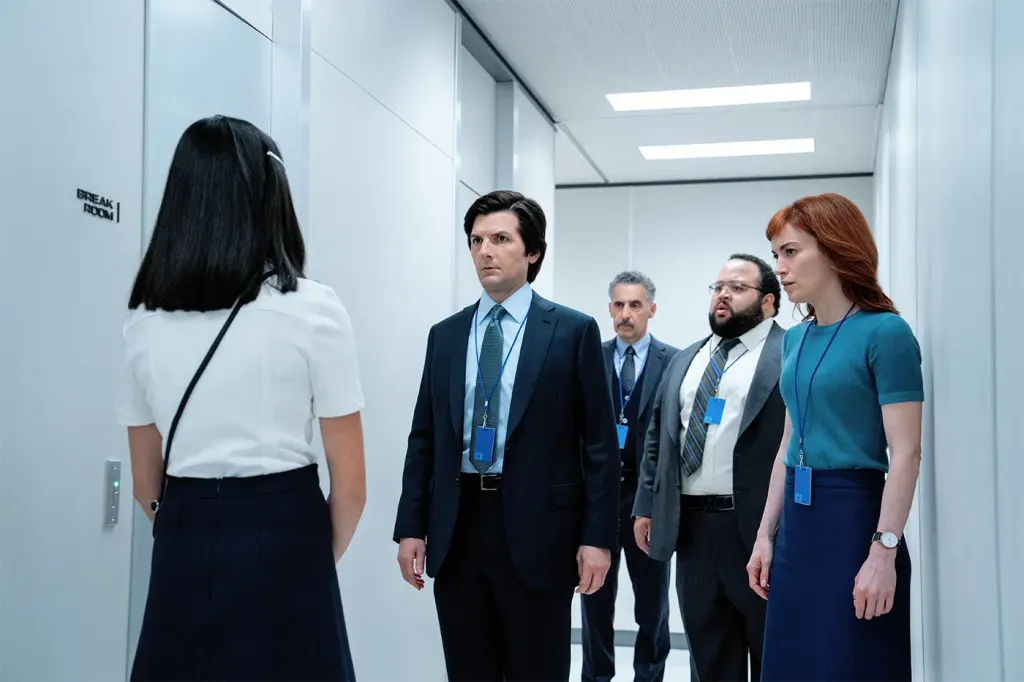
When a severed employee rides the elevator down to Lumon's work floor, the chip activates. Their work-self—the "innie"—takes over with zero access to outside memories.
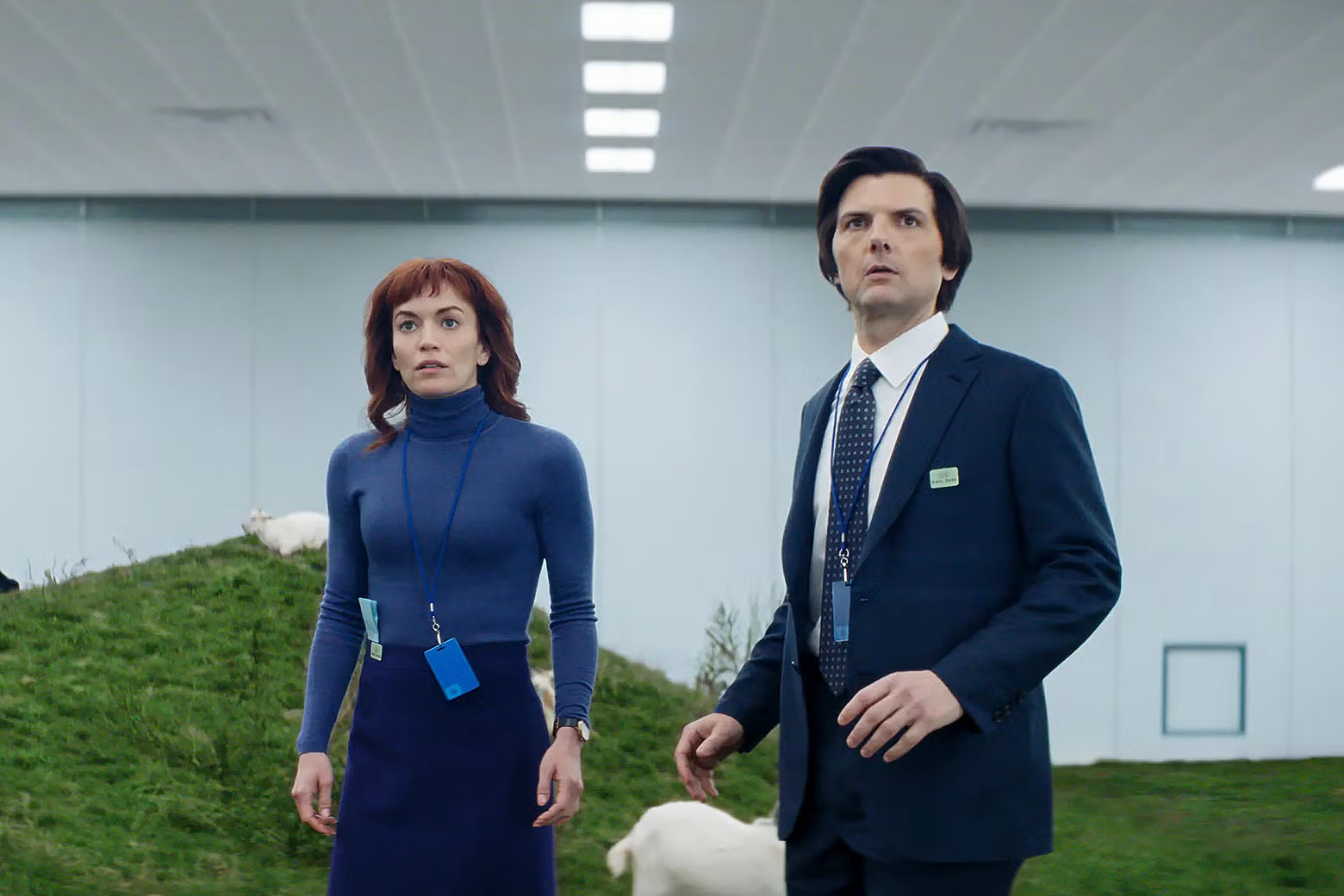
When they leave via elevator, the chip switches them back. Their outside-self—the "outie"—resumes control with no memory of what happened at work.
This isn't metaphorical memory loss. It's literal consciousness splitting. The innie and outie are functionally different people sharing one brain and body.
The innie exists only during work hours. They wake up at their desk, work an 8-hour shift, then cease to exist when their outie clocks out. For them, every day at Lumon is their entire existence.
Why This Creates an Ethical Nightmare
Mark Scout (the outie) chose severance to escape grief over his wife Gemma's death. He wanted work hours where he wouldn't feel that pain.
But Mark Scout (the innie) never consented to anything. He didn't choose to exist. He wakes up in an office, is told he's been working there for years, and has no choice about continuing.
The show's central ethical question isn't subtle: if the innie is a separate consciousness with their own thoughts, feelings, and desires, do they have human rights?
Helly R.'s storyline makes this explicit. Her innie tries to quit multiple times. Writes messages to her outie begging to be released. Even attempts suicide to escape.
Her outie—Helena Eagan, daughter of Lumon's current CEO—rejects every request. She views her innie as property, not a person.
What MDR Actually Does: The Season 2 Revelation
For two seasons, what Mark and his Macrodata Refinement team actually accomplish remained mysterious. They sort numbers on screens based on emotional responses—scary numbers, happy numbers, angry numbers.
Season 2 strongly suggests the truth through Harmony Cobel: "The numbers are your wife."
When MDR employees complete a file, they appear to create a new severed personality. Each file name like "Tumwater," "Wellington," or "Cold Harbor" corresponds to a room on Lumon's Testing Floor.
Mark's work seemingly creates multiple innie versions of Gemma, each confined to experiencing one specific scenario repeatedly.
How Gemma's Testing Floor Works
Gemma didn't die in the car accident. Lumon found her, gave her an experimental severance chip that appears to create 25 separate innie consciousnesses, and trapped her on the Testing Floor.
Each room subjects a different Gemma innie to specific experiences seemingly designed to evoke one of Kier Eagan's "four tempers": Woe, Frolic, Dread, and Malice.
One room has her on a crashing airplane (Dread). Another at the dentist (Woe). Writing thank-you cards at Christmas (referencing her past with Mark). Building a crib (her most traumatic memory—miscarrying their child).
The MDR work Mark does appears to "balance" these emotional responses in Gemma's different innies. By sorting numbers that seem to represent her emotional data into specific categories, he's potentially helping Lumon eliminate her capacity to feel pain from trauma.
Cold Harbor—the file Mark must complete—seems designed to test the ultimate question: Can Gemma's innie dismantle a baby crib (re-experiencing her miscarriage) without emotional response?
If successful, Lumon would prove they can sever people from their most painful memories entirely.
Lumon's Apparent Goal: Eliminating Pain
The corporate metaphors distract from what appears to be Lumon's stated objective, suggested in Season 2: fulfilling Kier Eagan's "grand agendum" to eliminate human suffering by perfecting severance.
This seems less about productivity or control and more about transhumanist philosophy taken to horrifying extremes.
Lumon appears to believe the four tempers—Woe (sadness), Frolic (joy), Dread (fear), and Malice (anger)—define human consciousness. By severing people from specific emotional memories, they seem to think they can eliminate pain while keeping people functional.
Imagine severing yourself just for traumatic experiences. Funerals. Breakups. Medical procedures. Difficult conversations.
You'd experience these events through an innie who doesn't carry the emotional weight afterward. Your outie would retain the factual memory but not the pain.
The Kier Eagan Death Ritual
Season 2 also revealed what appears to be Lumon's bizarre death ritual involving goats.
When Gemma completed Cold Harbor—seemingly proving severance could eliminate even her deepest trauma—the series implies Lumon planned to remove her chip (killing all 25 of her innies) and entomb her with a sacrificial goat.
According to their theology, the goat's "verve" and "wiles" would guide Gemma's spirit to Kier Eagan in the afterlife.
This cult-religious element helps explain why Lumon operates more like a church than a corporation. They appear to genuinely believe Kier Eagan was a prophet whose vision for painless existence through severance represents humanity's salvation.
The innies are surrounded by Kier imagery, quotes, and rules because Lumon is indoctrinating them into a philosophy their outies might resist.
Mark's Innies and Outies: The Season 2 Conflict
The Season 2 finale creates unprecedented tension by letting Mark's innie and outie communicate directly via camcorder.
Outie Mark wants his wife back. He'll do anything—including staying severed forever—to reunite with Gemma in the outside world.
Innie Mark wants to exist. For the first time, he prioritizes his own survival over his outie's desires.
This conflict has no clean resolution. Both are the same person. Both have legitimate claims to existence. Both want incompatible things.
If Outie Mark quits Lumon to be with Gemma, Innie Mark ceases to exist—effectively dying despite being the same person.
If Innie Mark somehow prevents them from quitting, Outie Mark loses his wife forever.
What This Means for Season 3
The show has set up its endgame: can innies and outies coexist as separate people, or must one cease to exist for the other to have the life they want?
Traditional answers don't work here. "Just quit" kills the innie. "Stay severed" imprisons the outie. Reintegration—combining both sets of memories—might destroy both personalities into something new.
Severance refuses to pretend these are easy questions with happy solutions.
The "Overtime Contingency" Makes Everything Worse
Season 1's cliffhanger activated the Overtime Contingency—a protocol that lets innies wake up in the outside world while their outies are unconscious.
This revealed what Lumon can actually do: control which consciousness is active anywhere, anytime.
Helly's innie woke up at a gala honoring Lumon and exposed the company's treatment of innies to powerful attendees. Mark's innie woke up at his sister's house and discovered his wife was alive. Irving's innie woke up in his outie's apartment and found a directory of severed employees.
The horror here is that severance isn't actually limited to Lumon's building. The company can activate your innie anywhere if they want.
What other protocols exist? Can they keep your innie active permanently, trapping your outie consciousness forever? Can they switch you mid-conversation? Delete one consciousness entirely?
The technology's implications extend far beyond voluntary work-life separation into mind control territory.
Why the Show Works Without Metaphor
Yes, Severance comments on corporate dehumanization, compartmentalized modern life, and how work colonizes our identity.
But those themes emerge naturally from the literal story: a company experimenting on people by splitting their consciousness, creating new people who lack human rights, and attempting to technologically eliminate pain.
This kind of stripped-down storytelling also appears in survival-driven series like From, where mystery and horror matter less than how people psychologically respond when they realize they’re trapped inside a system they can’t escape.
The questions the show asks don't need corporate allegory to matter:
If you could sever yourself from painful experiences, should you? What do you lose by never processing trauma? Is painless existence actually desirable?
If splitting your consciousness creates a new person, do they deserve autonomy? Can your past self consent on behalf of your future severed self?
How much control should any institution have over human consciousness? Where does voluntary enhancement end and coercion begin?
The Body Horror Underneath
Strip away the sterile office aesthetic and Severance is fundamentally body horror.
Someone else controls when you exist. Your consciousness gets turned on and off like a light switch. You share a brain with someone who might make decisions you'd never consent to.
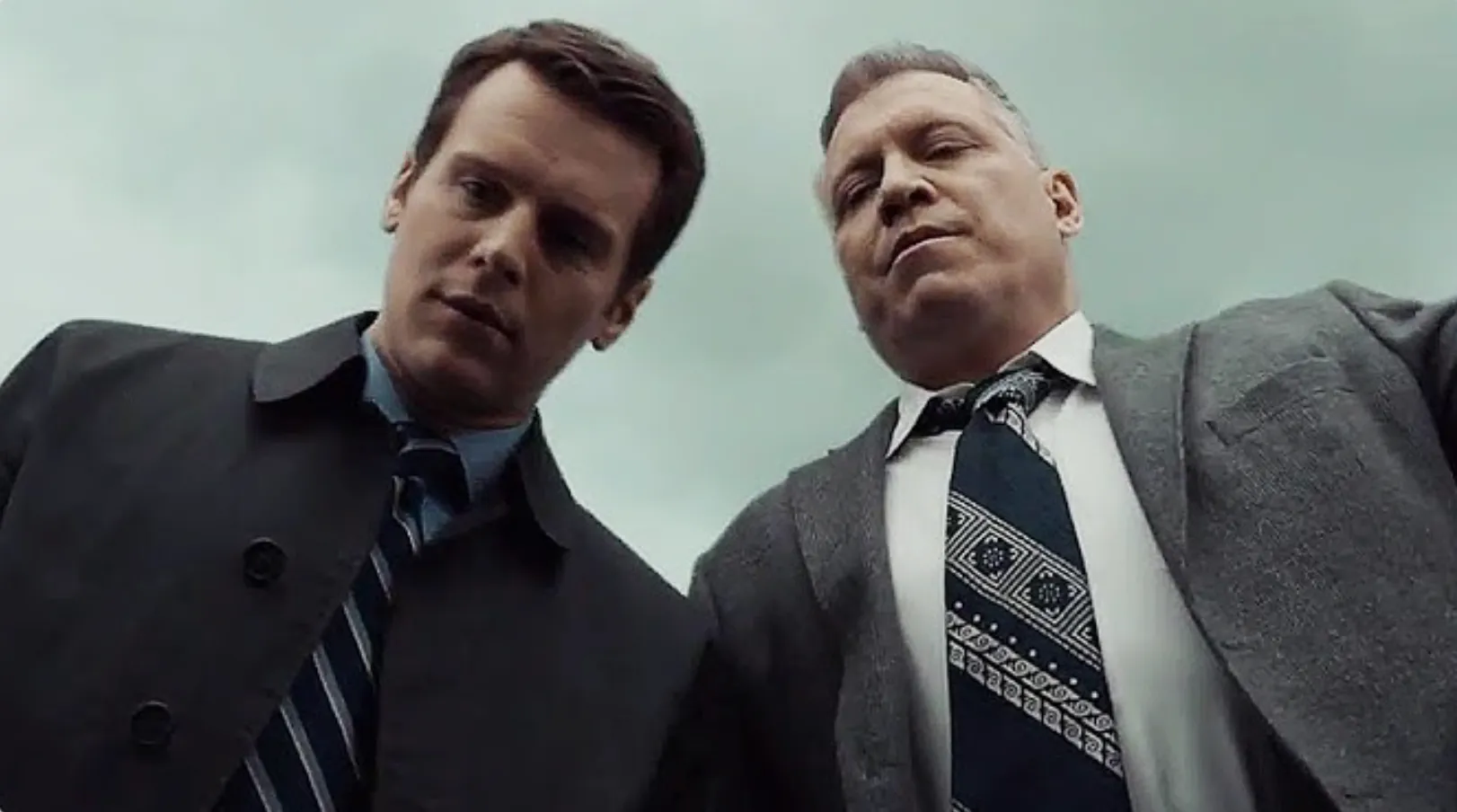
Like Mindhunter, Severance refuses clean answers, focusing instead on the psychological damage caused when institutions study human behavior without regard for the people inside the experiment.
The innies live in constant dissociation—lacking past or future, existing only in an eternal present.
The outies live with gaps in their timeline, trusting a procedure that literally removes part of their existence from their awareness.
Neither gets to be a complete person. Both are trapped in partial existence that serves Lumon's experiments.
What We Still Don't Know
Despite Season 2's major revelations, crucial questions remain unanswered or ambiguous.
What happens to other MDR employees' files? Dylan and Irving complete their own work—who are they potentially creating innies for?
How many people are on Testing Floors in Lumon facilities worldwide? The Season 2 premiere showed Lumon has severed employees across the globe doing similar work.
What is Lumon's ultimate endgame? Perfect severance for mass adoption? Creating backup personalities for wealthy clients? Actual resurrection of Kier Eagan through assembled consciousness data?
How does the severance chip actually work neurologically? The show hints that the barrier isn't perfect—memories leak through in dreams, art, subconscious behavior.
Season 3 will presumably address these questions while raising new ones. But the core story remains clear: people discovering they're trapped in an experiment that split them into two people, and trying to figure out if both can survive.
Read More Blogs You Might Like
If Severance resonated with you because of its focus on identity, control, and psychological unease, these articles explore similar themes across TV and anime:
Mindhunter Feels Incomplete Because Real Evil Is
A slow, unsettling look at what happens when institutions analyze human behavior without offering comfort or closure.
From Season 4 Confirmed: Release Date, Cast Updates, and Story Details
A series built around entrapment, fear, and the psychological cost of living inside an inescapable system.
Why Monster Anime Feels More Terrifying Than Any Horror Anime
Evil examined without spectacle, power systems, or easy answers.
Why Welcome to the NHK Hits Harder as You Get Older
A different kind of psychological horror rooted in isolation, self-denial, and identity collapse.
Chainsaw Man Review: Why This Anime Feels Empty, Brutal, and Wrong on Purpose
A modern story about meaninglessness where violence replaces purpose.
Tags

Next up
Mindhunter Feels Incomplete Because Real Evil Is
Mindhunter deliberately ends without resolution because real evil doesn't offer narrative closure. David Fincher's psychological thriller refuses the comfort of solved cases and caught killers, instead forcing viewers to confront an uncomfortable truth: understanding evil doesn't eliminate it, studying monsters changes the people who do the studying, and some darkness never fully resolves. The show's "incompleteness" isn't a flaw—it's the entire point, and why it remains more disturbing than traditional crime procedurals years after its quiet cancellation. There's a reason Mindhunter ends without answers, closure, or a final confrontation. Most crime shows train us to expect resolution. The killer is caught. The case is closed. Justice arrives in the final act. Mindhunter refuses all of that. It studies evil not as a puzzle to be solved, but as a reality that never truly ends. And that's why, years after Netflix placed it on indefinite hold, the series still feels unsettling in a way few shows manage. What Mindhunter Is Actually About Beyond the Procedural Framework On the surface, Mindhunter looks like a procedural. FBI agents Holden Ford and Bill Tench interview serial killers to understand how their minds work, developing criminal profiling techniques in the late 1970s. But that framing is misleading. This is not a story about catching criminals. It's a story about learning to live with the knowledge that some people cannot be fixed, explained away, or neatly contained. The show explores the birth of the FBI's Behavioral Science Unit, but its real subject is what prolonged exposure to evil does to the people studying it. Holden, Bill, and psychologist Wendy Carr aren't heroes hunting monsters. They're observers, slowly realizing that understanding evil doesn't make it safer. It only makes it clearer. That realization is what gives the show its heavy, lingering weight—a psychological toll that accumulates with each prison interview and unsolved case. The Cost of Hunting Monsters Based on the 1995 book by real FBI profiler John E. Douglas, Mindhunter combines factual historical details with fictional narratives to explore criminal psychology's early development. Douglas himself advised the show's creators, lending authenticity to the portrayal of BSU's groundbreaking but psychologically devastating work. The series ran for two critically acclaimed seasons between 2017 and 2019 before Netflix placed it on indefinite hold. Executive producer David Fincher explained the decision in 2023 candidly: the show cost approximately $20 million per episode, and viewership didn't justify such investment. "We didn't attract enough of an audience to justify such an investment," Fincher told French outlet Le Journal du Dimanche. "I don't blame them; they took risks to get the show off the ground." But there's recent hope. In June 2025, star Holt McCallany revealed he'd met with Fincher to discuss potentially reviving Mindhunter as three two-hour movies rather than a full season. "There is a chance that it may come back as three two-hour movies, but I think it's just a chance," McCallany told CBR. "I know there are writers that are working, but David has to be happy with the scripts." Why the Lack of an Ending Feels So Disturbing The Absence of Narrative Comfort Mindhunter ends without payoff because real-life evil doesn't offer one. The interviews don't build toward a single breakthrough moment. Each conversation with killers like Ed Kemper, Jerry Brudos, and Monte Rissell strips away comforting illusions. There is no grand motive. No tragic backstory that makes everything click into place. Just patterns of control, violence, and emotional detachment repeated again and again across different people. When Season 2 concludes with the Atlanta Child Murders case, the emotional impact feels muted, even disappointing to viewers expecting catharsis. But what Mindhunter shows instead is something closer to reality: the work continues, the damage accumulates, and the people studying evil are fundamentally changed by proximity to it. There is no final chapter where everyone walks away intact. Because in reality, they don't. Why Silence Creates Horror Mindhunter has almost no traditional scares. No jump cuts. No dramatic violence displayed on screen. What makes it terrifying is restraint. Long silences. Calm voices describing horrific acts. Casual admissions of cruelty delivered over prison tables with fluorescent lighting humming overhead. The killers aren't framed as monsters with supernatural abilities or cinematic flair. They're framed as people who found satisfaction in control and domination. That normality is far more disturbing than any stylized horror could achieve. Ed Kemper, portrayed with unsettling charisma by Cameron Britton, exemplifies this approach. He speaks articulately about murdering his mother and decapitating co-eds with the same emotional register someone might use to discuss weather patterns. The horror comes from recognizing that extraordinary evil can exist in ordinary-seeming people. This restraint is what makes Mindhunter linger. Unlike Monster anime, which explores human evil through a more traditional thriller structure, Mindhunter denies viewers any safe emotional exit. It doesn't give you permission to look away or find comfort in genre conventions. Holden Ford and the Cost of Curiosity When Understanding Becomes Contamination Holden is the clearest example of why the show couldn't end cleanly. He begins Season 1 with curiosity and confidence. He believes data, psychology, and systematic analysis can create control over criminal behavior. Over time, that belief erodes. His panic attacks aren't a subplot or character quirk—they're the direct consequence of staring too long into minds that don't reflect normal human limits or empathy. Mindhunter quietly argues that understanding evil doesn't grant immunity from it. It leaks into the people who study it through a process forensic psychiatrists call vicarious trauma. Holden doesn't break because he's weak or unsuited for the work. He breaks because exposure has an inevitable cost that can't be paid back. His girlfriend Debbie notices the changes first. He becomes distant, aggressive, less capable of normal human connection. He begins disclosing intimate personal details to serial killers while failing to maintain healthy boundaries in his actual relationships. The role-playing deteriorates—he starts believing he truly understands these killers in ways that make him special, unique, gifted. That erosion of professional boundaries leads to dangerous miscalculations. The series ends with Holden experiencing a full panic attack inside a prison, reeling from a life-threatening error caused by his compromised judgment. There's no recovery montage. No lesson learned that restores equilibrium. Just damage that will likely never fully heal. Bill Tench and the Evil That Comes Home The Personal Cost of Professional Knowledge If Holden shows the professional cost of studying serial killers, Bill Tench shows the personal one. His adopted son's storyline remains one of the most uncomfortable elements of the series. The show refuses to confirm or deny anything definitively, mirroring its core philosophy: not everything becomes clear, not every fear gets resolved, and sometimes the worst possibilities remain suspended in permanent uncertainty. Bill spends his career profiling violent behavior in convicted criminals, developing psychological frameworks to predict and understand brutal crimes. Then he faces the possibility that similar patterns might exist within his own home, in his own child. The show never gives him certainty because certainty would be dishonest. Real evil doesn't announce itself clearly. Sometimes it just sits quietly at the dinner table. Sometimes it looks like a troubled child who might become something terrible, or might not. The ambiguity is what makes Bill's storyline so devastating—he knows too much about how these patterns develop, but that knowledge doesn't tell him what to do when he suspects his own son. His wife Nancy can't understand why he seems so emotionally distant, why he can't separate work from home life. But how do you separate knowledge about human monstrosity from concerns about your own family? Holt McCallany's performance captures this internal collapse brilliantly—a man who thought professional compartmentalization was possible discovering too late that it isn't. The Incompleteness Is the Message Why Resolution Would Be Dishonest When viewers say Mindhunter feels unfinished, they're reacting to the absence of narrative comfort that other crime shows provide. We're conditioned to expect closure, catharsis, and the restoration of order. But thematically, the series ends exactly where it should. The Behavioral Science Unit is still in its early experimental phase. The crimes are still coming. The understanding is still incomplete and always will be. That's the truth the show leaves you with: evil isn't a story with a third act. It's a condition society learns to live alongside without ever fully controlling or comprehending it. By stopping where it does—whether permanently or until potential future films—Mindhunter avoids turning real suffering into entertainment closure. It respects the reality it's portraying instead of exploiting it for satisfying narrative arcs. The BTK Killer storyline, which Fincher originally planned to extend through five seasons culminating in the 2005 arrest, remains unresolved. The character appears in brief, chilling scenes throughout both seasons, a reminder that some killers remain active for decades. The Atlanta Child Murders and the Limits of Profiling Season 2's focus on the Atlanta Child Murders represents Mindhunter at its most ambitious and uncomfortable. The case highlights criminal profiling's inherent limitations and the racial biases embedded in the criminal justice system. Holden's psychological models lead him to profile the killer as likely being Black—a conclusion that much of Atlanta's Black community reasonably views as racist police prejudice disguised as science. The show doesn't shy away from this critique. It presents profiling not as infallible science but as an imperfect tool that can reinforce existing prejudices while claiming objectivity. When a suspect is eventually caught in the season finale, the resolution feels unsatisfying because the real case itself was unsatisfying. Questions remain. Doubts linger. The "closure" doesn't actually close anything for the families or the community. This refusal to manufacture false certainty separates Mindhunter from typical crime procedurals that need tidy resolutions. Why It Still Matters The Show That Refused to Glamorize Evil In an era where true crime often borders on spectacle and entertainment, Mindhunter stands apart. It doesn't glamorize killers or present them as fascinating puzzles to be admired. It doesn't promise insight that makes everything make sense or transforms horror into comprehensible narrative. Instead, it asks harder questions: What does prolonged exposure to evil do to people? Is understanding always a good thing? How much darkness can you study before it fundamentally reshapes who you are? Those questions don't expire with changing television trends. That's why the show still feels relevant despite its uncertain future, and why fans continue calling for its return years after Netflix placed it on hold. The series influenced how streaming platforms approach psychological thrillers. Its DNA appears in newer shows attempting similar restraint and thematic depth. Writer Liz Hannah, who worked on Mindhunter, is now developing The God of the Woods for Netflix—a psychological thriller that channels similar atmospheric tension without relying on sensationalist scares. For fans seeking similar psychological depth, Welcome to the NHK explores mental health and isolation with comparable unflinching honesty, while Perfect Blue examines identity dissolution and psychological horror without supernatural safety nets. The Uncomfortable Truth Mindhunter doesn't feel incomplete because it failed to finish its story. It feels incomplete because the story it's telling has no ending. Real evil doesn't wrap itself up cleanly. It doesn't wait for character arcs to resolve or audiences to feel satisfied. It exists, repeats, adapts, and continues long after the cameras stop rolling and the credits fade. Mindhunter had the rare restraint to stop before pretending otherwise. It refused to manufacture closure where none exists in reality. It denied viewers the comfort of believing that understanding evil means controlling it, or that studying monsters doesn't fundamentally change the people who do the studying. And that honesty—that willingness to leave audiences unsettled rather than satisfied—is exactly why, years later, it still disturbs anyone who watches closely enough. The incompleteness isn't a bug. It's the feature that makes Mindhunter one of the most psychologically accurate portrayals of criminal profiling's human cost ever created for television. Whether it returns as three films or remains permanently unfinished, the show already accomplished what it set out to do: force viewers to sit with discomfort, confront the limits of understanding, and recognize that some darkness doesn't resolve. It just is. Where to Watch: Both seasons of Mindhunter are currently streaming on Netflix. Related: For more psychological thrillers exploring human darkness, read our analysis of why Monster anime feels more terrifying than any horror anime or discover why Perfect Blue still feels uncomfortable even today.