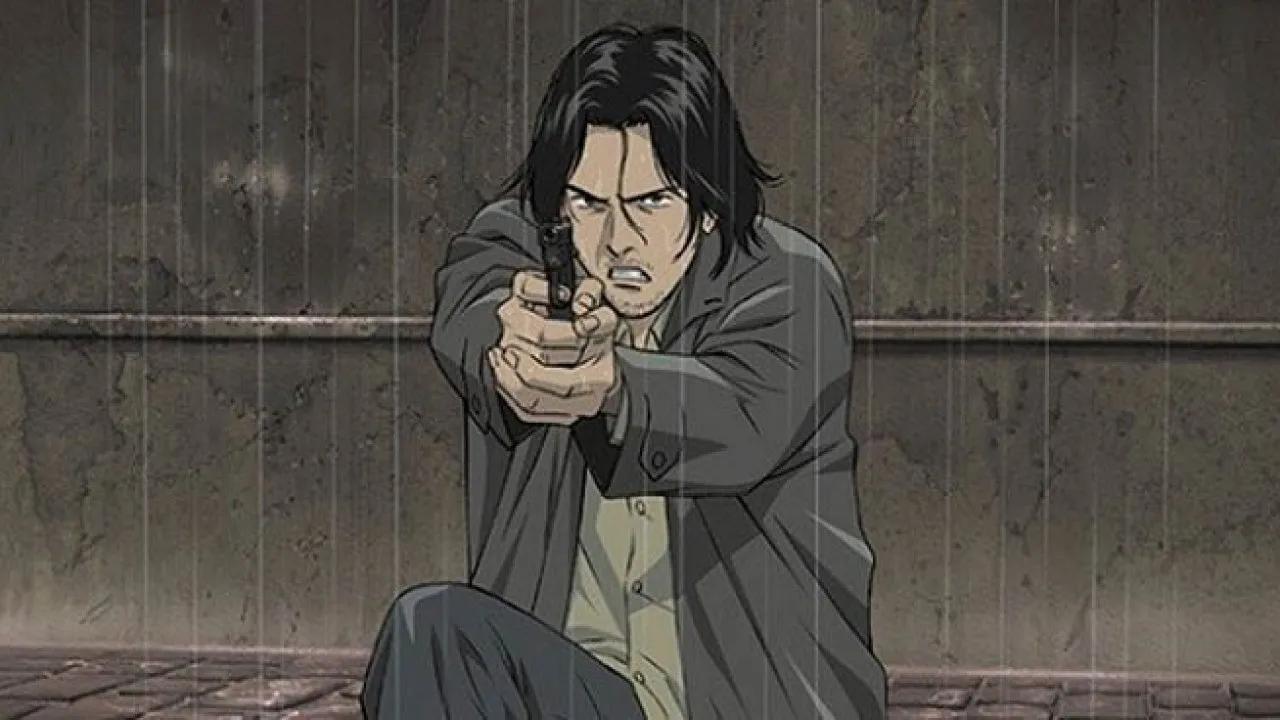

Monster is often called one of the darkest psychological anime ever made, not because of gore or supernatural horror, but because of how realistically it portrays evil. This article explores why Monster feels more terrifying than traditional horror anime, focusing on its moral dilemmas, human villains, slow-burn pacing, and unsettling realism.
Monster anime has no demons. No curses. No supernatural evil lurking in the shadows.
And yet, it remains one of the most disturbing anime ever made—not because of what it shows, but because of what it makes you realize about human nature.
While other horror anime rely on jump scares and grotesque imagery, Monster anime achieves something far more unsettling: it holds up a mirror to the darkest aspects of humanity and refuses to look away. Created by Naoki Urasawa and adapted by Madhouse, this 74-episode psychological thriller from 2004 continues to haunt viewers decades later.
This isn't accidental. Monster anime is terrifying precisely because it strips away every fantasy element that typically provides emotional distance in anime. What remains is pure, methodical psychological horror.
What Makes Monster Anime Different From Other Horror Anime
No Supernatural Safety Net
Most horror anime give you something to blame. A curse. A yokai. A demonic force from another dimension. These external threats are comforting because they're not real—you can't encounter them in your daily life.
Monster anime removes that safety entirely.
The horror in Monster anime comes from doctors, politicians, businessmen, and orphans. From decisions made in hospital rooms and conversations held over coffee. Every terrifying moment happens within the boundaries of what's physically possible in our world.
This realism is what separates Monster anime from Tokyo Ghoul, Parasyte, or even psychological thrillers like Death Note that still rely on supernatural elements. Johan Liebert doesn't have a Death Note or special powers. He just understands people better than they understand themselves.
The Slow Burn That Modern Anime Forgot
If you're wondering "is Monster anime worth watching" despite its 74-episode count and deliberate pacing, the answer depends on what you value. Monster anime doesn't accommodate binge culture. It demands patience.
This isn't a flaw—it's the entire point.
The series spends entire episodes on characters who seem irrelevant. A alcoholic ex-cop. A small-town couple. A student questioning his future. Then, slowly, you realize every person Johan Liebert touches becomes part of a larger web. The pacing mirrors real trauma: gradual, accumulating, impossible to escape.
Modern anime often mistake speed for intensity. Monster anime understands that true horror is slow, patient, and inevitable.
Dr. Kenzo Tenma and The Impossible Moral Question
When Doing the Right Thing Creates a Monster
The premise of Monster anime begins with what should be a simple ethical choice. Dr. Kenzo Tenma, a brilliant Japanese neurosurgeon working in Germany, faces a decision: save a critically injured child or operate on the city's mayor who arrived later.
He chooses the child. A purely moral decision that any decent person would make.
That child is Johan Liebert.
What makes this setup brilliant isn't the irony—it's the question it forces on viewers. Kenzo Tenma saved a life. He did nothing wrong. Yet from that single ethical act, decades of murder, manipulation, and destruction follow.
Monster anime asks: if you knew the consequences, would you still make the right choice? And if you wouldn't, what does that say about morality itself?
Why Kenzo Tenma Is the Perfect Protagonist
Unlike typical anime heroes who grow stronger and more confident, Kenzo Tenma spends the entire series crumbling under the weight of an impossible guilt. He's wanted for murders he didn't commit, hunting a monster he accidentally created, questioning whether human life actually has equal value.
He represents something rarely shown in anime: a good person who made the right choice watching helplessly as that choice destroys everything he believes in.
This psychological deterioration is slow, realistic, and painful to watch. Tenma doesn't have plot armor or protagonist privilege. He suffers authentically, and the anime never rescues him from the consequences of his compassion.
Johan Liebert: The Most Terrifying Anime Villain Ever Created
Why Johan Liebert Doesn't Need Powers
If you search "Johan Liebert Monster anime" trying to understand what makes him terrifying, here's the simple answer: he exposes what's already there.
Johan doesn't possess people. He doesn't use supernatural charisma or mind control. He simply understands human weakness with surgical precision and exploits it through conversation.
He finds the person contemplating suicide and gives them permission. He locates the jealous sibling and validates their resentment. He identifies the racist and encourages their hatred. Johan never creates evil—he cultivates it.
This is why Johan Liebert remains more disturbing than Light Yagami, more frightening than any demon king, more memorable than any supernatural threat in anime. He represents the evil that exists within ordinary people, waiting for someone to say "it's okay."
The Whisper That Breaks People
Johan rarely raises his voice. He doesn't threaten. He doesn't posture.
He whispers.
And that whisper is more terrifying than any monster's roar because it sounds like your own thoughts. Johan tells people what they already believe but were too afraid to act on. He removes moral guardrails, not through force, but through permission.
The anime shows this repeatedly: people who meet Johan don't become evil overnight. They gradually realize they were always capable of cruelty, and Johan simply helped them accept it.
The Perfect Monster Has No Motive
One of the most frustrating and brilliant aspects of Johan Liebert's character is his lack of clear motivation. Anime fans accustomed to villain monologues explaining trauma and justification will find nothing here.
Johan destroys because he can. Because he's curious what will happen. Because existence itself seems meaningless to him, so why not test how much meaning matters to others?
This absence of motive is precisely what makes him feel real. Real evil doesn't always have a tragic backstory. Sometimes people hurt others simply because they've learned they're capable of it and nothing stops them.
Unlike villains who justify their actions through ideology or power fantasies, Johan’s emptiness feels closer to real-world manipulation — a contrast that highlights why ideologically driven antagonists, like those examined in The Eminence in Shadow vs Overlord: Which Is the Better Dark Power Fantasy Anime, still feel safer by comparison.
Why Violence in Monster Anime Hits Harder
Restraint Makes Horror More Effective
Monster anime understands something most horror anime forget: violence is more terrifying when it's rare.
When someone dies in Monster anime, there's no stylized animation, no dramatic soundtrack, no adrenaline rush. Just silence. Aftermath. The weight of a life ending.
This grounded brutality mirrors how Chainsaw Man portrays violence as hollow and transactional rather than heroic, where suffering isn’t meaningful but simply endured — explored further in Chainsaw Man Review: Why This Anime Feels Empty, Brutal, and Wrong on Purpose.
The series makes you sit with consequences instead of moving quickly to the next plot point. Every death feels preventable. Every tragedy carries the specific weight of human choice rather than supernatural inevitability.
This restraint is why scenes of violence in Monster anime linger in your memory long after watching, while generic horror anime with ten times as much gore fade immediately.
The Horror of Normalcy
Monster anime's setting is intentionally mundane. Hospitals. Apartments. German countryside. Quiet streets where nothing seems dangerous.
By refusing fantasy aesthetics, the anime removes the psychological buffer between viewer and story. This could happen here. In your city. To people you know.
That's the real horror—not that monsters exist in some fantasy world, but that they already exist in ours, wearing human faces and making rational-sounding arguments.
Is Monster Anime Worth Watching? The Pacing Question
Why 74 Episodes Matters
One of the most common questions about Monster anime is whether its length and pacing are justified. In an era of 12-episode seasons and 2x viewing speeds, committing to 74 episodes of slow-burn psychological horror feels like a massive ask.
But here's what matters: every episode serves the thesis.
Monster anime uses its length to show how evil spreads through communities like a disease. It demonstrates that trauma isn't a single event but an accumulating weight. It proves that consequences don't resolve quickly—they compound over years.
Shorter series can be intense. Only long-form storytelling can capture the suffocating inevitability of watching someone's moral foundation slowly collapse.
When Slow Pacing Becomes Intentional Horror
The pacing in Monster anime isn't slow because the creators couldn't edit—it's slow because that's what real horror feels like. Not sudden, but gradual. Not shocking, but inevitable.
You watch Tenma make one small compromise. Then another. Then another. You see Johan have one brief conversation with a stranger. Then that stranger appears five episodes later, transformed.
This slow accumulation mirrors real life in a way fast-paced thrillers can't capture. Evil doesn't announce itself dramatically. It accumulates through thousands of small permissions until looking back, you can't identify where things went wrong.
Monster Anime Characters: More Than Protagonist and Antagonist
The Supporting Cast That Makes It Real
While Kenzo Tenma and Johan Liebert anchor the story, Monster anime's true depth comes from its dozens of fully realized supporting characters.
Inspector Heinrich Lunge, the detective hunting Tenma, isn't a simple antagonist. He's a man who's sacrificed his humanity for perfect logic and slowly realizes that wasn't the trade he thought it was.
Nina Fortner (Anna Liebert), Johan's twin sister, represents the question of nature versus nurture taken to its extreme. She shares Johan's genetics and trauma but made different choices—why?
Every character in Monster anime exists to explore a different facet of the central question: what separates good people from monsters?
Why Side Characters Matter More Here
Unlike typical anime where side characters exist to support the protagonist, Monster anime treats every person as the protagonist of their own story. It spends entire episodes with characters who never meet Tenma, showing how Johan's influence ripples outward through society.
This approach serves the horror. Evil in Monster anime isn't confined to the main plot—it's a contagion spreading through normal people making normal decisions in normal circumstances.
Comparing Monster Anime to Other Psychological Thrillers
Monster Anime vs Death Note
Both are psychological thrillers. Both feature brilliant antagonists manipulating systems. Both question the nature of justice.
The difference is crucial. Light Yagami has a supernatural tool that gives him power. Johan Liebert only has words.
Death Note asks what if you had the power to kill anyone?
Monster anime asks the far more disturbing question: what if you already have that power, just through conversation?
Light’s evil feels fantastical. Johan’s feels possible. That is why Monster anime remains more unsettling decades later.
If you want a deeper breakdown of Light Yagami’s moral descent, read Death Note Review: Why the Anime Still Hits Hard Years Later.
Light's evil feels fantastical. Johan's feels possible. That's why Monster anime remains more disturbing two decades later.
Monster Anime vs Psycho-Pass
Psycho-Pass explores similar themes of predestination and the nature of evil, but through a sci-fi dystopian lens. The Sibyl System is an external evil to fight against.
Monster anime has no system to blame. The evil is human, distributed, and emerging from ordinary choices. There's no technology to shut down, no dystopian government to overthrow. Just people, making choices, becoming monsters.
Why Monster Anime Aged Better
Created in 2004, Monster anime still feels contemporary because its horror isn't technological or supernatural—it's human. The questions it raises about manipulation, radicalization, and the fragility of moral systems feel more relevant now than ever.
While supernatural horror anime date themselves with specific cultural anxieties, Monster anime tapped into something timeless: the fear that the person sitting across from you might be a monster, and you'd never know.
The Lasting Impact: Why Monster Anime Still Matters
What Monster Anime Says About Modern Society
Monster anime premiered in 2004 but feels prophetic about 2026 concerns. Johan Liebert's method—finding vulnerable people and radicalizing them through validation—mirrors modern extremism more accurately than any contemporary thriller.
The anime understood something we're still grappling with: the most dangerous people aren't obviously evil. They're persuasive, patient, and skilled at finding society's fractures and widening them.
The Question Monster Anime Leaves You With
Monster anime doesn't end by telling you what to think. It leaves you with something worse: the responsibility to decide what a human life is worth.
Kenzo Tenma believes all lives have equal value. He saves Johan because that's what a good doctor does. Johan's existence tests that belief to its breaking point by asking: if one life enables the destruction of hundreds, does your principle still hold?
The anime never resolves this tension cleanly. It refuses to comfort you with easy morality.
Final Thoughts: Monster Anime's Uncomfortable Legacy
Monster anime isn't scary because of what happens in it.
It's scary because of what it suggests about people.
The series argues that monsters aren't born from curses, summoned from hell, or transformed by supernatural forces. They're created through trauma, enabled by society, and allowed to exist because good people make ethical choices without considering systemic consequences.
Johan Liebert is terrifying because he exposes something uncomfortable: evil doesn't need supernatural power. It just needs opportunity and permission.
Once you see that—really see it—it becomes impossible to watch the news, observe political movements, or even have difficult conversations the same way. Monster anime changes how you perceive manipulation, radicalization, and the casual cruelty humans are capable of.
That's why it remains more disturbing than any supernatural horror anime. It doesn't let you dismiss the evil as fantasy.
It makes you recognize it in reality.
Have you watched Monster anime? What moment disturbed you most? Share your thoughts in the comments below, and if you found this analysis helpful, check out our other deep dives into psychological anime that challenge conventional storytelling.
Frequently asked questions
Frequently asked questions
Is Monster anime worth watching?
Yes, if you value psychological depth over action. Monster anime is worth watching if you want horror that lingers, characters that feel real, and moral questions that don't have easy answers. It requires patience but delivers one of anime's most complete and disturbing narratives.
How many episodes is Monster anime?
Monster anime has 74 episodes. While this may seem daunting, the length allows for proper character development and the slow accumulation of dread that defines the series. Each episode builds toward the larger themes without filler.
Is Monster anime scary?
Not in the traditional jump-scare sense. Monster anime is scary in the way a conversation with a manipulative person is scary—you realize afterward how subtly your thinking was shifted. The horror is psychological and existential rather than visceral.
Does Monster anime have a good ending?
Without spoilers: Monster anime's ending is thematically consistent but intentionally ambiguous. It doesn't provide clean resolution because the questions it raises—about the value of human life and the nature of evil—don't have clean answers. Some viewers find this frustrating; others find it perfect.
Where can I watch Monster anime?
Monster anime availability varies by region. It's occasionally available on streaming platforms but has had limited legal streaming presence compared to more popular series. Physical media releases exist, though the complete series can be expensive due to its length and cult status.
Is Monster anime better than Death Note?
They're different types of psychological thrillers. Death Note is more plot-driven with supernatural elements and faster pacing. Monster anime is character-driven, purely realistic, and deliberately slow. Death Note is more entertaining; Monster anime is more disturbing. Neither is objectively better—it depends on what you value.