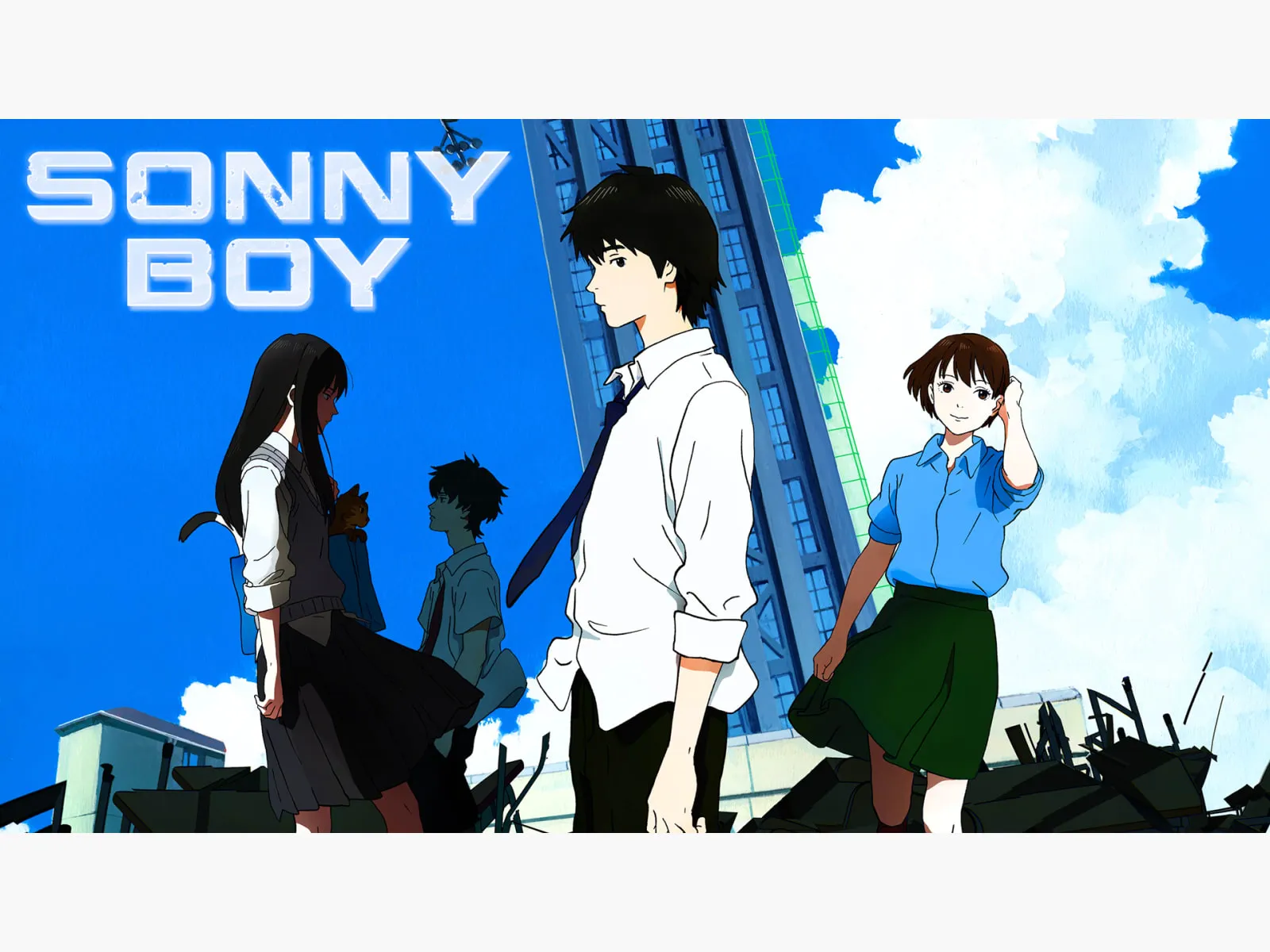

If you've ever sat through an episode of Sonny Boy and thought, "What on earth is happening right now?"—you're not alone. This 2021 anime series from director Shingo Natsume has left countless viewers scratching their heads, rewinding scenes, and diving into discussion forums trying to piece together what they just watched.
But here's the twist: that confusion wasn't an accident. It was completely intentional.
The Anime That Broke All the Rules
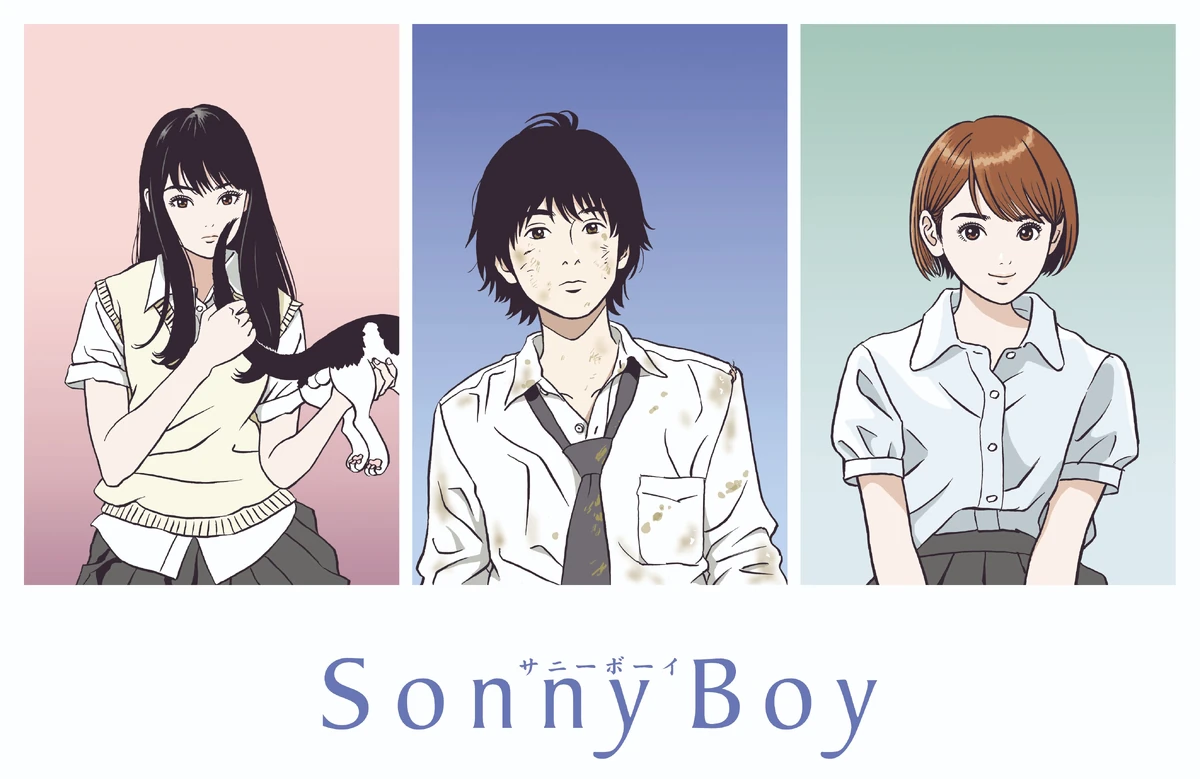
Sonny Boy isn't your typical isekai anime. When 36 middle school students suddenly find their school drifting through an alternate dimension, you might expect a straightforward survival story. Instead, what Madhouse delivered was something far more experimental and deeply philosophical.
This deliberate refusal to comfort the viewer mirrors how Why Zankyou no Terror Is Beautiful but Deeply Flawed uses ambiguity and emotional restraint to force the audience into reflection rather than resolution.
The series aired from July to October 2021, and from the very first episode, it was clear this wasn't going to hold your hand. There were no exposition dumps, no convenient narrator explaining the rules of this strange new world. Just students, supernatural powers, and a whole lot of existential questions.
Like Sonny Boy, From Old Country Bumpkin to Master Swordsman quietly subverts genre expectations by rejecting spectacle in favor of introspection and understated character growth.
Director Shingo Natsume's Bold Creative Vision
Shingo Natsume, known for his work on One Punch Man and Space Dandy, was given something rare in the anime industry: complete creative freedom. Producer Motoki Mukaichi essentially told him to make whatever he wanted, and Natsume seized that opportunity to craft what he himself called a "selfish" work.
In interviews, Natsume revealed several deliberate choices that made Sonny Boy so challenging to follow. The most striking? His decision to eliminate all internal monologues.
"I've felt that lately, characters tend to say anything at all that's on their mind through monologues, and I don't think that's very entertaining to watch," Natsume explained. "Since this was going to be my own original series, I wanted to do away with that."
This single choice fundamentally changed how viewers experienced the story. Without characters spelling out their thoughts and motivations, you had to pay attention to body language, facial expressions, and the spaces between dialogue. The anime demanded active engagement rather than passive consumption.
The Philosophy Behind the Confusion
Sonny Boy explores heavy themes that don't have easy answers: capitalist exploitation, social isolation, individual freedom versus collective order, and the struggle of adolescence. The confusion viewers feel mirrors the characters' own disorientation as they navigate bizarre parallel worlds without a roadmap.
Natsume described his main objective as showing "the friction between maintaining order and individual freedom." The story draws inspiration from "the illogicalities that can sprout through rules"—a reflection of Japanese society's rigid structure and the pressure teenagers face to conform.
The protagonist Nagara represents someone constrained by expectations, drifting through life without agency. His journey through these surreal dimensions becomes a metaphor for finding purpose and learning to engage with the world proactively.
Non-Traditional Storytelling Techniques
What makes Sonny Boy genuinely unique is how it tells its story. The anime frequently skips over major plot events entirely, choosing instead to focus on characters' reactions to things that happened off-screen. Episodes jump forward in time without warning. New characters appear without introduction. Entire storylines are left deliberately unresolved.
The second half transforms into something almost anthology-like, with episodes functioning as semi-independent vignettes exploring different philosophical concepts. One episode examines war through the lens of a talking dog's backstory. Another uses baseball-playing monkeys to comment on hierarchy and absurdity.
Critics have noted how the series presents philosophical questions "not so much answering any questions as much as asking and then pondering on them." This open-ended approach frustrated some viewers but captivated others who appreciated the ambiguity.
The Power of Visual Storytelling
Sonny Boy's animation style reinforces its themes of disorientation. The anime uses simple character designs without the typical colorful hairstyles and exaggerated features common in anime. Yet each character remains distinct through their movements and expressions.
Art director Mari Fujino created backgrounds inspired by painter Henri Rousseau, using complementary colors that, in her view, matched the uncertainty in Natsume's writing. The show even broke technical rules, using pure RGB black to depict the void—something you're typically advised against on television.
The first episode contains no music whatsoever. Later episodes use minimal background music, relying instead on natural sounds. This absence of musical cues removes another familiar guide for viewers, intensifying the sense of emptiness and isolation.
Why Leave So Much Unexplained?
By the finale, Sonny Boy leaves numerous questions unanswered. Who was War and why did he die? What did it mean for the principal to be "God"? Why did certain events happen the way they did?
Natsume's answer is refreshingly honest: it doesn't matter. The anime embraces the idea that sometimes things happen without deeper meaning. There's no grand explanation for why the students drifted into parallel worlds—it just happened, like a package sent to the wrong address.
What matters isn't the "why" but the "how"—how the characters respond, how they grow, and how they choose to live despite uncertainty. Nagara's subtle smile at the end signifies more character development than a thousand words of explanation could convey.
The Intentional Ambiguity
When asked about his goals for the series, Natsume said he wanted to create "an anime that, depending on your angle, you could form many different ways of looking at it." The confusion isn't a flaw—it's a feature that encourages viewers to think, discuss, and form their own interpretations.
The ending deliberately feels mundane. Nagara and Mizuho return to ordinary high school life. There's no triumphant homecoming, no magical transformation of reality. Just two teenagers who went on a strange journey and came back slightly changed.
Some viewers found this deeply unsatisfying. Others recognized it as a profound statement about growing up: most life changes don't come with dramatic revelations. They're quiet, incremental, and easy to miss if you're not paying attention.
A Deconstruction of Isekai Tropes
While Sonny Boy fits the isekai genre technically, it functions as a critique of the escapism that defines most isekai anime. Unlike series where being transported to another world is a fun adventure or wish fulfillment fantasy, Sonny Boy's alternate dimensions trap the characters in stasis.
The students can't age or truly change. Some choose to stay in these worlds rather than face the challenges of real life. The anime suggests that escapism, while tempting, prevents genuine growth and development.
Only Nagara and Mizuho—the two characters who struggled most in the real world—choose to return home. This choice to confront reality rather than hide from it represents true courage.
The Literary Influences
Natsume packed Sonny Boy with references to literature and philosophy. The series draws heavily from Kazuo Umezu's manga The Drifting Classroom, William Golding's Lord of the Flies, and works by J.D. Salinger and Jack Kerouac.
The tension between control and individual freedom echoes themes explored in Yhwach Is the Most Dangerous Villain Bleach Ever Created, where ideology and absolute order become more terrifying than chaos itself.
These references aren't just easter eggs—they inform the show's themes. Like Lord of the Flies, Sonny Boy examines what happens when young people try to create order in chaos. Like The Drifting Classroom, it explores isolation and the loss of familiar structures.
Why Some Viewers Loved the Confusion
For anime fans tired of formulaic storytelling, Sonny Boy was a breath of fresh air. Its willingness to be difficult, to resist easy interpretation, and to trust its audience created something genuinely original within the isekai landscape.
The confusion forced viewers to engage more deeply. Online communities dissected episodes, debated symbolism, and shared interpretations. The ambiguity became part of the experience, transforming passive viewing into active participation.
Critics praised the anime as "the best modern anime overlooked by audiences" and "one of the best anime of its year," noting how it "encapsulates the allure of anime's more bizarre and experimental side."
The Takeaway: Embracing Uncertainty
Sonny Boy confused viewers on purpose because confusion is part of being human. We don't have all the answers. Life doesn't come with exposition or clear explanations for why things happen. We navigate uncertainty with whatever tools we have—just like Nagara navigating parallel dimensions with only a compass and his friends.
The anime suggests that this uncertainty isn't something to fear or solve. It's something to accept and move through. Growth happens not when everything makes sense, but when we keep moving forward despite the confusion.
Natsume himself considered the ending "an incredibly happy ending," even though his sound director thought it was "too sad." That disagreement perfectly captures what makes Sonny Boy special—it means different things to different people, and that's exactly the point.
Should You Watch Sonny Boy?
If you prefer anime with clear plots, definitive answers, and straightforward character arcs, Sonny Boy might frustrate you. But if you're willing to embrace ambiguity and think deeply about what you're watching, it offers a uniquely rewarding experience.
The confusion isn't a bug—it's the core feature of an anime that dares to be different. In an industry often criticized for playing it safe, Sonny Boy took risks that didn't always pay off commercially but created something genuinely artistic.
As Nagara says in the final episode: "Our lives are just beginning. What lies ahead will just take a little bit longer." Sometimes the journey through confusion is more valuable than arriving at a neat conclusion.
And maybe that's the most important lesson Sonny Boy has to teach us—that being confused doesn't mean you're doing something wrong. Sometimes it means you're paying attention to something complex and real, something worth wrestling with even if you never fully figure it out.