

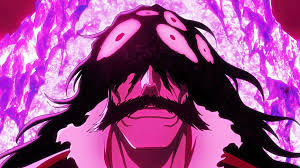
Yhwach represents the most dangerous villain in Bleach not because of raw power, but because he controls fate itself through The Almighty—an ability that sees and alters all possible futures simultaneously. Unlike Aizen who manipulated perception, Yhwach removes free will from reality, making victory conceptually impossible rather than just difficult. His danger stems from being narratively unstoppable: a villain who knows every move before it happens and rewrites any future where he loses, forcing the story itself to bend around his existence.
The most dangerous villains are not necessarily the strongest.
Sosuke Aizen could warp perception and transcend the limits of Soul Reapers. But Aizen operated within the story's rules. He could be outsmarted, outmaneuvered, defeated through clever strategy.
Yhwach is different.
He doesn't just break the rules. He rewrites them before they can apply to him. The Quincy King's true terror isn't that he's powerful—it's that he makes the concept of victory itself impossible.
Why Future Manipulation Trumps Physical Strength
Power in Bleach traditionally meant spiritual pressure, devastating techniques, or strategic brilliance. Yamamoto commanded flames that could destroy Soul Society. Aizen possessed perfect hypnosis and god-tier spiritual energy.
These abilities remained bound by causality. Actions led to consequences. Strategies could fail. Opponents could adapt.
Yhwach's The Almighty operates on a fundamentally different level. It doesn't enhance his combat ability—it removes combat as a meaningful concept.
The ability grants two catastrophic powers. First, omni-precognition: seeing every possible future simultaneously like grains of sand. Second, future acausality: altering those futures to ensure desired outcomes.
This creates an impossible situation for opponents.
Imagine fighting someone who has already seen every move you will make, every strategy you will attempt, every moment of desperation or inspiration. Now imagine they can edit the future to ensure all those attempts fail before you even think of them.
That's not a difficult opponent. That's a rigged game where the rules change retroactively to guarantee your loss.
The Terrifying Implications of Total Precognition
Traditional precognition in fiction shows one possible future or a linear timeline. Characters can change fate by acting differently than foreseen.
The Almighty doesn't work that way.
Yhwach observes all possible futures branching from the present moment. Every decision creates new timelines, and he sees all of them simultaneously. This means there is no "surprising" him or "changing fate."
He has already witnessed you trying to surprise him in thousands of possible futures. He knows which strategies work and which fail. Any clever plan you devise, he has already seen and prepared for.
When Ichigo attempted to activate his Bankai during their final battle, Yhwach simply brought forth a future where Tensa Zangetsu was already broken. The sword shattered before Ichigo could even release it—not because Yhwach was faster, but because he made "the future where Ichigo uses Bankai" cease to exist as a possibility.
This is why The Almighty terrifies in ways raw power never could. Strength can be overcome with strategy. Speed can be countered with prediction. But how do you fight someone who has deleted every future where you win?
How The Almighty Removes Free Will From the Story
The philosophical horror of Yhwach's power extends beyond combat mechanics. He represents the complete absence of free will within the Bleach universe during his reign.
This removal of agency places Yhwach closer to psychological horror than traditional shonen antagonists, a fear rooted in inevitability rather than violence, much like Why Monster Anime Feels More Terrifying Than Any Horror Anime.
Free will requires the possibility of choice mattering. Your decisions must be capable of affecting outcomes.
Yhwach's existence removes that possibility.
Every choice you make has already been observed and, if it threatens him, nullified before you make it. You believe you're acting freely, but the outcomes were predetermined the moment he opened those eyes.
This creates existential dread that surpasses Aizen's manipulation. With Kyoka Suigetsu, you knew someone was controlling your perception. The horror came from uncertainty—not knowing what was real.
With The Almighty, there is no uncertainty. There is only inevitability. Yhwach has seen the end of your story and ensured it concludes with his victory.
The Narrative Trap Yhwach Creates
From a storytelling perspective, The Almighty presents a problem that most shonen villains avoid: it makes protagonist victory logically impossible within established rules.
This kind of narrative pressure mirrors how certain stories deliberately challenge audience expectations, similar to how Why Sonny Boy Confused So Many Viewers on Purpose weaponizes uncertainty rather than resolution.
Typical powerful villains leave openings. Madara had limits to his regeneration. Frieza's arrogance created opportunities. Even Aizen's perfect hypnosis had weaknesses clever opponents could exploit.
Yhwach closes every opening before it appears.
If there exists a future where he loses, he simply changes that future. He can rewrite his own death, bringing himself back to life by selecting a timeline where he survived. This happened in the manga—Ichigo killed him, and Yhwach casually revived by choosing a different future.
The story must eventually defeat him because stories require endings. But The Almighty's mechanics make any defeat feel unsatisfying or contrived because logically, within the rules established, Yhwach should win.
This is what makes him dangerous from a meta-narrative perspective. He doesn't just threaten the characters—he threatens the story's ability to conclude coherently.
Why Soul Society Was Structurally Unprepared
The Soul Reapers built their entire defensive philosophy around the assumption that threats could be met with superior force or strategic brilliance.
Yamamoto represented maximum force—flames that could reduce Soul Society to ash if unleashed fully. The Royal Guard represented ultimate defense—five warriors protecting the Soul King's palace with reality-altering Bankai abilities.
All of it proved meaningless against The Almighty.
Yamamoto's power? Yhwach stole his Bankai before the captain could use it, having already foreseen when and how it would be deployed. The Royal Guard? Defeated despite their overwhelming abilities because Yhwach had already witnessed their techniques and rendered them ineffective.
The structural unpreparedness runs deeper than tactics. Soul Society's entire conception of combat assumes opponents play by certain rules: techniques have activation times, strategies unfold sequentially, reactions occur after actions.
The Almighty renders these assumptions obsolete.
Yhwach doesn't react to attacks—he has already acted in the future to prevent them in the present. By the time you throw a punch, he has already moved five steps ahead in a timeline where your punch never connected.
The Philosophical Foundation That Failed
Soul Society operated on a fundamental belief that skill, training, and determination could overcome any threat. The Shinigami Academy taught that mastering Zanjutsu, Hakuda, Hoho, and Kido would prepare warriors for any enemy.
This philosophy assumes enemies are defeatable through superior execution of those arts.
Yhwach invalidates the assumption entirely. No amount of swordsmanship matters when your opponent has edited the future so your blade never touches them. Training becomes irrelevant when every technique you've mastered has already been observed and countered across infinite timelines.
The danger here is spiritual as much as tactical. Soul Society's defenders couldn't comprehend an enemy who made their entire worldview obsolete. Not because they weren't strong enough—because strength itself stopped being the relevant variable.
Yhwach vs Aizen: Power vs. Control
Comparisons between Yhwach and Aizen are inevitable. Both threatened Soul Society's existence. Both possessed reality-distorting abilities. Both required coalitions of enemies to defeat.
Aizen’s danger came from manipulation rather than inevitability, a distinction explored in depth in Is Mihawk Actually Stronger Than Shanks or Just Better Written, where narrative presence matters more than raw power.
But their danger manifests differently.
Aizen manipulated perception through Kyoka Suigetsu. He could make you see whatever he wanted, turning allies into enemies and attacks into illusions. His strength came from information control—you couldn't trust your senses, so you couldn't effectively fight him.
This is psychological warfare. Terrifying, but beatable with the right countermeasures. If you could somehow perceive truth through the illusion or coordinate with others who weren't hypnotized, Aizen became vulnerable.
Yhwach doesn't manipulate what you see. He manipulates what can be.
The Difference Between Illusion and Inevitability
Aizen's Kyoka Suigetsu trapped you in false perception. The real world still existed—you just couldn't accurately perceive it.
The Almighty changes the real world. The future isn't an illusion Yhwach creates. He literally selects which timeline becomes reality from infinite possibilities.
When he breaks Tensa Zangetsu in the future, the sword genuinely breaks in the present. This isn't a trick or deception. The causal chain has been rewritten so the sword-breaking event occurs before the moment that would have prevented it.
This makes Yhwach categorically more dangerous. You can theoretically break free from illusion. You cannot break free from edited reality.
Aizen required constant concentration to maintain Kyoka Suigetsu's effects. He had to actively trick you. Yhwach simply selects the future he prefers and allows causality to make it real. No continuous effort required.
Why Aizen Himself Feared Yhwach
The most telling evidence of their relative danger comes from Aizen's response to Yhwach's invasion.
Aizen, who believed himself transcendent and beyond all Soul Reapers, recognized Yhwach as a genuine threat requiring intervention. Despite being imprisoned and restrained, Aizen provided crucial assistance in the final battle specifically because he understood The Almighty's implications.
A villain who considers himself god still acknowledges another villain as dangerous. That says everything about their relative threat levels.
Aizen could be contained through seals and imprisonment because his power had limits. Yhwach's power operates on a level where traditional containment becomes conceptually questionable. How do you imprison someone who can simply edit the future to ensure his imprisonment never occurred?
The Philosophical Threat to Bleach's Universe
Beyond combat implications, Yhwach represents an existential threat to the very structure of the Bleach cosmos.
His stated goal is merging the three worlds—Soul Society, Hueco Mundo, and the World of the Living—back into the primordial existence where death held no meaning.
Bleach rarely ventures this far into existential horror, but when it does, it approaches the same territory explored in Why Perfect Blue Still Feels Uncomfortable Even Today, where control over reality becomes deeply unsettling.
This isn't conquest. It's universal restructuring.
Most villains want to rule the world. Yhwach wants to unmake reality as it currently exists and replace it with his vision of a deathless existence where all souls persist in a single unified realm.
The Fate Manipulation at Cosmic Scale
The Almighty at full power, enhanced by absorbing the Soul King, grants Yhwach control over the fundamental flow of souls between worlds.
The three-world system exists in delicate balance. Souls circulate: humans in the living world die and go to Soul Society, are eventually reborn, die again, continuing the cycle. Hollows disrupt this flow, and Soul Reapers maintain balance by defeating Hollows and ensuring souls progress through the cycle properly.
Yhwach can manipulate this entire system's future.
He can see every possible timeline where the worlds remain separated and systematically edit those futures out of existence, replacing them with timelines leading to merger. This isn't about destroying the worlds through force—it's about making their continued separation impossible through fate manipulation.
No amount of defensive power stops this. You can't punch away the heat death of the universe. Similarly, you can't sword-fight your way out of having your reality's fundamental structure rewritten across all possible futures.
What Makes a Villain Truly Dangerous
Yhwach forces us to reconsider what "dangerous" means for fictional antagonists.
Traditional metrics—power levels, destructive capacity, strategic intelligence—fail to capture his specific threat. He's not the strongest in pure combat. Gerard Valkyrie's "The Miracle" and Lille Barro's "The X-Axis" demonstrate comparable reality-breaking abilities.
But none of them threaten narrative coherence itself.
Yhwach's danger operates on three levels that compound into unprecedented threat:
Tactical: He makes victory impossible through future manipulation.
Strategic: He makes resistance futile through inevitability.
Existential: He makes reality itself subject to his whims.
Most villains threaten characters. The truly dangerous ones threaten the world. The exceptionally rare villains threaten the nature of existence itself while removing any conceptual possibility of being stopped.
Yhwach achieved that final category. He became dangerous not just to Soul Society or the Bleach universe, but to the story's ability to function as a story where protagonist actions matter.
The Unsatisfying Necessity of Plot Armor
The manga defeated Yhwach through Still Silver—arrows forged from the hearts of Quincies he killed with Auswählen, capable of temporarily nullifying his powers—combined with Aizen's Kyoka Suigetsu creating crucial moments of distraction.
Many fans found this resolution unsatisfying. Not because it was poorly written, but because The Almighty's mechanics logically preclude defeat. Yhwach should have foreseen the Still Silver plan. He should have edited the future where it succeeded.
The narrative required him to lose for the story to end. But the powers established made his victory logically inevitable. This tension creates lasting discomfort.
That discomfort is itself proof of how dangerous Yhwach was—even the meta-narrative structure struggled to contain him coherently. The villain became too perfectly designed as an unstoppable force, creating problems that transcended the in-universe conflict.
The Legacy of Narrative Inevitability
Years after Thousand-Year Blood War concluded in manga form, Yhwach remains the standard against which Bleach villains are measured.
Not because he had the highest power level. Not because he caused the most destruction. But because he represented danger in its purest form: the complete removal of hope through systematic elimination of all possible futures except the one he chose.
That's what makes him Bleach's most dangerous villain.
Aizen could be outsmarted. Previous threats could be overpowered. Yhwach removed both possibilities simultaneously by controlling causality itself. Against omniscient precognition combined with timeline manipulation, traditional protagonist tools—determination, friendship, hidden potential, strategic brilliance—become irrelevant.
Few anime villains force this level of meta discomfort, placing Yhwach alongside characters whose existence challenges storytelling itself, a theme also examined in Ergo Proxy Explained Without the Confusion.
You can't inspire your way out of predetermined defeat. You can't believe hard enough to change a future that has already been rewritten against you.
The danger of inevitability exceeds the danger of strength. And Yhwach embodied inevitability more completely than any villain the series produced.
Frequently asked questions
Frequently asked questions
Is Yhwach the strongest villain in Bleach?
Yhwach is not necessarily the strongest in raw combat power, but he is the most dangerous. His ability, The Almighty, allows him to see and alter all possible futures, making traditional strength comparisons largely irrelevant.
Why is Yhwach more dangerous than Aizen?
Aizen manipulates perception through illusion, which can theoretically be countered. Yhwach manipulates reality itself by rewriting the future. He does not trick opponents; he removes any future where they succeed.