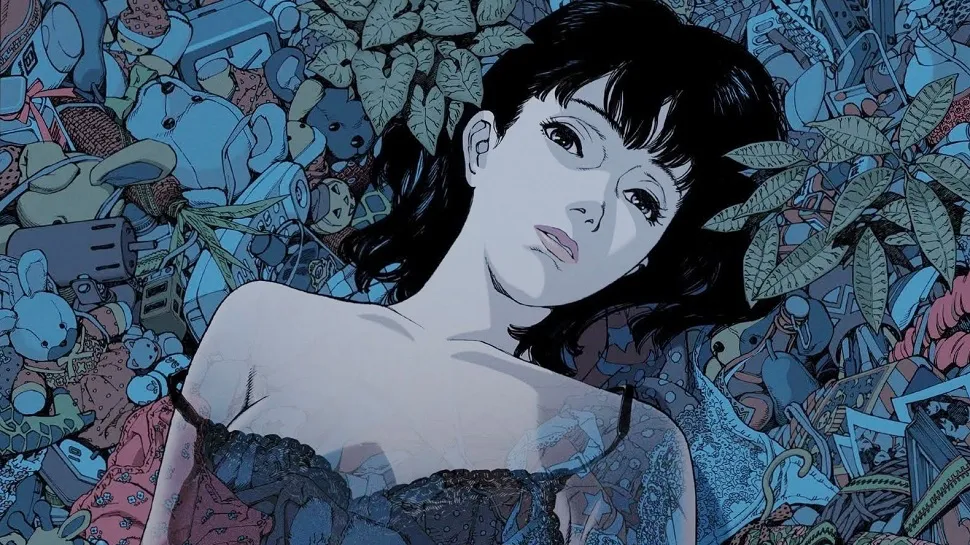

Perfect Blue remains deeply unsettling because it explores psychological horror rooted in identity dissolution, parasocial relationships, and the loss of self-perception—themes that have only grown more relevant with social media and modern celebrity culture. Unlike supernatural horror that offers emotional distance, Satoshi Kon's 1997 masterpiece forces viewers to confront how fragile human identity actually is when subjected to public scrutiny, obsession, and the blurring line between persona and person.
There's a scene in Perfect Blue where Mima stares at her reflection, uncertain which version is real. The idol. The actress. The person she was before fame. The persona created by fans. The character she plays on television.
None of them feel like her anymore.
That moment doesn't leave you after the credits roll. It follows you into your own bathroom mirror, your social media profile, every photograph where you've performed a version of yourself for someone else's consumption. That's why Perfect Blue feels different from other psychological horror anime. It doesn't scare you with monsters or supernatural forces. It scares you with yourself.
The Horror Without Safety Nets
Why Perfect Blue's Terror Feels Possible
Most horror provides escape through impossibility. Demons don't actually possess people. Ghosts aren't really haunting your apartment. Serial killers with supernatural abilities don't exist outside fiction. These narrative boundaries let audiences experience fear safely, knowing the credits will restore reality's rules.
Perfect Blue offers no such comfort.
Everything that happens to Mima Kirigoe could happen. Obsessive fans exist. Stalkers create fake websites impersonating their targets. People lose themselves trying to meet public expectations. Careers demand compromises that chip away at identity. The pressure to maintain different versions of yourself across different spaces—the sweet idol, the serious actress, the private person—can genuinely fragment someone's sense of self.
This realism is what makes the film linger. Satoshi Kon understood that the most terrifying horror comes from recognizing something true about human psychology, not from inventing new fears. When Mima can't distinguish between her acting roles, her memories, and actual events, she's experiencing something fundamentally possible. Dissociative identity disorder exists. Derealization exists. The psychological breakdown from sustained trauma and stress exists.
The film never winks at the audience. It never confirms which scenes are real and which are delusions. That ambiguity isn't artistic pretension—it's intentional psychological warfare designed to make you feel what Mima feels: the creeping horror of not trusting your own perception.
When Identity Becomes Performance
The Idol Persona vs. The Actress vs. The Person
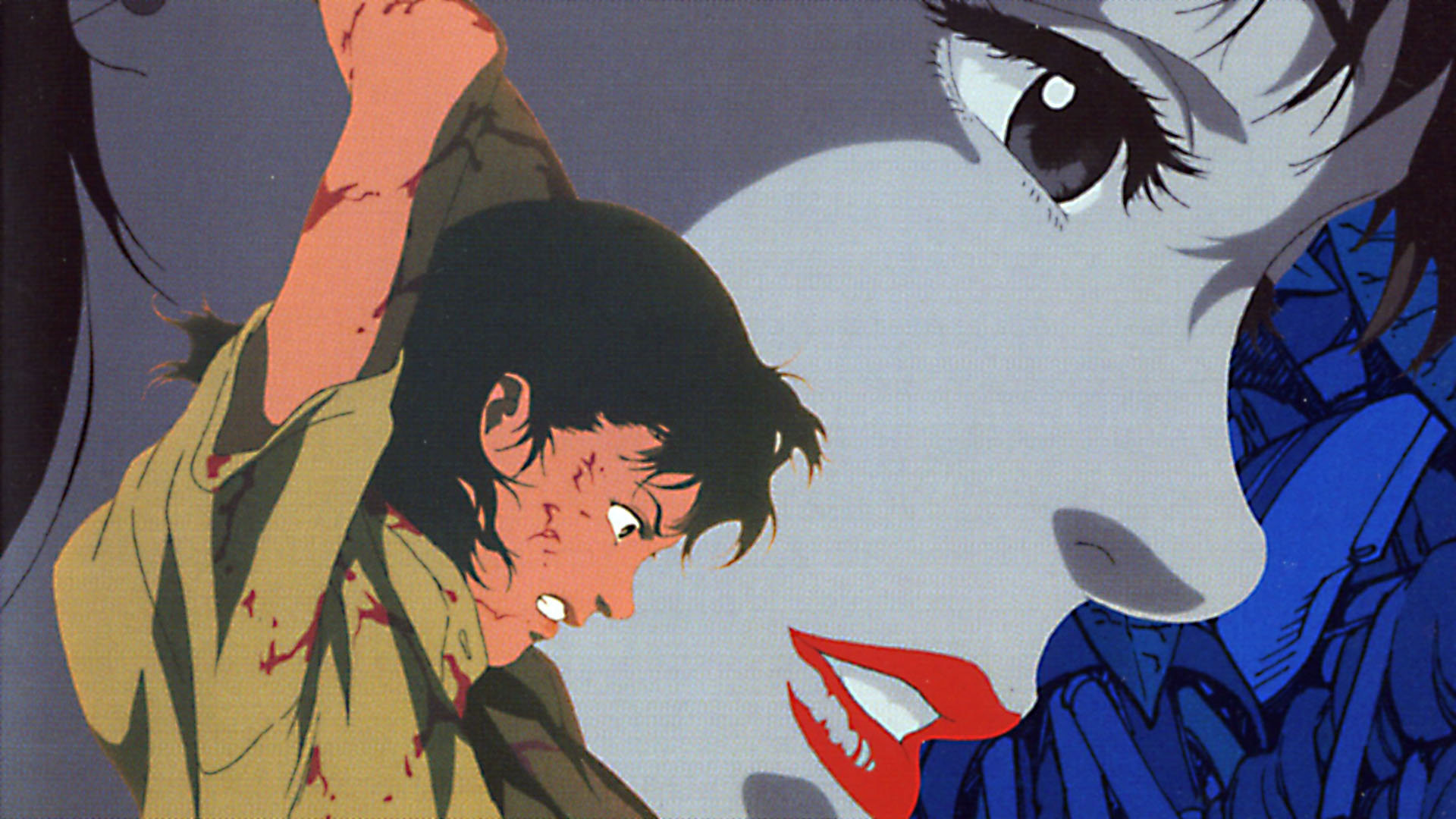
Mima's transition from pop idol to actress serves as the narrative catalyst, but the deeper horror lies in what that transition reveals about identity construction. As a member of CHAM!, she performed a specific persona: innocent, cheerful, approachable. That persona wasn't entirely manufactured—presumably parts of it reflected genuine aspects of her personality—but it also wasn't the complete picture of who she was as a person.
When she pursues acting, she's pressured into increasingly mature roles, including a graphic rape scene that her former manager can't even watch. The film doesn't present this transition as simply "breaking free" from her idol image. Instead, it shows how both roles—the idol and the serious actress—become prisons that trap different versions of her, neither allowing her to exist as a complete person.
Her stalker, Me-Mania, represents the extreme manifestation of parasocial relationships. He doesn't love Mima the person. He loves Mima the idol—the constructed image he believes belongs to him. When she deviates from that image, he experiences it as betrayal. She's tarnished herself by being something other than what he needed her to be.
How Parasocial Obsession Became Prophecy
This dynamic feels horrifyingly familiar in modern celebrity culture. Fans frequently express ownership over public figures, demanding they remain frozen in whatever version initially attracted their attention. Child stars who try to shed innocent images face backlash. Musicians who change genres get accused of betrayal. Streamers and content creators who reveal personality traits inconsistent with their online personas receive death threats.
Perfect Blue predicted how parasocial relationships would intensify when the boundary between public and private selves collapsed—something the internet has accelerated beyond what anyone in 1997 could have imagined.
The Website That Knows Everything
When Fiction Became Social Media Reality
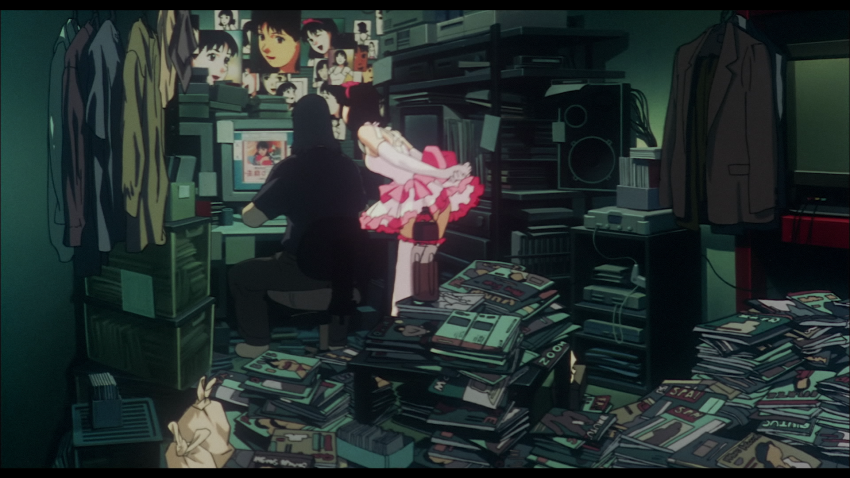
The most prophetic element of Perfect Blue is "Mima's Room," a website created by her stalker that chronicles her daily activities in intimate detail, written from her perspective. In 1997, when the internet was still nascent and social media didn't exist, this felt like pure horror fiction.
In 2026, it's Tuesday.
Celebrities now maintain exactly this kind of intimate documentation themselves, sharing what they ate for breakfast, their workout routines, their emotional states, their daily schedules. Fans create elaborate websites tracking their favorite public figures' activities. The boundary between what's private and what's performed has dissolved almost completely.
The horror in "Mima's Room" wasn't just the stalker's obsession—it was how the fake Mima felt more real than the actual person. The website version of Mima was consistent, always available, perfectly aligned with what fans wanted her to be. The real Mima was confused, inconsistent, changing, human. Which version deserves to exist?
The Performance That Never Ends
This question haunts anyone who maintains a public presence online. The curated version of yourself that gets likes and engagement starts feeling more legitimate than your messy, contradictory reality. You begin performing even in private, rehearsing which version of an experience will photograph well before you've finished living it.
Mima's breakdown mirrors what happens when the performance becomes inescapable. She can't tell which thoughts are hers and which belong to the characters she plays. She can't distinguish between events she experienced and scenes she filmed. Her sense of continuous identity—the feeling that you're the same person across time and context—shatters under the weight of maintaining too many competing versions of herself.
Silence, Confusion, and the Absence of Answers
How Disorientation Becomes the Point
Perfect Blue refuses to comfort its audience with explanations. The film's narrative structure deliberately disorients viewers, cutting between Mima's perspective, her television show Double Bind, her hallucinations of her idol self, and actual events without clear transitions. Scenes that initially appear real later reveal themselves as performances. Confrontations that seem like hallucinations turn out to have happened.
This confusion is the point.
Most psychological anime eventually provide clarity. Even Monster anime, despite exploring the darkest aspects of human evil and manipulation, maintains a coherent narrative structure where viewers can distinguish between reality and character psychology. Death Note plays with supernatural power and psychological manipulation, but the rules of its universe remain consistent.
Perfect Blue offers no such stability.
Satoshi Kon's Visual Language of Fractured Reality
The film's visual language actively works against comprehension. Mirrors reflect wrong images. Transitions between scenes obscure whether time has passed or whether we've entered fantasy. The repeated motif of eyes watching—from television screens, from crowds, from Mima's own fractured self-image—creates paranoia that infects the viewing experience itself.
Satoshi Kon's directorial approach treats identity as inherently unstable. The smooth cuts between Mima the idol performing on stage and Mima the actress performing on set and Mima the person performing privacy suggest these aren't distinct states but overlapping realities constantly bleeding into each other.
This aesthetic choice has profound psychological implications. By denying viewers stable ground, Kon forces us to experience something approximating dissociative experience. We can't orient ourselves because Mima can't orient herself. The discomfort we feel while watching mirrors the discomfort of existing in a state of perpetual uncertainty about which self is real.
Why It Ages Better Than Other Psychological Horror
The Film That Predicted Our Future
Twenty-nine years after its release, Perfect Blue has only grown more relevant. Many anime from the late '90s feel dated despite their quality. Perfect Blue feels like it was made yesterday—or perhaps tomorrow, as society continues catching up to what Kon predicted.
The film anticipated several trends that would dominate culture decades later: the rise of social media and its impact on identity construction, the intensification of celebrity culture and parasocial relationships, the exploitation built into entertainment industries, the commodification of female performers specifically, and the psychological toll of maintaining different public and private selves.
Unlike Welcome to the NHK, which explores social anxiety and isolation in ways that feel increasingly relevant with modern technology, Perfect Blue identified something even more fundamental: that the self might not survive sustained public scrutiny.
Cultural Influence Beyond Anime
Films like Black Swan (2010) openly borrowed from Perfect Blue's visual language and thematic concerns. Director Darren Aronofsky purchased the remake rights to reference specific shots. The influence extends beyond direct homage—Perfect Blue established a template for exploring how performance identity corrodes personal identity, a theme that resonates across multiple art forms as celebrity culture becomes increasingly democratized.
Anyone with a smartphone camera now has the tools to become a public figure. Anyone can cultivate audiences who form parasocial attachments. Anyone can experience the fragmentation that comes from performing different versions of yourself across platforms. Perfect Blue stopped being a story about one woman's breakdown and became a warning about modern existence.
The film also predicted how female performers specifically face this pressure. Mima isn't just asked to change—she's asked to sexualize herself, to be degraded on camera, to compromise boundaries as "part of the job." The film's critique of how entertainment industries exploit women pretending it's empowerment has aged disturbingly well.
The Intentional Discomfort of Ambiguity
Why Understanding Would Ruin the Horror
What makes Perfect Blue exceptional within psychological horror anime isn't just that it disturbs viewers—it's that the disturbance serves a purpose. The ambiguity isn't Kon being pretentious. It's Kon ensuring viewers can't distance themselves from Mima's experience through comprehension.
Compare this to Chainsaw Man, which creates emotional discomfort and emptiness on purpose to reflect its protagonist's dehumanization. Both series use discomfort as narrative tool rather than flaw, but Perfect Blue's approach cuts deeper because it denies the possibility of understanding what happened.
The Final Scene's Unsettling Question
The film's final scene suggests Mima has recovered, having reclaimed her identity and put the trauma behind her. She looks at her reflection and smiles, declaring, "I'm the real thing."
But is she? Or is this just another performance, another version of herself she's constructed to survive? The audience can't know because Mima herself might not know. Identity isn't something you reclaim like lost keys—it's something you continuously construct, and the construction becomes exponentially more difficult when thousands of people have competing claims on who you should be.
This uncertainty is what follows viewers after the credits. We don't get closure because Mima doesn't get closure. We don't get answers because the questions Perfect Blue asks don't have clean answers. Can you maintain authentic selfhood while performing for public consumption? Where does performance end and person begin? If the performed version feels more real to everyone else, does your private self even matter?
Living Inside the Horror
Why the Discomfort Follows You Home
The discomfort Perfect Blue creates isn't limited to its runtime. The film plants seeds of paranoia that bloom whenever you think about how you present yourself to the world.
Every social media post becomes a small act of identity construction. Every photograph involves choosing which version of yourself to project. Every public interaction requires calculating how you'll be perceived. The pressure to maintain coherent personal brands means performing consistency even when you feel fractured.
The horror is that this is normal now. We've all become Mima to varying degrees, fragmenting ourselves across platforms, trying to satisfy competing visions of who we should be, occasionally catching our reflection and wondering which version is real.
Perfect Blue doesn't offer solutions because there might not be solutions. In a world where privacy is increasingly impossible and public performance increasingly mandatory, the psychological cost of existing under constant observation might just be the price of participation.
The film ends, but the discomfort continues. That's what makes it psychological horror rather than just psychological thriller. Horror operates through lingering unease, through fears that follow you home and reshape how you see the world. Perfect Blue succeeds because it makes you afraid of something you can't escape: the possibility that your identity is more fragile than you thought, and that the version of yourself you present to others might eventually consume whoever you used to be.
Mima's story could be anyone's story. That's what makes it so uncomfortable to watch. That's what makes it impossible to forget.