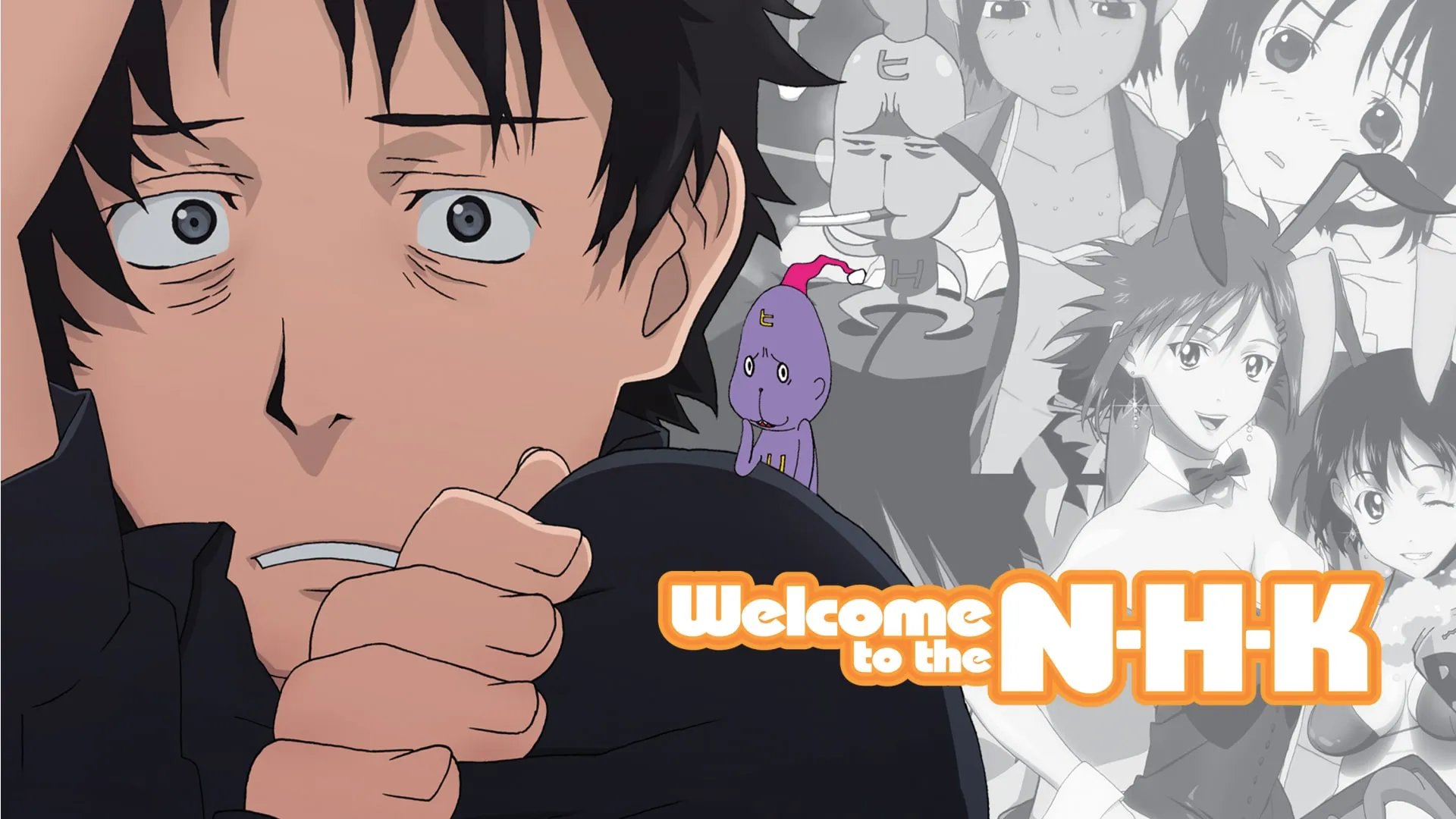

Welcome to the NHK can feel like a strange dark comedy when you first encounter it. Satou is a 22-year-old hikikomori who barely leaves his apartment, invents conspiracies to explain his life and repeatedly sabotages the opportunities that might help him change. When you are younger, the premise can look deliberately extreme. Watching it later, the exaggeration starts feeling uncomfortably close to recognizable adult behavior: avoiding a phone call, letting one bad month become six, being embarrassed about falling behind and then hiding because admitting it feels worse.
That is why the anime hits harder with age. Satou's life is not destroyed by one dramatic villain. It shrinks through avoidance. He loses structure, confidence and money slowly enough that every individual decision can be explained away. The older you are, the easier it becomes to understand how a person can know exactly what is wrong and still be unable to act like someone who knows.
Satou's excuses stop being funny when they become familiar
Satou constantly creates explanations that protect him from the simplest conclusion: he is scared. The NHK conspiracy is the loudest example. If a giant organization is responsible for making him a hikikomori, then his isolation becomes something that happened to him rather than something he has to take responsibility for changing.
The conspiracy is obviously absurd, but the psychological mechanism is not. People often prefer explanations that preserve self-image. A failed application becomes proof the industry is impossible. A bad social interaction becomes proof nobody would want to talk to you. One missed opportunity becomes evidence that trying is pointless. Welcome to the NHK turns that habit into comedy, then waits long enough for the comedy to become sad.
Isolation creates its own logic
One of the show's strongest observations is that isolation becomes self-reinforcing. The longer Satou stays inside, the harder ordinary tasks feel. His social skills become rusty, his shame increases, and every successful day spent avoiding people makes avoidance easier to repeat. From the outside, the solution can look simple: leave the apartment, get a job, talk to someone. From inside Satou's routine, each step feels connected to the possibility of humiliation.
The anime does not present this process neatly. Satou can be selfish, dishonest and exhausting. That matters because the story refuses to make social withdrawal beautiful just to make its protagonist sympathetic. Understanding why Satou behaves badly is not the same thing as pretending the behavior has no consequences for the people around him.
Work and money make the story feel more adult
A younger viewer can focus on Satou's social anxiety and romantic failures. An older viewer is more likely to notice how much of the story is also about economic dependence. Rent, food and the ability to survive without family support place limits on the fantasy that Satou can stay disconnected forever.
The series understands that adulthood is partly enforced by boring material realities. Motivation does not always arrive first. Sometimes a person changes because money runs out, another person stops enabling them or their current lifestyle becomes impossible to maintain. That is less inspirational than a dramatic self-improvement speech, but it is often more believable.
Misaki is not a magical cure
At first, Misaki seems to arrive in the exact shape of a wish-fulfillment character: a mysterious young woman notices Satou, claims she can cure his hikikomori lifestyle and keeps returning even when he gives her little reason to. A weaker story could have used her as the reward for a lonely protagonist.
Welcome to the NHK gradually reveals why that interpretation is wrong. Misaki has her own needs, fears and unhealthy reasons for attaching herself to Satou. She does not rescue him from above. Their relationship becomes complicated because both of them are tempted to use the other person as proof that they are needed.
That makes the romance more uncomfortable and more honest. Love can support change, but another person cannot permanently perform your self-worth for you. The series refuses the idea that finding the right partner automatically repairs isolation.
Almost everyone is trying to escape through someone else
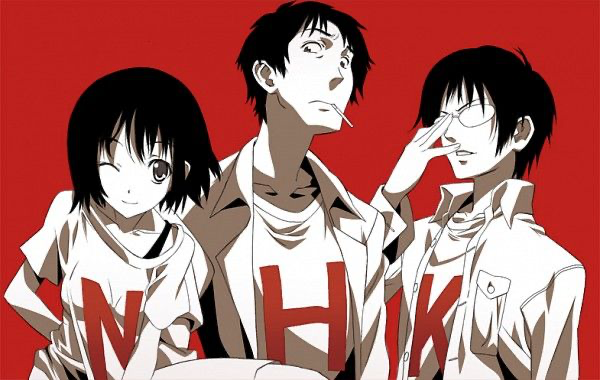
Satou is not the only person avoiding his life. Yamazaki throws himself into an obsessive creative dream and resentment. Hitomi searches for connection while carrying her own dissatisfaction. Misaki builds an identity around helping someone she believes is worse off than she is. The characters look different on the surface, but many of them are trying to solve an internal problem with an external person, project or fantasy.
That pattern becomes easier to recognize with age because adult life gives people more socially acceptable forms of avoidance. Someone can hide inside work, a relationship, an online community, a creative project or constant self-improvement content while still refusing to address the thing they are afraid of. The show was made long before today's social platforms became dominant, yet its portrayal of retreat into mediated life has aged remarkably well.
The comedy makes the serious parts more uncomfortable
Welcome to the NHK often makes Satou's worst moments ridiculous. That can create tonal whiplash, but it is also one of the reasons the series works. People do not experience difficult periods with a soundtrack telling them which moments are tragic. Embarrassing, funny and painful things can happen within the same day.
The humor also prevents the show from turning Satou into a noble symbol of suffering. He is allowed to be pathetic. He can misunderstand obvious situations, make bad choices and behave in ways that deserve criticism. The audience can care about him without having to admire him.
It is compassionate without romanticizing withdrawal
The anime's compassion comes from taking Satou's fear seriously while still showing that his coping mechanisms hurt him. It does not argue that isolation makes someone deeper, smarter or purer than ordinary society. Satou misses experiences because he is absent from them. His world becomes smaller.
At the same time, the show avoids the equally shallow idea that a person can be shamed into functioning. Satou does not become a different human being overnight. Progress is uneven, influenced by circumstances, relationships and necessity. He moves forward partly because the conditions that allowed him to stay frozen begin to disappear.
Why the ending works
The ending is effective because it does not transform Satou into a motivational success story. He does not suddenly become charismatic, wealthy or fearless. The victory is smaller: life continues, and he participates in it a little more than before.
That modest scale fits everything the series has been saying. For someone whose problem is withdrawal, ordinary participation is not ordinary. Going outside, working, maintaining a relationship or accepting uncertainty can represent meaningful movement even when none of it looks impressive from the outside.
Why Welcome to the NHK hits harder as you get older
Age changes the way Satou looks. He becomes less of an exaggerated anime shut-in and more of a warning about how easy it is to let embarrassment turn into avoidance and avoidance turn into a life. The details become more painful because adulthood teaches you how quickly time can disappear while you are waiting to feel ready.
But the series is not ultimately nihilistic. Its characters are messy, dependent and often wrong about what will save them, yet they keep colliding with one another until isolation becomes harder to maintain. Welcome to the NHK hits harder with age because its central fear becomes more believable, but so does its small hope: you do not need to become a perfect version of yourself before you are allowed to re-enter your own life.
Frequently asked questions
Frequently asked questions
Is Welcome to the NHK actually a comedy?
Yes, but it is a dark comedy. The series uses absurdity and uncomfortable humor around serious themes such as isolation, dependency and self-sabotage, so the dramatic weight often becomes more memorable than the jokes.
Does the anime cover the entire story?
The anime tells a complete version of Satou's story but differs from the original novel and manga in several details and character developments. Its ending works as a self-contained conclusion even though the versions are not identical.
Is Welcome to the NHK helpful for people dealing with depression or social anxiety?
Some viewers find the series relatable because it portrays isolation and avoidance without making them glamorous. It is still fiction, not mental-health guidance, and parts of the story can be heavy, so viewers should approach it according to their own comfort.
What does NHK stand for in the show?
NHK is actually Nippon Hoso Kyokai, Japan's public broadcaster. Satou jokingly reinterprets it as Nihon Hikikomori Kyokai, or the Japanese Hikikomori Association, as part of his conspiracy thinking.
Should I watch Welcome to the NHK dubbed or subbed?
Both versions are well regarded. The Japanese cast preserves the original performance context, while the English dub is often praised for fitting the series' awkward and emotional tone. Either is a reasonable choice.