
Mobile Suit Gundam GQuuuuuuX (pronounced "G-Quacks") is a 2025 mecha anime created by Studio Khara (Evangelion) and Sunrise that's become 2025's most viral anime. Set in an alternate Universal Century timeline where Char Aznable wins the One Year War, the 12-episode series follows high schooler Amate Yuzuriha as she pilots the GQuuuuuuX in illegal underground mecha duels. With Evangelion creator Hideaki Anno writing and FLCL director Kazuya Tsurumaki directing, it blends Gundam's political drama with experimental storytelling that's divided longtime fans but attracted newcomers. Streaming now on Prime Video.
What Is Gundam GQuuuuuuX?
Mobile Suit Gundam GQuuuuuuX is a 12-episode mecha anime that premiered in April 2025, following a theatrical compilation film in January. It's the 16th mainline Gundam installment and the first full Universal Century series since 1993's Victory Gundam—though it takes place in an alternate timeline.

The collaboration between Studio Khara (known for Neon Genesis Evangelion) and Sunrise (the legendary Gundam studio) was announced in December 2024 and immediately generated massive hype. Hideaki Anno, Yoji Enokido, and Kazuya Tsurumaki—the creative team behind Evangelion and FLCL—brought their distinctive style to the Gundam franchise.
The result? Japan's most viral anime of 2025, according to Bushiroad's Anime Data Insights Lab study of 270 series.
The Alternate Timeline That Changes Everything
In the original Mobile Suit Gundam (1979), protagonist Amuro Ray pilots the RX-78-2 White Gundam to help the Earth Federation defeat Char Aznable and the Principality of Zeon.
GQuuuuuuX flips this completely.
Here, Char steals the RX-78-2, renames it the "Red Gundam," and uses it to win Zeon's independence. Five years later, both the Red Gundam and Char have disappeared, leaving a Zeon-dominated world.
This isn't a retcon of existing Gundam continuity—it's a completely separate "what if" timeline that lets the creators explore familiar characters and conflicts from new angles.
The Story: Underground Mecha Duels and Political Conspiracy
Amate Yuzuriha is a high school student living in the Side 6 space colony Izuma. Her peaceful life shatters when she meets Nyaan, a war refugee from Side 2, and encounters Shuji, a mysterious vandal piloting the Red Gundam.
When military police brutally pursue Shuji, Amate impulsively pilots the gMS-Ω GQuuuuuuX—a next-generation mobile suit—to help him escape.
Clan Battles: Illegal Mecha Fighting
Unable to return to normal life, Amate joins "Clan Battles"—underground mobile suit duels operated by junk dealer Kaneban Co. She competes under the alias "Machu" (her childhood nickname), earning money while evading authorities.
These battles aren't just spectacle. They're how powerless people in a Zeon-controlled society create agency for themselves—fighting for survival, reputation, and connection in a world that's forgotten them.
The premise mirrors Hajime no Ippo's competition-driven pressure, but with giant robots and political undertones.
The Political Drama Beneath the Duels
GQuuuuuuX isn't just about mecha fights.
Beneath the Clan Battles runs a conspiracy involving Kycilia Zabi's power grab within Zeon, the mysterious "kira-kira" psychic ability Amate possesses, and Char's true motives for disappearing.
The series balances personal stakes (Amate protecting her friends) with large-scale political maneuvering, creating tension similar to Monster's layered conspiracy approach, though compressed into 12 episodes.
Why the Evangelion Connection Matters
The Studio Khara involvement isn't just marketing.
Hideaki Anno's Influence
Anno wrote the 30-minute prologue focusing on Char's alternate victory, filling it with the technical detail and military jargon that defined Evangelion. Characters stand in rooms delivering space opera dialogue. Mechanical systems are explained in obsessive detail.
If you've watched Evangelion, you'll immediately recognize Anno's fingerprints.
Kazuya Tsurumaki's Direction
Director Kazuya Tsurumaki (FLCL, Rebuild of Evangelion) brings rapid-fire pacing, eccentric character quirks, and kinetic action sequences that feel distinctly different from traditional Gundam.
The animation style shifts between fluid 2D hand-drawn combat and CG mobile suits, creating a visual hybrid that some fans love and others find jarring.
Ikuto Yamashita's Radical Mecha Designs
Mechanical designer Ikuto Yamashita (Evangelion, Shin Kamen Rider) reimagined classic Gundam mobile suits with angular, unsettling proportions.
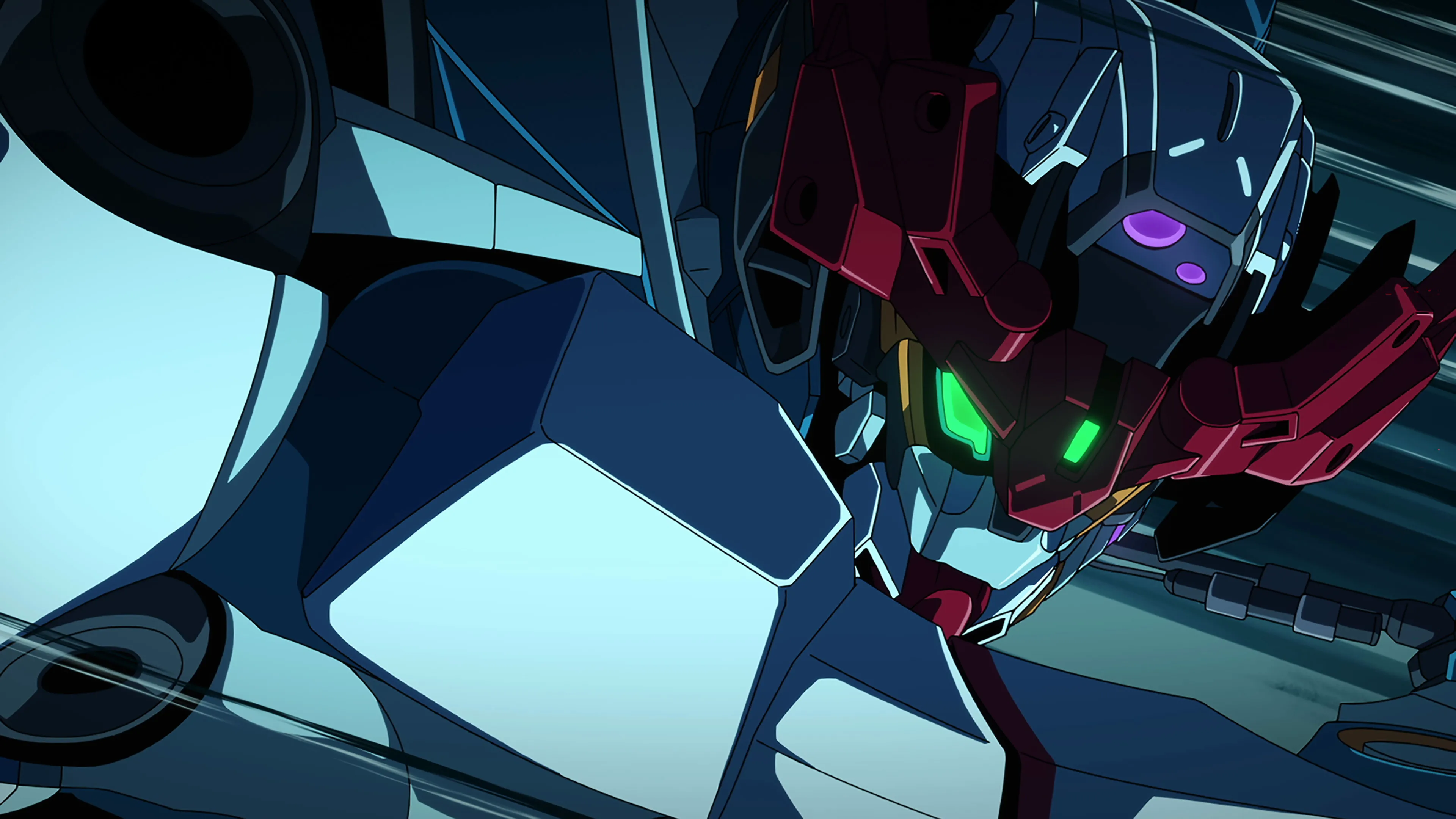
The GQuuuuuuuX itself looks deliberately strange—sleek yet bulky, with articulation that challenges traditional Gundam aesthetics. Director Tsurumaki specifically told Yamashita: "I want Gunpla like nothing I've ever seen before."
The result divides fans. Some find the designs fresh and experimental. Others think they abandon what makes Gundam visually iconic.
What Makes GQuuuuuuX Different From Other Gundam Series
Shortest Mainline Gundam Ever
At just 12 episodes, GQuuuuuuX is the shortest Gundam TV series excluding OVAs.
This compressed runtime means the story moves fast—sometimes too fast. Character development that would normally unfold over 50 episodes happens in a handful of scenes. Political conspiracies that deserve explanation get rushed.
But the brevity also eliminates filler. Every episode advances the plot or deepens character relationships.
Female Protagonist in a Male-Dominated Franchise
GQuuuuuuX is only the second mainline Gundam with a female lead (after 2022's The Witch from Mercury).
Amate isn't a trained soldier or Newtype prodigy. She's an ordinary teenager thrust into piloting a Gundam by circumstance, not destiny. Her journey focuses on survival and protecting her friends rather than becoming humanity's savior.
The series explores what it calls the "female experience" of piloting Gundams—though reviews are mixed on whether it actually delivers meaningful perspective or just uses gender as surface-level differentiation.
The "Kira-Kira" Psychic Ability
Amate experiences a sensation called "kira-kira" (sparkling) that seems to enhance her piloting abilities during combat.
These sequences are visualized through surreal, almost psychedelic animation reminiscent of Evangelion's introspective scenes—reality fractures, colors shift, time feels elastic.
Whether kira-kira is a Newtype ability, something unique to Amate, or connected to the GQuuuuuuX's design remains deliberately ambiguous throughout the series.
The Reception: Viral Success, Divided Fanbase
GQuuuuuuX topped Japan's 2025 anime viral rankings in both Trend Score and Fan Score categories, beating out Sakamoto Days, Medalist, and others.
The compilation film opened at #1 at the Japanese box office in January 2025, reaching 1 million attendees in two weeks across 426 theaters (including 52 IMAX locations).
But critical and audience reception tells a more complicated story.
What Critics Praised
Animation quality: Reviews consistently highlight the fluid combat animation and high production values. Rotten Tomatoes critics called it "some of the best robot action scenes in quite a while."
Political themes: The series maintains Gundam's tradition of exploring war, occupation, and resistance through the lens of giant robot battles.
Accessibility for newcomers: Unlike dense UC timeline entries, GQuuuuuuX's alternate timeline doesn't require extensive Gundam knowledge (though familiarity with the original series enhances appreciation).
What Fans Criticized
Rushed pacing: At 12 episodes, character arcs feel compressed. Relationships that should develop organically instead happen through exposition.
Tonal inconsistency: The series oscillates between serious political drama and arcade-style Clan Battle spectacle without always finding balance.
Underdeveloped side characters: The show reportedly kills off one-time characters who quickly become fan favorites, leading to speculation the director didn't want to develop personalities outside the main cast.
Divisive ending: The finale leaves major plot threads unresolved, which some viewers found honest and others found frustrating.
The Ratings Tell the Story
- IMDb: 6.8/10 (across 720+ reviews)
- Rotten Tomatoes (Beginning film): 90% critics, 100+ verified audience ratings
- MyAnimeList: Mixed reviews ranging from 3/10 to 10/10
The polarization is real. Evangelion fans who came for Tsurumaki's direction often loved it. Traditional Gundam fans expecting 50-episode political opera felt shortchanged.
Who Should Watch Gundam GQuuuuuuX?
Watch If You:
- Want an entry point into Gundam that doesn't require watching 40+ years of continuity
- Enjoyed Evangelion's experimental approach to mecha storytelling
- Appreciate anime that prioritizes visual style and atmosphere, similar to why Frieren feels different from other fantasy anime
- Like short, tightly-paced series over long-running epics
Skip If You:
- Prefer traditional Gundam's longer, more deliberate storytelling
- Need complete narrative resolution by the finale
- Dislike experimental animation styles mixing 2D and CG
- Want deep character development over spectacle
- Expect every plot thread to be explained
The Studio Khara Difference: Why It Feels Like Evangelion Gundam
GQuuuuuuX shares creative DNA with Evangelion in ways that go beyond superficial similarities.
The Anno Approach to Military Fiction
Both series obsess over technical detail. How mobile suits operate. What happens in command centers during battles. The protocols for launching mechas.
This isn't dry exposition—it creates immersion by treating fictional technology as if it has real operational logic.
Tsurumaki's Frenetic Energy
FLCL's hyperkinetic pacing appears in GQuuuuuuX's Clan Battle sequences. Quick cuts. Exaggerated character reactions. Action that prioritizes emotional impact over tactical realism.
This clashes with Gundam's typically grounded approach to mecha combat, creating a hybrid style that either thrills or alienates depending on your expectations.
Character Designs by Take
Illustrator Take (Katanagatari, Pokémon) created character designs that look distinctly modern compared to classic Gundam's aesthetic.
Amate and Nyaan wouldn't look out of place in a contemporary slice-of-life anime. This makes them relatable but also visually disconnected from the franchise's military sci-fi roots.
How GQuuuuuuX Connects to Other Gundam Series
While set in an alternate UC timeline, GQuuuuuuX constantly references the original Mobile Suit Gundam:
- Char's role reversal: Seeing Char as protagonist instead of antagonist reframes his motivations
- Challia Bull's survival: A character killed in episode 39 of the original series survives here, suggesting how small timeline changes cascade
- Mobile suit redesigns: The RX-78-2, Zaku, and other iconic mechas appear in Yamashita's reinterpreted forms
For Gundam veterans, these callbacks create a "familiar but wrong" feeling that enhances the alternate timeline's impact.
For newcomers, they're just cool mecha designs with no baggage attached.
The Music and Sound Design
Opening theme "Plazma" by Kenshi Yonezu became a hit in Japan, reaching high chart positions.
But reviews noted the soundtrack sometimes clashes with the show's tone—upbeat J-pop playing during tense combat feels incongruous, a tonal challenge that even acclaimed anime sometimes struggle with.
The voice acting cast includes:
- Tomoyo Kurosawa (Kumiko in Sound! Euphonium) as Amate
- Yui Ishikawa (Mikasa in Attack on Titan) as Nyaan
- Shimba Tsuchiya as Shuji
The English dub released simultaneously with Japanese audio on Prime Video—a first for Gundam series.
What Comes Next: Merchandise and Physical Releases
Gunpla Model Kits
Bandai has released multiple High Grade 1/144 model kits:
- HG GQuuuuuuX (May 2025, ¥2,420/$17)
- HG Red Gundam (June 2025)
- HG Police Zaku (July 2025)
- HG 01 Gundam [GQ] (January 2026, ¥2,826/$19)
- HG Hambrabi (GQ) (June 2026)
The GQuuuuuuX model features state-of-the-art articulation and flexibility showcased in promotional videos.
Home Video Releases
Three-volume releases launched in 2026:
- Diskless editions (¥8,800 each): Serial codes for digital extras, booklets, storyboards, no episodes
- DVD editions: 4 episodes per volume, booklets, non-credit OP/ED, Japanese and English subtitles
This marks the first "diskless" Gundam release, signaling industry shifts toward digital distribution.
Why 2026 Is GQuuuuuuX's Year
Though the series aired in 2025, its cultural impact extended into 2026:
- Awards: Won Japan Anime Trend Award and Animation of the Year at the 2026 Tokyo Anime Award Festival
- Continued merchandising: New Gunpla kits releasing throughout 2026
- International expansion: The series gained traction globally on Prime Video after its Japan-exclusive initial run
- Convention presence: Studio Khara announced a new short film at Japan Expo 2025, keeping momentum alive
The compressed 12-episode format actually helped its longevity—viewers can binge it in an afternoon, making it easier to recommend than 50-episode commitments.
The Verdict: A Bold Experiment That Mostly Works
Mobile Suit Gundam GQuuuuuuX won't replace your favorite Gundam series.
It's too short, too experimental, too deliberately divisive.
But it proves the franchise can evolve without abandoning what makes it Gundam—political complexity, war's human cost, and the symbolic power of giant robots.
The Evangelion creative team brought fresh energy to a 46-year-old franchise. Some experiments failed (tonal whiplash, rushed character development). Others succeeded (stunning animation, accessible alternate timeline, bold redesigns).
For newcomers intimidated by Gundam's vast continuity, GQuuuuuuX offers a 12-episode entry point that captures the franchise's themes without requiring homework.
For longtime fans, it's a fascinating "what if" that respects the original while fearlessly reimagining it—the kind of bold creative risk that made Death Note still hit hard years after its release.
That's rare in legacy franchises—and exactly why it became 2025's most viral anime.
Where to Watch: Mobile Suit Gundam GQuuuuuuX is streaming exclusively on Prime Video with Japanese audio and English subtitles/dub.