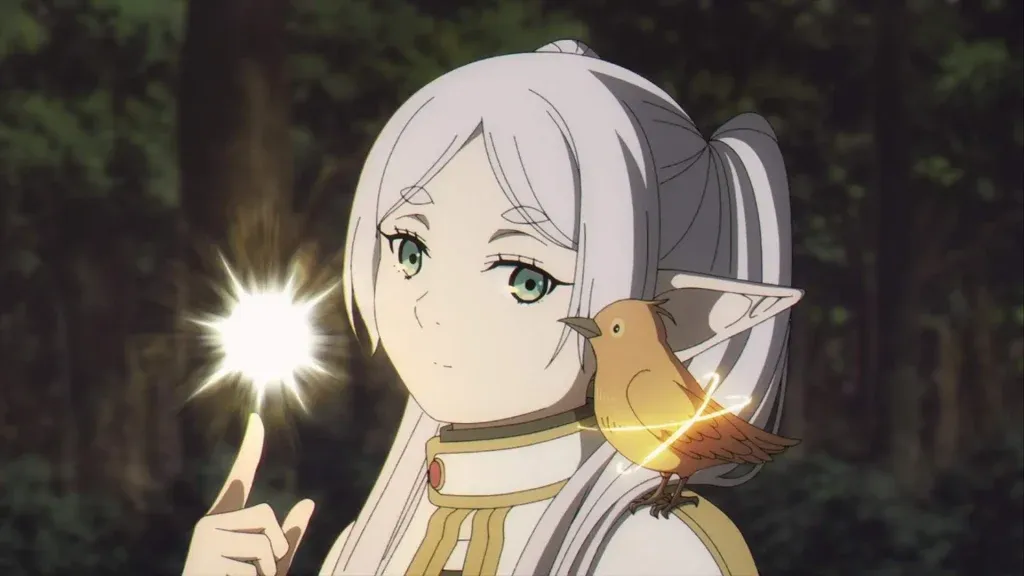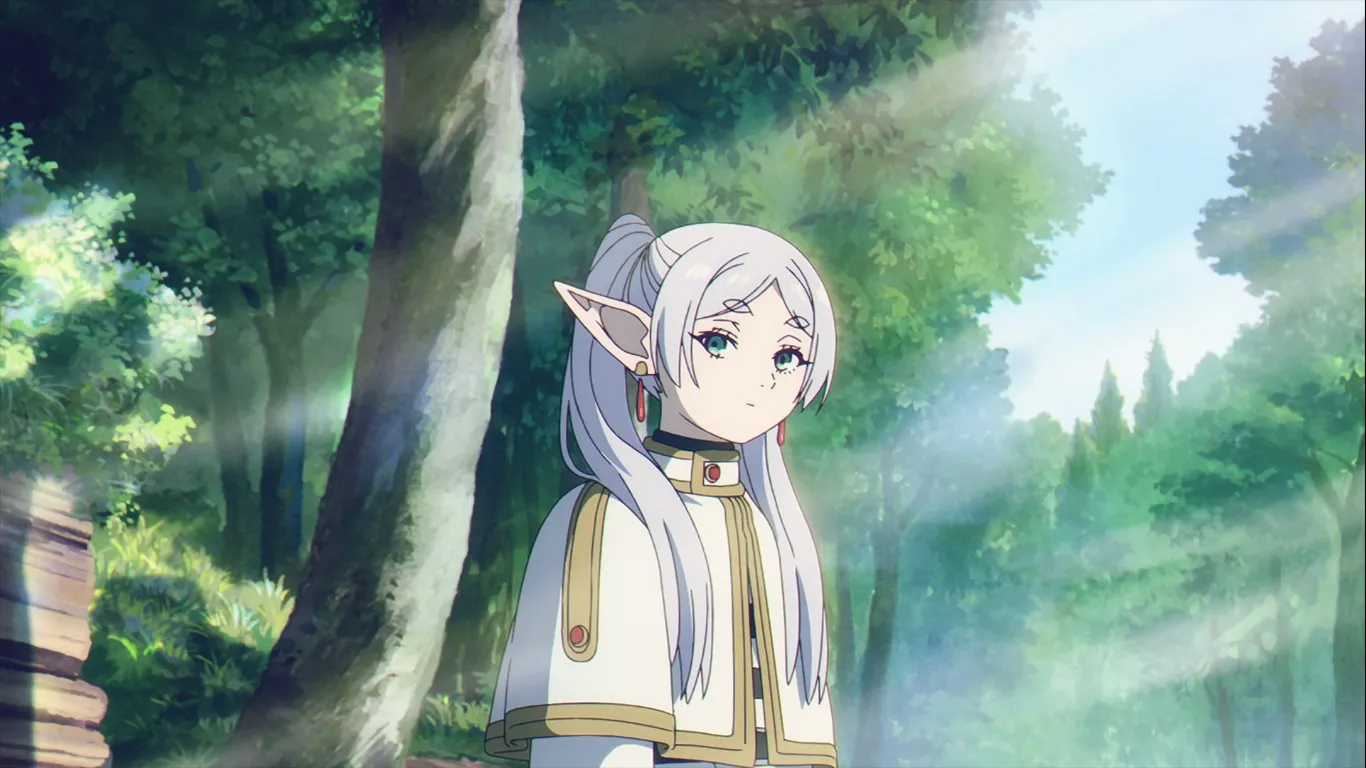

Most fantasy stories treat defeating the Demon King as the destination. Frieren: Beyond Journey's End treats it as the starting point. The great adventure is already over when the story begins, the heroes have returned home, and history is preparing to turn them into legends. What matters now is something fantasy anime often rushes past: what happens to the people who survive the quest, and what does that journey mean after enough time has passed for memory to change it?
That reversal is the main reason Frieren feels so different. It has magic, monsters, demons, ancient ruins and spectacular fights, but the series is rarely interested in those things only as spectacle. Nearly everything is filtered through time. A spell matters because someone taught it to Frieren. A village matters because she once passed through it with Himmel. A statue matters because a person who seemed permanent is now gone. Fantasy becomes a way to talk about memory rather than an excuse to keep raising the power ceiling.
Most fantasy ends where Frieren begins
The hero's journey usually gives a story its shape: assemble the party, travel through dangerous lands, grow stronger, defeat the enemy and return changed. Frieren deliberately places that entire structure in the past. We see pieces of the original adventure only through flashbacks, and those memories become more important because we already know the party cannot stay together forever.
This creates an unusual kind of suspense. The question is rarely whether Himmel's party succeeded, because we know they did. The question is what Frieren failed to notice while they were together. A small conversation from decades ago can suddenly become more emotionally important than the battle that surrounded it. The series turns hindsight into narrative momentum.
Immortality changes the meaning of time
Frieren's long lifespan is not simply a fantasy ability. It is the central problem of her emotional life. Ten years feels short to an elf who can live for centuries, but it can represent the most important decade of a human life. At the beginning, Frieren understands that difference intellectually without really feeling it. She can measure time, but she does not yet understand why humans treat limited time as precious.
Himmel's death forces that gap into the open. Frieren realizes that she spent ten years traveling beside him and still knows surprisingly little about the person he was. The tragedy is not that she never cared. It is that she assumed there would always be more time to understand what caring meant.

Himmel is present because he is gone
Himmel spends surprisingly little of the present-day story alive, yet he is one of its most important characters. Frieren keeps discovering evidence of him in places he no longer occupies: statues, stories, habits, old promises and memories triggered by ordinary details. His absence gives those details weight.
The series also refuses to reduce Himmel to a flawless saint. He liked being remembered, posed for statues and could be vain in a charming way. Those imperfections make his kindness feel more human. He does good things not because the story needs an untouchable hero, but because he repeatedly chooses to make life a little better for people he may never meet again.
Frieren slowly learns that this is why his actions survived him. The statues are not only monuments to victory. They are anchors for memory, intentionally left behind so people can remember that the heroes were real. Himmel understands mortality in a way Frieren initially does not, so even his vanity becomes connected to the human need not to disappear completely.
Small memories matter more than lore dumps
Frieren has a huge fantasy world, but it rarely explains that world through long lectures. Instead, history appears through traces. A spell has an old inventor. A ruined location carries the remains of a conflict. A village celebrates a custom because someone once passed through. The audience learns the world by seeing how the past survives inside the present.
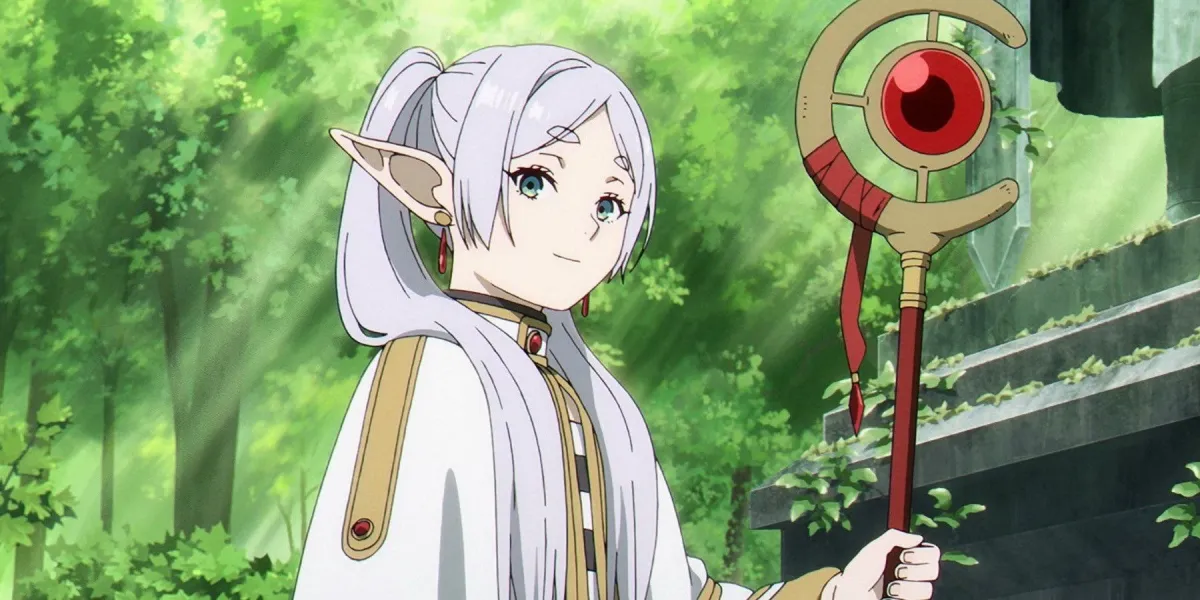
That approach makes even silly magic meaningful. Frieren loves collecting strange spells that seem useless in combat. On paper, that can look like a joke about an overpowered mage wasting time on trivial magic. In practice, those spells represent people. Someone once thought a spell for cleaning clothes, creating flowers or finding a lost object was worth preserving. Frieren's collection turns magic into cultural memory.
Magic is not only a power system
Many fantasy anime organize magic around rank, raw strength and increasingly complex techniques. Frieren has those elements, but it is more interested in what magic says about the person using it. Frieren's restraint comes from experience. Fern's precision reflects discipline. Demons approach magic with different priorities because their relationship to deception, survival and status is fundamentally different from that of humans.
That is why major fights can be brief and still feel satisfying. The story often establishes the deciding idea long before the characters begin attacking. Understanding an opponent, hiding information, reading mana or knowing the history behind a spell can matter more than producing the largest explosion.
Fern and Stark keep Frieren from living only in the past
If Frieren traveled alone, the series could easily become a story about nostalgia. Fern and Stark prevent that. They are not replacements for Himmel's party. Their importance comes from being new people with their own limits, irritations and hopes. Frieren's second journey matters because she is learning to pay attention while the relationship is happening rather than understanding it only after everyone is gone.

Fern brings routine into Frieren's life. She notices meals, schedules, spending, sleeping habits and social obligations that Frieren would happily ignore. Stark adds another kind of human vulnerability: he can be frightened, insecure and still choose to act. Their youth also gives Frieren a chance to become the older companion who leaves memories behind for someone else.
Demons reveal the series' moral worldview
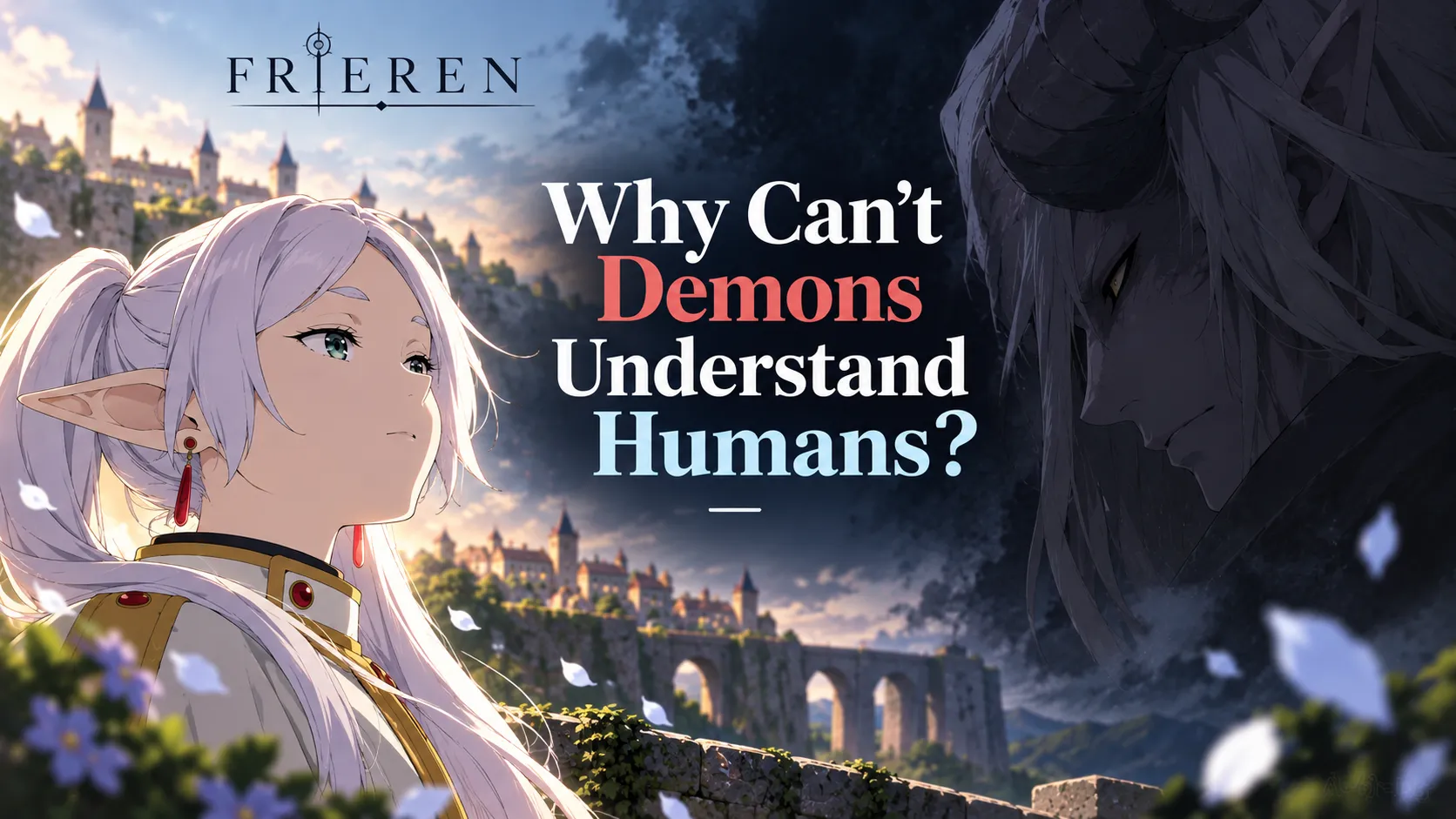
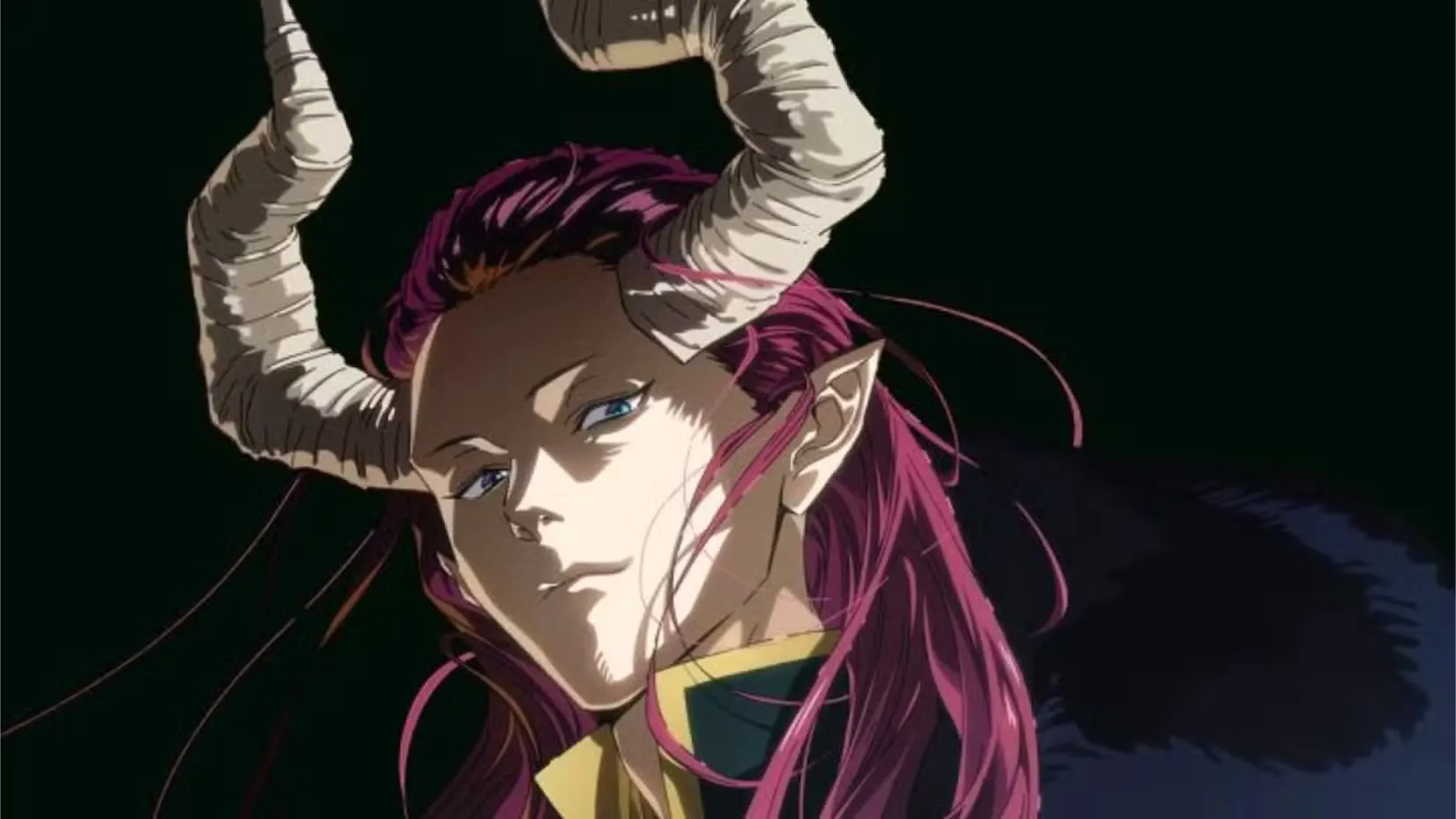
Frieren's demons are one of the clearest examples of the show resisting familiar fantasy comfort. They can speak, negotiate and imitate emotional language, but the series repeatedly argues that communication does not guarantee shared morality. A demon can understand which words will move a human without experiencing those words in the same way.
This is deliberately unsettling because fantasy audiences are trained to expect monsters to become understandable once we learn enough about them. Frieren asks a harder question: what if understanding another being does not erase the fundamental difference between you? The best demon stories in the series are not about simple hatred. They are about the limits of empathy when two forms of life evolved around very different social instincts.
The action works because the show does not live on action
Frieren can deliver beautiful magical battles, but it rarely uses them to prove that the story has become serious. Quiet episodes already carry emotional weight. That restraint makes the action feel larger when it arrives because combat interrupts a rhythm built from walking, talking, eating, collecting spells and helping people with small problems.
The series also understands that an overwhelmingly strong character does not remove tension if strength is not the only thing at stake. Frieren can defeat enemies that would terrify ordinary adventurers, yet she cannot reverse Himmel's death, recover missed opportunities or force herself to understand another person instantly. Emotional limitations remain even when physical danger does not.
Why Frieren feels melancholy without becoming hopeless
The series is constantly aware that people disappear. Towns change. Friends age. Heroes become stories. But Frieren is not arguing that attachment is pointless because everything ends. It argues the opposite. Limited time is exactly what makes attention valuable.
Frieren cannot redo the ten years she spent with Himmel, but regret does not trap her permanently. It changes how she travels now. Every new friendship is an opportunity to notice more, ask more and remember better. The past gives the story sadness, while the present keeps it from becoming a funeral.
Why it feels different from other fantasy anime
Frieren is not unique because it avoids familiar fantasy ingredients. It uses nearly all of them. What makes it distinctive is the order of importance. The world-saving quest is background. Memory is foreground. Power is useful, but attention is transformative. A hero can defeat the Demon King and still leave the most important lesson in the way he stopped to help someone on the road.
That is why Frieren can make a ten-second flashback hurt more than an enormous battle. The show understands that the moments people dismiss as ordinary are often the ones that become precious later. Its fantasy world feels ancient and expansive, but its real subject is small and human: learning to value people before they turn into memories.