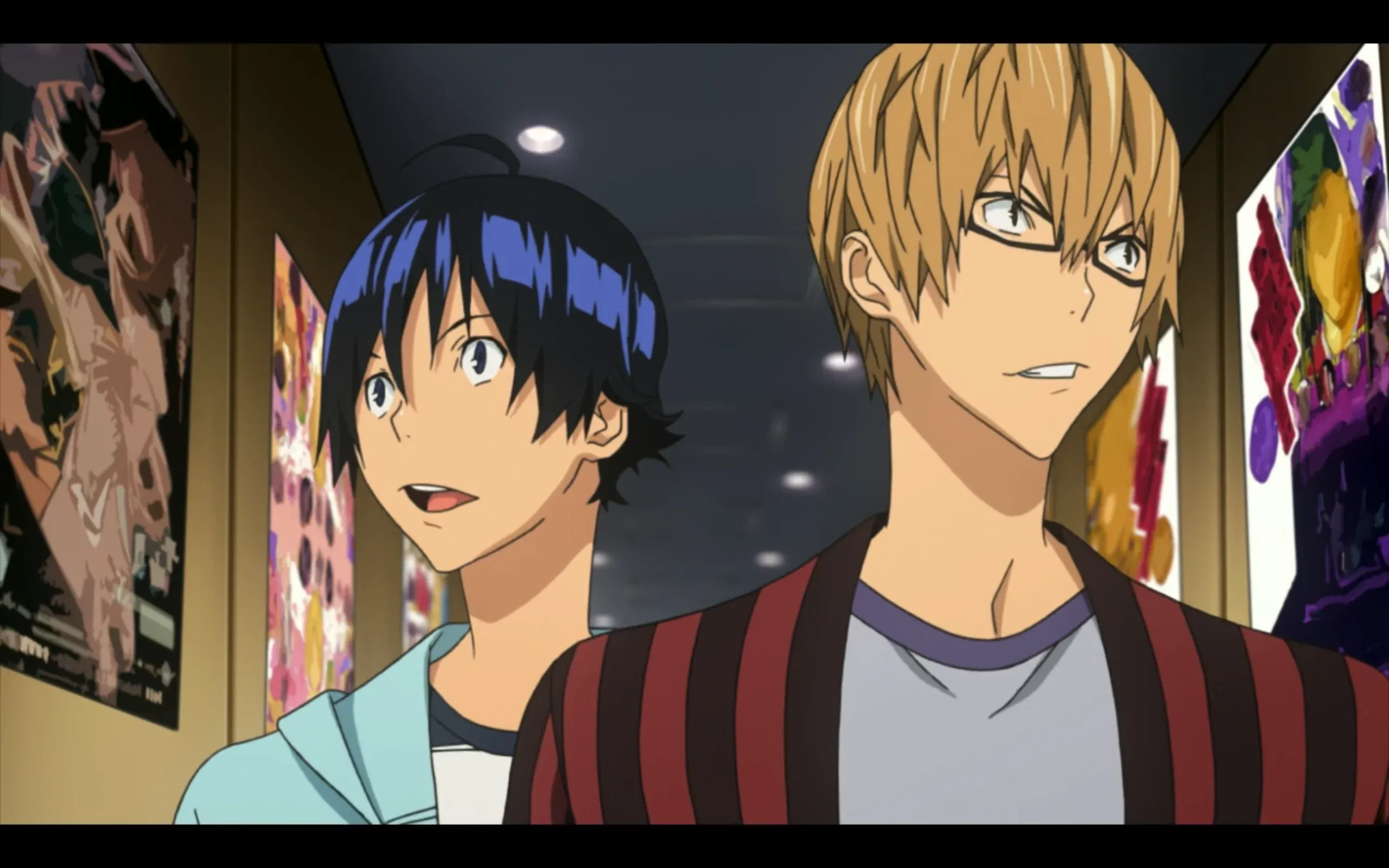
Barakamon is a slice-of-life anime about calligrapher Seishuu Handa who's sent to a rural island after punching an art critic. Rather than teaching lessons about healing or creativity, the series allows growth to happen naturally through daily routines, community connections, and quiet moments. It captures what creative burnout actually feels like—the flatness, the ego-driven perfectionism, the loss of joy—and shows reconnection with art not through sudden breakthroughs but through living differently.
What Is Barakamon?
Barakamon is a 2014 slice-of-life anime following a burned-out calligrapher exiled to a rural island after a public outburst. Rather than focusing on healing or inspiration, it explores creative burnout through routine, community, and quiet disruption—examining why joy disappears from work you once loved.
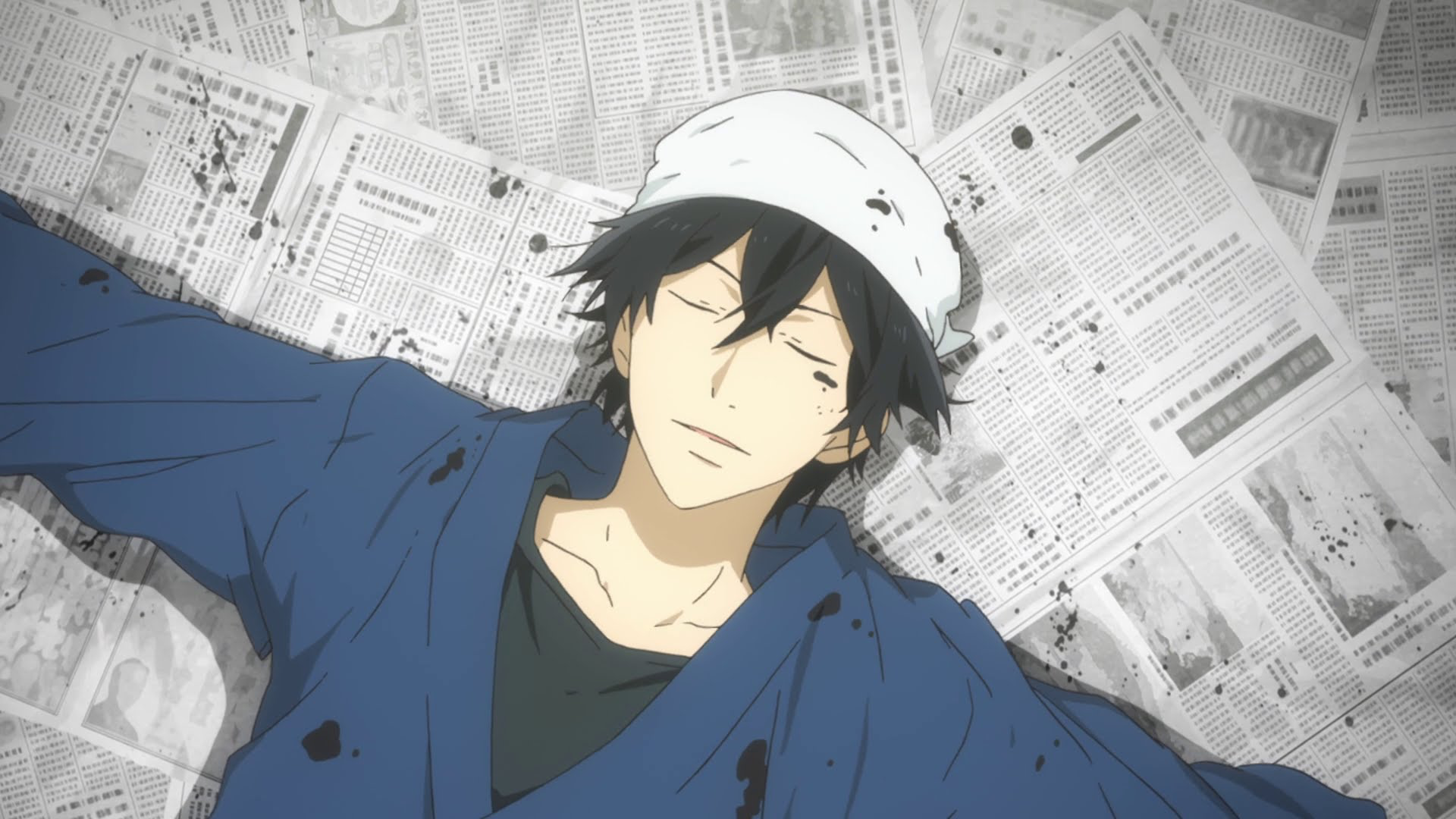
The anime follows Seishuu Handa, a 23-year-old calligrapher who punches an elderly critic for calling his work "textbook" and lacking personal expression. His father exiles him to the remote Goto Islands to reflect.
What follows isn't a redemption arc. It's something quieter. Something that feels more like remembering than learning.
Is Barakamon Worth Watching?
Watch if you:
- Have experienced creative burnout or felt disconnected from work you once loved
- Value character-driven stories over plot or action
- Enjoy slice-of-life anime with emotional depth (like Frieren's approach to quiet character development)
- Want something comforting without being saccharine
Skip if you:
- Need dramatic conflict or fast pacing
- Want complete narrative resolution by the finale
- Don't connect with stories about creative struggle
When Skill Becomes Prison
Burnout doesn't always look like collapse. Sometimes it's just quiet. A flatness where the joy got sucked out of everything you used to love.
What makes Barakamon resonate with creative people isn't that it's "inspirational." It's that it depicts the specific exhaustion that comes from tying your entire worth to being the best.
Handa is a prodigy. He debuted professionally young. His technical skill is undeniable. But skill became prison.
Every piece of calligraphy carries the weight of his reputation. Every stroke has to prove he deserves recognition. The act of creation—which presumably started from some pure place of interest—has become entirely about external validation.
This mirrors the pressure in Hajime no Ippo, where competition becomes suffocating rather than motivating. The difference is that boxing has clear victories. Art doesn't.
The Burnout Creative People Recognize
This is the burnout creative people recognize: when making something stops being about the thing itself and becomes only about whether it's good enough.
The anime shows this through Handa's practice sessions. He writes the same characters over and over, technically perfect, emotionally empty. His hand knows what to do but his work lacks what the critic identified: a personal touch. Authenticity. Life.
He can't manufacture that through harder work. That's what makes burnout so frustrating—effort stops translating to satisfaction.
A programmer can write flawless code that solves nothing meaningful. A writer can construct grammatically perfect sentences that say nothing. Handa's calligraphy is the visual version: technically masterful, spiritually dead.
Growth That Happens Sideways
Barakamon refuses the narrative structure where struggle leads to epiphany leads to change.
Handa doesn't have a moment of clarity where everything clicks. His artistic growth doesn't come from intense practice or studying masters. It happens sideways, almost accidentally, through experiences that have nothing to do with calligraphy.
Catching mochi at a port festival. Helping kids catch beetles. Getting dragged to village events he doesn't want to attend.
These moments don't "teach" him anything in the conventional sense. They just give him different things to pay attention to besides his own anxiety about being good enough.
When Trying Harder Makes It Worse
One episode features Handa attempting to write while increasingly sleep-deprived and stressed. His work becomes objectively worse the harder he tries.
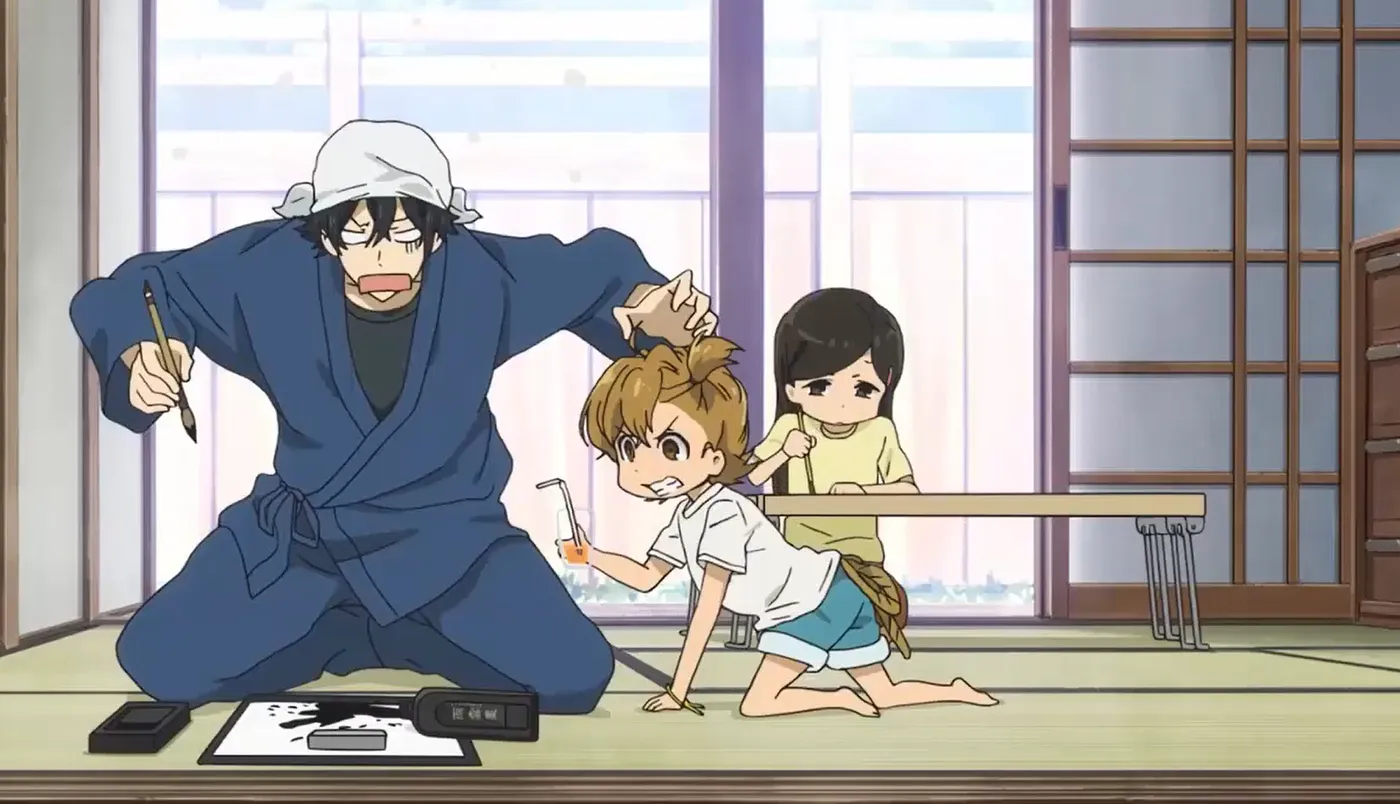
Later, after an afternoon playing with Naru—a relentless seven-year-old who decides he's her new playmate—he creates something spontaneous that actually captures feeling rather than just demonstrating technique.
The difference isn't that he learned a lesson. It's that he stopped white-knuckling every brushstroke.
This is the opposite of most competition anime where effort directly correlates with results. In creative work, sometimes the problem is the effort.
The Community That Doesn't Fix You
What Barakamon gets right about healing through community is that the islanders don't set out to heal Handa. They just live their lives and include him in that living.
They don't treat him as a troubled artist who needs guidance. He's just another person on the island, subjected to the same community expectations, traditions, and casual invasions of privacy everyone else experiences.
Why the Voice Acting Matters
The voice acting deserves specific mention. Unlike most anime where adult women voice children, Barakamon cast actual child actors.
This makes Naru's energy feel authentic rather than performed. Her chaos isn't cute anime chaos—it's real kid chaos that exhausts adults. You can hear it in the unpolished delivery, the natural rhythm of actual seven-year-old speech patterns.
This casting choice prevents the show from romanticizing childhood as pure or wise. Naru is helpful sometimes and genuinely annoying other times, exactly like real children. Handa isn't being saved by magical rural wisdom or innocent children teaching him to see clearly. He's just spending time with actual people who happen to be kids.
Connection Beyond Ego
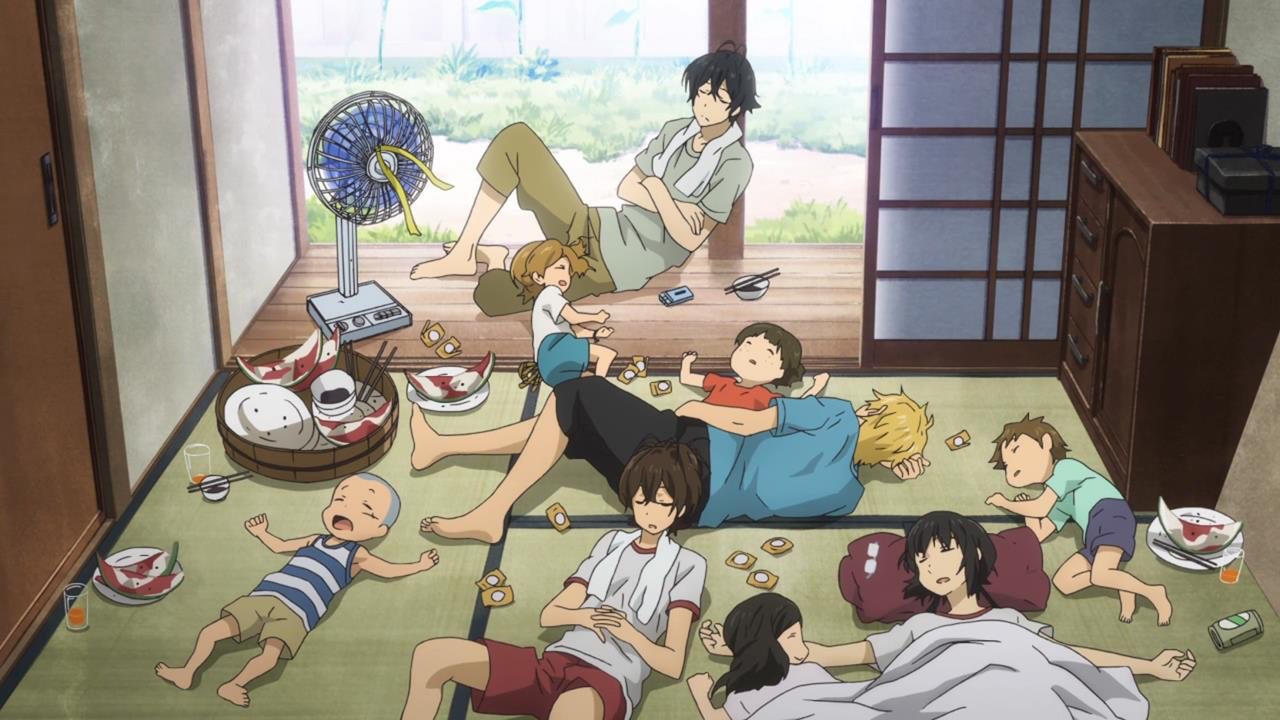
Handa learns to care about these people not because they teach him valuable lessons but because you can't live alongside someone's daily life without starting to care what happens to them.
This matters for his art because creation requires connection to something beyond your own ego. When everything becomes about proving yourself, you lose connection to why creation feels meaningful in the first place.
The Calligraphy as Metaphor
The choice of calligraphy as Handa's art form matters.
Calligraphy requires technical mastery developed through endless repetition. There are correct and incorrect ways to form characters. Tradition weighs heavily. The gap between technical proficiency and artistic expression is massive and difficult to articulate.
This makes it the perfect metaphor for creative burnout. You can master the technical aspects of your craft and still create work that feels dead because you've lost connection to why you're doing it.
The rigidity of calligraphy—where there are literally "correct" brush strokes—mirrors any creative field with established rules. A musician can play every note perfectly and still produce soulless music. A designer can follow every principle of good design and create something that doesn't communicate anything.
The Physical Act of Creation
Handa's journey isn't about getting better at calligraphy in the conventional sense. It's about reconnecting with the physical act of making marks on paper—the texture of ink, the weight of the brush, the satisfaction of movement divorced from judgment.
Several scenes show him creating calligraphy without intending to. Playing with Naru leads to spontaneous brushwork. Helping with village projects produces characters he doesn't overthink. These moments bypass his ego entirely.
The anime suggests that sometimes the way back to joy in your work is through side doors—making things without the pressure of them needing to be good.
What the Anime Doesn't Do
Handa doesn't abandon his ambition. He still wants to be a great calligrapher. The competition still matters to him. His anxieties don't magically disappear because he played with children and ate homemade food.
What changes is his relationship to the work itself. He starts creating because the act of creation interests him again, not just because the result might impress judges.
The series ends with his growth still very much in progress. His artistic crisis isn't solved. His personality hasn't transformed completely. He's just slightly more capable of being present rather than constantly performing.
This refusal to wrap everything up neatly is what makes Barakamon feel honest. Real healing from burnout isn't a completed arc. It's ongoing adjustment in how you relate to your work and yourself.
Why It Ages Well (And What It Gets Wrong About Itself)
Barakamon aired in 2014. Over a decade later, it resonates more strongly, not less.
The pressure to commodify creativity has intensified. Social media turned everyone's creative output into content measured by engagement metrics. The specific type of burnout Handa experiences—where you're technically skilled but emotionally disconnected from your work—has become increasingly common.
Watching Handa slowly remember that calligraphy can be joyful rather than just evaluative hits differently when you're living in a world that turns every hobby into a potential side hustle.
Where the Show Contradicts Itself
But here's where the show contradicts itself, or at least where my reading might be wrong:
You could argue that Barakamon is prescriptive. That it's saying "disconnect from productivity culture and reconnect with community" as a solution to burnout.
I don't think that's what it's doing. I think it's just showing what happened to one person without claiming this is theanswer. But the show doesn't explicitly reject that interpretation either, which means it's subject to being read as "go rural, find healing"—which is both impossible for most people and potentially a misreading of what makes the story work.
The show's power isn't in Handa's specific circumstances (island exile) but in the structure of how change happens (sideways, accidental, incomplete). But that's easy to miss if you're looking for solutions.
Who This Anime Is Actually For
Barakamon works best for people who've already experienced some version of Handa's crisis.
If you've ever felt technically competent at something but emotionally disconnected from it, this will resonate. If you've pursued excellence until the pursuing became the entire point and you forgot why you started, you'll recognize Handa's specific frustration.
For people who haven't experienced creative burnout, the stakes might feel low. A calligrapher having an artistic crisis on a beautiful island doesn't sound particularly dramatic.
But for people who've lost joy in work they once loved, watching someone slowly, quietly find their way back without dramatic epiphanies or easy answers feels deeply meaningful.
Unlike Monster's slow-burn psychological tension, Barakamon's quietness isn't building toward anything. It just exists. For some viewers, that's boring. For others, it's exactly what they need.
The Ending Stays Honest
The ending doesn't resolve Handa's artistic journey. He returns to Tokyo with some perspective but not transformation. His relationship with calligraphy is better but not fixed.
Because real creative burnout doesn't end. You don't "solve" it and move on.
You adjust how you relate to your work. You catch yourself spiraling and sometimes manage to stop. You remember that creation used to be joyful and occasionally access that feeling again.
But you're still the same person who burned out in the first place. The tendencies that led you there don't disappear.
What Barakamon offers isn't a cure. It's not even particularly hopeful. It just shows that you can be burned out, disconnected, and still make something real if you stop trying to force it.
For anyone strangling their work with expectation, that's not comfort. That's just honest.
Where to Watch: Barakamon is available streaming on Crunchyroll and Funimation with English subtitles.
Frequently asked questions
Frequently asked questions
Is Barakamon a healing anime?
Barakamon is often labeled a healing anime, but it doesn’t actively try to comfort the viewer. Instead of calm scenery or spiritual lessons, it focuses on everyday disruption, community friction, and slow emotional adjustment. The healing happens indirectly.
Is Barakamon about creative burnout?
Yes. At its core, Barakamon is about creative burnout caused by perfectionism, external validation, and tying self-worth to achievement. Seishuu Handa’s struggle mirrors how skilled creators can lose joy even while improving.
Is Barakamon slow or boring?
Barakamon is slow in structure but not passive. Episodes are filled with activity, dialogue, and character interaction. Viewers expecting action or dramatic plot twists may find it uneventful, but those interested in character-driven stories usually find it engaging.
Who should watch Barakamon?
Barakamon works best for viewers who have experienced creative pressure, burnout, or emotional stagnation. If you enjoy introspective slice-of-life anime that prioritize emotional realism over plot, it’s worth watching.