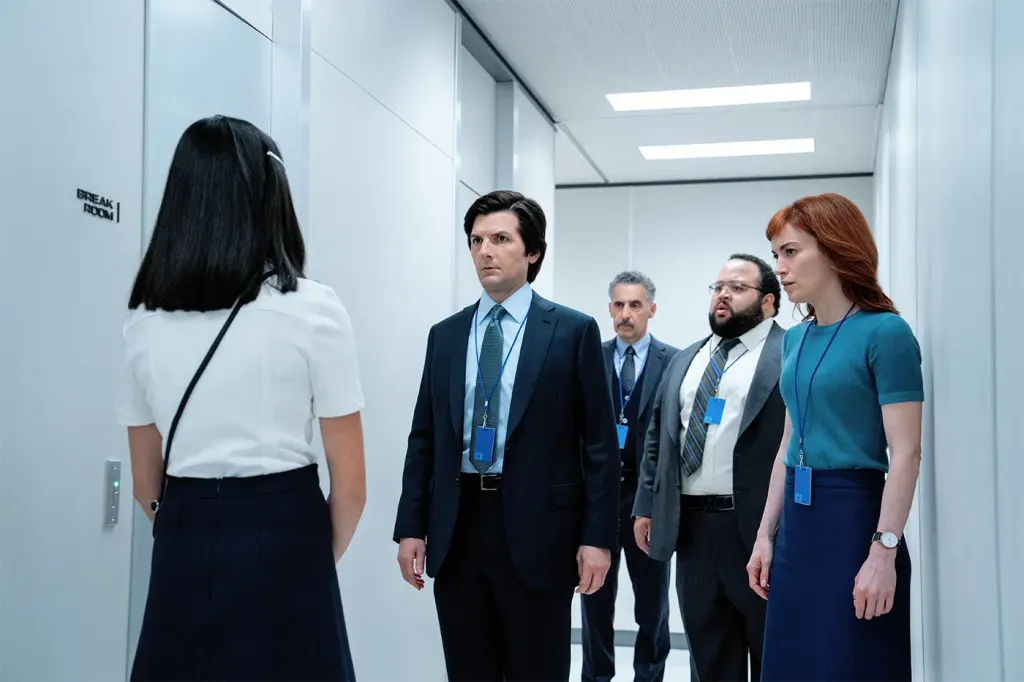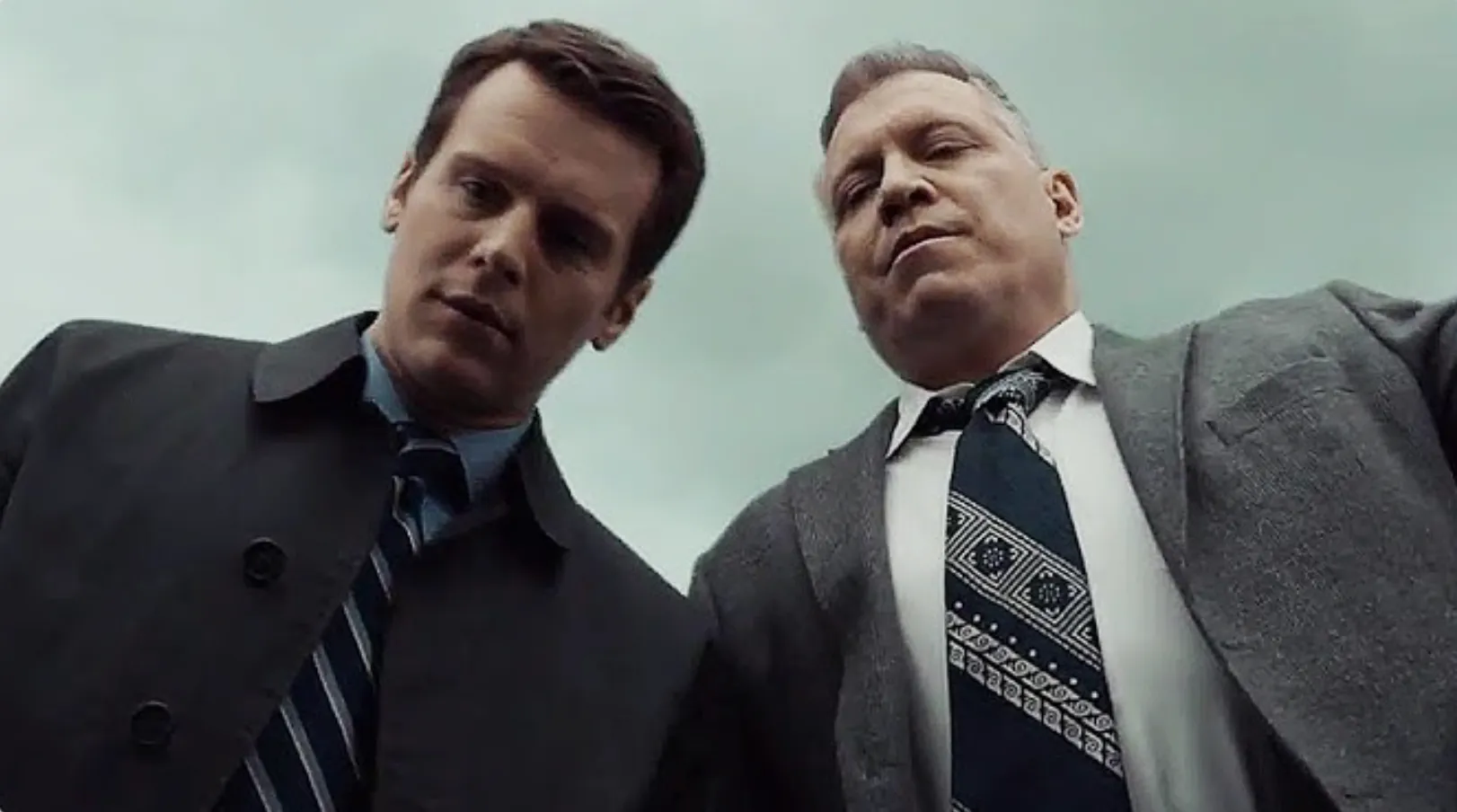

Mindhunter deliberately ends without resolution because real evil doesn't offer narrative closure. David Fincher's psychological thriller refuses the comfort of solved cases and caught killers, instead forcing viewers to confront an uncomfortable truth: understanding evil doesn't eliminate it, studying monsters changes the people who do the studying, and some darkness never fully resolves. The show's "incompleteness" isn't a flaw—it's the entire point, and why it remains more disturbing than traditional crime procedurals years after its quiet cancellation.
There's a reason Mindhunter ends without answers, closure, or a final confrontation.
Most crime shows train us to expect resolution. The killer is caught. The case is closed. Justice arrives in the final act. Mindhunter refuses all of that. It studies evil not as a puzzle to be solved, but as a reality that never truly ends.
And that's why, years after Netflix placed it on indefinite hold, the series still feels unsettling in a way few shows manage.
What Mindhunter Is Actually About
Beyond the Procedural Framework
On the surface, Mindhunter looks like a procedural. FBI agents Holden Ford and Bill Tench interview serial killers to understand how their minds work, developing criminal profiling techniques in the late 1970s. But that framing is misleading.

This is not a story about catching criminals. It's a story about learning to live with the knowledge that some people cannot be fixed, explained away, or neatly contained. The show explores the birth of the FBI's Behavioral Science Unit, but its real subject is what prolonged exposure to evil does to the people studying it.
Holden, Bill, and psychologist Wendy Carr aren't heroes hunting monsters. They're observers, slowly realizing that understanding evil doesn't make it safer. It only makes it clearer. That realization is what gives the show its heavy, lingering weight—a psychological toll that accumulates with each prison interview and unsolved case.
The Cost of Hunting Monsters
Based on the 1995 book by real FBI profiler John E. Douglas, Mindhunter combines factual historical details with fictional narratives to explore criminal psychology's early development. Douglas himself advised the show's creators, lending authenticity to the portrayal of BSU's groundbreaking but psychologically devastating work.
The series ran for two critically acclaimed seasons between 2017 and 2019 before Netflix placed it on indefinite hold. Executive producer David Fincher explained the decision in 2023 candidly: the show cost approximately $20 million per episode, and viewership didn't justify such investment. "We didn't attract enough of an audience to justify such an investment," Fincher told French outlet Le Journal du Dimanche. "I don't blame them; they took risks to get the show off the ground."
But there's recent hope. In June 2025, star Holt McCallany revealed he'd met with Fincher to discuss potentially reviving Mindhunter as three two-hour movies rather than a full season. "There is a chance that it may come back as three two-hour movies, but I think it's just a chance," McCallany told CBR. "I know there are writers that are working, but David has to be happy with the scripts."
Why the Lack of an Ending Feels So Disturbing
The Absence of Narrative Comfort
Mindhunter ends without payoff because real-life evil doesn't offer one.
The interviews don't build toward a single breakthrough moment. Each conversation with killers like Ed Kemper, Jerry Brudos, and Monte Rissell strips away comforting illusions. There is no grand motive. No tragic backstory that makes everything click into place. Just patterns of control, violence, and emotional detachment repeated again and again across different people.
When Season 2 concludes with the Atlanta Child Murders case, the emotional impact feels muted, even disappointing to viewers expecting catharsis. But what Mindhunter shows instead is something closer to reality: the work continues, the damage accumulates, and the people studying evil are fundamentally changed by proximity to it.
There is no final chapter where everyone walks away intact. Because in reality, they don't.
Why Silence Creates Horror
Mindhunter has almost no traditional scares. No jump cuts. No dramatic violence displayed on screen. What makes it terrifying is restraint. Long silences. Calm voices describing horrific acts. Casual admissions of cruelty delivered over prison tables with fluorescent lighting humming overhead.
The killers aren't framed as monsters with supernatural abilities or cinematic flair. They're framed as people who found satisfaction in control and domination. That normality is far more disturbing than any stylized horror could achieve.
Ed Kemper, portrayed with unsettling charisma by Cameron Britton, exemplifies this approach. He speaks articulately about murdering his mother and decapitating co-eds with the same emotional register someone might use to discuss weather patterns. The horror comes from recognizing that extraordinary evil can exist in ordinary-seeming people.
This restraint is what makes Mindhunter linger. Unlike Monster anime, which explores human evil through a more traditional thriller structure, Mindhunter denies viewers any safe emotional exit. It doesn't give you permission to look away or find comfort in genre conventions.
Holden Ford and the Cost of Curiosity
When Understanding Becomes Contamination
Holden is the clearest example of why the show couldn't end cleanly.
He begins Season 1 with curiosity and confidence. He believes data, psychology, and systematic analysis can create control over criminal behavior. Over time, that belief erodes. His panic attacks aren't a subplot or character quirk—they're the direct consequence of staring too long into minds that don't reflect normal human limits or empathy.
Mindhunter quietly argues that understanding evil doesn't grant immunity from it. It leaks into the people who study it through a process forensic psychiatrists call vicarious trauma. Holden doesn't break because he's weak or unsuited for the work. He breaks because exposure has an inevitable cost that can't be paid back.
His girlfriend Debbie notices the changes first. He becomes distant, aggressive, less capable of normal human connection. He begins disclosing intimate personal details to serial killers while failing to maintain healthy boundaries in his actual relationships. The role-playing deteriorates—he starts believing he truly understands these killers in ways that make him special, unique, gifted.
That erosion of professional boundaries leads to dangerous miscalculations. The series ends with Holden experiencing a full panic attack inside a prison, reeling from a life-threatening error caused by his compromised judgment. There's no recovery montage. No lesson learned that restores equilibrium. Just damage that will likely never fully heal.
Bill Tench and the Evil That Comes Home
The Personal Cost of Professional Knowledge
If Holden shows the professional cost of studying serial killers, Bill Tench shows the personal one.
His adopted son's storyline remains one of the most uncomfortable elements of the series. The show refuses to confirm or deny anything definitively, mirroring its core philosophy: not everything becomes clear, not every fear gets resolved, and sometimes the worst possibilities remain suspended in permanent uncertainty.
Bill spends his career profiling violent behavior in convicted criminals, developing psychological frameworks to predict and understand brutal crimes. Then he faces the possibility that similar patterns might exist within his own home, in his own child. The show never gives him certainty because certainty would be dishonest.
Real evil doesn't announce itself clearly. Sometimes it just sits quietly at the dinner table. Sometimes it looks like a troubled child who might become something terrible, or might not. The ambiguity is what makes Bill's storyline so devastating—he knows too much about how these patterns develop, but that knowledge doesn't tell him what to do when he suspects his own son.
His wife Nancy can't understand why he seems so emotionally distant, why he can't separate work from home life. But how do you separate knowledge about human monstrosity from concerns about your own family? Holt McCallany's performance captures this internal collapse brilliantly—a man who thought professional compartmentalization was possible discovering too late that it isn't.
The Incompleteness Is the Message
Why Resolution Would Be Dishonest
When viewers say Mindhunter feels unfinished, they're reacting to the absence of narrative comfort that other crime shows provide. We're conditioned to expect closure, catharsis, and the restoration of order.
But thematically, the series ends exactly where it should. The Behavioral Science Unit is still in its early experimental phase. The crimes are still coming. The understanding is still incomplete and always will be.
That's the truth the show leaves you with: evil isn't a story with a third act. It's a condition society learns to live alongside without ever fully controlling or comprehending it.
By stopping where it does—whether permanently or until potential future films—Mindhunter avoids turning real suffering into entertainment closure. It respects the reality it's portraying instead of exploiting it for satisfying narrative arcs. The BTK Killer storyline, which Fincher originally planned to extend through five seasons culminating in the 2005 arrest, remains unresolved. The character appears in brief, chilling scenes throughout both seasons, a reminder that some killers remain active for decades.
The Atlanta Child Murders and the Limits of Profiling
Season 2's focus on the Atlanta Child Murders represents Mindhunter at its most ambitious and uncomfortable. The case highlights criminal profiling's inherent limitations and the racial biases embedded in the criminal justice system.
Holden's psychological models lead him to profile the killer as likely being Black—a conclusion that much of Atlanta's Black community reasonably views as racist police prejudice disguised as science. The show doesn't shy away from this critique. It presents profiling not as infallible science but as an imperfect tool that can reinforce existing prejudices while claiming objectivity.
When a suspect is eventually caught in the season finale, the resolution feels unsatisfying because the real case itself was unsatisfying. Questions remain. Doubts linger. The "closure" doesn't actually close anything for the families or the community. This refusal to manufacture false certainty separates Mindhunter from typical crime procedurals that need tidy resolutions.
Why It Still Matters
The Show That Refused to Glamorize Evil
In an era where true crime often borders on spectacle and entertainment, Mindhunter stands apart. It doesn't glamorize killers or present them as fascinating puzzles to be admired. It doesn't promise insight that makes everything make sense or transforms horror into comprehensible narrative.
Instead, it asks harder questions: What does prolonged exposure to evil do to people? Is understanding always a good thing? How much darkness can you study before it fundamentally reshapes who you are?
Those questions don't expire with changing television trends. That's why the show still feels relevant despite its uncertain future, and why fans continue calling for its return years after Netflix placed it on hold.
The series influenced how streaming platforms approach psychological thrillers. Its DNA appears in newer shows attempting similar restraint and thematic depth. Writer Liz Hannah, who worked on Mindhunter, is now developing The God of the Woods for Netflix—a psychological thriller that channels similar atmospheric tension without relying on sensationalist scares.
For fans seeking similar psychological depth, Welcome to the NHK explores mental health and isolation with comparable unflinching honesty, while Perfect Blue examines identity dissolution and psychological horror without supernatural safety nets.
The Uncomfortable Truth
Mindhunter doesn't feel incomplete because it failed to finish its story.
It feels incomplete because the story it's telling has no ending. Real evil doesn't wrap itself up cleanly. It doesn't wait for character arcs to resolve or audiences to feel satisfied. It exists, repeats, adapts, and continues long after the cameras stop rolling and the credits fade.
Mindhunter had the rare restraint to stop before pretending otherwise. It refused to manufacture closure where none exists in reality. It denied viewers the comfort of believing that understanding evil means controlling it, or that studying monsters doesn't fundamentally change the people who do the studying.
And that honesty—that willingness to leave audiences unsettled rather than satisfied—is exactly why, years later, it still disturbs anyone who watches closely enough. The incompleteness isn't a bug. It's the feature that makes Mindhunter one of the most psychologically accurate portrayals of criminal profiling's human cost ever created for television.
Whether it returns as three films or remains permanently unfinished, the show already accomplished what it set out to do: force viewers to sit with discomfort, confront the limits of understanding, and recognize that some darkness doesn't resolve. It just is.
Where to Watch: Both seasons of Mindhunter are currently streaming on Netflix.
Related: For more psychological thrillers exploring human darkness, read our analysis of why Monster anime feels more terrifying than any horror anime or discover why Perfect Blue still feels uncomfortable even today.
Frequently asked questions
Frequently asked questions
Why did Mindhunter end without an ending?
Mindhunter ends without closure because it mirrors real criminal psychology. Serial killers are rarely “resolved” in clean narrative arcs, and the show intentionally avoids artificial conclusions to reflect how real-world investigations often remain unfinished.
Was Mindhunter cancelled or put on hold?
Mindhunter was not officially cancelled, but placed on indefinite hold by Netflix. Creator David Fincher has stated that while the show was expensive to produce, a return is possible if the right format and scripts come together.
Is Mindhunter based on real events?
Yes. Mindhunter is inspired by the book Mindhunter: Inside the FBI’s Elite Serial Crime Unit by John E. Douglas. Many interviews and cases in the series are based on real serial killers and historical investigations, though some characters are fictionalized.
Why does Mindhunter feel more disturbing than other crime shows?
Mindhunter avoids sensationalism. It focuses on calm conversations, psychological manipulation, and the long-term mental toll of studying violent criminals. The lack of resolution and emotional distance makes it feel more realistic — and more unsettling — than typical crime dramas.