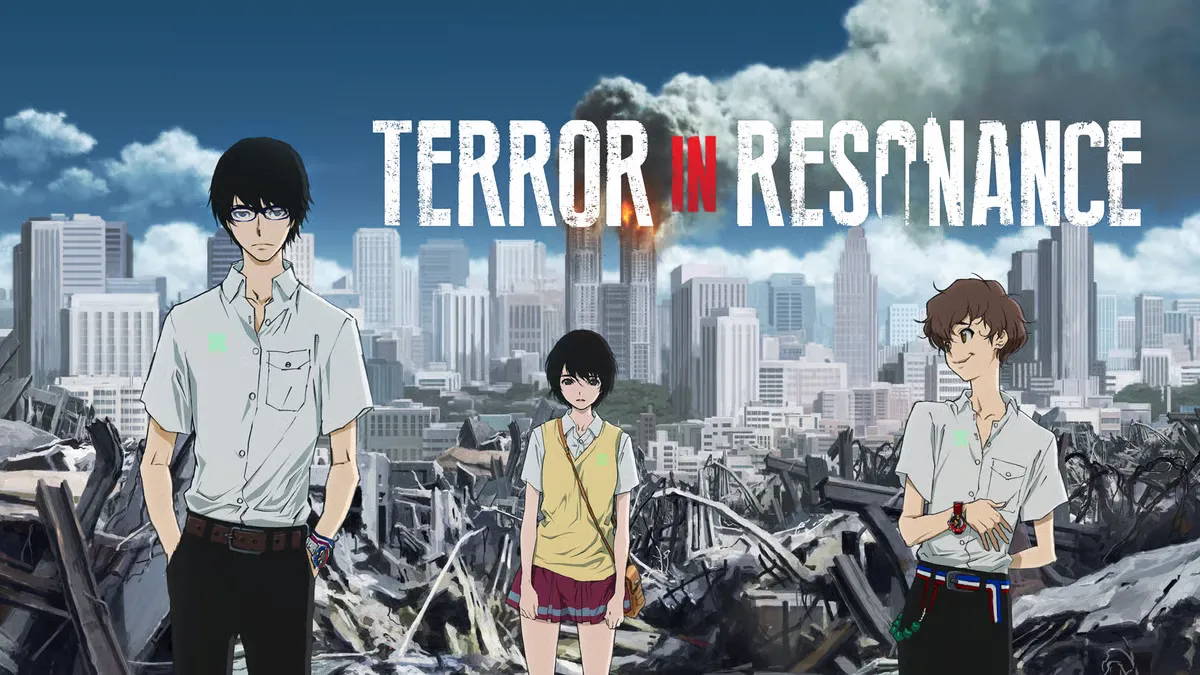

Zankyou no Terror delivers stunning visual direction, a haunting Yoko Kanno soundtrack, and cinematic animation under Shinichirō Watanabe. However, its ambitious themes about terrorism and systemic abuse falter due to rushed pacing, an underdeveloped second half, and the uneven introduction of antagonist Five. The result is a beautiful, mature anime whose style often outpaces its narrative execution.
Zankyou no Terror looks like a masterpiece.
The color palette—muted grays, blacks, whites punctuated by sudden vivid moments—creates oppressive beauty. The animation flows with cinematic quality rarely seen in TV anime. Yoko Kanno's haunting score elevates every scene into something that feels profound.
Then the story tries to match that aesthetic ambition, and the cracks start showing.
This isn't a bad anime. Far from it. But it's a frustrating one—full of moments that hint at brilliance while never quite achieving it. A show where the style occasionally overwhelms the substance it's trying to convey.
What Zankyou no Terror Gets Right
Before examining where it falters, recognizing what the series achieves matters.
The Visual Direction
MAPPA's animation is stunning. Watanabe and his team frame Tokyo as both beautiful and oppressive—clean lines, empty spaces, a city that feels isolated despite millions of people.
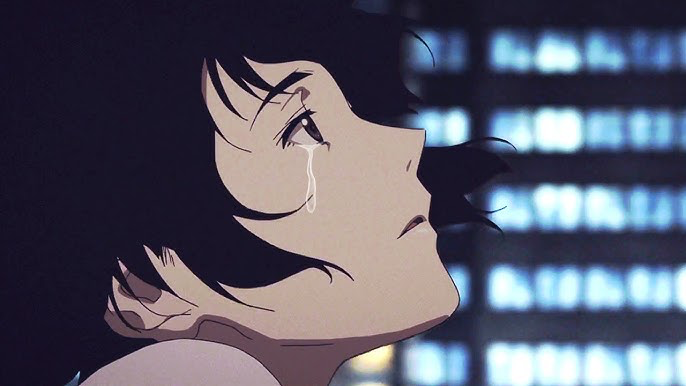
The "camerawork" mimics live-action film. Dynamic lighting shifts. Imperfect angles. Depth of field that draws focus to specific elements while blurring backgrounds.
Two scenes in particular—the motorcycle chase and the ferris wheel conversation—rank among anime's most beautifully animated and directed moments. They're referenced constantly in discussions about the series because they showcase what peak anime production looks like.
Yoko Kanno's Soundtrack
Watanabe stated Icelandic band Sigur Rós inspired the series. That influence permeates Kanno's composition—atmospheric post-rock builds, melancholic piano, electronic textures that create unease.
The opening theme "Trigger" by Yuuki Ozaki starts calm before spiraling into controlled chaos—mirroring Nine and Twelve's precisely planned terror. The ending "Dareka, Umi o" by Aimer captures Lisa's drowning desperation through escalating tension.
Background tracks range from panic-inducing ("Saga") to eerily peaceful ("Walt"). The music doesn't just accompany scenes—it defines their emotional texture.
Mature Themes Handled Seriously
Terrorism as anime subject matter was uncommon in 2014. Zankyou no Terror approaches it without sensationalism or cheap thrills.
Nine and Twelve aren't generic villains. They're traumatized children weaponized by the system they're now attacking. Their "terrorism" deliberately avoids casualties—elaborate puzzles warning authorities before detonations, ensuring buildings empty before destruction.
The series treats this moral complexity with rare seriousness for the medium. Similar to how Monster explores the nature of evil through Johan Liebert, Zankyou no Terror examines whether victims of systemic abuse can become terrorists while remaining sympathetic.
an Liebert, Zankyou examines whether victims of systemic abuse can become terrorists while remaining sympathetic.
Where the Narrative Falters
The problems emerge around episode 5, and they never fully resolve.
The Introduction of Five
Five—another experiment survivor obsessed with defeating Nine—disrupts the careful tension Watanabe built across early episodes.
Her character functions as obstacle rather than person. The obsessive rival trope feels tired: genius antagonist willing to sacrifice innocents to "win the game" against the protagonist. Her motivation reduces to "Nine is the only thing resembling family," which isn't explored deeply enough to justify her actions.
When she dies after kissing Nine, it feels unearned. The series wants this moment to carry emotional weight it hasn't developed.
Critics and fans consistently cite Five's arc as where the show loses momentum. Not because she's unlikeable—flawed characters work—but because she represents conventional anime storytelling intruding on something trying to transcend those conventions.
Pacing Issues in 11 Episodes
Eleven episodes isn't enough for what Zankyou no Terror attempts.
The experimental facility backstory, Shibazaki's investigation, Nine and Twelve's plan, Lisa's integration, Five's arrival, the nuclear threat resolution, and the emotional conclusion—all compressed into limited runtime.
Early episodes breathe. They take time establishing atmosphere, character dynamics, the puzzle structure. The second half rushes, jumping between plot points without letting them develop.
This feels particularly evident in Lisa's character arc. She starts as bullied teenager with overbearing mother, gets swept into Sphinx's world, becomes emotional anchor for Twelve, then mostly disappears until the climax. Her potential never fully realizes because there isn't time.
Themes That Don't Fully Commit
The series wants to critique government experimentation on children, surveillance state expansion, how systems create the threats they claim to fight against, and whether justice exists for the systemically abused.
But it engages these topics carefully—perhaps too carefully. We learn Nine and Twelve were part of Rising Peace Academy's experiments creating "savant" child weapons, but we don't see the full horror. The series tells us it was bad rather than showing the trauma's depth.
This restraint creates tonal inconsistency—visual direction that feels heavy and oppressive, themes that gesture toward systemic critique, yet a story that pulls punches when confronting its own darkness.
The Characters: Compelling But Incomplete
Nine and Twelve
The central duo works because they feel like actual teenagers rather than anime archetypes.
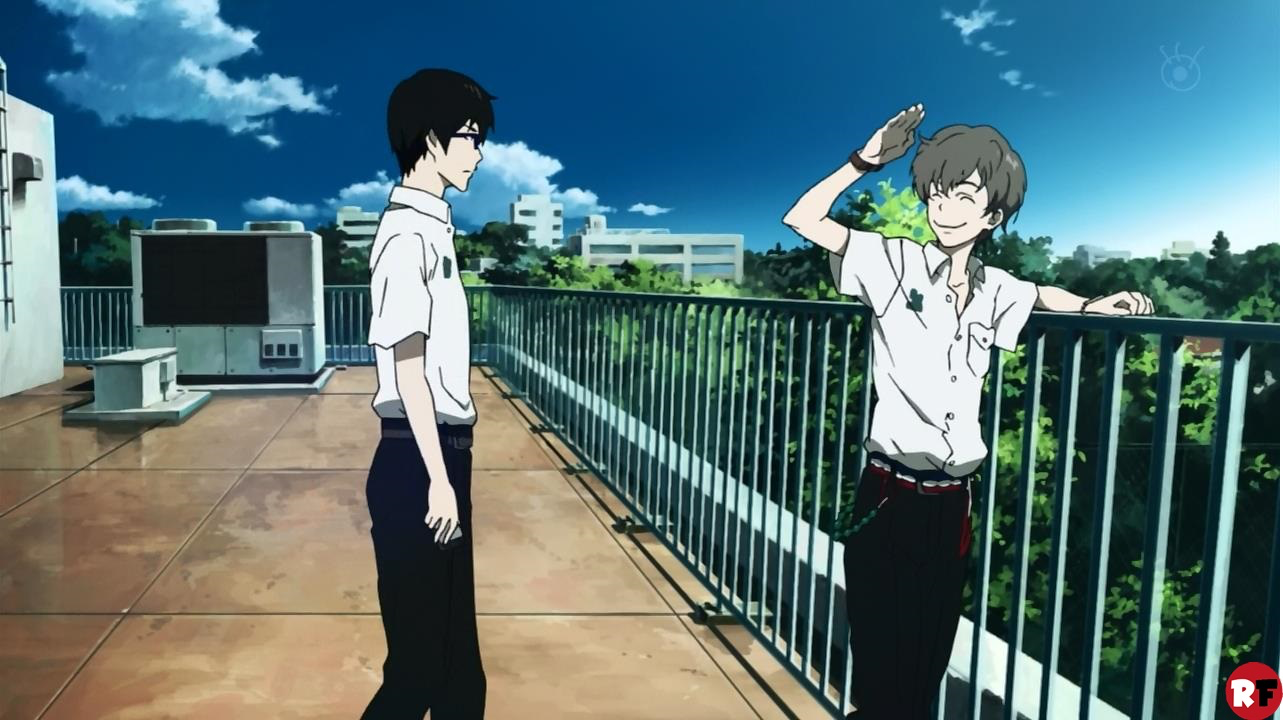
Nine is calculating, cold, driven—but not emotionless. His rare smiles or moments of vulnerability hit harder because of their scarcity. Twelve provides warmth and humanity, making their partnership feel balanced rather than one character serving as foil.
Their relationship carries the series. The tragedy isn't just what was done to them—it's that they found each other in that darkness and decided their response would be precision rather than mindless destruction.
What's missing is deeper exploration of their individual trauma. We understand they suffered, but the show keeps that suffering at arm's length.
Lisa Mishima
Lisa divides viewers more than any character. Some find her realistic portrayal of anxiety and powerlessness compelling. Others consider her frustrating and underdeveloped.
Both perspectives have merit. Lisa functions as audience surrogate—ordinary person caught in extraordinary circumstances. Her weakness and fear feel human compared to Nine and Twelve's composed competence.
But her character arc stalls. After joining Sphinx, she doesn't grow as much as she drifts through remaining episodes. The series doesn't know what to do with her beyond making Twelve care about someone, which reduces her to narrative device.
Lisa feels real, but reality alone isn't enough—a character still needs narrative direction, and the series never fully gives her one.
Shibazaki
The detective investigating Sphinx offers the most complete character arc.
Unlike younger protagonists, Shibazaki operates from experience and weariness. He's been demoted for past conflicts with authority. He recognizes institutional corruption because he's lived through it.
His gradual understanding of Nine and Twelve—recognizing them as victims rather than simple criminals—provides the show's moral center. When he finally meets them, the mutual respect despite opposing sides creates genuine tension.
If the series has a "hero," it's Shibazaki. He represents what adults should do when systems fail children: actually try to understand and help rather than just enforce order.
What the Ending Delivers (And What It Doesn't)
The finale attempts bittersweet resolution.
Nine and Twelve's plan succeeds—exposing the experiments, forcing acknowledgment of institutional abuse. They achieve their goal of making their suffering visible, refusing to let society forget what was done to them.
But they die. Not dramatically in conflict, but from radiation poison from Five's nuclear bomb. They spend final moments together, Twelve already gone, Nine watching fireworks Lisa promised she'd see with them.
It's emotionally effective. The ending doesn't feel manipulative despite tragic deaths because it flows from established consequences. Their exposure plan required becoming fugitives. Five's escalation introduced nuclear elements. Radiation doesn't care about narrative satisfaction.
Yet something feels unfinished. The series gestures toward systemic critique but resolves through individual tragedy. The experiments get exposed, but will anything actually change? Does their sacrifice accomplish more than making people briefly pay attention before moving on?
These questions linger because the show raises them without fully exploring answers.
Why It Still Matters
Despite frustrations, Zankyou no Terror remains worth experiencing.
The Ambition Alone Deserves Recognition
Most anime don't attempt what this series tried. Terrorism as subject. Child experimentation. Institutional critique. All wrapped in artistic presentation prioritizing mood and atmosphere over exposition.
The fact it partially succeeds makes it more interesting than shows playing it safe.
The Production Quality Is Legitimately Excellent
Even acknowledging narrative issues, the visual and audio craftsmanship is undeniable.
Watanabe's direction, MAPPA's animation, Kanno's soundtrack—these elements showcase what anime can achieve technically and artistically. For viewers interested in anime that pushes visual storytelling boundaries, this remains essential viewing.
It Treats Serious Subjects Seriously
In medium often criticized for immaturity or exploitation, Zankyou no Terror approaches difficult themes with respect.
It doesn't glorify terrorism. It doesn't make light of child abuse. It doesn't pretend systems always work. The seriousness with which it handles these topics—even imperfectly—matters.
The Watanabe Factor
Part of the disappointment stems from expectations.
Shinichirō Watanabe directed Cowboy Bebop—arguably anime's most universally acclaimed series. He followed with Samurai Champloo, which blended period setting with modern sensibilities brilliantly. Space Dandy demonstrated his range with episodic comedy.
Zankyou no Terror was positioned as his return to serious drama. The hype was massive. When it didn't match Bebop's perfection, backlash emerged.
This creates unfair standard. Judged independently, the series succeeds more than it fails. But compared to Watanabe's best work, the flaws become more visible.
Directors shouldn't be judged solely against their peaks. Yet the expectation exists whether fair or not.
Who Should Watch This
Watch Zankyou no Terror if you value:
- Stunning visual direction and cinematography in anime
- Yoko Kanno's atmospheric compositions
- Serious attempts at mature subject matter
- Psychological thriller anime with artistic ambitions
- Stories about systemic abuse and institutional failure
Skip if you need:
- Perfectly executed narratives without pacing issues
- Fully developed character arcs for entire cast
- Themes explored to their deepest conclusions
- More than 11 episodes to tell complete story
The series works best for viewers who appreciate ambitious attempts even when they don't fully succeed. If you need flawless execution, the second-half stumbles will frustrate.
Final Thoughts: Beautiful Imperfection
Zankyou no Terror is gorgeous anime about ugly truths, executed with style that sometimes overwhelms the substance beneath.
It's visually stunning. Musically transcendent. Thematically ambitious. And narratively flawed in ways that prevent it from achieving the masterpiece status its production quality deserves.
But those flaws make it more interesting than safe shows that execute modest ambitions perfectly. Zankyou no Terror reached for something difficult and mostly succeeded despite limitations.
The style couldn't fully save the pain—narrative pain from pacing issues, thematic pain from incomplete exploration, and the literal pain of trauma the characters never escape.
Yet that's almost fitting. The series is about how even beautiful gestures can't erase what was done. Nine and Twelve's elaborate plans, Lisa's desperate hope, Shibazaki's attempts at justice—none of it changes the fundamental tragedy.
Zankyou no Terror doesn't resolve its pain—it leaves it visible, unresolved, and quietly burning, which may be its most honest choice.