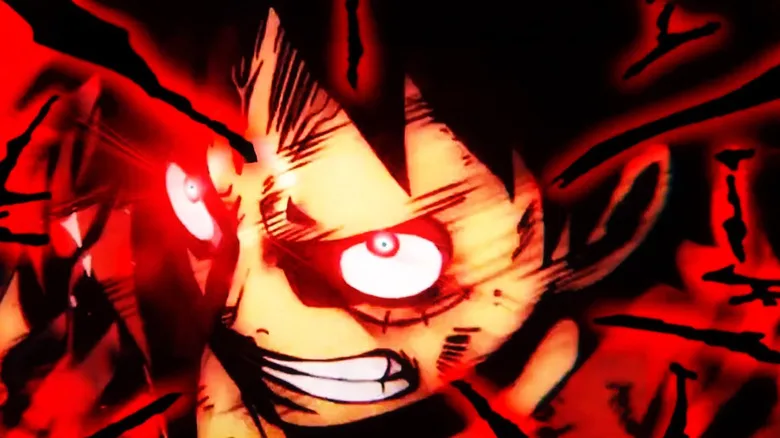
What Is Haki in One Piece? All 3 Types and Advanced Forms Explained
Rushabh Bhosale
Updated
Haki is the power to turn will, awareness and fighting spirit into something usable in battle. In One Piece, it is divided into three main categories: Observation Haki, Armament Haki and Conqueror’s Haki. The first two can be developed through training, while Conqueror’s Haki is an innate quality possessed only by certain people.
That basic answer is simple. The confusing part is everything that comes later: Future Sight, hardening, emission, internal destruction, Ryuo and Conqueror’s coating. These are not six extra Haki types. Most are advanced applications of the original three.
This explanation focuses on abilities already established across the anime’s major arcs. It avoids current manga-only revelations.
What Is Haki in One Piece?
Haki is best understood as a combat system built around willpower. It allows fighters to sense things ordinary perception cannot, reinforce themselves or their weapons, and in rare cases overwhelm other people through sheer force of spirit.
It also solves one of One Piece’s biggest combat problems. Devil Fruits can produce bizarre abilities, including bodies that conventional attacks cannot easily touch. Haki gives non-Devil Fruit fighters a way to compete without turning every important battle into a contest of who has the stranger supernatural power.
Haki existed in the story before the terminology was fully explained. Once Silvers Rayleigh teaches Luffy the system during the two-year training period, earlier moments become easier to understand and later fights start using Haki much more explicitly.
The Three Types of Haki Explained
1. Observation Haki: sensing what you cannot see
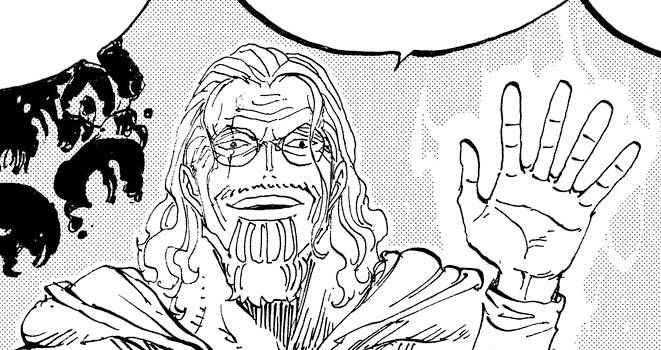
Observation Haki, or Kenbunshoku Haki, expands a fighter’s perception. A user can sense the presence of people around them, read movement and intent, and react to attacks that would be difficult to follow with normal eyesight alone.
The exact strengths vary by user. Some characters specialize in locating people over a wide area. Others are unusually sensitive to emotions or intentions. In combat, the most familiar application is anticipating an opponent’s next movement.
Observation Haki is not automatic invincibility. Knowing an attack is coming does not guarantee that your body is fast enough to evade it, and a user’s emotional state can interfere with the concentration needed to use advanced perception consistently.
Future Sight is advanced Observation Haki
Future Sight pushes Observation Haki beyond reading immediate intent. Skilled users can perceive events a short distance into the future. Charlotte Katakuri demonstrates the technique during Whole Cake Island, and Luffy develops his own use of it through their fight.
The important distinction is that Future Sight is not a fourth Haki category. It is an advanced level of Observation Haki.
2. Armament Haki: turning will into armor
Armament Haki, or Busoshoku Haki, lets a fighter reinforce their body or weapon. It improves offensive and defensive capability and, crucially, allows attacks to interact with Devil Fruit users whose bodies would otherwise make ordinary physical strikes ineffective.
The familiar black coating seen on fists, swords and other weapons is commonly associated with Armament hardening. Swordsmen can apply Haki to blades, while close-range fighters use it to make punches, kicks and blocks far more dangerous.
Armament does not simply switch off a Devil Fruit. A Haki-coated punch can hit a Logia user’s real body, for example, but the opponent still retains their Devil Fruit abilities. That difference matters when comparing Haki with powers that actually nullify supernatural abilities.
Advanced Armament: emission and internal destruction
Armament Haki becomes more complicated in Wano. Instead of keeping Haki tightly around the body, a skilled user can make it flow outward. This allows force to be projected beyond the immediate surface of a punch or weapon.
A more advanced application sends that power into the target so damage occurs from within. This is especially important for Luffy because Kaido’s exterior is extraordinarily difficult to damage through conventional attacks.
Is Ryuo a different type of Haki?
No. Ryuo is the term used in Wano for Haki, with the local teaching placing particular emphasis on the idea of flow. English-language discussions often use “Ryuo” as shorthand for advanced Armament, but it should not be treated as a separate fourth branch of the power system.
3. Conqueror’s Haki: imposing your will on others
Conqueror’s Haki, or Haoshoku Haki, is fundamentally different from the other two. It cannot simply be learned by anyone who trains hard enough. A person either possesses the potential for it or does not.
Its basic application projects the user’s will outward. People who cannot withstand that pressure can lose consciousness without being physically struck. This makes Conqueror’s Haki spectacular against crowds, but knocking out weak opponents is only the beginning of what the ability can do.
Characters associated with exceptional ambition, leadership and the qualities of a ruler are the ones most often revealed to possess it. Luffy, Shanks and several of the world’s strongest pirates are among its prominent users.
What Is Advanced Conqueror’s Haki?
The biggest upgrade comes when Conqueror’s Haki stops being only an aura that overwhelms weaker people. A small number of elite fighters can infuse or coat their attacks with it.
Luffy realizes this during his battle with Kaido. The discovery explains why possessing Conqueror’s Haki and being able to weaponize it are two very different achievements. Many characters can release the basic form; far fewer can use it at the highest combat level.
Visually, powerful Haki clashes are often accompanied by black lightning-like effects, but visual effects alone should not be treated as a perfect diagnostic rule. The story’s dialogue and context are more reliable than assuming every similar animation means advanced Conqueror’s coating.
Can a Character Use More Than One Type of Haki?
Yes. Haki types are not mutually exclusive. A fighter can learn both Observation and Armament, and someone born with Conqueror’s potential can develop that alongside the other two.
Luffy is the clearest example because his progression lets the audience learn the system with him. He trains the fundamentals under Rayleigh, develops Future Sight through Katakuri, improves his Armament applications in Wano and then learns to apply Conqueror’s Haki directly to high-level combat.
Haki vs Devil Fruits: Which Is More Important?
One Piece deliberately avoids making this a clean either-or answer. A brilliant Devil Fruit can completely reshape a battle, while exceptional Haki can let a fighter challenge enemies whose abilities would otherwise seem impossible to handle.
The strongest characters often combine systems rather than choosing one. Luffy’s later fighting style is powerful because his Devil Fruit abilities, physical creativity and several forms of Haki reinforce one another.
That matters even more as the anime moves through the One Piece Elbaph arc, where understanding the series’ established power systems makes major confrontations much easier to follow.
Why Haki Can Feel Confusing
The terminology is the main problem. Fans often talk about “advanced Haki” as if it were one universal transformation, even though Observation, Armament and Conqueror’s each develop in different ways.
The simplest way to remember the system is this: Observation perceives, Armament reinforces, and Conqueror’s overwhelms. Future Sight belongs to Observation. Emission and internal destruction belong to advanced Armament. Conqueror’s coating is the elite combat application of Conqueror’s Haki.
If you are catching up rather than revisiting individual fights, the One Piece filler list helps separate skippable material from worthwhile anime-original episodes, while the breakdown of how long One Piece takes to watch gives a realistic idea of the commitment.
The Simple Answer
Haki in One Piece is a three-part power system built around will and perception. Observation Haki lets fighters sense and anticipate. Armament Haki reinforces bodies and weapons and lets users strike otherwise difficult Devil Fruit bodies. Conqueror’s Haki projects an exceptional user’s will and, at its highest known level in the anime, can be infused into attacks.
Future Sight, Ryuo-style flow, internal destruction and Conqueror’s coating make the system look larger than it is, but they all grow from those three foundations. Once that distinction is clear, One Piece’s later battles become much easier to read.
Tags
Sources
Frequently Asked Questions
What are the three types of Haki in One Piece?
The three basic categories are Observation Haki, Armament Haki and Conqueror’s Haki. Observation focuses on sensing, Armament strengthens offense and defense, and Conqueror’s imposes the user’s will on others.
Can everyone learn Conqueror’s Haki?
No. Unlike Observation and Armament, Conqueror’s Haki is an innate quality that only certain people possess. Training can improve its control and application, but it cannot simply be learned from scratch.
Is Ryuo a fourth type of Haki?
No. Ryuo is Wano’s term for Haki, especially the concept of making Armament Haki flow. It is not a separate fourth category.
What is Luffy’s Future Sight?
Future Sight is an advanced application of Observation Haki that lets a sufficiently skilled user perceive events a short time before they happen.
Next up
One Piece Elbaph Arc: Release Schedule & Story Setup
The One Piece Elbaph arc began April 5, 2026 and is currently airing. See the new 26-episode annual plan, streaming schedule, key characters and story setup.