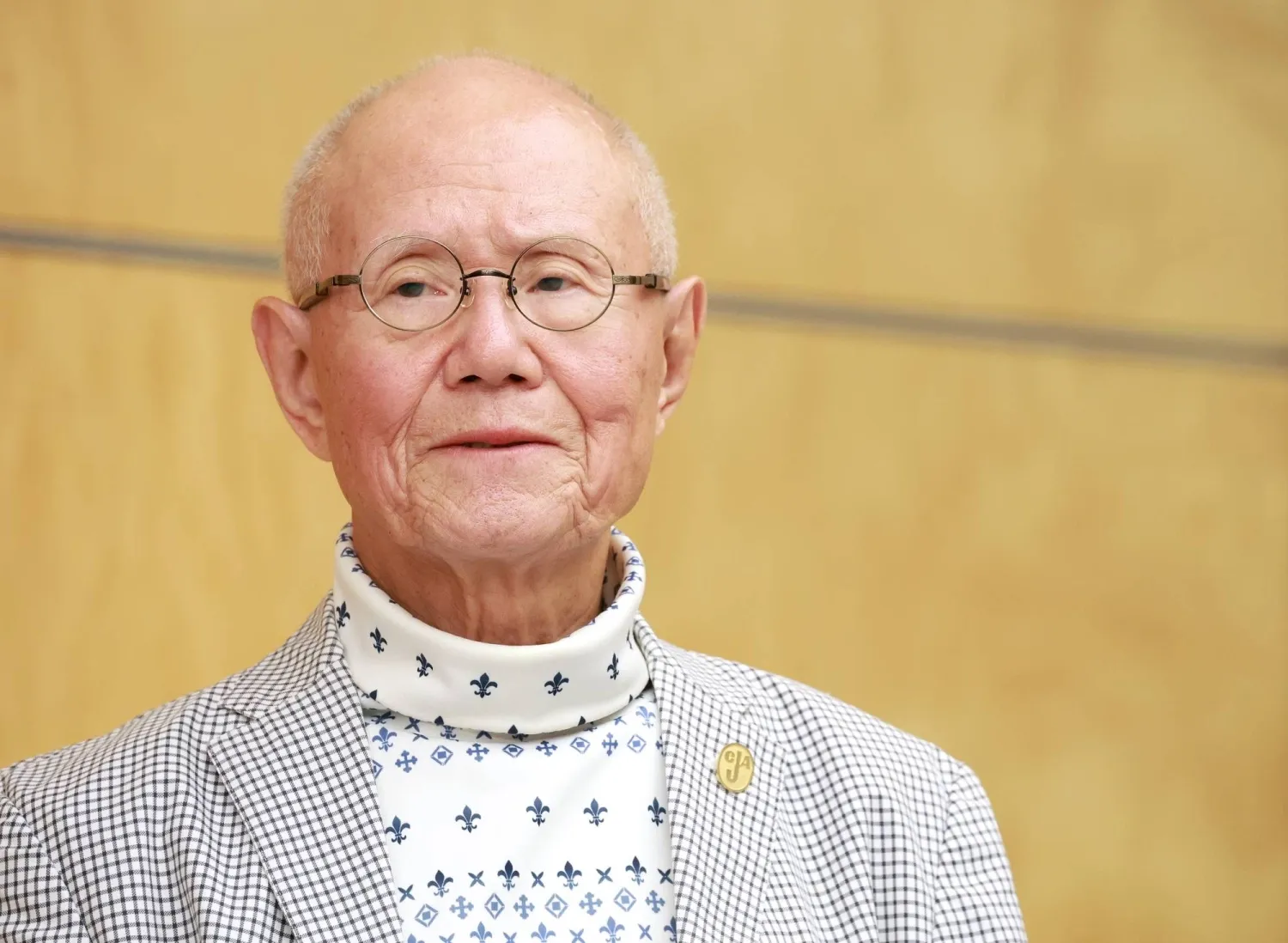

Tetsuya Chiba, the celebrated manga artist who illustrated Ashita no Joe and helped define Japan's sports-manga tradition, died on October 22, 2026, at a Tokyo hospital. He was 87. His death was announced on October 27 by publisher Kodansha and reported by major Japanese news outlets. Chiba's legacy reaches well beyond one boxing story: his work gave emotional weight to underdogs, influenced later manga creators and helped establish sports drama as a serious form of popular storytelling.
Chiba's family held a private funeral. His wife, Yukiko, thanked readers and those who had supported his work over a roughly 70-year career in a statement released through Shogakukan. The family asked people not to send flowers or condolence gifts. Japanese wire service Jiji Press reported myelodysplastic syndrome as the cause of death; the Associated Press noted that Kodansha's announcement itself did not specify a cause.
The artist behind Joe Yabuki
For many readers, Chiba's name will always be attached to Ashita no Joe, also known as Tomorrow's Joe. Serialized in Weekly Shonen Magazine from 1968 to 1973, the manga was written by Asao Takamori, the pen name of Ikki Kajiwara, and illustrated by Chiba. That division of credit matters: Chiba was the artist and co-creator of the landmark series, not its sole writer.
The story follows Joe Yabuki, a troubled young man who finds purpose in boxing. It is remembered for its intense matches, but its staying power comes from the characters' pride, loneliness, sacrifices and imperfect choices. Joe's victories are rarely simple celebrations. Training changes his body and his relationships, and the story repeatedly asks what a fighter gives up to keep moving forward.
Its popularity was extraordinary. The Associated Press recalled that fans once organized a symbolic funeral for a character from the series. That response is a reminder of how deeply the manga's fictional lives resonated with Japanese readers. It was more than a weekly sports adventure; for many, it was a story about dignity and determination in a changing society.
Why Ashita no Joe changed sports anime
The manga's influence carried into television. The original Ashita no Joe anime began airing on April 1, 1970, and ran for 79 episodes, according to the official TMS Entertainment series listing. Director Osamu Dezaki helped translate Chiba's drawings and the manga's emotional intensity into animation. A later television continuation, Ashita no Joe 2, brought the remaining story to another generation.
The achievement is not simply that Ashita no Joe made boxing popular. It showed how a sports narrative could be built around a character's psychology and social circumstances rather than a neat sequence of tournaments. Joe can be reckless, stubborn and difficult to admire, yet the audience is asked to understand why the ring matters to him. That kind of complexity remains a useful standard for sports stories.
Modern boxing fans may recognize echoes of that tradition in Hajime no Ippo, although the two works have different tones and goals. Our look at how Hajime no Ippo portrays the cost of improvement explores the same underlying question: what does serious training demand from someone who refuses to quit? The comparison is an editorial connection, not a claim that every later boxing scene was directly copied from Chiba.
His career was bigger than one famous boxer
Chiba debuted professionally in 1956, first drawing stories for girls before moving into boys' magazines. His early sports work included the baseball manga Chikai no Makyu, while his later titles ranged across multiple disciplines. Ore wa Teppei explored kendo, Notari Matsutaro centered on sumo, and Ashita Tenki ni Naare followed golf. His catalog demonstrates how adaptable the sports-manga form could be when it treated competitors as people rather than collections of abilities.
He also made work informed by his own childhood. Born in Tokyo in January 1939, Chiba spent part of his early life in Japanese-occupied northeastern China. After Japan's surrender in 1945, his family endured danger and hardship before returning to Japan in 1946. Chiba later drew on those experiences in autobiographical stories and advocated for peace and freedom of expression, according to the Associated Press.
That background adds context to the empathy visible across his career. His characters frequently confront poverty, isolation, fear or the possibility of failure. Their effort matters because their circumstances matter. It is a sensibility that makes his stories worth revisiting even when the reader has no particular interest in boxing, kendo or golf.
Manga creators and publishers pay tribute
The response from fellow artists shows how far his influence extended. ORICON reported tributes from Hajime no Ippo creator George Morikawa and Kingdom creator Yasuhisa Hara, among others. Hara credited Chiba's encouragement after his own debut and acknowledged the role of the Chiba Tetsuya Award in supporting new talent. Other creators spoke about learning from the way Chiba depicted both winners and losers.
Kodansha praised his decades of work and his commitment to nurturing younger artists. The Chiba Tetsuya Award, associated with emerging manga talent for decades, is part of that legacy. Chiba also held leadership roles in the Japan Cartoonists Association and received Japan's Order of Culture in 2024, becoming the first manga artist to receive the honor, according to Jiji Press.
For readers who discovered sports manga through newer works, the tributes provide a useful bridge backward. Our separate coverage of Hajime no Ippo's announced English print omnibus offers a contemporary example of how boxing manga continues finding new audiences across generations.
What Tetsuya Chiba leaves behind
A career this long cannot be reduced to a single iconic panel or a list of awards. Chiba helped make sports manga a place where young people could be angry, fragile, funny and brave without becoming invincible. His drawings gave those emotions recognizable faces. His mentorship and advocacy then extended that influence to artists whose work readers enjoy today.
There is no need to claim that one person invented sports manga to understand the scale of this loss. Chiba was one of the form's defining figures, and Ashita no Joe remains a reference point because its central conflict is human rather than merely athletic. The manga asks what it means to pour everything into a dream, even when the outcome is uncertain. That question has not aged.
Sources
Associated Press, October 27, 2026: https://abcnews.com/Entertainment/wireStory/japanese-manga-artist-tetsuya-chiba-boxing-masterpiece-ashita-137596220
Jiji Press via Nippon.com, October 27, 2026: https://www.nippon.com/en/news/yjj2026102700555/japanese-manga-artist-tetsuya-chiba-dies-at-87.html
ORICON NEWS, October 27, 2026: https://www.oricon.co.jp/news/2489070/full/
FNN Prime Online family statement, October 27, 2026: https://www.fnn.jp/articles/-/1140629
TMS Entertainment official Ashita no Joe series listing: https://www.tms-e.co.jp/alltitles/1970s/029101.html
Frequently asked questions
Frequently asked questions
When did Tetsuya Chiba die?
Tetsuya Chiba died on October 22, 2026, at age 87. His death was publicly announced on October 27.
Did Tetsuya Chiba create Ashita no Joe?
He illustrated and co-created Ashita no Joe with writer Asao Takamori, the pen name of Ikki Kajiwara.