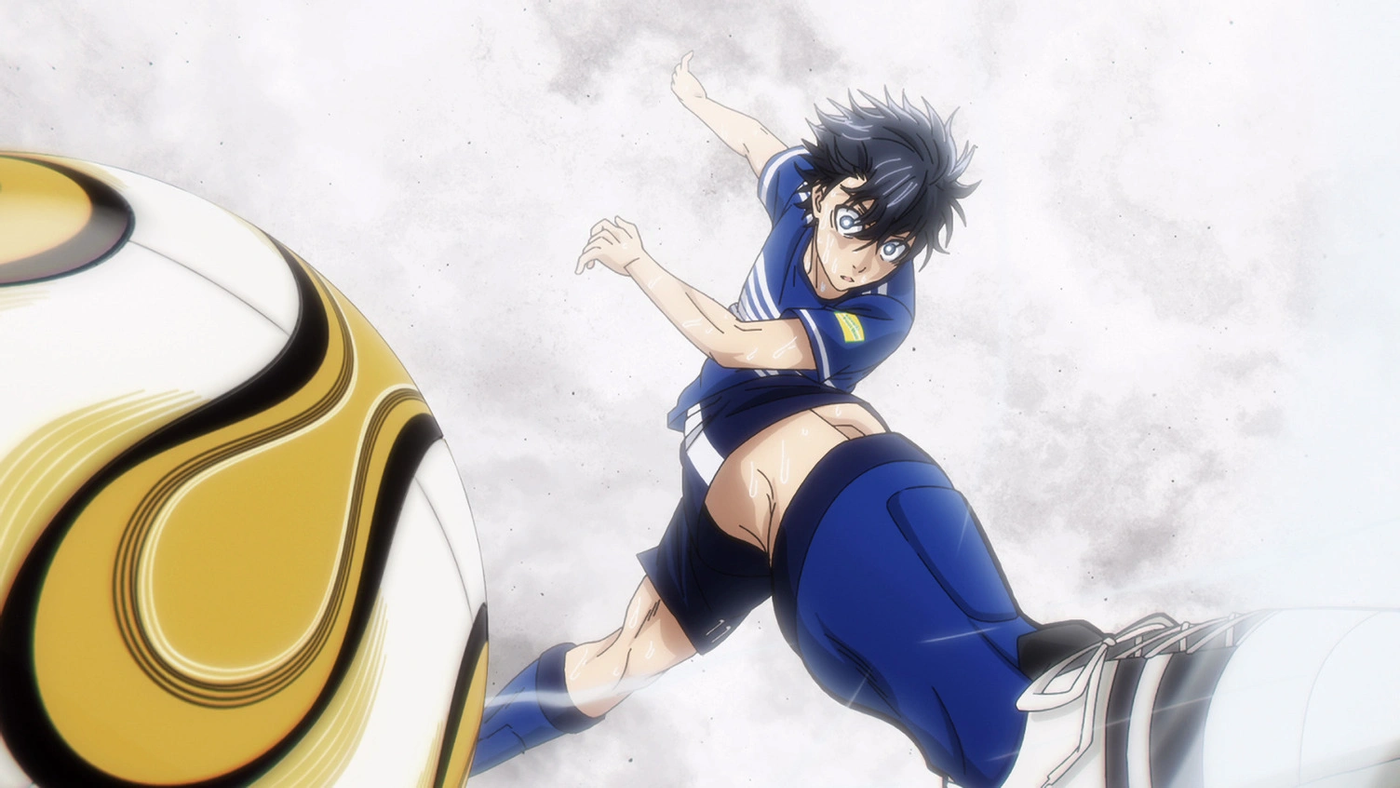
What Does Ego Mean in Blue Lock? Jinpachi Ego’s Philosophy Explained
In Blue Lock, “ego” does not simply mean being arrogant, hogging the ball or refusing to pass. It is the conviction to become the player who decides the match, then understanding what makes you capable of doing it. Jinpachi Ego builds the entire Blue Lock project around that idea because he believes Japan needs a striker who wants responsibility for the decisive goal rather than automatically disappearing into the safest team play.
That distinction matters. Blue Lock is deliberately theatrical about selfishness, but its best players do not succeed by ignoring everyone around them. Isagi constantly reads teammates and opponents. Bachira needs other players to bring out his creativity. Barou learns that domination requires adaptation. The series treats ego less as “never cooperate” and more as “never lose sight of the football only you can play.”
What does “ego” actually mean in Blue Lock?
The premise makes the basic definition unusually clear. Kodansha describes Blue Lock as a program created after Japan’s 2018 World Cup failure to find an “absolute ace striker,” gathering 300 elite young forwards and forcing them to compete for survival. The official anime likewise describes Jinpachi Ego as the coach with complete authority over the project, putting 300 high-school players through special survival training to create the world’s best striker.
Egoism is the mental engine of that selection process. A striker has to know what they want from a play, believe their own ability can produce the decisive result and be willing to act on that belief under pressure. For Isagi, that means moving toward the place where he can score instead of settling for the socially comfortable decision. For Barou, it appears as an almost tyrannical desire to remain the protagonist. For Bachira, it is tied to the freedom to play the football that excites him.
Those players can all be egoists without playing the same way. That is one of the most important points in the series: ego is not a technique. It is the personal drive that gives a player’s technique direction.
Why Jinpachi Ego thinks Japan needs an egoist striker
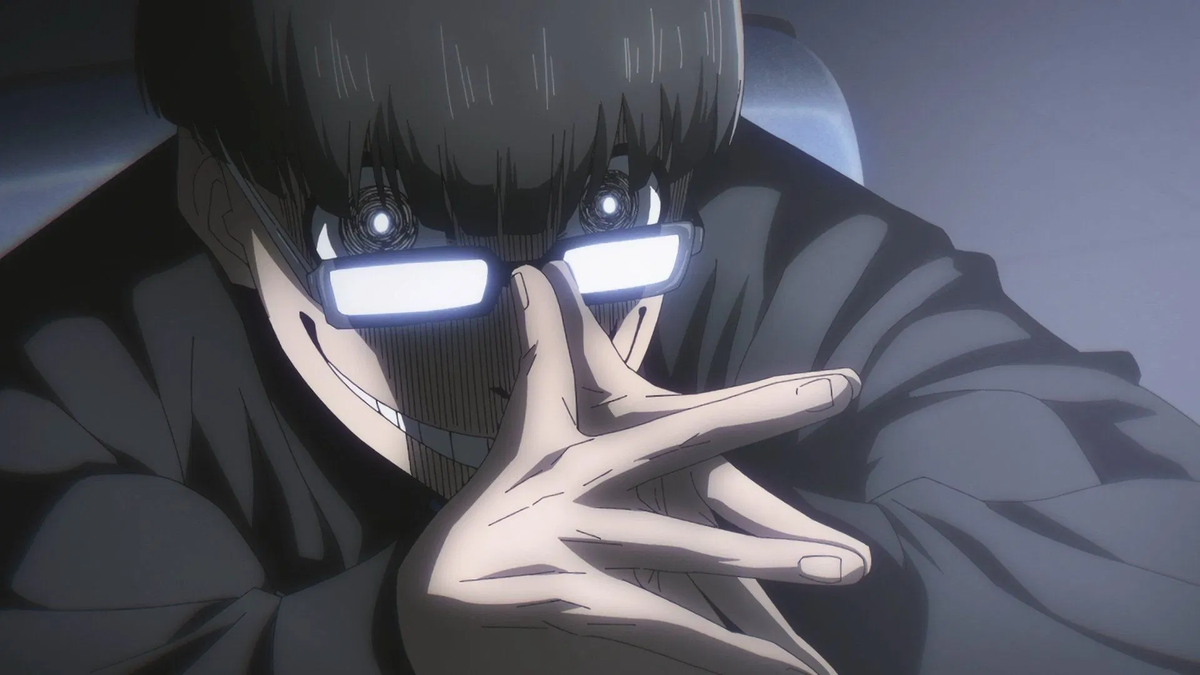
Blue Lock begins from an intentionally extreme diagnosis. Japan can produce disciplined, technically capable players, but Ego argues that this is not enough to create the forward who demands the ball when a match has to be won. His answer is to manufacture an environment where forwards cannot hide behind the group.
Every elimination format turns abstract ambition into a choice. Do you shoot or pass? Can you explain why your best play worked? What is your “weapon”? Can that weapon still create a goal when the opponent understands it? What happens when someone stronger takes away the conditions that made you comfortable?
This is why Ego’s philosophy is more demanding than simple confidence. Saying “I am the best” has no value if a player cannot reproduce the action that proves it. Blue Lock keeps forcing its strikers to connect desire with a repeatable way of winning.
Ego is not the same thing as selfishness
The easiest way to misunderstand Blue Lock is to take its slogans literally and conclude that good football means never passing. The matches themselves contradict that reading.
Isagi’s growth depends on understanding other players better, not less. He studies their movements, predicts their choices and finds the point where his own scoring route intersects with theirs. Rivalries produce combinations. Players “devour” each other by taking information from an opponent’s strength and adapting it to their own game. Even temporary cooperation can be intensely egoistic when both players are using the same sequence to reach their own ideal result.
The important question is who disappears inside the cooperation. Blue Lock rejects the forward who passes because taking responsibility feels frightening. It does not reject the forward who passes because that action creates the best route for them or their team to break the defense and eventually score.
Weapons turn ego into something useful
Blue Lock constantly asks players to identify a “weapon”: the quality they can reliably turn into an advantage. Speed, trapping, dribbling, physical strength, shooting technique and spatial awareness matter because ambition without a usable skill cannot decide a match.
This is where Isagi’s story becomes a useful explanation of Ego’s philosophy. He enters Blue Lock without the spectacular athletic trait that makes characters such as Chigiri or Nagi immediately obvious. His development comes from recognizing how well he reads the field, learning what situations make that perception valuable and repeatedly rebuilding his game around new information.
His ego is therefore not a personality transplant that turns him into Barou. It gives his analytical football a purpose: Isagi wants to be the one who scores. The field reading, positioning and later evolutions of his vision become tools for reaching that outcome.
Why Isagi is such a good example of Blue Lock egoism
The opening premise gives Isagi the perfect flaw for Blue Lock to attack. He knows the frustration of choosing the team-oriented option in a decisive moment and wondering what would have happened if he had trusted his own shot. Blue Lock does not simply teach him to become greedier. It teaches him to examine why a goal happens.
As the competition becomes harder, Isagi repeatedly discards versions of himself that no longer work. That willingness to rebuild is crucial. Ego in Blue Lock is not stubborn loyalty to one move. A player who insists on expressing themselves in a way that can no longer win is eventually trapped by their own identity.
That is why adaptation can be egoistic. Isagi changes because his objective does not change. He still wants to become the striker who determines the game, so he is willing to alter almost everything else.
Barou, Bachira and Nagi show that ego looks different for everyone
Barou is the clearest example of why ego cannot be reduced to arrogance. His “King” identity initially looks like the purest possible version of Ego’s lesson: dominate everyone and score yourself. But Blue Lock forces him to confront situations where his established style is no longer enough. His most important growth comes when his desire to remain the protagonist becomes strong enough to change the way he plays.
Bachira’s problem is different. His creativity is already exceptional, but his relationship with the imaginary “monster” and his desire to find players who understand him shape how he uses that talent. His development pushes him toward owning that creativity rather than depending on someone else to validate it.
Nagi begins from the opposite direction: absurd natural ability without the same hunger that drives many of the other forwards. His story asks what happens when talent finally discovers desire. Blue Lock uses these differences to make ego personal rather than a single personality type every striker must imitate.
Chemical reactions explain why egoists can still work together
One of Blue Lock’s smartest ideas is that strong individual ambitions do not automatically destroy teamwork. They can create better teamwork when players force each other into solutions neither could produce alone.
The series describes these clashes and combinations as chemical reactions. Two players do not have to become selfless friends. Their weapons, objectives and readings of the game can interact in a way that creates a new scoring possibility. Cooperation becomes dynamic because neither player has to erase the quality that makes them dangerous.
This becomes even more important as the level rises. The official Neo Egoist League material describes Isagi as having developed both his talent and his “ego” through brutal selections and the U-20 match, while Michael Kaiser is introduced as an elite U-20 ace with overwhelming confidence in his own ability. Their conflict is compelling precisely because elite football now contains several players who expect the game to revolve around their own route to victory.
Why the Neo Egoist League makes the philosophy more complicated
The philosophy becomes harder to dismiss as a gimmick once the story reaches the Blue Lock Season 3 material and the Neo Egoist League. The surviving players are no longer competing only inside Ego’s artificial facility. They are being measured against elite international systems, established professionals and players such as Kaiser who already possess world-class ambitions.
That progression matters because it tests whether Blue Lock’s ideas survive contact with a larger football world. Individuality has to coexist with tactics, roles, contracts, club structures and opponents who are just as ambitious. An ego that worked against inexperienced teenagers may fail when the player cannot adapt it to a professional environment.
In other words, the series gradually moves from “be selfish enough to shoot” toward a more interesting question: can you understand yourself well enough to reproduce your best football against people who are also trying to impose their own game?
Is Jinpachi Ego’s philosophy supposed to be realistic?
Blue Lock is a sports thriller, not a coaching manual. Kodansha itself categorizes the manga as both sports and thriller, and the story exaggerates elimination, psychology and individual rivalry to create drama. Treating every one of Ego’s speeches as literal real-world football instruction misses the genre.
What makes the philosophy effective in fiction is that it turns familiar sports questions into visible conflicts. When should a player trust themselves? What skill actually makes them valuable? Can they explain their success instead of calling it luck? Can a talented player change when opponents solve their favorite move? How much individuality can a team contain before it stops functioning?
Blue Lock answers those questions with maximalist language, glowing eyes and survival-game stakes. Underneath the spectacle, however, the central idea stays consistent: a striker needs a personal reason and a personal method for becoming decisive.
So, what makes someone a true egoist in Blue Lock?
A true Blue Lock egoist is not simply the loudest player or the one who shoots most often. The strongest version of the concept combines ambition with self-knowledge. The player knows the result they want, understands the weapon that can produce it, reads the environment around them and is willing to evolve when their current answer stops working.
That is why Isagi can cooperate constantly and still embody Ego’s philosophy. His awareness of everyone else does not reduce his ambition. It gives him more information with which to pursue it.
Blue Lock’s definition of ego is ultimately about refusing to become anonymous at the decisive moment. The series wants its strikers to understand exactly what they can do, then enter the most difficult part of the match believing that their football can change the result.
Tags
Sources
Frequently Asked Questions
What does ego mean in Blue Lock?
In Blue Lock, ego is the conviction to pursue the way you personally can decide a match, especially as a striker. It is not simply arrogance or refusing to cooperate.
Does Blue Lock say teamwork is bad?
No. Blue Lock repeatedly shows players combining their strengths. The difference is that cooperation is treated as a way for competing ambitions and individual weapons to produce goals, rather than a reason for a striker to erase their own scoring instinct.
Why did Jinpachi Ego create Blue Lock?
Ego was given control of the project to develop a world-class striker capable of helping Japan win the World Cup. The official anime describes him as putting 300 high-school players through survival-based training to produce the world's best striker.
Next up
What Is Metavision in Blue Lock? How Isagi’s Field Vision Works
What is Metavision in Blue Lock? Learn how Isagi uses peripheral vision, scanning and prediction, how it differs from spatial awareness, and its limits.