
The Hōgyoku is the tiny object behind some of Bleach's biggest betrayals. It explains why Rukia's arrest matters, how Aizen develops his Arrancar army, and why his final confrontation with Ichigo becomes a battle of constant evolution. Yet its power is widely misunderstood: the Hōgyoku is not a magic stone that grants anyone any wish.
This guide follows the main Bleach manga, particularly the Soul Society, Turn Back the Pendulum and Fake Karakura Town arcs. Major spoilers for Aizen's plan and defeat follow.
What is the Hōgyoku in Bleach?
The Hōgyoku, often written Hogyoku and sometimes translated as the Breakdown Sphere, is an artificial spiritual object connected to Kisuke Urahara and Sōsuke Aizen. Its most obvious ability breaks down barriers between spiritual categories, particularly Soul Reapers and Hollows. That is only part of what the manga eventually reveals.
Aizen later explains that the object can perceive the desires of nearby people and help bring them into reality. This does not mean unlimited wish fulfillment. The person must possess the potential to reach the outcome. The Hōgyoku can accelerate or awaken possibilities, not simply create every imagined ability from nothing.
Who created the Hōgyoku, Urahara or Aizen?
Both developed their own versions. Urahara researched the boundary between Hollows and Soul Reapers, while Aizen pursued similar experiments for his ambitions. Neither original object was sufficient for its creator's ultimate goals. Aizen eventually combined the two Hōgyoku, making the result central to his attempt to surpass ordinary spiritual limits.
Urahara is therefore not the sole inventor of the finished object Aizen uses. Nor is Aizen merely a thief who finds a completed artifact. Their parallel research and sharply different ethics make the Hōgyoku a reflection of both characters: one tries to contain the danger, while the other exploits it.
Bleach volumes 36 and 37 revisit their past during Turn Back the Pendulum. The chapters show how Aizen's experiments endangered Shinji Hirako and other Soul Reapers, and why Urahara's intervention carried consequences that lasted for decades. Those events connect the earlier history directly to the Arrancar conflict.
Why was the Hōgyoku hidden inside Rukia?
Urahara realized the object was too dangerous to leave accessible. Unable to destroy it, he hid his Hōgyoku inside Rukia Kuchiki's soul, using a special artificial body, or gigai, as part of the concealment. Rukia did not knowingly agree to carry it. Her situation was manipulated by people with knowledge she lacked.
Aizen's Soul Society conspiracy revolves around retrieving the hidden object. He manipulates the authorities and arranges the circumstances of Rukia's execution. What looks like a harsh punishment for transferring her powers to Ichigo is also a cover for Aizen's much larger plan. The revelation transforms the meaning of the entire rescue arc.
After the execution plan fails, Aizen extracts the Hōgyoku by another method. The truth emerges around the climax collected in Bleach volume 20. Rather than disappear after Rukia's rescue, the stolen object becomes the foundation of Aizen's next major campaign.
How does the Hōgyoku affect Arrancar and the Visored?
Soul Reapers and Hollows ordinarily have different spiritual natures. Aizen uses the Hōgyoku to help break that division, producing powerful Arrancar with Soul Reaper-like traits. The Espada are not all identical products of a single automatic process, but the object helps Aizen push Hollow evolution and assemble his army.
The Visored reveal the opposite danger. Shinji and several other Soul Reapers underwent Hollowfication during Aizen's earlier experiments. Urahara's intervention helped stabilize them, but it did not simply erase their transformations. Their masks and estrangement from Soul Society are consequences of the same boundary-crossing research.
The distinction matters because the Hōgyoku does not operate like an ordinary Zanpakutō release. For a comparison of spiritual techniques, see how Bankai works. Bankai and Hōgyoku-driven transformation are separate mechanisms, even when the same fighter possesses both.
What is the Hōgyoku's true power?
Its deeper power is desire manifestation. Aizen first describes the object as a means of crossing the Soul Reaper-Hollow divide, but later reveals that this is one application of its ability to recognize the heart and help realize latent possibilities. That makes the object more unsettling than a simple strength amplifier.
Aizen also claims the Hōgyoku influenced the emergence of powers in characters such as Orihime and Chad. That is an in-story explanation from Aizen, not proof that every unusual ability in Bleach comes from the stone. Readers should avoid treating it as a universal origin for the series' supernatural systems.
Nor does desire manifestation mean the Hōgyoku obeys spoken commands like a machine. Its effects depend on potential, spiritual capacity and what someone genuinely desires. The difference between a declared ambition and an unspoken wish becomes crucial when Aizen finally loses.
Why did Aizen put the Hōgyoku inside his body?
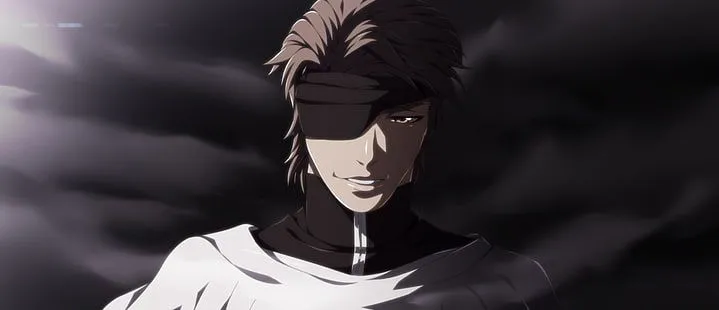
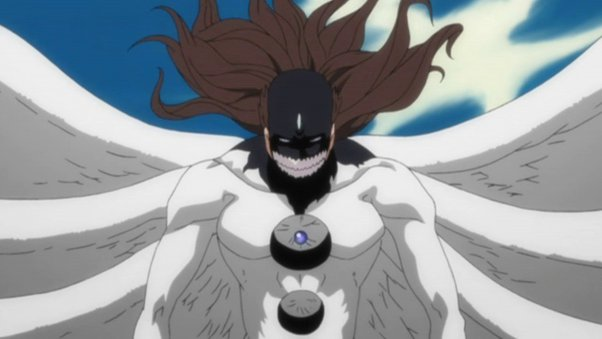
Aizen wants to transcend Soul Reapers and Hollows. By integrating the object with himself, he seeks evolution that training and swordsmanship alone cannot provide. During the Fake Karakura Town battle, his body changes repeatedly and survives attacks that would defeat ordinary opponents. VIZ's volume 47 synopsis emphasizes how his new power overwhelms several elite fighters.
These transformations should not be confused with Kyōka Suigetsu, Aizen's Zanpakutō, whose complete hypnosis was already formidable. The Hōgyoku gives him a separate path to transformation and survival. Our guide to why Aizen never revealed his Bankai examines another unresolved question about his sword.
Does the Hōgyoku make Aizen immortal?
It grants extraordinary regeneration and helps explain why killing Aizen is not a practical solution. But being extraordinarily difficult to kill is not the same as being impossible to defeat. Aizen can be overpowered, restrained and sealed. His fate depends on more than whether a conventional attack can destroy his body.
Ichigo uses the Final Getsuga Tenshō at enormous personal cost. Meanwhile, Urahara's earlier sealing technique activates when Aizen becomes vulnerable. Both contributions matter: Ichigo creates the opening and Urahara's preparation contains the threat. Bleach volume 48 covers the conclusion of this confrontation.
Why did the Hōgyoku stop Aizen from evolving?
The ending deliberately allows interpretation. Aizen believes the Hōgyoku has rejected him when his powers begin to diminish. Urahara describes the object's apparent will. Ichigo offers a more personal reading: beneath Aizen's arrogance, he may have wished to escape the isolation created by his overwhelming strength.
That possibility changes the meaning of the Hōgyoku. If it responds to the heart, Aizen's deepest desire may differ from his stated ambition to stand above everyone. But Ichigo's reading is not a laboratory-confirmed explanation of Aizen's unconscious mind. It is a character interpretation that the story invites readers to consider.
The established outcome is simpler: Aizen is sealed rather than killed. The precise role of hidden desire in his defeat remains less certain than many online summaries suggest. Avoid treating one interpretation as an explicit rule confirmed beyond doubt.
Is the Hōgyoku the same as the Soul King?
No. The Hōgyoku is an artificial object used in research and Aizen's evolution. The Soul King, Reio, has a different function sustaining Bleach's worlds. They connect thematically through questions about spiritual boundaries, but they are not interchangeable. Read about the Soul King's role for the cosmological stakes.
Does the Hōgyoku still matter in Thousand-Year Blood War?
Aizen remains relevant after his defeat, and his unusual survival is part of what makes his imprisonment important. Yet the Thousand-Year Blood War does not simply repeat the Arrancar arc with the Hōgyoku as its main objective. The conflict focuses on the Quincies, Yhwach and the fate of the realms.
That distinction preserves the scale of the story. The Hōgyoku explains Aizen's rise, while later arcs explore different powers and ambitions. Readers can compare why Yhwach is so dangerous and how Quincy powers work without assuming every later mystery is another Hōgyoku effect.
Why the Hōgyoku matters to Bleach
The Hōgyoku is both a plot mechanism and a test of character. For Urahara, it represents research he cannot safely control. For Rukia, it makes her an unwitting target. For the Visored, it is tied to a stolen future. For Aizen, it promises transcendence but cannot guarantee happiness or connection.
It also unites the Soul Society rescue and Arrancar conflicts into one long story. The object hidden in Rukia is the same breakthrough behind Aizen's transformations. The irony is that a device capable of breaking spiritual boundaries cannot automatically cure the loneliness of the person most obsessed with mastering it.
Frequently asked questions
What does Hōgyoku mean in Bleach?
It names the artificial spiritual sphere linked to Urahara and Aizen. Hogyoku is the common spelling without the macron, and Breakdown Sphere is one English rendering.
Did Aizen or Urahara invent it first?
Both developed separate versions. Aizen later combined them into the Hōgyoku he used.
Why did Aizen need Rukia?
Urahara hid his Hōgyoku inside her soul, and Aizen manipulated her execution to retrieve it.
Can the Hōgyoku grant any wish?
No. Its desire-manifesting power is tied to what a person has the potential to achieve.
Was Aizen killed by Ichigo?
No. Ichigo weakened him, and Urahara's prepared seal restrained him. Aizen survived.
Frequently asked questions
Frequently asked questions
What does Hōgyoku mean in Bleach?
It is the name of the artificial spiritual sphere linked to Urahara and Aizen, sometimes called the Breakdown Sphere.
Did Aizen or Urahara invent the Hōgyoku first?
Both developed separate versions. Aizen later combined them.
Why did Aizen need Rukia?
Urahara hid his Hōgyoku inside her soul, and Aizen manipulated her execution to recover it.
Can the Hōgyoku grant any wish?
No. Its power helps realize desires within a person's potential.
Was Aizen killed by Ichigo?
No. Ichigo weakened Aizen, and Urahara's prepared seal restrained him.