Is Mihawk Actually Stronger Than Shanks, Or Just Better Written?
Rushabh Bhosale
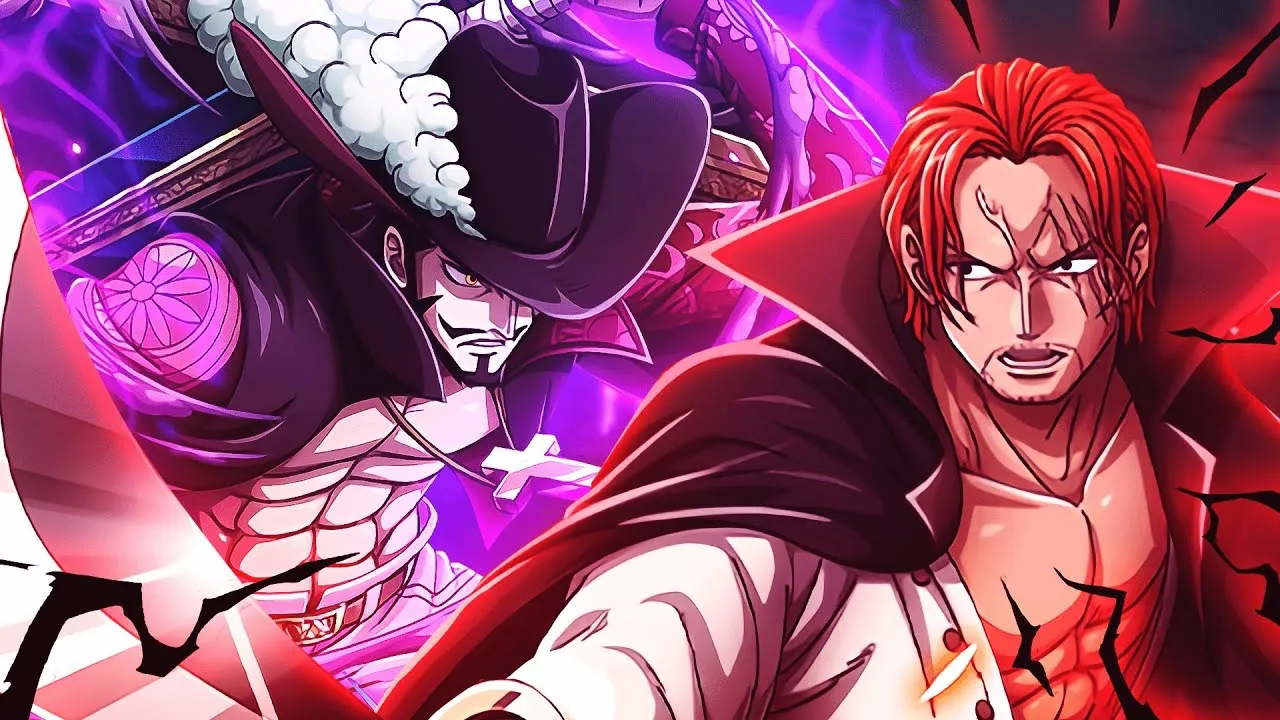
Mihawk is written as the stronger swordsman. Shanks is written as the more important character. The debate exists because One Piece treats narrative power and combat dominance as separate categories, and fans keep trying to merge them.
This isn't a question of who would win in a fight. It's a question of what Eiichiro Oda wants each character to represent in the story's architecture.
Short answer: Mihawk is stronger in swordsmanship. Shanks is stronger in influence and narrative impact.
Why This Question Won't Die
Mihawk holds the title "World's Greatest Swordsman." Shanks is a Yonko who split the sky with Whitebeard and made an admiral sweat by simply walking onto Marineford. One has a title. The other has presence.
The confusion comes from how One Piece distributes power across different dimensions. Mihawk's strength is definitional—he exists at a fixed point Zoro must surpass. Shanks' strength is relational—it's always measured by who respects him, who fears him, and what he chooses not to do.
Fans treat this like a math problem. Oda treats it like storytelling.
If they fought tomorrow in a pure duel, sword to sword, Mihawk wins.
Mihawk's Power Is Built on Silence
Mihawk doesn't prove his strength. He declares it by existing.
His title isn't earned on screen. It's given to him by the world, by the narrator, by the story's internal logic. Oda uses Mihawk the way a novelist uses a locked door—you don't need to see what's behind it to know it matters. Mihawk's restraint is his power. He shows up at Marineford and casually tests Whitebeard. He trains Zoro not because he's bored, but because no one else is worth his time.
This is narrative economy. Mihawk doesn't need to defeat anyone else because his role is to be the endpoint, not the journey. His Vivre Card states he's waiting for someone to surpass "his rival," implying Shanks is already behind him. But this is story framing, not a fight result.
Oda never shows Mihawk struggling because the moment he does, the illusion breaks.
Shanks' Power Is Built on Influence
Shanks barely fights, yet his strength is never questioned.
He stops Kaido off-screen. He ends the war at Marineford with words. His Conqueror's Haki damages a ship just by boarding it. Where Mihawk's power is isolated and absolute, Shanks' power is social and political. He moves the world by being in it.
This is why Shanks feels stronger even when the text says Mihawk holds the title. Shanks' strength is always implied, never contained. You never see the ceiling. With Mihawk, the ceiling is the title itself—greatest swordsman, full stop. With Shanks, every new scene suggests more.
The story uses Shanks to show that power in One Piece isn't just about who you can beat. It's about who listens when you speak.
The Title Versus the Throne
Here's what fans miss: Mihawk's title is technical. Shanks' status is existential.
"World's Greatest Swordsman" is a combat designation. It tells you Mihawk is unmatched in swordsmanship, which in One Piece includes Haki, technique, and lethality. But it doesn't tell you he runs the world. It doesn't tell you he has a crew, territory, or political weight.
Shanks is an Emperor. That's not a power level—it's a system. Yonko don't just fight, they shape the world's balance. Mihawk opted out of that system. He has no crew, no ambition, no interest in influence. He is powerful in a vacuum.
The question isn't "Who is stronger?" It's "Stronger at what?"
Why Power Scaling Misses the Point
Fans argue feats, statements, and implications as if One Piece is a tournament arc. It's not.
Oda doesn't write power as a ladder. He writes it as a web. Luffy doesn't beat Kaido because he's definitively stronger—he beats him because the story is ready for it, because his crew believes in him, because his Haki blooms at the right moment. One Piece power is contextual, emotional, and often collaborative.
One Piece has always rewarded patience and context, which is why even arcs many viewers label as filler still shape how power and relationships are perceived over time. That is also why The One Piece filler episodes you shouldn’t skip matter more than fans admit.
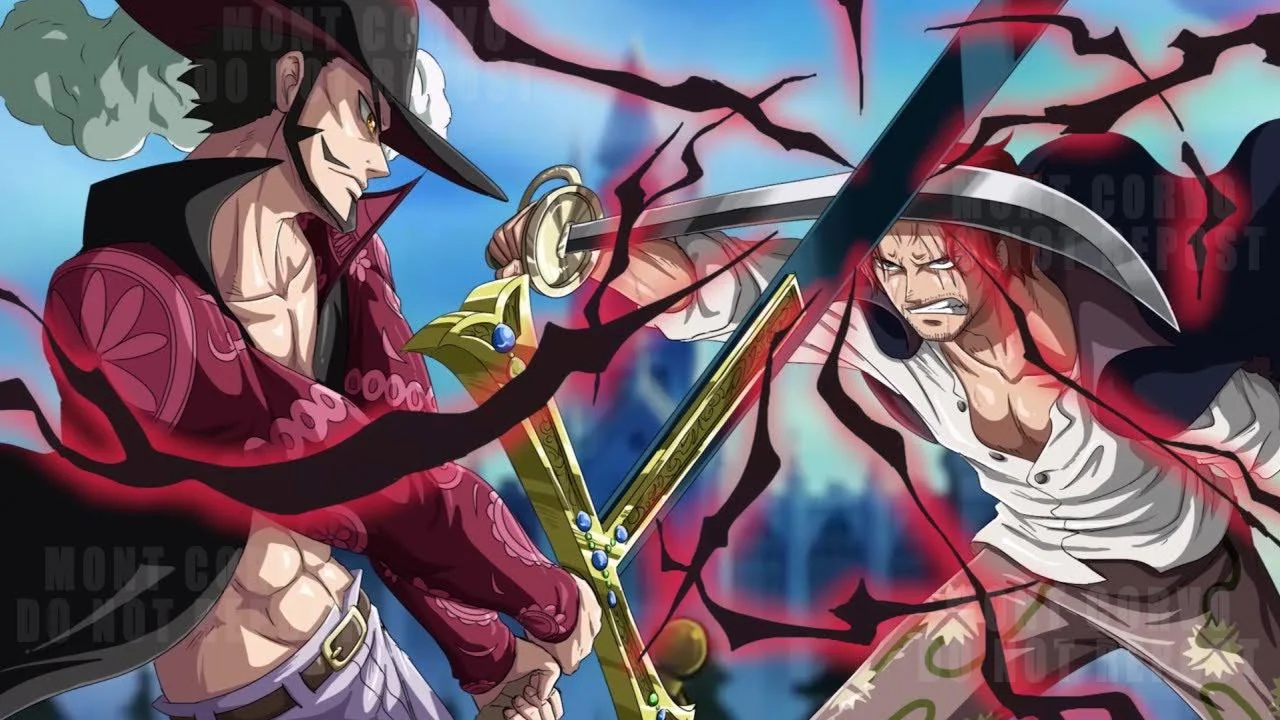
Mihawk and Shanks aren't meant to fight again. Their rivalry exists in the past, preserved in amber. Mihawk stopped dueling Shanks after he lost his arm—not because Shanks got weaker, but because the fight lost its meaning. That's not a power judgment. It's a narrative one.
The story doesn't care who wins. It cares what the fight represents.
What Oda Actually Said
The manga, databooks, and Oda's own comments treat Mihawk's title as absolute within swordsmanship. If you fight with a sword as your primary weapon, Mihawk is your ceiling. Shanks fights with a sword. Therefore, in pure swordplay, Mihawk is superior.
But Oda also frames Shanks as someone who rivals Whitebeard, who commands respect from all Four Emperors, whose Haki is considered monstrous even by Yonko standards. These aren't contradictory statements—they're different categories.
Oda’s recent storytelling choices show a clear focus on long term narrative control rather than weekly momentum, which is also reflected in production decisions like the anime pause. This context is explored further in Why One Piece anime is going on a hiatus after episode 1155.
One Piece separates "strongest swordsman" from "strongest fighter" from "most influential pirate." Mihawk holds one title. Shanks holds the other two.
The Real Answer
Mihawk is the better swordsman. Shanks is the greater force.
If they fought tomorrow in a pure duel, sword to sword, Mihawk wins. That's what his title means. But if the question is "Who would survive longer in the New World?" or "Who has more impact on the One Piece endgame?" the answer is Shanks, and it's not close.
Mihawk is written to be Zoro's final test. Shanks is written to be the world's conscience, Luffy's emotional anchor, and possibly the story's final moral question. One is a benchmark. The other is a pillar.
Oda builds Mihawk through absence and title. He builds Shanks through presence and consequence. These are different kinds of strength, and the story treats them as such.
The Question You Should Be Asking
Is this really about strength, or is it about how Oda wants power to feel in One Piece?
Mihawk feels untouchable because he's never tested. Shanks feels infinite because he's never fully shown. One is preserved by restraint, the other by implication. Both are narrative tools Oda uses to make the world feel larger than any one fight.
The debate will never end because it's not supposed to. It's working exactly as intended. You're not arguing about who's stronger—you're arguing about what strength means in a story where a rubber boy with a straw hat is destined to surpass them both.
Mihawk doesn't need to beat Shanks. He just needs to stay undefeated until Zoro arrives.
Shanks doesn't need to beat Mihawk. He just needs to make you believe he could end the world if he wanted to.
That's not bad writing. That's control.
Tags
Frequently Asked Questions
Is Mihawk stronger than Shanks?
Mihawk is the stronger swordsman by title and narrative role, while Shanks is the more influential and consequential force in the world.
Next up
Bakugo's Rivalry with Deku Is About Identity, Not Competition
Bakugo and Deku's rivalry in My Hero Academia isn't about who's stronger—it's about who they are when strength stops defining them. Bakugo's entire identity was built on being superior to everyone, especially Quirkless Deku. When Deku gains One For All and starts surpassing him, Bakugo doesn't just face defeat in competition—he faces the collapse of his entire sense of self. The rivalry explores what happens when your worth is tied to being the best, when the person you looked down on becomes your equal, and when you're forced to rebuild who you are from scratch. Unlike typical shonen rivalries driven by power scaling, Bakugo and Deku's relationship asks: if you're not the strongest, who are you? Bakugo didn’t lose to Deku. He lost the story he told himself about who he was. Streaming on Crunchyroll and Funimation. The Rivalry That Doesn't Follow the Rules Most shonen rivalries follow a template: two powerful characters push each other to greater heights through competition. Goku and Vegeta. Naruto and Sasuke. The formula works because both rivals start roughly equal. Bakugo and Deku break this completely. Their rivalry begins when one has everything and the other has nothing—built on the assumption that gap will never close. The Childhood That Set Everything Bakugo gained an inflated ego from being praised excessively for his powerful Explosion Quirk, leading him to bully Quirkless Izuku Midoriya. But the bullying wasn't just cruelty. It was self-defense. When they were children, Deku tried to help Bakugo after he fell into a river. Bakugo was offended that a weakling like Deku tried to save him and assumed he was looking down on him. This moment reveals everything. Bakugo's entire identity rested on being superior. A Quirkless kid offering help shattered that hierarchy—so Bakugo rebuilt the wall with violence and contempt. The nickname "Deku" (meaning useless) wasn't just an insult. It was Bakugo's attempt to permanently define someone who threatened his sense of self. When Your Identity Is Built on Being Better Katsuki started out believing his worth was tied to how strong he was. In My Hero Academia's society, Quirks determine value. Heroes are celebrities. Power equals worth. Bakugo absorbed this completely—his Explosion Quirk made him special, and being special became his entire personality. The Problem With Conditional Self-Worth When your identity depends on external validation—being the strongest, smartest, most talented—you're building on sand. Any threat to that superiority threatens your entire existence. Deku represented the ultimate threat: proof that Bakugo's superiority wasn't inherent. If a Quirkless nobody could become his equal, then Bakugo was never special—he just got lucky with genetics. This connects to how comparing yourself to others destroys you in The Pet Girl of Sakurasou—when your worth depends on being better than someone else, you're always one comparison away from collapse. The Identity Crisis Disguised as Competition In Episode 8, Deku defeated Bakugo in a practice exercise. But Bakugo lost not because of his power but because of his arrogance and inability to work as a team. This wasn't just a loss in training. It was existential annihilation. Bakugo's entire worldview rested on a hierarchy where he stood at the top and Deku at the bottom. When Deku wins—not through luck but through qualities Bakugo dismissed as weakness (teamwork, strategy, empathy)—the entire structure collapses. What Bakugo Actually Lost He didn't lose a fight. He lost the story he'd been telling himself about who he was. After he loses to Deku, feels he can't measure up to Todoroki, gets kidnapped, and fails his Licensing Exam, he suffers a massive identity crisis that knocks down his fragile confidence. Each defeat chips away at the foundation. If strength doesn't guarantee victory, what does it guarantee? If being talented doesn't make you special, what does? Similar to how Haikyuu explores effort without a promise of greatness, Bakugo discovers that natural talent without growth is a dead end. Why Bakugo Can't Just "Get Stronger" In a typical shonen rivalry, the solution to falling behind is training harder. Get a new technique. Unlock a transformation. Close the gap through effort. Bakugo does train harder. He does get stronger. It doesn't fix anything. The Problem Isn't Power—It's Perspective If he isn't the strongest and he isn't meant to achieve immediate greatness, then what is his role? It's something that Quirkless Midoriya had to evaluate for many years as a child. What is his purpose in a world that seems destined to leave him behind? Bakugo is forced to ask the same question Deku asked his entire childhood: who am I if I'm not what I thought I was? For Deku, that question led to discovering identity beyond Quirks—heroism as action, not status. For Bakugo, it requires dismantling everything he built his personality on. What Deku Has That Bakugo Doesn't The series explicitly contrasts their approaches to All Might, their shared idol. While Deku admired All Might's ability to save lives with a smile, Bakugo admired his strength and ability to defeat anyone. This difference is everything. Two Different Definitions of Heroism Deku sees heroism as connection—reaching people, protecting them, making them feel safe. Bakugo sees heroism as dominance—being strong enough that threats don't matter, proving yourself through victory. Neither is wrong, but only one is complete. Endeavor has a powerful quirk and is skilled at rescuing civilians, but the reason why he's unable to surpass All Might is because he fundamentally does not care about the people he's saving. Bakugo mirrors Endeavor—technically excellent, strategically brilliant, but missing the emotional core that makes All Might irreplaceable. The rivalry with Deku forces Bakugo to develop what he lacks: empathy, collaboration, the ability to see strength in vulnerability. The Fight That Changes Everything Their second major fight—where Bakugo finally admits his feelings—is when the rivalry transforms completely. Bakugo breaks down. He admits he feels responsible for All Might's retirement. He admits he doesn't understand how Deku got his Quirk. He admits he feels left behind. Vulnerability as Strength For someone whose entire identity was built on never showing weakness, this moment is death and rebirth. Bakugo's ceaseless drive forces Midoriya to become more assertive, and he eventually welcomes the rivalry. Meanwhile, Midoriya's attitude forces Bakugo into a previously unforeseen habit of contemplation. They're not just making each other stronger. They're making each other more complete. Deku learns confidence and assertiveness from Bakugo's refusal to back down. Bakugo learns empathy and teamwork from Deku's instinctive heroism. This parallels how Kids on the Slope shows that relationships force us to grow in unexpected ways—growth doesn't require perfection, just willingness to change. The Ending: Choosing to Redefine Yourself By the series' conclusion, Bakugo's transformation is complete—not because he's the strongest, but because he's rebuilt his identity on different foundations. Bakugo has been a proponent in crafting technology that allows Midoriya to potentially take a physically active role in superheroism again, meaning that the boy who once insulted a character without "powers" has now evolved into a man who wishes to find a way to bring those abilities back. From Contempt to Support The Bakugo who bullied Quirkless Deku now dedicates himself to helping Quirkless Deku become a hero again. Not because he pities him. Because he respects him. His identity is no longer built on being superior to Deku. It's built on being Deku's equal—someone who pushes him forward not through competition but through collaboration. The rivalry doesn't end. It evolves into partnership. Similar to how Bakuman shows the hidden costs of creative ambition, Bakugo discovers that identity built on relationships is stronger than identity built on dominance. What the Rivalry Actually Teaches Bakugo and Deku's relationship isn't about friendship conquering all or rivals becoming brothers. It's about what happens when the person you built your entire identity around surpasses you—and you're forced to decide who you are without that hierarchy. The Uncomfortable Truth About Conditional Identity Most people build identity on external markers: job titles, achievements, being better than peers. When those markers shift—when you get fired, when someone younger surpasses you, when your talent stops being enough—you face the same crisis Bakugo does. Who are you when the thing that made you special becomes common? When your worth can't be measured by comparison? The series doesn't offer easy answers. Bakugo's growth takes the entire series. He relapses into old patterns. He struggles with anger management. But he rebuilds anyway—slowly, imperfectly, honestly. This connects to why Eren started the Rumbling beyond just protecting Paradis—real growth is messy, incomplete, and driven by complex motivations beyond simple heroism. The Rivalry That Saved Both of Them Both young heroes look at the world's number 1 hero for inspiration. While their end goals were the same, the two determined they needed different things to get to their goals. However, as the story progresses both begin to realize that they each lack what the other has. Deku needed Bakugo's confidence, his refusal to accept limits, his aggressive drive to win. Bakugo needed Deku's empathy, his collaborative spirit, his instinct to save rather than defeat. Neither could become a complete hero alone. The rivalry forced them both to develop what they lacked—not through competition, but through recognition. By the end, they're not trying to surpass each other. They're trying to become worthy of standing beside each other. That's not a rivalry about competition. That's a rivalry about identity—and it's exactly why it works.