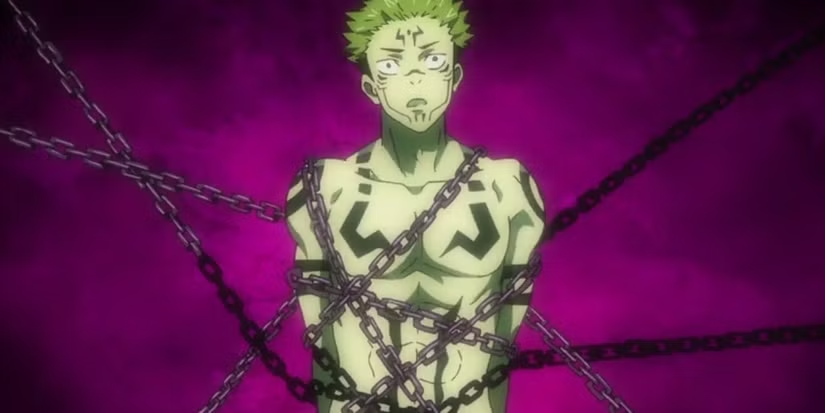
What Is a Binding Vow in Jujutsu Kaisen? How the Rules Work
Rushabh Bhosale
Updated
A Binding Vow in Jujutsu Kaisen is essentially a supernatural trade-off: a sorcerer accepts a real restriction, risk or obligation and receives an advantage in return. The idea sounds simple, but Binding Vows quietly shape everything from everyday cursed-energy use to some of the series’ biggest turning points.
They are not a separate cursed technique that only certain characters possess. Binding Vows are closer to a rule of jujutsu itself. A fighter can deliberately give something up, limit how an ability works or make an agreement with another person, and the restriction gives that choice real supernatural weight.
What is a Binding Vow in Jujutsu Kaisen?
The easiest way to understand a Binding Vow is as Jujutsu Kaisen’s risk-and-reward system. Power becomes more effective when the user accepts a meaningful disadvantage. The greater the restriction, danger or sacrifice, the more valuable the potential return can become.
That is why the system fits Jujutsu Kaisen so well. Its strongest abilities rarely operate as free upgrades. Characters constantly work around conditions, ranges, activation requirements and personal weaknesses. Binding Vows turn those limitations into something a skilled sorcerer can deliberately manipulate.
This can look superficially similar to Heavenly Restriction, but the two concepts are different. A Binding Vow is an agreement or condition. Heavenly Restriction is imposed from birth, trading one aspect of a person’s body or cursed energy for another advantage without that person choosing the bargain.
The two main kinds of Binding Vows
Binding Vows broadly fall into two categories: vows a person places on themselves and agreements made between multiple people. The distinction matters because the consequences and purpose are different.
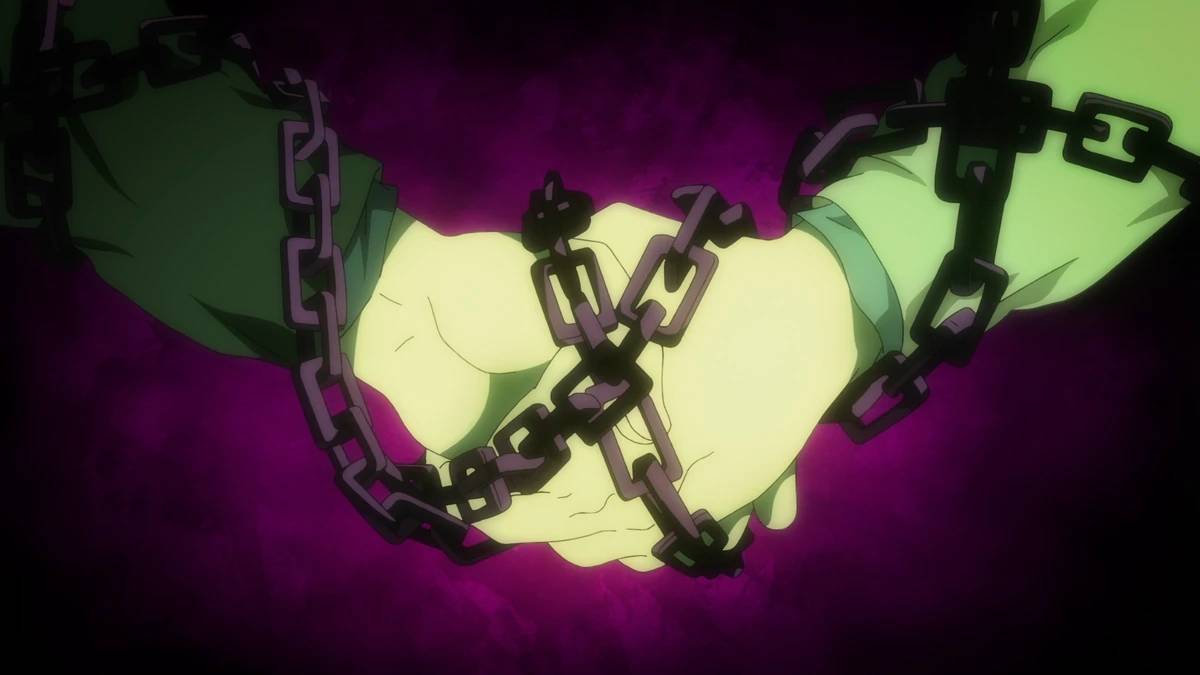
Self-imposed Binding Vows
A self-imposed vow deliberately limits the user in order to improve something else. The sorcerer controls both sides of the bargain. If the restriction stops being worthwhile, abandoning it generally means losing the benefit that came from imposing it.
Kento Nanami’s Overtime is one of the cleanest examples. Nanami restricts how much cursed energy he uses during his normal working hours. Once he enters overtime, that restraint produces an increase in the cursed energy he can access. His salaryman mentality literally becomes part of his combat strategy.
Another common example is revealing how a cursed technique works. Explaining your ability gives an opponent information they can use against you. Because voluntarily exposing that weakness creates risk, the technique can receive a corresponding boost. What sometimes looks like a character explaining their power for the audience can therefore have an in-world tactical purpose.
Binding Vows made with another person
A vow between people behaves more like a supernatural contract. Both sides accept terms and are expected to obey them. These agreements are especially dangerous because the series never gives characters a comfortable, predictable penalty chart for breaking them.
That uncertainty is part of their power. Kenjaku warns Mahito against casually violating a vow involving another person because the consequences are not something even experienced sorcerers can confidently control. A contract therefore creates trust not because the participants like each other, but because neither side wants to discover what breaking it will cost.
How Sukuna and Yuji’s Binding Vow works
The pact between Yuji Itadori and Sukuna is the story’s most important early example. After Yuji dies, Sukuna offers to restore him under specific conditions. When Sukuna says the trigger word “Enchain,” he can take control of Yuji’s body for one minute. Yuji will also forget that the agreement was made.
Yuji does not simply accept the first version of the deal. He forces an additional restriction: Sukuna cannot kill or hurt anyone during that minute. Sukuna ultimately gets the agreement by defeating Yuji in a fight inside his innate domain.
The scene establishes something important about Binding Vows: wording matters. They are not vague promises based on what somebody probably intended. The exact conditions can create opportunities, and a character as calculating as Sukuna is extremely good at recognizing those openings.
Spoiler warning: the next section discusses events from the Culling Game anime.
Why the Enchain loophole matters
During the Culling Game, Sukuna finally activates Enchain. The crucial gamble is that Yuji did not consider himself part of the promise not to hurt “anyone.” Sukuna concentrates himself into one of Yuji’s fingers, tears it off and uses it to transfer into Megumi Fushiguro.
Sukuna does not know with absolute certainty that the interpretation will work before trying it. That detail prevents the scene from being a simple case of Sukuna having secret knowledge of every rule. He identifies a possible loophole in the agreement and risks the plan on it.
The Culling Game continues beyond this point, and Jujutsu Kaisen Season 4 has officially been announced to continue the arc with Part 2. That makes the logic behind Binding Vows increasingly useful for anime-only viewers as the power system becomes more technical.
Why Nanami’s Overtime is such a useful example
Sukuna’s contract shows how complicated a vow can become, but Nanami demonstrates the basic principle better than almost anyone. He voluntarily makes himself less efficient during regular hours. The restriction is real, so working beyond those hours gives him a meaningful return.
The important part is that a Binding Vow is not simply asking the universe for more cursed energy. There must be something on the other side of the exchange. Nanami cannot declare himself stronger with no downside. His increased output exists because he has already accepted a limitation.
Are Binding Vows always equal trades?
Not in the sense of a visible mathematical exchange rate. Jujutsu Kaisen never provides a formula saying that sacrificing one specific thing always produces a fixed amount of power. Context, skill and the nature of the restriction matter.
That flexibility is why Binding Vows can feel unpredictable. A restriction that is devastating for one sorcerer may mean very little to another. The system rewards genuine limitations rather than treating every sacrifice as an interchangeable currency.
It also explains why clever characters get more from the system. Understanding exactly what can be restricted, what can be gained and how narrowly a condition can be defined becomes another form of jujutsu expertise.
What happens if someone breaks a Binding Vow?
For a vow made with yourself, the basic consequence is comparatively straightforward: breaking the restriction causes you to lose what the vow was giving you. That makes self-imposed vows flexible enough to use as tactical tools.
A vow made with another person is much more dangerous. The manga deliberately leaves the exact punishment uncertain rather than establishing one universal result. That uncertainty is itself a deterrent. Even powerful characters treat violating a mutual vow as an unacceptable gamble.
So claims that every broken Binding Vow automatically causes death go further than the story establishes. The safer conclusion is that mutual vows carry potentially severe and unpredictable consequences, which is precisely why characters respect them.
Why Binding Vows matter to Jujutsu Kaisen’s power system
Binding Vows make Jujutsu Kaisen’s battles less dependent on raw cursed-energy totals. A weaker fighter can create a better situation by accepting the right restriction, while an overwhelmingly powerful fighter can refine an already dangerous technique by changing its conditions.
More importantly, the mechanic reflects the series’ broader approach to power. Strength usually comes with a cost. Information has value. Conditions matter. A technique is not just what it does, but also when it can be used, what the user risks and which rules an opponent can exploit.
That is the simplest way to understand Binding Vows: they turn sacrifice and limitation into power. Once that rule is clear, many of Jujutsu Kaisen’s seemingly complicated abilities become much easier to follow.
Tags
Sources
Frequently Asked Questions
What is a Binding Vow in Jujutsu Kaisen?
A Binding Vow is a rule or agreement that creates a meaningful restriction, risk or obligation in exchange for an advantage. Some vows are imposed on oneself, while others are contracts between people.
Can a sorcerer break a Binding Vow?
Self-imposed vows can be abandoned, but the user generally loses the benefit created by the restriction. Vows made with another person are treated much more seriously, and the exact penalty for breaking one is deliberately uncertain.
What is Sukuna and Yuji's Binding Vow?
Sukuna agreed to revive Yuji under conditions that included gaining control of Yuji's body for one minute after saying Enchain. The agreement later becomes crucial during the Culling Game storyline.

Next up
What Is Domain Expansion in Jujutsu Kaisen? How Domains Work
How does Domain Expansion work in Jujutsu Kaisen? Learn sure-hit effects, domain clashes, counters, incomplete domains and what makes Sukuna different.