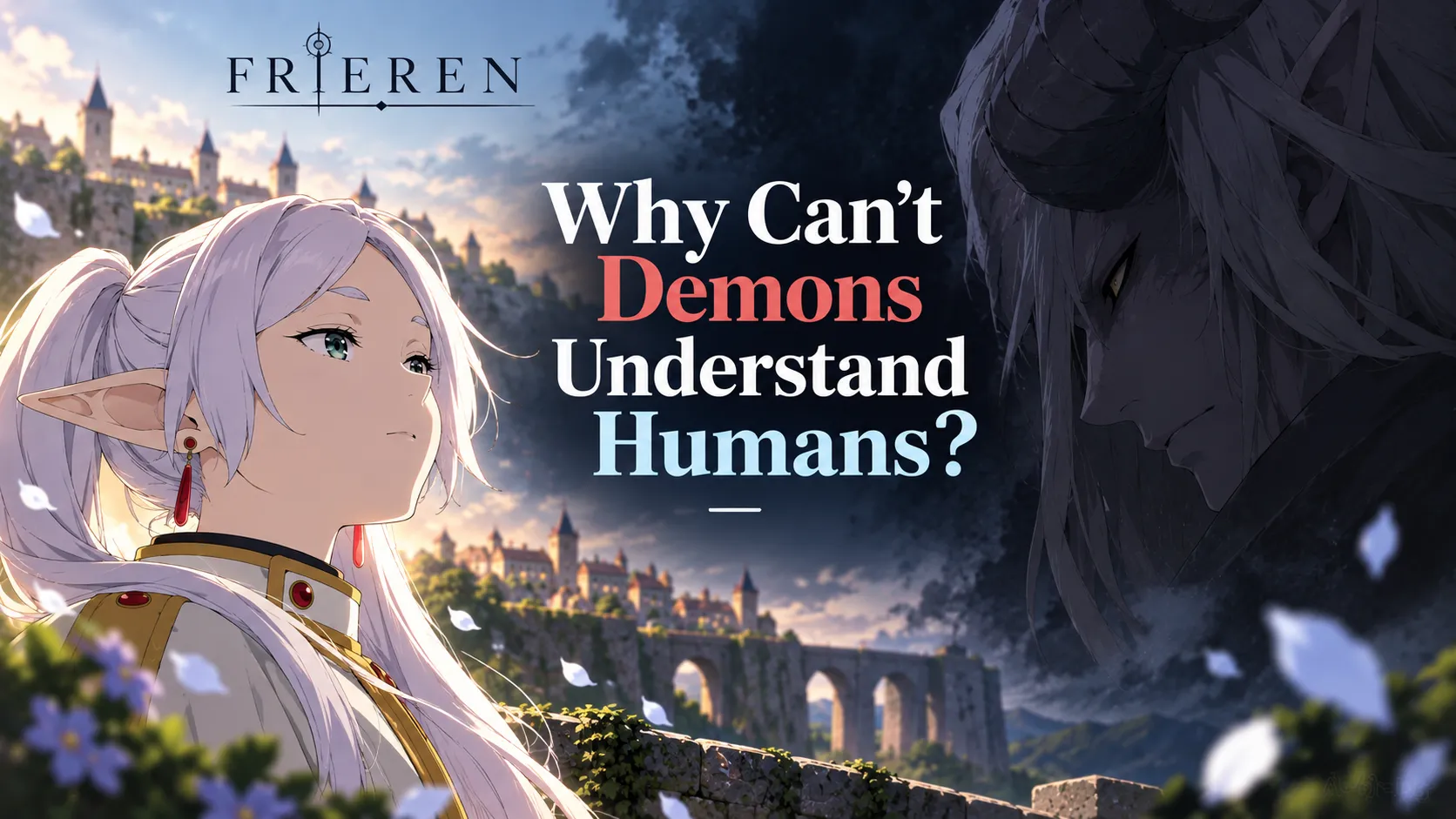

Manga spoilers for the Golden Land Arc follow.
Macht of the Golden Land is positioned to become the defining antagonist of Frieren: Beyond Journey’s End Season 3. The official anime promotion has already placed him at the center of the Golden Land Arc, while the manga establishes him as the last and most powerful of the Seven Sages of Destruction.
Yet describing Macht as simply “the strongest demon” misses why he matters. His real importance comes from the contradiction at the center of his character: Macht spends years attempting to understand human emotions, builds relationships with humans and even teaches Denken, but his idea of understanding never becomes human empathy.
That makes him an unusually appropriate villain for Frieren. The series has always been interested in how differently elves, humans and demons experience the world. Macht turns that theme into a crisis large enough to consume an entire city.
For readers mainly looking ahead to the anime, our Frieren Season 3 release date and Golden Land Arc guide covers the confirmed October 2027 broadcast window and production information. This article focuses instead on who Macht is, how his magic works, why Denken matters to him and what his story says about demons.
Who Is Macht of the Golden Land?
Macht is a powerful demon and one of the Seven Sages of Destruction, the elite demons who served under the Demon King. By the era of Frieren’s current journey, he is described as the last and strongest surviving member of that group.
His title comes from the fate of Weise, a fortified city that he transformed into gold. The disaster created the Golden Land and left Macht contained behind a barrier rather than freely roaming the Northern Plateau.
The official English description for Frieren Volume 9 introduces the coming conflict by calling Macht the last and most powerful of the Seven Sages of Destruction. Volume 10 then explains the crucial history behind Weise: years before the Demon King’s defeat, Macht made an arrangement with the city’s lord while attempting to understand human emotions. That relationship initially benefited both sides before Macht ultimately turned the city and its residents into gold.
The catastrophe is therefore not random destruction. It is the conclusion of Macht’s long experiment with humanity.
Why Macht Is Different From Frieren’s Earlier Demons
Frieren establishes early that demons are intelligent beings capable of language, deception and complex magical techniques. What the story repeatedly questions is whether their use of human language reflects the same emotional reality humans assume it does.
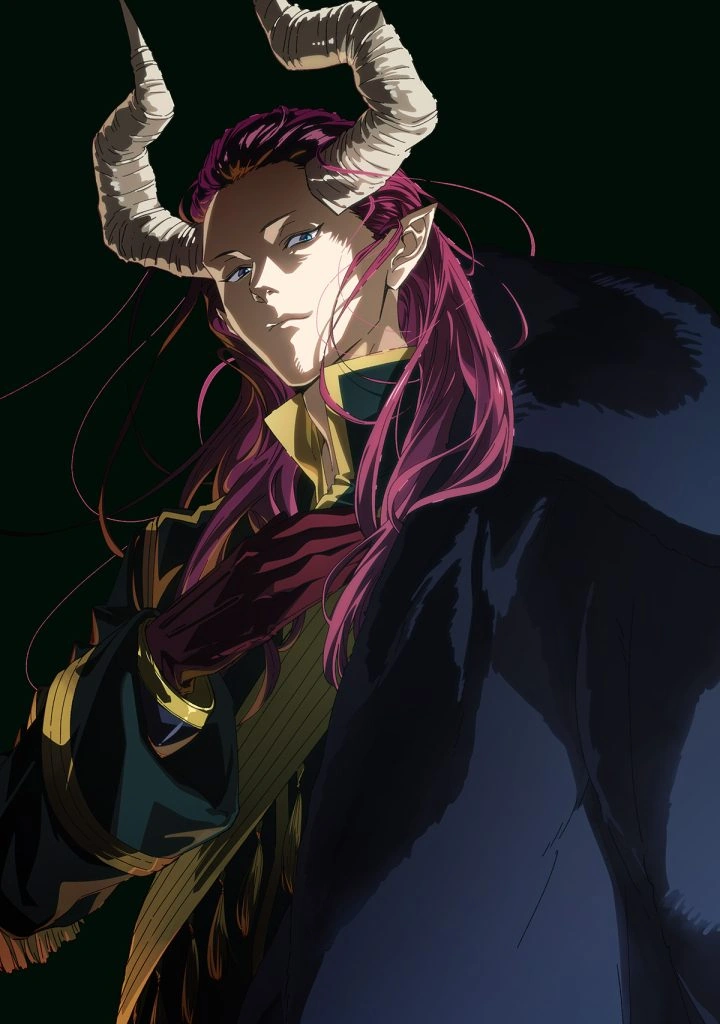
Macht complicates that question because he does not merely imitate human social behavior for a quick advantage. He spends a prolonged period among humans and actively pursues an understanding of concepts that do not come naturally to him.
That makes him more disturbing, not less.
A conventional monster can be understood through hunger or aggression. Macht is capable of patience, curiosity and sustained relationships, yet those qualities do not guarantee a human moral framework. His story asks whether intellectual knowledge of an emotion is equivalent to actually experiencing it.
That question connects directly to what makes the series distinctive. Our earlier analysis, Why Frieren Feels Different From Other Fantasy Anime, looks at how the story uses lifespan, memory and perspective rather than treating fantasy races as cosmetic differences.
Macht is one of the clearest demonstrations of that approach.
What Is Diagoldze?
Macht’s signature ability is Diagoldze, the curse responsible for the Golden Land.
At its most terrifying, Diagoldze turns matter into gold. Its threat is not simply that Macht can fire a powerful magical attack. The curse can fundamentally transform its targets, and the scale of what happened to Weise demonstrates how catastrophic that power becomes when applied to an entire settlement.
The curse is also difficult because Frieren distinguishes certain demonic abilities from ordinary magic that human and elven mages can easily analyze and counter. Macht’s technique becomes a problem that cannot be solved merely by throwing more destructive mana at him.
The official VIZ description for Volume 11 confirms the eventual importance of breaking the curse of Diagoldze, underscoring that defeating Macht requires understanding his magic rather than simply surviving it.
That makes Diagoldze a particularly fitting ability for the arc. Macht’s philosophical problem is his inability to fully understand humanity; the heroes’ practical problem is their inability to immediately understand and undo his curse. Knowledge becomes part of the battle on both sides.
Why Did Macht Turn Weise Into Gold?
The transformation of Weise is where Macht’s character becomes more complicated than a standard demon massacre.
According to VIZ’s official synopsis for Volume 10, Macht had made a deal with the lord of Weise in an attempt to understand human emotions. The arrangement initially benefited both sides. Macht’s presence and power could be useful to the city, while life among humans gave him an environment in which to pursue something demons normally lack.
But the experiment ends catastrophically when Macht transforms the city and its residents into gold.
The important point is not that Macht secretly becomes human and then suddenly changes his mind. His arc is darker: proximity to humans does not automatically erase the fundamental divide between demon and human experience.
Macht can observe human bonds. He can learn social expectations. He can form relationships that look meaningful from the outside. Yet the Golden Land demonstrates the danger of assuming those behaviors guarantee the same moral and emotional boundaries a human would possess.
Macht and Denken: Why Their Relationship Matters
Denken is essential to understanding why the Golden Land Arc has emotional weight.
Anime viewers know Denken as the veteran mage who passes the First-Class Mage Exam after a long career navigating imperial politics. Season 3 gives that character history a much more personal dimension: Weise is tied to his past, and Macht was once his master.
The official anime character profile already identifies Denken as the mage who becomes responsible for managing the barrier surrounding the Golden Land. VIZ’s Volume 11 synopsis goes further, describing Denken directly challenging Macht, his former master, while driven by memories of his wife.
That turns their eventual confrontation into far more than a contest between two powerful mages.
Denken has lived a human life defined by ambition, relationships, aging and loss. Macht is a long-lived demon attempting to understand emotions from a fundamentally different perspective. Their shared history places those two experiences against each other.
Denken is therefore not just a convenient mage strong enough to participate in the fight. His life embodies much of what Macht has spent so long trying to understand.
Is Macht Stronger Than Frieren?
Macht is powerful enough that reducing the matchup to a simple ranking is misleading.
He is identified as the strongest of the Seven Sages of Destruction, and Diagoldze creates a problem that conventional magical strength alone does not solve. Frieren, meanwhile, is one of the greatest living mages and has centuries of experience specifically fighting demons.
The Golden Land conflict is dangerous because both sides possess advantages that cannot be summarized by mana output alone. Macht’s curse and experience make him extraordinarily difficult to confront directly, while Frieren’s greatest strengths include analysis, patience and the ability to understand magic over time.
That is consistent with Frieren’s approach to combat. Battles often turn on information, compatibility, deception and magical specialization rather than a universal numerical power level.
Macht belongs near the top of the threats the series has introduced, but his importance comes from why he is difficult to defeat, not from assigning him a single number on a tier list.
Why Frieren Is Such a Dangerous Opponent for Macht
Macht’s reading of opponents makes Frieren’s mana suppression especially important to the way this conflict is built.
Demons repeatedly make the mistake of interpreting Frieren through ordinary expectations.
She suppresses her mana, studies enemies patiently and has spent an enormous portion of her life learning how demons think and fight. Her apparent calm can make her seem passive, but that patience is one of her most dangerous qualities.
Macht’s power creates exactly the kind of problem Frieren is built to approach: an ancient, poorly understood magical phenomenon that cannot simply be overwhelmed immediately.
VIZ’s Volume 11 synopsis emphasizes this aspect of the confrontation by noting that demons have historically underestimated Frieren. That theme is not just a dramatic boast. Her greatest advantage against demons is often the gap between what they think they understand about her and what centuries of preparation have actually made possible.
Solitär Makes the Golden Land Conflict Even More Dangerous
Macht is the central figure of the Golden Land Arc, but he is not the only major demon involved.
Solitär becomes another crucial threat, and her presence prevents the arc from collapsing into a straightforward “everyone versus Macht” battle. VIZ’s Volume 11 description explicitly pairs the final conflicts: Denken faces his former master Macht while Frieren confronts Solitär.
This matters structurally because it forces the heroes to divide their attention. It also broadens the arc’s exploration of demon intelligence. Macht’s unusual relationship with humanity is not representative of every demon, and Solitär provides another perspective on how demons study and interpret humans.
For anime viewers, her role is best experienced without every twist spoiled in advance. What matters going into Season 3 is that Macht is the heart of the Golden Land’s history, but the arc’s demonic threat is larger than Macht alone.
Why Macht Wants to Understand Human Emotions
Macht’s curiosity about human emotion is one of the most important elements of his characterization because it creates the illusion that reconciliation might be possible.
If a demon genuinely wants to understand concepts such as guilt, malice or attachment, perhaps the gap between species can be crossed. Frieren refuses to answer that possibility cheaply.
Macht’s long experiment among humans suggests that learning the vocabulary and social shape of emotion is not necessarily the same as sharing the internal experience behind it. That distinction is crucial to the series’ portrayal of demons.
Humans naturally interpret communication through empathy. If someone speaks about grief, affection or regret convincingly enough, people tend to assume there is an emotional state behind those words similar to their own.
Demons in Frieren make that assumption dangerous.
Macht is fascinating because he appears to push closer to the boundary than most. His story tests whether curiosity itself can bridge the divide—and what happens when humans stake their lives on the answer.
Is Macht Evil?
Calling Macht “evil” is understandable, but the label alone does not explain what the story is doing with him.
From a human perspective, his actions are unquestionably horrific. Weise becomes a city of gold, lives are destroyed, and his overwhelming magical ability makes him an existential danger.
The more interesting question is whether Macht experiences morality in the same framework humans use to judge those actions.
Frieren does not excuse demons by presenting them as misunderstood humans. Instead, it repeatedly stresses that their intelligence can coexist with a fundamentally alien relationship to human life. Macht’s attempt to understand humanity makes that difference more visible because he spends so much time approaching the boundary without necessarily crossing it.
That is why he works better as an antagonist than a villain whose only motivation is conquest. The audience can understand what he is trying to investigate without accepting the consequences of his experiment.
Why Macht Is the Perfect Villain for Frieren Season 3
Season 3 needs an antagonist who can challenge more than Frieren’s ability to cast stronger spells.
Macht does exactly that.
He is connected to Denken’s past. His curse defines an entire region. His history stretches back toward the era before the Demon King’s defeat. And his central motivation directly engages the anime’s ongoing questions about memory, lifespan and whether different species can truly understand one another.
That combination makes the Golden Land Arc a natural escalation after the earlier seasons. The danger becomes larger without abandoning the reflective storytelling that made Frieren successful.
This is also why the arc has the potential to stand out among modern fantasy anime. For readers interested in another visually ambitious magic-focused series, Why Witch Hat Atelier Could Be the Best Fantasy Anime of 2026 offers a useful comparison in how fantasy stories can make the rules and philosophy of magic matter as much as spectacle.
What Macht Reveals About Frieren’s Demons
Macht may be the series’ most important test case for its philosophy of demons.
Earlier demons establish the basic warning: humanlike speech does not guarantee humanlike feeling. Macht asks the harder version of the question. What happens when a demon spends years sincerely investigating humanity?
The answer is uncomfortable because intelligence and understanding are not identical to empathy.
That distinction also prevents Frieren’s demons from functioning as ordinary fantasy races with different aesthetics. Their relationship to humans is biologically and psychologically dangerous. Communication can create the appearance of common ground even when the assumptions underneath that communication are incompatible.
Macht’s tragedy—if the word can be applied to him—is that he comes close enough to human society for both sides to imagine understanding might be possible.
The Golden Land is the cost of discovering how incomplete that understanding remains.
How Powerful Is Macht Compared With the Seven Sages of Destruction?
The clearest canonical description is straightforward: Macht is presented as the last and most powerful of the Seven Sages of Destruction.
That does not mean every hypothetical matchup involving the Sages can be settled automatically. Frieren is too dependent on magical compatibility and specific techniques for simple rankings to answer every battle.
But Macht’s status is not merely fan power scaling. It is part of the official framing around the Golden Land story, and it helps explain why his containment becomes such a serious problem.
The heroes are not approaching an ordinary surviving demon from the Demon King’s era. They are dealing with one of that era’s most dangerous magical figures, armed with a curse capable of changing an entire city.
What Anime-Only Viewers Should Know Before Season 3
The most useful preparation is to remember Denken.
His First-Class Mage Exam appearances establish his intelligence, pragmatism and experience, but they do not yet reveal the full emotional context behind his connection to the Golden Land. Season 3 is positioned to transform him from an important supporting mage into one of the arc’s central characters.
It is also worth remembering the anime’s earlier lessons about demons. Aura and other demons demonstrated how easily human language can encourage people to project human motivations onto creatures that do not necessarily share them.
Macht takes that concept much further.
Finally, viewers should expect a story that uses combat as the conclusion of a much longer historical and philosophical conflict. The Golden Land Arc matters because the characters need to understand what Macht is before they can meaningfully confront what he has done.
Final Thoughts
Macht of the Golden Land is one of Frieren’s most compelling antagonists because his danger cannot be separated from his curiosity.
He is the strongest of the Seven Sages of Destruction, the wielder of the curse Diagoldze, the demon responsible for transforming Weise into the Golden Land and a figure deeply connected to Denken’s past. Those facts alone make him powerful enough to anchor Season 3.
But his lasting importance comes from the question underneath the battle: can a demon truly understand human emotion?
Macht spends years trying. The Golden Land is what remains when that experiment collides with the fundamental difference between demons and humans.
That is why Season 3’s conflict should be more than a showcase for stronger magic. Macht forces Frieren to return to one of its oldest ideas—the danger of mistaking familiar words and behavior for a familiar inner world—and push it further than ever before.