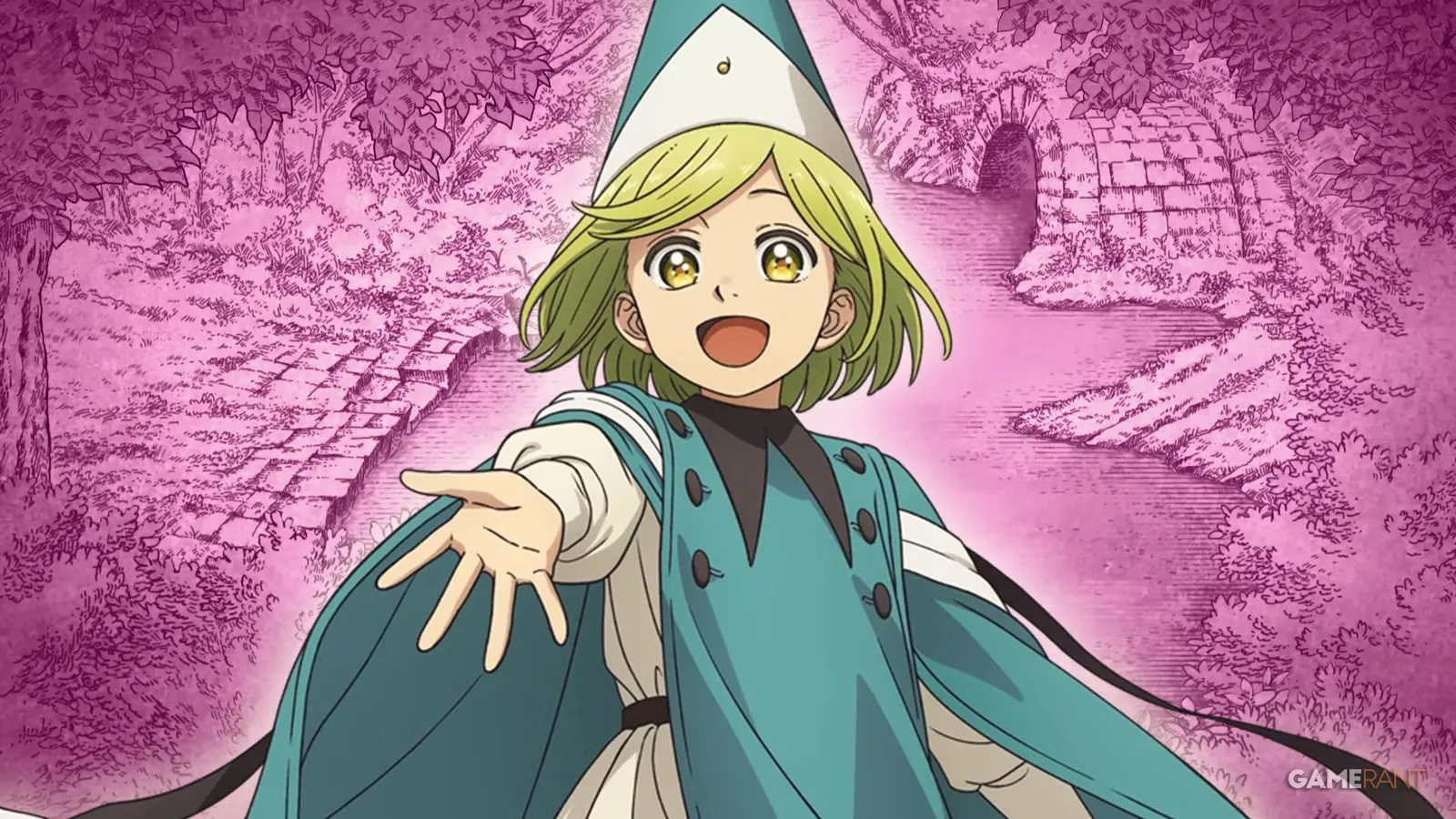

Every few years, a fantasy anime arrives that doesn't just entertain — it redefines what the genre can feel like. Frieren did it in 2023. Made in Abyss did it in 2017. And if everything lines up the way it should, Witch Hat Atelier is about to do it in 2026.
Quick Answer
Witch Hat Atelier could become the best fantasy anime of 2026 because it combines elite source material, a visually unique magic system, strong staff, and deeper themes about knowledge, power, and morality. If the adaptation captures the manga’s atmosphere, it has real breakout potential.
The anime premieres April 6 on Crunchyroll, and the anticipation is unlike anything we've seen for a non-sequel this year. This isn't hype built on action trailers or viral fight clips. It's built on a manga that won two Eisner Awards, two Harvey Awards, moved over 7 million copies, and earned comparisons to Studio Ghibli from critics who don't throw that comparison around lightly.
Witch Hat Atelier has been called the best fantasy manga of its generation. Now it has to prove it can be the best fantasy anime of 2026. Here's why it has every chance to pull it off.
The Source Material Is Genuinely Special
Kamome Shirahama's manga has been serializing in Kodansha's Morning Two since 2016, and it's done something rare — it's gotten better with every volume. The story follows Coco, a dressmaker's daughter who's always dreamed of being a witch in a world where magic is reserved for the gifted. When she discovers that magic isn't an innate talent but a craft anyone can learn through drawing glyphs, her world cracks open — and so does the story's.
What makes Witch Hat Atelier different from standard fantasy isn't just the magic system (though we'll get to that). It's the perspective. Coco isn't a chosen one. She's a curious girl who stumbles into a hidden world and immediately causes a catastrophe — accidentally turning her mother to stone with a forbidden spell. Her journey begins not with destiny, but with guilt. She becomes an apprentice under the witch Qifrey not to fulfill a prophecy, but to find a way to undo the damage she caused.
That emotional foundation — a protagonist driven by a mistake rather than a calling — gives the entire series a weight that most fantasy anime never achieve. It's the kind of character-driven storytelling that trusts its audience to connect with vulnerability rather than power.
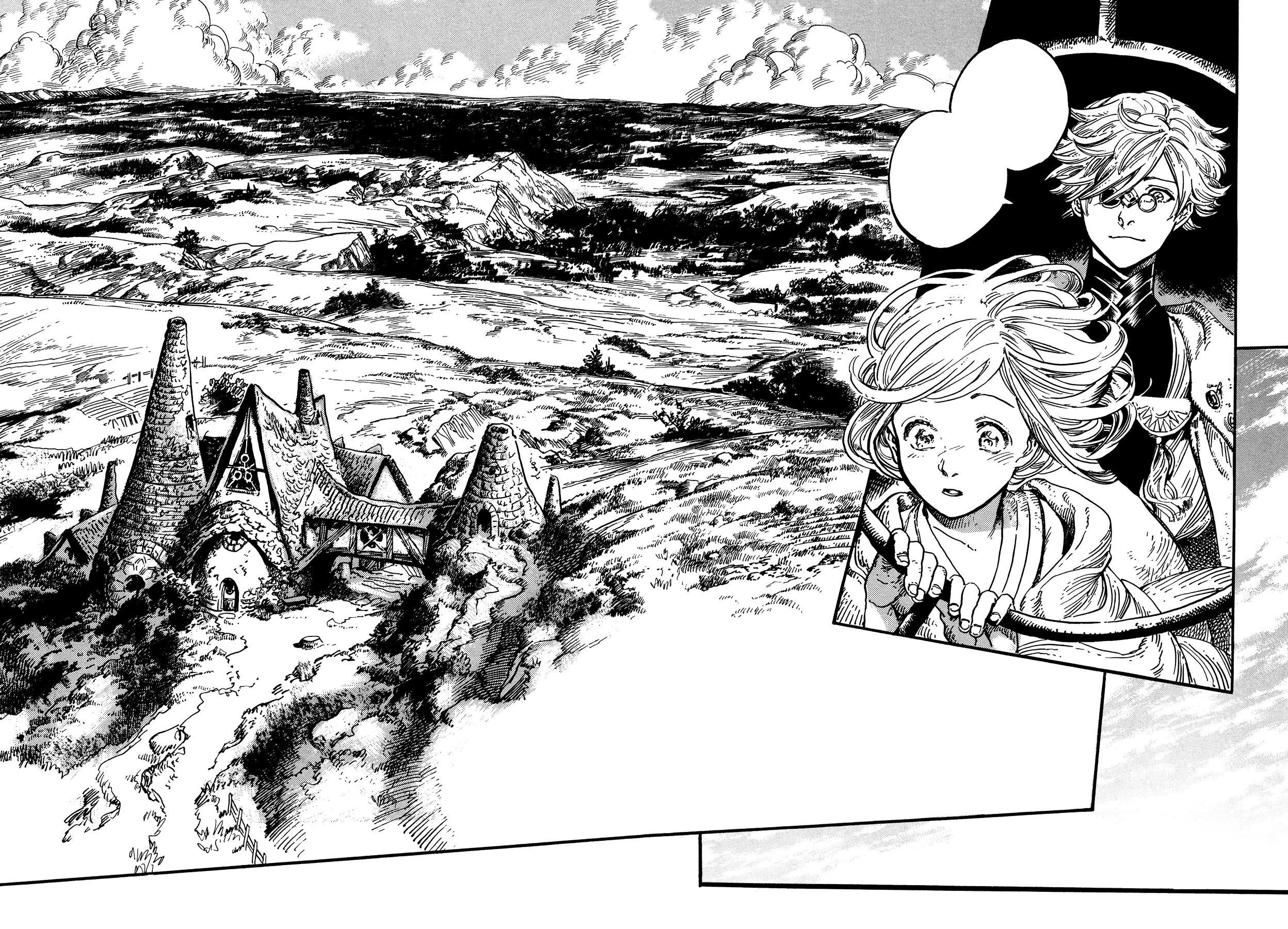
The manga has also been praised endlessly for Shirahama's artwork. Her pages look like illustrated fairy tales — intricate, detailed, and alive with a sense of wonder that's almost impossible to replicate in animation. Which brings us to the biggest question.
Can the Anime Match the Art?
This is where Witch Hat Atelier faces its greatest challenge and opportunity. Shirahama's manga art is so detailed, so specific in its linework and composition, that any adaptation was always going to be compared against an impossibly high bar.
Bug Films is handling the production — the same studio behind Zom 100: Bucket List of the Dead, with support credits on Summer Time Rendering and Komi Can't Communicate. Director Ayumu Watanabe (also Summer Time Rendering, Children of the Sea) brings a track record of handling visually ambitious projects with care. And crucially, the anime was delayed from its original 2025 release specifically to improve quality. That delay is a statement: the team knows what they have, and they're not willing to rush it.
From the trailers released so far, the animation doesn't perfectly replicate Shirahama's storybook linework — some fans have noted simplified character designs compared to the manga. But the sense of atmosphere is there. The colors, the magical effects, the way environments feel lived-in and enchanted simultaneously. It looks like a world you could wander into.
Character designer Kairi Unabara's credits include Spy x Family Season 3 and The Heike Story, both known for expressive, personality-rich character work. Series composition writer Hiroshi Seko has worked on Dandadan, Jujutsu Kaisen, and Attack on Titan — a resume that suggests the story's darker undertones won't be softened for the adaptation.
And then there's the music. Yuka Kitamura is composing the score. The opening theme comes from Eve featuring Suis of Yorushika. That combination alone suggests an audio experience designed to match the visual ambition.
The Magic System Is Unlike Anything Else in Anime
Most fantasy anime treat magic as either a soft, vaguely defined force (Frieren) or a hard, rules-based combat system (Jujutsu Kaisen). Witch Hat Atelier does something different. Magic is drawing. Literally.
Witches in this world cast spells by inscribing specific glyphs and symbols with enchanted ink. The magic system is visual, artistic, and creative — meaning the audience can see how spells work, understand why they fail, and appreciate the ingenuity when characters find new applications. It turns magic from something mystical into something tactile. You're not just watching someone cast a spell. You're watching someone design one.
This approach has massive implications for the anime. Every spell is essentially a piece of art within the art. The potential for visually inventive sequences — characters drawing glyphs in mid-air, inscribing circles on water, improvising spells under pressure — is enormous. If Bug Films leans into this visual language, the magic scenes could be unlike anything we've seen in the medium.
The system also creates natural tension. Because magic is knowledge-based rather than power-based, the conflict isn't about who's strongest. It's about who's cleverest. Coco's outsider perspective gives her creative solutions that traditional witches would never consider — because she doesn't know the "right" way to do things. That framing rewards intelligence over brute force, which makes every encounter feel fresh. It shares DNA with how the best power systems use tactical depth instead of raw escalation.
Beneath the Wonder, There's Genuine Darkness
Don't let the storybook aesthetic fool you. Witch Hat Atelier has teeth.
The world's magic establishment — the Pointed Hats — enforces strict rules about what magic can and can't do. Body-altering magic is forbidden. The public isn't allowed to know how magic works. And anyone who breaks these rules — the Brimmed Caps — is hunted as a heretic. The system exists to prevent catastrophe, but it also maintains a power structure that benefits those already at the top.
Coco's very existence as an apprentice is controversial because she learned magic as a commoner — something the establishment considers dangerous. The story explores institutional gatekeeping, the ethics of knowledge control, and the question of who gets to decide what's too dangerous for people to know. These aren't background themes. They're central to the plot.
The Brimmed Caps — the series' antagonist faction — aren't cartoon villains. They believe the restrictions on magic are unjust, that body-altering magic could heal and help people, and that the Pointed Hats are hoarding power through fear. The moral lines blur constantly. Some of the most unsettling moments in the manga come not from the villains doing evil, but from the "good" institutions doing things that are harder to justify than they'd like to admit.
This thematic depth is what separates Witch Hat Atelier from lighter fantasy fare. It's a story about wonder and creativity on the surface, and about systemic power and moral ambiguity underneath. That willingness to show flawed institutions rather than simple good-versus-evil conflicts is what gives the manga its staying power — and it's what could make the anime resonate far beyond the usual fantasy audience.
The Competition — And Why It Still Stands Out
Spring 2026 is loaded. Witch Hat Atelier premieres days after Frieren: Beyond Journey's End Season 2 wraps its run. It'll air alongside JoJo's Bizarre Adventure: Steel Ball Run on Netflix, the continuation of One Piece's Elbaf Arc, and dozens of other seasonal titles fighting for attention.
But here's why Witch Hat Atelier still stands out: it occupies a space nobody else is filling. There's no other anime this season offering a hand-drawn fantasy world with a drawing-based magic system, a female protagonist on a guilt-driven quest, and themes that interrogate institutional power through the lens of art and creativity. It's not competing with Demon Slayer for fight choreography or with isekai fantasy for power scaling thrills. It's doing its own thing entirely.
Frieren proved in 2023 that audiences are hungry for fantasy anime that prioritizes contemplation over combat, atmosphere over adrenaline. Witch Hat Atelier operates in the same philosophical neighborhood — but with a younger protagonist, a more tactile magic system, and a sharper political edge. If Frieren opened the door for meditative fantasy anime, Witch Hat Atelier is positioned to walk through it with something entirely its own.
The Cast Signals Ambition
The voice cast alone tells you this isn't a small production. Natsuki Hanae — the voice of Tanjiro in Demon Slayer and Okarun in Dandadan — plays Qifrey. Yuichi Nakamura — Gojo in Jujutsu Kaisen — voices Olruggio. Misaki Kuno (Hawk in Seven Deadly Sins) plays Brushbuddy. These aren't budget castings. They're statement hires that suggest Crunchyroll and Bug Films are positioning this as a flagship title.
Newcomer Rena Motomura voices Coco, and early screenings of the first three episodes at Shinjuku Piccadilly in Tokyo reportedly drew strong reactions. The combination of veteran talent and fresh voices mirrors the series' own blend of established craft and new perspective.
What Could Go Wrong
Let's be honest about the risks. The manga's art is so iconic that any simplification will be noticed. The pacing of a monthly manga doesn't always translate cleanly to weekly anime episodes. And the series' quieter, more contemplative moments could struggle to hold casual viewers in a season packed with action-heavy competitors.
There's also the challenge of tonal balance. Witch Hat Atelier needs to be simultaneously whimsical and dark, accessible and complex, beautiful and unsettling. Getting that balance wrong in either direction — too saccharine or too grim — would undermine what makes the source material so beloved.
But the delay, the staff, the cast, and the trailers all point toward a team that understands the assignment. If they deliver, Witch Hat Atelier won't just be the best fantasy anime of 2026. It'll be the one people are still talking about years from now. The kind of series that rewards patience with genuine emotional depth — where every episode builds something that matters.
April 6. Crunchyroll. The wait is almost over. And if this adaptation lands, the rest of 2026's anime calendar has a new benchmark to chase.