Black Torch arrives with an unusual history for a modern shonen adaptation. Tsuyoshi Takaki’s manga is not a long-running hit being translated to television at the height of its popularity. It is a completed, five-volume supernatural action series that ended years before its anime debut.
That history can make the adaptation look like a gamble. In practice, it may be the reason the anime has such clear potential. Black Torch already has a defined beginning, a compact cast, a complete central conflict, and a hero-monster partnership that can carry an entire season without requiring years of setup.
The anime does not need to prove that the manga was secretly enormous. It only needs to show that Takaki’s ideas were always larger than the space the original serialization gave them.
A Simple Premise With Immediate Momentum
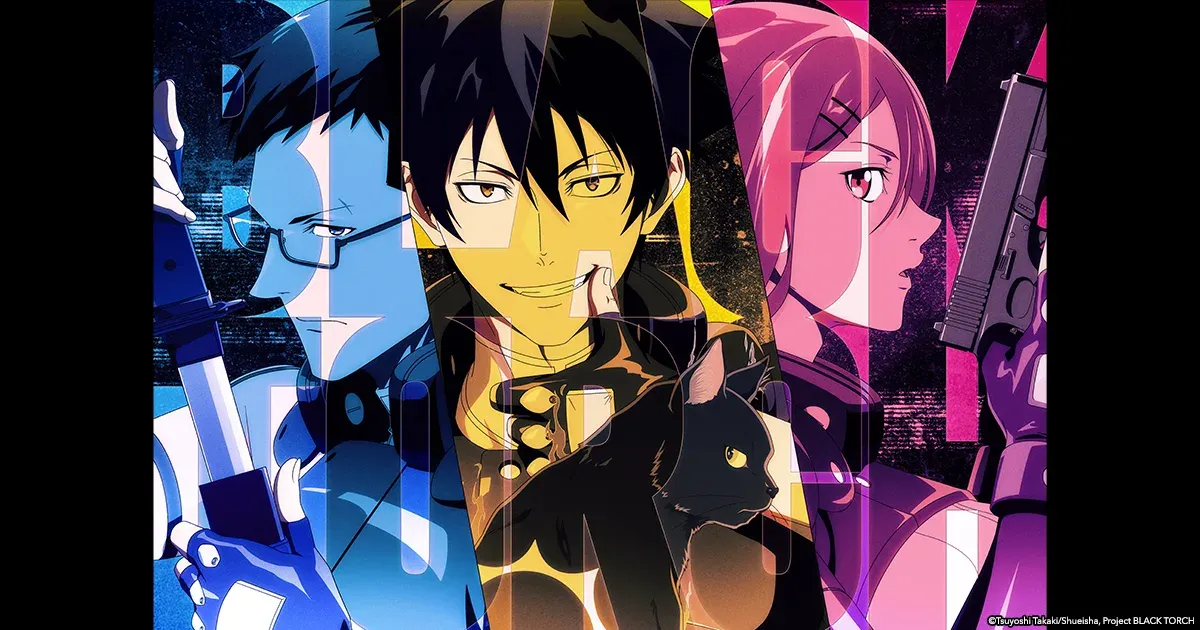
Black Torch centers on Jiro Azuma, a high school student descended from shinobi who can communicate with animals. His life changes when he encounters Rago, a powerful mononoke disguised as a black cat. Their meeting pulls Jiro into a hidden war involving supernatural beings and the government organization tasked with containing them.
The setup is familiar by design: an impulsive young fighter gains dangerous power, enters a secret combat organization, and becomes a target for enemies who want that power for themselves. What distinguishes Black Torch is how quickly it ties those genre elements to Jiro’s personality.
Jiro is not compassionate in the abstract. His ability to speak with animals means that his kindness is part of how he experiences the world. Helping Rago is therefore not merely the incident that starts the plot. It is the clearest expression of who Jiro already is.
That gives the story a cleaner emotional foundation than many power-fusion narratives. Jiro does not accept Rago because he wants strength. He accepts the risk because abandoning an injured creature would violate his instincts.
Jiro and Rago Are the Real Engine of the Series
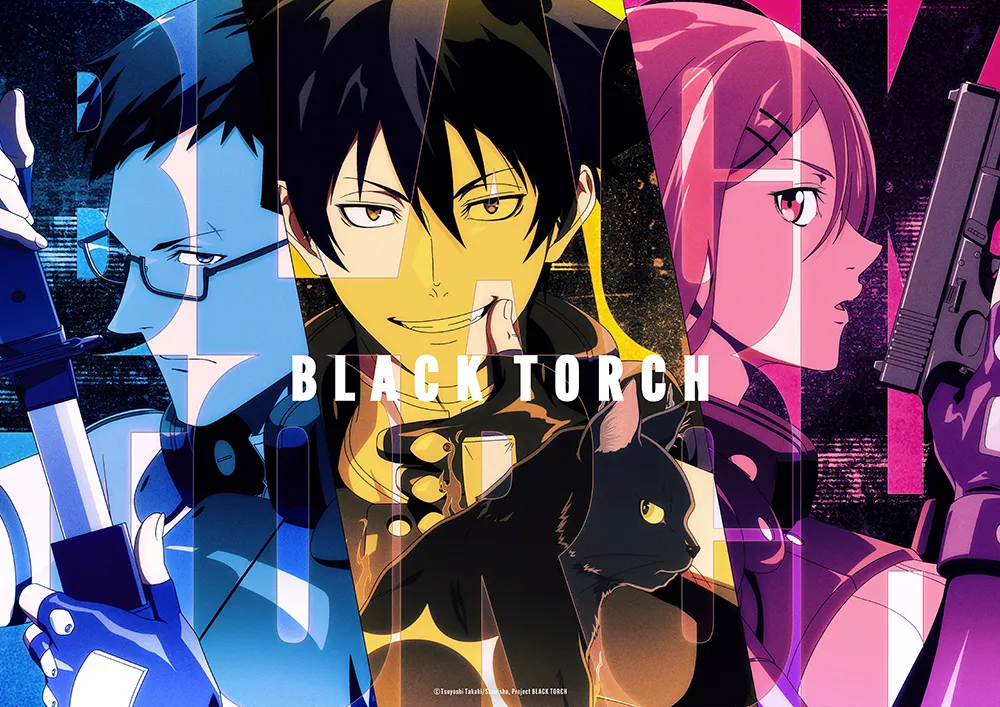
The central attraction of Black Torch is not its bureaucracy, terminology, or power system. It is the relationship between Jiro and Rago.
Rago is dangerous, proud, and far more experienced than his human host. Jiro is reckless, stubborn, and unwilling to treat Rago as either a weapon or a master. Their bond creates immediate friction because neither character naturally accepts subordination.
This is precisely the kind of dynamic animation can strengthen. Timing, vocal performance, facial reactions, and physical comedy can make their arguments feel less like exposition and more like the development of an unstable partnership. Their battles can also communicate trust through movement: who takes control, who reacts first, and whether their combined power looks coordinated or barely contained.
A successful adaptation should make every major fight reveal something about that bond. The spectacle matters, but the emotional progression matters more. Jiro and Rago begin as two beings forced into the same survival problem. The story becomes meaningful when they start choosing each other.
The Short Manga Run Can Become an Adaptation Advantage
Black Torch was serialized in Jump SQ. and Shonen Jump+ before being collected in five volumes. That brevity is often discussed as a limitation, but a television adaptation can turn it into structural clarity.
Long-running manga adaptations frequently struggle with pacing because the source material is still expanding. Black Torch has the opposite problem. Its full shape is already visible. The production can decide where to slow down, which confrontations deserve expansion, and how much connective material is needed between major turns.
A compact source also gives the anime an opportunity to smooth over compression. Supporting characters can receive more breathing room. The Bureau of Espionage can feel like an institution rather than a sequence of assignments. Rivalries can develop across scenes instead of appearing only when the plot needs a fight.
None of this requires the anime to replace the manga. The better goal is to reveal the version of the story that the manga’s strongest ideas imply.
Black Torch Has a Strong Visual Identity to Build On
Takaki’s artwork gives Black Torch a clear contrast between traditional shinobi imagery and modern supernatural combat. Jiro’s physical fighting style, Rago’s monstrous presence, and the series’ sharp black energy effects all lend themselves to animation.
The key challenge is not simply making attacks move. It is preserving the weight and aggression of the original designs. Black Torch works when combat feels close, fast, and dangerous. Jiro is not a distant tactician. He throws himself into conflict, and the visual language should reflect that lack of restraint.
The mononoke also need to feel more than generically monstrous. The premise draws on Japanese supernatural imagery, but its creatures function as personalities, threats, and symbols of appetite. Distinct movement and sound design can help separate them from the anonymous demons that populate many action series.
The anime’s strongest visual opportunity is the fusion between Jiro and Rago. It should feel powerful without becoming effortless. Their combined form carries the tension of cooperation: two wills sharing one body, neither fully comfortable with the arrangement.
The Bureau Gives the Story Its Ideological Conflict
Once Jiro enters the Bureau of Espionage’s special unit, Black Torch becomes more than a simple humans-versus-monsters story. The organization represents control, classification, and suspicion. Jiro’s bond with Rago challenges all three.
From the Bureau’s perspective, Rago is a catastrophic threat. From Jiro’s perspective, Rago is an individual who made a choice. That disagreement creates the series’ most important moral question: can a system built to contain danger recognize the difference between a dangerous being and an enemy?
Jiro is valuable because he refuses to let institutions make that decision for him. His impulsiveness often causes problems, but it also protects the story from becoming emotionally passive. He does not merely learn the Bureau’s rules. He forces the people around him to confront the assumptions behind those rules.
This tension gives supporting characters such as Ichika Kishimojin and Reiji Kirihara a larger purpose. They are not only teammates or rivals. They embody different responses to discipline, loyalty, and the fear of mononoke power.
Why the Anime Matters Now
The return of Black Torch is notable because it challenges the usual logic of adaptation. Anime is often treated as the final reward for manga that prove their commercial durability. Black Torch suggests another possibility: adaptation as reassessment.
A short or prematurely concluded manga can still contain a compelling world, memorable characters, and a premise that benefits from another medium. The question is not whether the source ran long enough to justify animation. The question is whether animation can reveal value that the original publication cycle did not fully develop.
Black Torch is especially suited to that kind of second life. Its story is accessible, its emotional core is immediate, and its supernatural action can be expanded without losing the directness that made the manga appealing.
What the Adaptation Needs to Get Right
The anime’s success will depend less on adding material than on choosing where to deepen what already exists.
First, Jiro’s kindness must remain as important as his aggression. He is easy to flatten into a loud action protagonist, but his instinct to protect vulnerable creatures is the basis of every major decision he makes.
Second, Rago must retain his independence. The story loses tension if he becomes only a source of power or comic relief. His pride, history, and capacity for judgment are what make his partnership with Jiro feel consequential.
Third, the supporting cast needs enough time to become more than functions of the plot. Black Torch has the shape of an ensemble series even when its manga moves quickly. Animation can make that ensemble feel fully present.
Finally, the adaptation should embrace the manga’s compactness. Black Torch does not need to imitate an endless battle saga. Its best version is focused, energetic, and emotionally complete.
A Second Chance With Real Potential
Black Torch does not arrive with the security of a massive ongoing franchise. It arrives with something potentially more interesting: a complete but compressed story that can be reconsidered through animation.
That makes the anime more than a straightforward transfer from page to screen. It is an opportunity to test whether strong characters and a clear supernatural premise can outlive the circumstances of their original serialization.
Jiro and Rago already provide the answer in miniature. Their story is about two beings who should not work together, finding power precisely because they do. Black Torch itself now has the same opportunity.
Frequently asked questions
Frequently asked questions
What is Black Torch about?
Black Torch follows Jiro Azuma, a shinobi descendant who can communicate with animals. After meeting the powerful mononoke Rago, he is drawn into a hidden conflict between supernatural beings and the Bureau of Espionage.
Who created Black Torch?
Black Torch was created by manga artist Tsuyoshi Takaki.
How long is the Black Torch manga?
The completed manga was collected in five volumes.
Where can viewers watch the Black Torch anime?
VIZ identifies Crunchyroll as the streaming home for the anime outside Asia.