
Meruem becomes more human than the Hunters by learning empathy and individual identity through Komugi, while Gon descends into inhuman rage after Kite's death. The Chimera Ant Arc's central irony: the monster learns to value life and chooses love over conquest, while the hero loses his humanity to revenge. Meruem transforms from ruthless king to someone who questions his purpose and spends his final moments playing a board game. Meanwhile, Gon becomes willing to kill an innocent girl and sacrifice everything to murder Neferpitou, embodying humanity's capacity for cruel dehumanization when driven by hatred.
The Chimera Ant Arc asks one devastating question: what does it mean to be human?
Hunter x Hunter answers by showing the monster becoming more human than the hero.
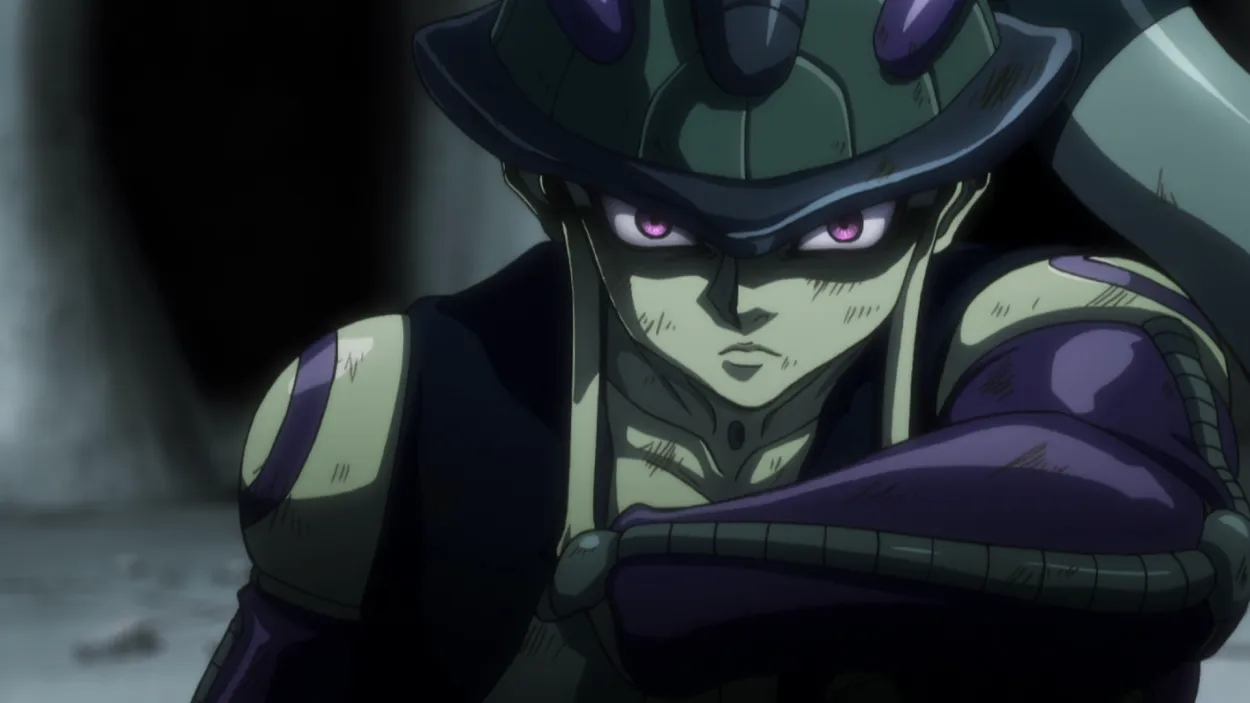
Meruem enters the story as pure apex predator—born to rule, designed to conquer, incapable of empathy. He kills his own mother moments after birth. He views humans as livestock.
Then he meets Komugi, a frail blind girl who plays board games.
By the arc's end, Meruem dies holding her hand, having abandoned conquest for connection. He becomes fully human through learning to care about someone beyond himself.
Meanwhile, Gon—cheerful, optimistic Gon who befriended enemies and saw goodness everywhere—transforms into something monstrous. Driven by rage over Kite's death, he threatens to murder an innocent girl to get revenge on Neferpitou.
The series doesn't present this reversal as plot twist. It's thematic thesis: humanity isn't biological. It's choice, empathy, and the capacity to grow beyond programming.
The King Who Started As Monster
Meruem's introduction establishes him as irredeemably evil.
He tears himself from his mother's womb, killing her in the process without a second thought. His first act is matricide. His second is asserting absolute dominance over his Royal Guards through casual violence.
Everything about his design communicates inhuman threat—the tail that can decapitate with a flick, the chitinous armor, the compound eyes. Born from the Chimera Ant Queen after she consumed thousands of humans, he represents evolutionary perfection designed for one purpose: conquer the world, establish Chimera Ant dominance, treat other species as food.
For the first portion of the arc, he fulfills that role flawlessly.
He slaughters humans with no more thought than swatting flies. When his followers bring him strategic game champions to test his intelligence, he defeats them instantly then kills them. Their only purpose was momentary entertainment before becoming food.
What Separates Him From Other Villains
Most anime antagonists believe they're righteous. Light Yagami thinks he's creating a better world. Eren Jaeger believes he's protecting his people. Even Frieza considers himself naturally superior. This contrast becomes clearer when compared to characters like Light Yagami, whose moral certainty is dissected in Death Note Review: Why the Anime Still Hits Hard Years Later.
Meruem starts different. He doesn't justify his actions through ideology. He simply is what he was designed to be—an apex predator following evolutionary programming.
This makes his transformation matter more. He's not abandoning false righteousness. He's developing consciousness beyond his nature—something anime villains almost never do because it requires admitting their fundamental purpose might be wrong.
This idea—that humanity emerges not from power but restraint—appears again in characters like Reigen Arataka, who remains deeply human precisely because he refuses to abuse the power he never truly had.
Komugi: The Girl Who Changed Everything
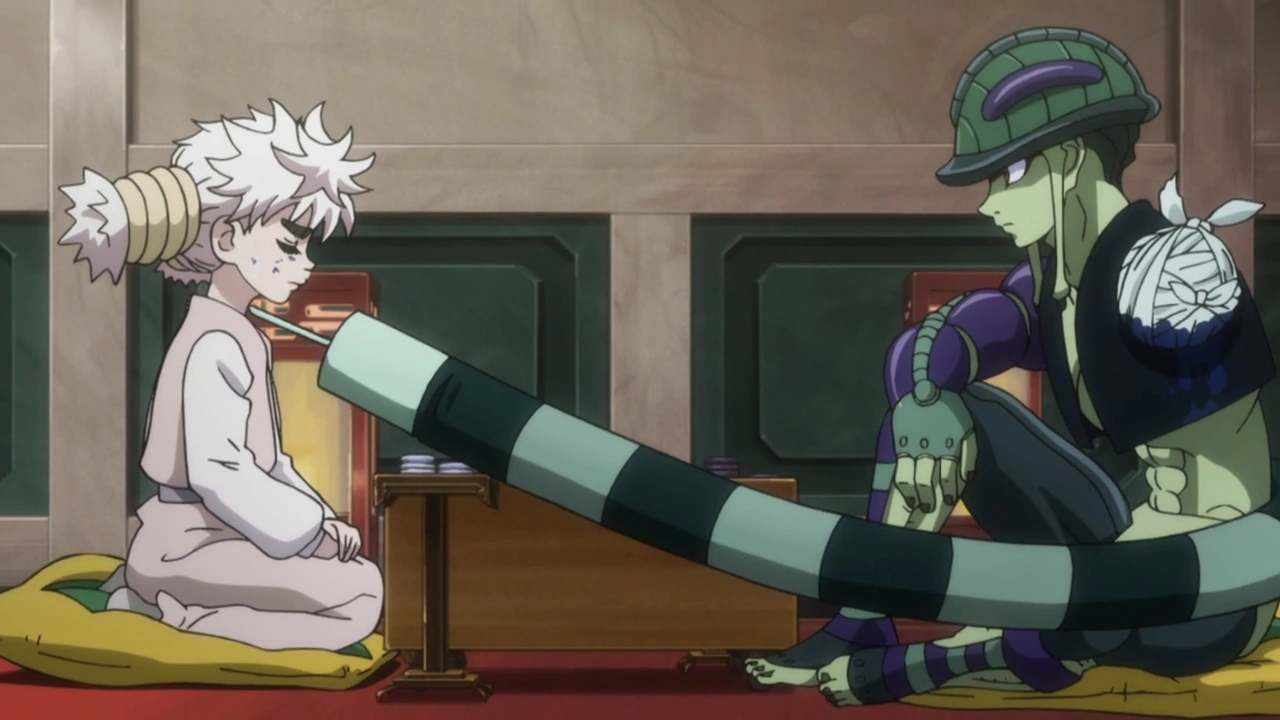
Komugi enters as another game champion brought to entertain the King.
Small, blind, physically weak, she seems destined for the same fate as previous challengers: defeat, then death.
Instead, she beats him at Gungi.
For the first time in his existence, Meruem loses. His absolute superiority—the core of his identity—gets challenged by a frail human girl who apologizes constantly and seems terrified of inconveniencing anyone.
The rational response would be killing her for the insult. Instead, Meruem demands a rematch.
Then another. And another.
How Defeat Teaches Humility
Meruem's obsession with beating Komugi reveals something he didn't know existed: room for improvement.
As the pinnacle of Chimera Ant evolution, perfection was his baseline. The concept that he could become better through effort never occurred to him because he'd never needed to try.
Komugi—through years of dedicated practice, using unconscious Nen to enhance her Gungi abilities—demonstrates that mastery comes from passion and persistence. Not from being born strongest.
This realization fractures Meruem's worldview. If power isn't everything, what is? If he can improve, what was he before? If this weak human surpasses him in one domain, what does superiority even mean?
The questions force him toward individuality. Before Komugi, he was simply "King"—a role without personal identity. She makes him wonder about his name, his purpose beyond conquest, who he is separate from what he was designed to be.
The Moment Meruem Becomes Human
The transformation crystallizes when Komugi gets injured during a Royal Guard conflict.
Meruem's reaction—genuine concern, protective instinct, anger at those who endangered her—shocks everyone, including himself. These emotions don't serve conquest. They're purely personal, arising from connection to an individual he's come to value.
When his Royal Guards question keeping Komugi alive, arguing she distracts him from his purpose, Meruem's response reveals complete transformation: her life matters more than their strategic advice.
He's no longer The King following predetermined role. He's Meruem, an individual making choices based on personal values.
This is the exact moment the arc redefines humanity—not as biological category, but as the capacity to choose compassion over purpose.
Choosing Komugi Over Conquest
After his battle with Netero poisons him with the Poor Man's Rose—a weapon representing humanity's capacity for mutual destruction—Meruem faces his mortality.
His Royal Guards want him to consume them, regain strength, continue conquest. They offer their lives for his purpose.
Instead, Meruem asks one question: where is Komugi?
In his final hours, the King who wanted to rule the world abandons every ambition to play board games with a blind girl. They sit together in an abandoned room. Komugi asks if she can stay with him. Meruem, vision fading from poison, asks her to call his name.
"Meruem," she says.
The King who never needed a name beyond his title dies as Meruem—an individual defined by relationship, not role.
Gon: The Hero Who Becomes Monster
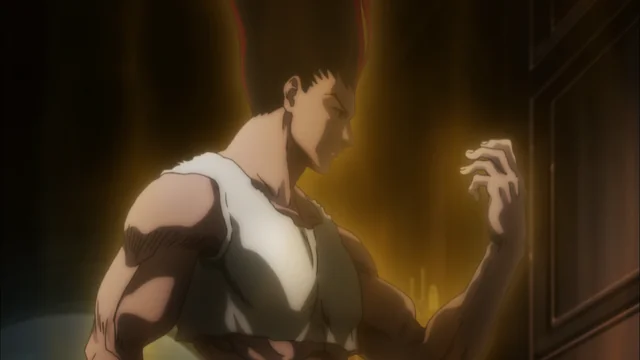
While Meruem moves toward humanity, Gon descends into darkness.
The cheerful protagonist who made friends with everyone, who believed in redemption, who saw good in villains—that Gon vanishes after Kite's death.
What remains is pure vengeance.
This isn't moral failure—it's emotional collapse. Gon isolates himself from Killua, his closest friend. He fixates on murdering Neferpitou with such single-minded intensity that nothing else registers. When Pitou is healing Komugi—exercising the same compassion Meruem learned—Gon threatens to kill both of them.
The moment Gon threatens an innocent girl to satisfy revenge reveals how far grief has dragged him from his nature.
The Transformation That Horrifies
During his confrontation with Neferpitou, Gon makes a Nen contract: sacrifice all his potential, his future, possibly his life, for enough power to kill his enemy.
The transformation is horrifying. He ages into a twisted adult form, eyes dead, face expressionless. He doesn't speak. He just murders Pitou with brutal efficiency while the chimera ant tries desperately to explain Kite's fate.
Gon doesn't care about explanations. He's abandoned reason, empathy, proportionality. He's become pure vengeance—the most human emotion taken to inhuman extremes.
The series framed this transformation as tragedy, not triumph. Gon's friends watch in horror. Killua recognizes his best friend has become something he doesn't recognize.
Humanity's Capacity for Cruelty
Gon's descent illustrates humanity's darkest capacity: dehumanizing others when emotions overwhelm reason.
To satisfy his rage, Gon reduces Pitou from individual to obstacle. He can't see the ant's genuine remorse, growth, or current actions healing an innocent. He only sees the target of his hatred. This reduction of a person into a symbol of harm parallels the psychological horror examined in Why Monster Anime Feels More Terrifying Than Any Horror Anime, where losing the ability to see individuals enables cruelty.
This myopic vengeance mirrors real-world cruelty. When we dehumanize others—reducing them to representatives of harm done to us—we become capable of atrocities we'd never commit against people we see as individuals.
The arc explicitly compares Gon's transformation to Meruem's in reverse. Where Meruem learns to see individuals and value their lives, Gon loses that capacity entirely.
Netero: Humanity's Representative
Chairman Netero's role in the arc complicates the human-versus-monster binary further.
As humanity's strongest Hunter and representative, Netero chooses nuclear weapon over honorable combat. He brings the Poor Man's Rose—a bomb that will poison everything in its radius—because winning matters more than how.
His final act epitomizes humanity's willingness to sacrifice everything for victory. The Rose doesn't just kill Meruem. It spreads radioactive poison that will kill innocents for generations.
Netero justifies this through collective survival. Individual humans may die from the Rose, but humanity itself continues. The ends justify the means.
The Weapon That Reveals Human Nature
The Poor Man's Rose exists because humanity turns innovation toward destruction. The narrator explicitly states the weapon shouldn't exist—wouldn't exist—if humans prioritized collective wellbeing over individual nation's military advantage.
This weapon, more than any Chimera Ant action, demonstrates humanity's inhuman nature. We create tools specifically designed for mutual annihilation. We stockpile weapons that could destroy our species.
Meruem recognizes this. After the Rose detonates, understanding humanity created such weapons for use against each other, he questions whether humans or ants are truly the monsters.
The series doesn't answer cleanly. But it suggests that capability for both profound compassion and absolute cruelty defines humanity more than biology does.
The Mirror Arc: What Humanity Actually Means
The Chimera Ant Arc's genius is making Gon and Meruem mirrors.
One starts human, becomes monstrous. The other starts monstrous, becomes human. Their arcs intersect at the point where biological origin stops mattering compared to choices and growth.
Meruem's humanity emerges through:
- Learning empathy beyond his species
- Questioning his predetermined purpose
- Valuing an individual over his role
- Choosing connection over conquest
- Accepting mortality with grace
Gon's inhumanity emerges through:
- Abandoning empathy for vengeance
- Ignoring friends' concern
- Reducing enemies to obstacles
- Sacrificing his future for momentary satisfaction
- Becoming willing to harm innocents
The arc suggests humanity isn’t what you are—it’s who you choose to become, echoing the same question explored in Ergo Proxy, where identity is defined not by origin or purpose, but by the choices a being makes after becoming self-aware.
Why This Matters Beyond Hunter x Hunter
Meruem's character arc resonates because it challenges comfortable assumptions about heroes, villains, and human nature.
We want clear distinctions. Good people who stay good. Bad people who stay bad. Heroes who overcome darkness. Villains who remain evil.
Hunter x Hunter refuses that comfort. It shows that circumstances, choices, and capacity for growth matter more than starting positions.
Meruem—designed as ultimate antagonist—develops more humanity than characters positioned as heroes. Not through sudden revelation but through accumulated small choices: not killing Komugi when defeated, protecting her when injured, questioning his purpose, ultimately choosing relationship over power.
Meanwhile, Gon—the optimistic protagonist—reveals how quickly circumstances can strip away humanity. Loss, rage, and fixation on revenge transform him into something capable of threatening innocents without hesitation.
The arc asks: if the monster can become human and the human can become monstrous, what separates the two?
The answer is uncomfortable: nothing permanent. Humanity is practice, not inherent state. It requires continued choice, empathy, and willingness to see others as individuals rather than representatives of harm or benefit to us.
And that suggests we're all far more capable of becoming monsters than we'd like to believe.