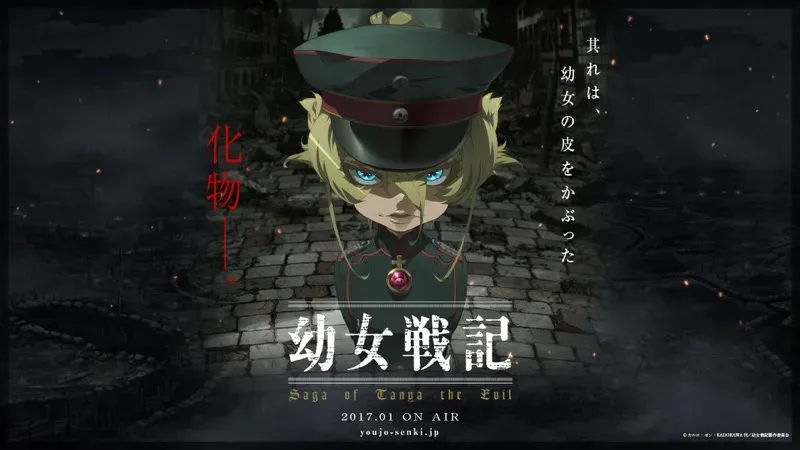

Tanya Degurechaff is fascinating because Saga of Tanya the Evil builds its protagonist around a contradiction: she is an extreme individualist trapped inside institutions that reward her precisely when she wants them to leave her alone. She wants survival, security, professional advancement, and eventually a comfortable position away from danger. Yet her competence repeatedly convinces the military that she belongs closer to the center of the war.
That irony gives Tanya far more depth than the simple label of an “evil isekai protagonist” suggests. She is calculating, ruthless, arrogant, and capable of horrifying violence, but she is also remarkably consistent. Her choices emerge from a worldview built around rational incentives, institutional rules, and self-preservation. Then Being X places that worldview in a universe where Tanya is forced to confront the one thing she refuses to accept on principle: divine authority.
The result is one of isekai’s most unusual protagonist conflicts—not a hero trying to become stronger, but a rationalist trying to prove that reality itself should not be allowed to dictate what she believes.
Spoiler Warning: This character analysis discusses Tanya’s reincarnation, her conflict with Being X, and major themes from the anime and early franchise material. It avoids detailed late-light-novel outcomes.
Tanya Degurechaff at a Glance
| Trait | What It Means for Tanya | | --- | --- | | Core goal | Survive and secure a safe, comfortable future | | Worldview | Rationalist, utilitarian, intensely individualistic | | Greatest strength | Strategic thinking and adaptation | | Central contradiction | Her attempts to escape danger make her more valuable to the military | | Main external conflict | War and the interventions of Being X | | Main internal conflict | Her belief in rational control versus a reality she cannot fully control |
Yen Press describes Tanya as a ruthless, calculating former salaryman reincarnated as a destitute orphan girl in a war-torn world, while the anime’s official character material emphasizes that her ultimate objective is survival, advancement, and a stable future in a safe rear area. Those two descriptions capture the character’s essential tension: Tanya is extraordinarily good at war while desperately wanting the rewards that should allow her to escape it.
Tanya Is an Isekai Protagonist Who Does Not Want an Adventure
Many isekai stories turn reincarnation into liberation. A protagonist leaves an unsatisfying previous life, receives extraordinary abilities, and discovers a world where those abilities provide freedom, status, companionship, or purpose.
Tanya’s reincarnation works almost in reverse.
Her new world is not a playground. It is a geopolitical machine moving toward industrialized war. Her magical aptitude does not free her from the system; it makes her useful to it. Military talent does not buy peace; it produces new assignments. Promotion does not necessarily move her away from danger; it gives commanders more reasons to trust her with dangerous operations.
This is the first reason Tanya stands apart. Her power is a trap.
She keeps trying to optimize her circumstances, but every successful optimization raises her value to an institution with objectives different from her own. The better Tanya performs, the harder it becomes for her to become irrelevant.
That is a much more interesting use of an overpowered protagonist than simply asking what Tanya can defeat.
Her Rationalism Is Both a Superpower and a Blind Spot
Tanya’s defining characteristic is not cruelty. It is rationalism pushed toward an extreme.
She tends to understand people through incentives, rules, hierarchy, efficiency, and predictable self-interest. In military environments, that way of thinking can be enormously powerful. She studies systems, identifies what superiors want, recognizes operational constraints, and acts decisively when other people hesitate.
The same worldview also limits her.
Human beings do not always behave like rational economic actors. Loyalty, faith, hatred, grief, nationalism, pride, and revenge can overpower self-preservation. Tanya can account for these forces intellectually, but she often treats them as variables to manage rather than experiences that possess value in themselves.
That creates an important distinction: Tanya is highly intelligent, but intelligence does not make her omniscient.
Her confidence in rational analysis can become its own form of rigidity. She despises faith because she sees it as surrendering reason. Yet her absolute confidence in her own framework sometimes resembles the dogmatism she believes she has escaped.
Being X Turns Tanya’s Ideology Into the Real Battlefield
The conflict with Being X is what elevates Tanya beyond a clever military antihero.
On the surface, their struggle is straightforward. A supernatural entity demands recognition and faith; Tanya refuses to grant either willingly. Being X places her in circumstances intended to force dependence on divine power, while Tanya interprets those interventions as coercion rather than revelation.
But the conflict is more interesting than “atheist versus god.”
Tanya’s objection is fundamentally about autonomy.
She cannot tolerate the idea that an authority can manipulate her circumstances and then demand gratitude for providing the means to survive them. From Tanya’s perspective, suffering engineered to produce belief does not validate faith. It invalidates the authority demanding it.
Being X therefore attacks the foundation of Tanya’s identity. Tanya believes that competence, calculation, and disciplined choices should allow an individual to improve their circumstances. Being X represents a universe in which an external power can simply change the rules.
Their war is philosophical before it is supernatural.
The Type 95 Makes Her Contradiction Visible
One of the sharpest pieces of irony in Tanya’s character is her relationship with divine power.
She rejects Being X, yet circumstances repeatedly connect her battlefield effectiveness with power she associates with the very entity she despises. The visual and narrative contradiction is deliberate: a character who refuses faith can be pushed into actions and appearances that resemble religious devotion.
For Tanya, this is humiliating because it turns belief into an instrument.
She wants language, power, and military procedure to remain functional tools. Being X contaminates that logic by making the spiritual unavoidable. Tanya can insist that she is acting pragmatically, but the spectacle visible to everyone else can tell a completely different story.
This gap between Tanya’s intention and everyone else’s interpretation becomes one of the series’ most productive sources of irony.
Tanya Keeps Winning the Wrong Reward
Perhaps the best recurring joke in Saga of Tanya the Evil is also one of its strongest character mechanisms.
Tanya wants a safe career.
To obtain it, she needs to demonstrate competence.
She demonstrates extraordinary competence.
Her superiors conclude that someone this capable should be given greater responsibility.
Greater responsibility sends Tanya back toward danger.
This cycle is funny because the audience understands both sides. Tanya is not irrational for believing that achievement should improve her career. Her commanders are not irrational for deploying an exceptional officer where she can provide the greatest strategic value.
The problem is structural. Tanya and the military are optimizing for different outcomes.
She wants personal security. The institution wants maximum utility from scarce talent.
That makes Tanya’s story partly an institutional satire. She understands bureaucracy extremely well, yet she repeatedly discovers that understanding a system does not mean controlling what that system does with you.
She Is Ruthless Without Being Random
Calling Tanya evil is easy. Understanding what kind of moral character she actually is takes more work.
Tanya is capable of decisions most conventional protagonists would find horrifying. She can discuss casualties impersonally, exploit legal and procedural boundaries, and prioritize strategic necessity over sentiment. Her emotional distance makes those moments especially unsettling.
But Tanya is not compelling because she behaves like a chaotic villain.
She usually wants rules to be clear. She values discipline. She dislikes waste. She expects organizations to behave according to recognizable incentives. Even her harshest decisions tend to emerge from a framework rather than sadism for its own sake.
That distinction does not absolve her. It makes her more disturbing.
A character who commits violence because she enjoys evil is easy to categorize. Tanya forces the viewer to confront how frightening violence can become when it is processed through procedure, legality, efficiency, and professional responsibility.
The question stops being “Is Tanya a monster?” and becomes “How much moral responsibility disappears when terrible choices are perfectly rational inside the system that produced them?”
That is a much harder question.
Tanya’s Appearance Changes How Everyone Reads Her
The reincarnation premise creates another layer of tension through the enormous gap between Tanya’s appearance, internal consciousness, and social role.
She possesses the memories and analytical habits of an adult salaryman, but the world sees a young girl. She is simultaneously underestimated because of her body and feared because of what she does with it.
The anime exploits this contrast aggressively. Tanya can move from childlike visual framing to terrifying battlefield expressions within seconds. That dissonance is not merely shock value. It makes the audience constantly negotiate incompatible impressions of the same person.
Is Tanya a child soldier shaped by an appalling environment? A reincarnated adult making calculated choices? A military prodigy? A victim of divine coercion? An aggressor benefiting from a violent system?
The premise refuses to let any one description fully replace the others.
That instability is central to her fascination.
Why Tanya Works Better as an Antihero Than a Villain
Tanya frequently occupies moral territory associated with villains, but the narrative structure makes “villain protagonist” an incomplete description.
We understand her objectives. We see the logic connecting her decisions. We know that her desired endpoint is not conquest for its own sake but survival and security. We also see forces larger than Tanya—states, armies, historical momentum, and Being X—restricting the choices available to her.
None of that makes her morally innocent.
It makes her an effective antihero because the audience can follow her reasoning without being required to endorse it. The series creates tension by allowing two reactions at once: admiration for Tanya’s competence and discomfort with what that competence accomplishes.
A weaker story would try to resolve the contradiction by secretly proving Tanya is kindhearted or by reducing her to a monster. Saga of Tanya the Evil is more interesting when it preserves the contradiction.
Tanya Is Powerful, but the Story Does Not Let Power Solve Her Real Problem
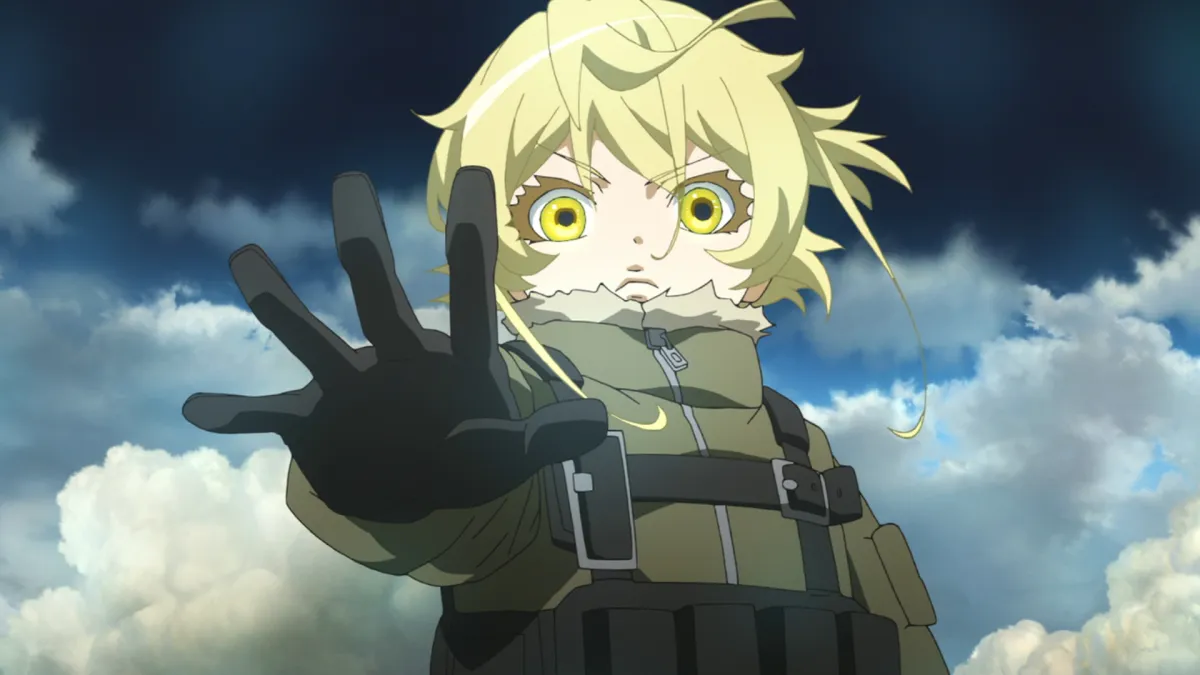
Tanya is an exceptional aerial mage and commander. The official anime material describes her as an Imperial Army aerial mage officer with an outstanding record and exceptional command ability. Yet none of those advantages can simply end her central conflict.
She cannot shoot bureaucracy.
She cannot outmaneuver geopolitics forever.
She cannot prove Being X irrelevant when Being X can interfere with the conditions of her life.
And she cannot guarantee a peaceful future merely by becoming better at surviving the present.
This is why Tanya’s strength rarely destroys narrative tension. The story gives her formidable tools while placing the real problem at a level those tools cannot easily reach.
Her magic can win battles. Her intelligence can solve operations. Neither automatically gives her control over history.
The Anime Makes Tanya’s Contradictions Even Sharper
The anime adaptation emphasizes Tanya’s duality through performance and visual direction. Her small frame can appear almost swallowed by the machinery and uniforms of war, while close-ups can transform her face into something ferocious and intimidating.
That contrast reinforces the central idea that different observers encounter different versions of Tanya.
Her subordinates can see a brilliant commander. Her enemies can see a monster. Military leadership can see a valuable strategic asset. Being X can see an arrogant soul requiring correction. Tanya sees herself as a rational individual attempting to survive an absurd situation.
No single perspective is sufficient.
That is one reason Tanya remains so memorable even in a genre crowded with reincarnated protagonists. The series does not merely give her unusual traits. It builds an entire narrative machine designed to challenge how she understands herself.
Is Tanya Degurechaff Actually Evil?
The most useful answer is: Tanya is morally disturbing, but “evil” is intentionally too simple to explain her.
She is ruthless and often lacks ordinary empathy. She participates effectively in a brutal war machine and can rationalize actions that viewers may find appalling. Those facts should not be softened simply because she is the protagonist.
At the same time, the series repeatedly places her inside systems where violence has already been normalized and where refusing to act can carry catastrophic consequences. Tanya does not create every conflict she enters, and her personal objective is usually survival rather than cruelty.
The title The Saga of Tanya the Evil therefore works as a provocation. It encourages viewers to judge Tanya, while the story keeps complicating the standards by which that judgment is made.
The better question is not whether Tanya passes a binary good-versus-evil test. It is what Tanya reveals about morality when institutions reward actions that an individual can rationally justify but an outside observer may still find horrifying.
Why Tanya Stands Out Among Isekai Protagonists
Tanya’s uniqueness comes from the way several familiar isekai ingredients are inverted at once.
She retains knowledge from a previous life, but that knowledge does not guarantee comfort. She possesses exceptional power, but power makes institutions demand more from her. She encounters a divine being, but refuses the expected relationship between mortal and god. She advances through the new world, but advancement repeatedly moves her farther from the quiet life she wants.
Most importantly, Tanya has a worldview strong enough for the story to argue with.
Her rationalism is not just a personality quirk. It shapes how she interprets war, employment, authority, religion, morality, and human behavior. Because the narrative constantly places pressure on that worldview, Tanya can remain internally consistent while still generating conflict and surprise.
That is the mark of a strong protagonist: the story does not need her to behave randomly to keep moving. It only needs Tanya to pursue what she already wants.
Final Analysis
Tanya Degurechaff is one of isekai’s most fascinating protagonists because her greatest strengths continually create new versions of the problem she is trying to escape.
Her intelligence makes her valuable. Her value keeps her near the war. Her rationalism helps her survive but struggles to account for faith and irrational human behavior. Her refusal to submit to Being X preserves her autonomy while ensuring that the conflict remains personal. Even her victories can become evidence that the institutions around her should demand more.
That is why Tanya works so well beyond the novelty of “a ruthless salaryman reincarnated as a young girl.” She is a protagonist built around ideological friction. Saga of Tanya the Evil keeps asking whether intelligence can produce freedom inside systems larger than the individual—and keeps giving Tanya enough success to believe the answer might still be yes.
Frequently asked questions
Frequently asked questions
Who was Tanya Degurechaff before reincarnation?
Before becoming Tanya, the protagonist was a Japanese salaryman with a highly rationalistic and utilitarian outlook. After death, that consciousness is reincarnated as Tanya in a war-torn alternate world.
What does Tanya actually want?
Tanya primarily wants survival and a stable, comfortable future. Her attempts to earn a safer position repeatedly demonstrate so much competence that the military gives her greater responsibility instead.
Why does Tanya hate Being X?
Tanya sees Being X’s demand for faith as coercive interference rather than legitimate proof of divine authority, turning their conflict into a struggle over autonomy as well as religion.
Is Tanya a villain or an antihero?
Antihero is the more useful description. Tanya is morally troubling and capable of ruthless decisions, but her central goals are survival, security, and autonomy rather than simple malice.
Why is Tanya so successful in the military?
She combines magical talent with adult memories, strategic thinking, discipline, adaptability, and a strong understanding of institutional incentives.