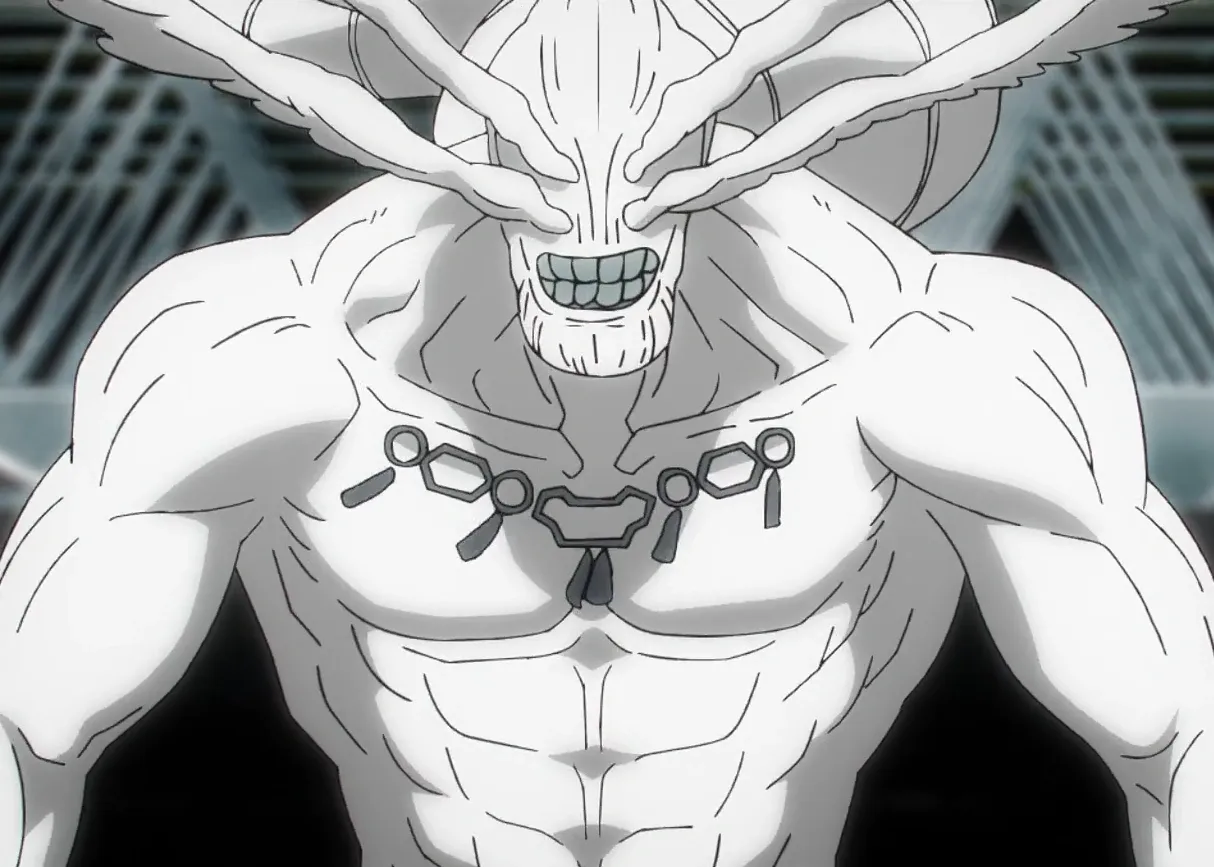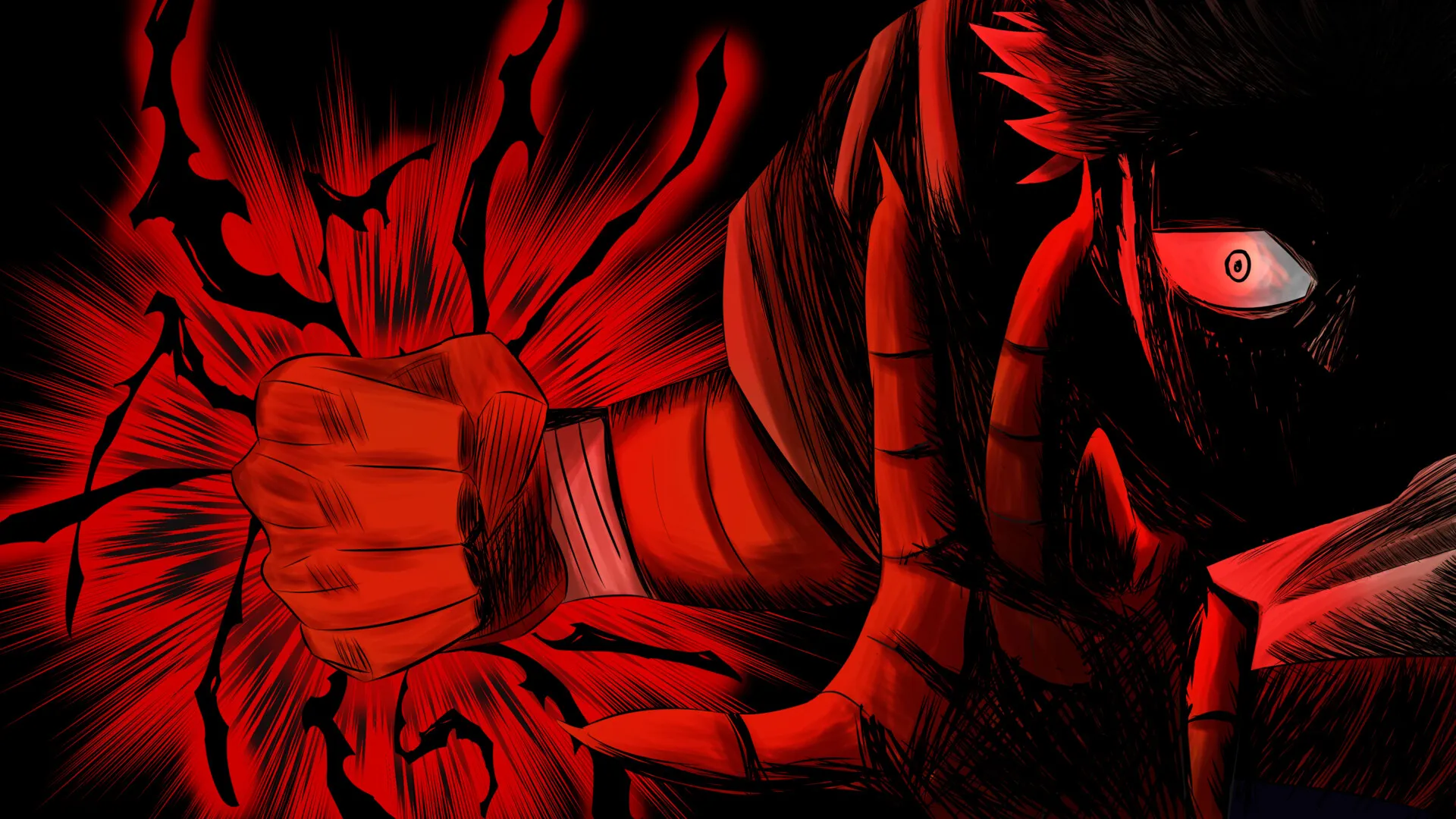

Every Jujutsu Kaisen Domain Expansion: manga spoiler warning
Domain Expansion is one of the most searched abilities in Jujutsu Kaisen because every major reveal seems to rewrite the rules of a fight. This is a complete reader-oriented roster for Gege Akutami's original 271-chapter manga, including domains that were named, unnamed, incomplete, or only discussed. It contains spoilers through the final volume, far beyond some anime adaptations. If you are watching the anime only, stop before the manga-only entries.
There is no universally agreed total because some references count a sorcerer who says they can expand a domain, a spirit whose attempt was interrupted, or an unnamed space revealed only briefly. Our core list has 17 users/cases: named domains including Megumi's incomplete one, several unnamed domains, and Hanami's attempted domain known from supplementary information. We identify what was actually shown, what was only attempted, and what remains unknown. This page does not combine the original series with the separate Jujutsu Kaisen Modulo continuation.
Domain Expansion names: quick reference
The principal named domains are Sukuna: Malevolent Shrine; Gojo: Unlimited Void; Jogo: Coffin of the Iron Mountain; Mahito: Self-Embodiment of Perfection; Megumi: Chimera Shadow Garden; Dagon: Horizon of the Captivating Skandha; Higuruma: Deadly Sentencing; Hakari: Idle Death Gamble; cursed-spirit Naoya: Time Cell Moon Palace; Kenjaku: Womb Profusion; Yorozu: Threefold Affliction; and Yuta: Authentic Mutual Love. Hanami's domain has a name in supplementary fanbook material but is not fully displayed in the main manga.
The manga also depicts or attempts domains associated with the Smallpox Deity, Ryu Ishigori, Takako Uro and Yuji Itadori without confirming comparable names for them. Yuki Tsukumo is discussed as capable of using a domain, but readers never receive a completed demonstration. Some fan lists include additional primitive innate domains or claimed users, so always ask which definition they apply before comparing totals.
What is Domain Expansion and why does it matter?
At its broadest, a domain manifests the user's innate territory and often imbues a barrier with a cursed technique. A refined completed domain can grant a sure-hit effect, allowing a technique to reach a trapped opponent according to the domain's rules. But “sure hit” does not automatically mean “instant death.” A courtroom domain can impose a trial, while a gambling-themed domain can make its rules unavoidable without directly injuring a target.
The more interesting battles involve barrier conditions. Some users build a closed shell; other extraordinary users manifest an open-barrier domain that occupies real space. An incomplete expansion may enhance the user's technique without gaining the conventional sure-hit guarantee. For a deeper treatment of barriers, counters and clashes, read our separate Domain Expansion mechanics guide.
Satoru Gojo: Unlimited Void

Unlimited Void (also commonly called Infinite Void) exposes targets to an overwhelming influx of information, preventing ordinary thought and action. It is among the clearest demonstrations that a sure-hit effect does not need to resemble a projectile. In the anime, the contrast between Gojo's calm expression and the impossible internal experience of the target establishes why high-level domains are terrifying.
Against Sukuna in the manga, the conflict becomes about timing, barrier refinement and the risks of repeated activation, not simply which technique has the flashier visuals. Gojo's precision and powerful Limitless technique explain why his domain remains a benchmark, but the story makes clear that even an extraordinary domain can be countered under certain conditions.
Ryomen Sukuna: Malevolent Shrine
Malevolent Shrine is unusual because its barrier is open rather than sealing opponents inside an enclosed shell. Within its effective range, repeated slashing techniques threaten everything that remains exposed to the area. This architecture matters enormously against opponents whose domains are enclosed, since interactions at the barrier boundary can change the outcome of a clash.
It is tempting to call Malevolent Shrine the strongest domain and end the debate. The manga resists that simplification: Sukuna's exceptional technique, binding conditions, adaptation strategy and experience all matter. A domain's power does not exist separately from the caster's decisions. His clash with Gojo is a study of how advantages in one area can be offset by others.
Jogo: Coffin of the Iron Mountain
Jogo's Coffin of the Iron Mountain turns the surrounding territory into a volcanic environment. Heat, molten terrain and the threat of Jogo's fire-based cursed techniques give it an instantly legible visual identity. It also serves as an early lesson that simply entering the opponent's domain can make conventional dodging irrelevant.
Jogo is sometimes dismissed because his major opponents are absurdly powerful. That is a poor way to judge the domain itself. Against most sorcerers, a volcanic battlefield with a reliable attack advantage would be catastrophic. The story uses him to teach the audience the scale of an advanced cursed technique long before the most elaborate late-manga examples appear.
Mahito: Self-Embodiment of Perfection
Self-Embodiment of Perfection expresses Mahito's soul-manipulating ability in an enclosed territory. The central danger is that his Idle Transfiguration can affect a victim's soul through the domain's guaranteed-contact mechanism. This is a particularly frightening domain because the threat is not determined by conventional durability or distance alone.
Mahito's character development is tied to experimentation and ruthless curiosity, so the domain feels like an extension of his worldview. Its unsettling design communicates the nature of his power. Survival depends on specific counters, unusual soul awareness or disrupting the domain rather than merely enduring an ordinary blow.
Megumi Fushiguro: Chimera Shadow Garden
Chimera Shadow Garden is an incomplete Domain Expansion, an important qualification for comparison lists. It fills the battlefield with shadow and enhances Megumi's ability to deploy shikigami and move through darkness. Yet its initial form lacks the standard barrier and sure-hit properties associated with a complete domain. The story makes a virtue of that imperfection: Megumi can still use it creatively under favorable conditions.
What makes the domain compelling is that it reflects Megumi's strategic temperament. Instead of overwhelming every opponent with automatic damage, he exploits terrain, surprise and multiple points of attack. When discussing “all domains,” leaving him off because his expansion is incomplete would conceal a valuable part of the power system.
Dagon: Horizon of the Captivating Skandha
Dagon's Horizon of the Captivating Skandha creates a deceptively tranquil tropical coastline. Its beauty is the trap: marine shikigami attacks become extraordinarily dangerous within the domain's rule system. The battle demonstrates why a calm-looking environment should not be confused with a harmless ability.
Dagon's domain also highlights coordination. Countermeasures, domain interference and the arrival of outside fighters can change the tactical situation. The story makes this a team confrontation instead of a straightforward contest between two attack animations. It is among the most memorable examples of environmental design reinforcing a cursed spirit's identity.
Hiromi Higuruma: Deadly Sentencing
Deadly Sentencing is a courtroom rather than a battlefield. It invokes Judgeman and imposes procedural rules, with outcomes such as confiscation and potentially harsher judgments depending on the case. The sure-hit property in this context is tied to the nonviolent rule system rather than an unavoidable physical strike.
Higuruma is a crucial counterexample to the claim that domains are simply giant attacks. His abilities draw from his background as a lawyer and his disillusionment with legal institutions. The arena is character writing as much as combat mechanics: guilt, evidence and power become literal elements of the technique.
Kinji Hakari: Idle Death Gamble
Hakari's Idle Death Gamble uses rules associated with a pachinko-like game. The sure-hit component communicates the domain's information and framework to the opponent; the most spectacular payoff happens when Hakari achieves a jackpot. He can then access an extraordinary period of cursed energy supply and automatic healing that makes him nearly impossible to put down for a limited window.
That makes it one of the most unusual domains in the series. It is less about immediate elimination and more about changing the odds of the fight through a system the opponent must endure. A ranking based only on lethal sure-hit attacks would misunderstand why Hakari's domain is effective.
Naoya Zenin: Time Cell Moon Palace
When Naoya returns as a cursed spirit, Time Cell Moon Palace builds on the 24-frame logic of his Projection Sorcery. Targets subjected to its effect must obey an extraordinary movement rule, and violations cause devastating internal injury. The domain transforms the idea of animation frames into a mechanism of bodily control.
It is an excellent example of a domain developing a previously established technique rather than introducing an unrelated power. Its cruelty suits Naoya's character, and its rules force opponents to understand the mechanism rather than simply overpower the user. The domain is manga material, so anime-only readers should approach this section with spoiler caution.
Kenjaku: Womb Profusion
Womb Profusion is a disturbing domain associated with Kenjaku, whose knowledge of barriers makes him exceptionally dangerous. It is presented as an open-barrier construction rather than a conventional sealed arena, putting Kenjaku in a rare category of advanced users. The domain's effects are devastating, although explanations of its exact underlying technique require care because fans often fill gaps with assumptions.
The key narrative point is expertise. Kenjaku's long experience and understanding of sorcerer systems give the domain an advantage that cannot be captured by an attractive ranking graphic. Its open architecture is one of the reasons the manga's most advanced domain interactions remain so difficult to predict.
Yorozu: Threefold Affliction
Yorozu's Threefold Affliction works with her Construction technique and the threat of the Perfect Sphere, a construct whose unusual properties make a successful hit devastating. The domain can turn that otherwise challenging attack into a sure-hit threat. The danger lies in the combination of a specialized technique and the rules of the expansion, not just in the enclosed scenery.
Yorozu demonstrates how a domain can solve a weakness in the caster's ordinary ability. A theoretically devastating attack becomes much more significant if the domain removes the normal requirement to land it. The manga's presentation also reinforces her intense, obsessive characterization.
Yuta Okkotsu: Authentic Mutual Love
Yuta's Authentic Mutual Love surrounds him with countless swords associated with techniques he has copied. Within the domain, he can use stored abilities and select a technique to carry the sure-hit effect. That flexibility makes it extremely difficult for an opponent to know which rule will become decisive.
It also makes the domain an expression of Yuta's character. His power is connected to bonds with other people and the burden of what he carries from those connections. Its striking environment is not simply decorative; it gives a visual structure to the idea of copied techniques and variable tactics.
Yuji Itadori's unnamed Domain Expansion
Yuji activates a domain late in the original manga, beginning in chapter 264. It features recognizable places from his memories and the city where he grew up, creating a surprisingly personal atmosphere for a technique deployed against Sukuna. Importantly, the original manga does not provide an officially confirmed name for this domain. Fan-created titles should not be passed off as canon.
The domain's offensive implications connect to Yuji's developing use of Shrine and his ability to target the boundary between souls. Its emotional significance is as important as the attack: the setting gives his conflict with Sukuna room to become a conversation about life, values and identity, not just a contest of increasingly large explosions.
Unnamed domains: Smallpox Deity, Ryu Ishigori and Takako Uro
The Smallpox Deity uses an eerie burial-and-countdown mechanism that attacks a target under domain rules; the manga never gives the expansion a familiar named title. Ryu Ishigori and Takako Uro each attempt a Domain Expansion during their encounter with Yuta, but the overlapping domain contest collapses before their individual effects are fully explored. Inventing names or elaborate mechanics for those failed expansions would turn uncertainty into false trivia.
These cases matter for readers looking for every user rather than every named technique. A domain's existence can be established without its full visual design or sure-hit being explained. That is one reason different fan rosters disagree about totals even while using the same chapters.
Hanami and Yuki Tsukumo: known ability, incomplete evidence
Hanami begins an expansion attempt in the story, but the completed technique is not demonstrated on-page. A name appears in supplementary fanbook material, which must be distinguished from a manga chapter showing the domain in action. Yuki Tsukumo is discussed as someone able to deploy a domain, yet readers never see her fully activate and demonstrate it. Neither should be given fabricated sure-hit mechanics.
These are important footnotes because online lists often fill unknown entries with confident guesses. The more accurate approach separates shown, attempted, mentioned, and supplementary material. We include Hanami in the roster with that caveat and treat Yuki as a discussed-but-unshown additional case, not as a fully documented extra domain.
Which Domain Expansion is strongest?
There is no single official ladder ranking every domain under all conditions. Unlimited Void and Malevolent Shrine are obvious candidates for the most formidable because of their overwhelming effects, top-tier refinement and historic clash. But “strongest” depends on the type of fight. Higuruma's Deadly Sentencing makes direct damage an inadequate metric; Hakari's domain changes survival odds; Yuta's can vary its sure-hit technique; an incomplete domain may still provide a creative advantage.
A useful comparison asks four questions: How reliable is the sure-hit? How resistant is the barrier to interference? What happens when two expansions overlap? And how much can the user adapt if the initial plan fails? For readers interested in barrier interactions, the existing JJK domain mechanics explainer provides a separate detailed foundation.
Simple Domain, Hollow Wicker Basket and Domain Amplification
A Simple Domain is an anti-domain defensive technique that can neutralize or interrupt the sure-hit effect over a limited area without requiring a full expansion. Hollow Wicker Basket provides related protection against sure-hit mechanisms and is particularly relevant in later fights. Domain Amplification is a different kind of technique used to interact with or neutralize cursed techniques at close range; it should not be described as a normal full Domain Expansion.
Falling Blossom Emotion is another specialized defensive answer. None of these methods is an automatic victory button, and their effectiveness depends on conditions and the opponent. The appeal of Jujutsu Kaisen's power system is that seemingly unstoppable techniques still interact with rules that knowledgeable fighters can exploit.
Domain Expansion FAQ
How many Domain Expansions are in JJK? The answer depends on whether you count named techniques, incomplete domains, failed activations or users whose ability is only stated. This guide discusses seventeen core cases from the original manga and flags additional uncertain examples separately.
What is Yuji's Domain Expansion called? The original manga does not confirm a canonical name.
Does Megumi have a Domain Expansion? Yes: Chimera Shadow Garden, initially incomplete.
What is Gojo's Domain Expansion? Unlimited Void, a domain that overloads its target with information.
What is Sukuna's Domain Expansion? Malevolent Shrine, a rare open-barrier domain with large-area slashing effects.
Is Simple Domain an expansion? No. It is a defensive anti-domain technique, not an equivalent full expansion.
Final verdict: a domain is an expression of a character
The most memorable Domain Expansions do two things simultaneously. They redefine the tactical battlefield, and they communicate the person using them. Gojo's endless information, Sukuna's merciless range, Higuruma's courtroom, Hakari's gambling rules and Yuji's memory-laden setting all tell different stories about strength. Treating every domain as a single tier-list number misses that creativity. Use this roster to identify the users and their verified abilities, and use the dedicated mechanics guide to understand why those abilities interact so differently.
Frequently asked questions
Frequently asked questions
What is Yuji's domain called?
The original Jujutsu Kaisen manga does not reveal an official name.
What are the strongest Domain Expansions?
Unlimited Void and Malevolent Shrine are prime contenders, but refinement, circumstances and counters matter.