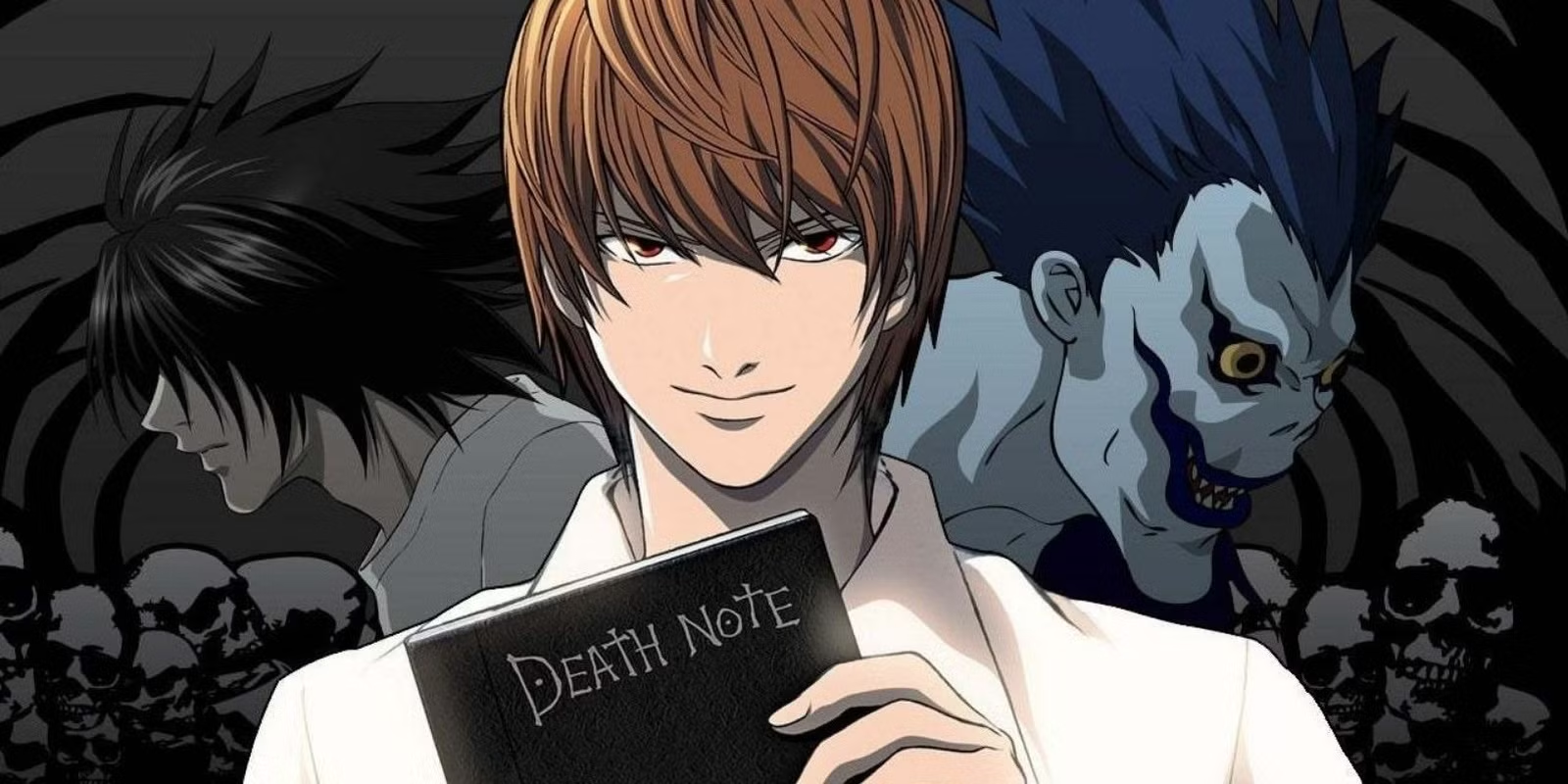

The Death Note looks like an ordinary notebook, but its rules make it one of anime's most dangerous weapons. A human who writes another person's name while picturing their face can cause that person's death. Light Yagami discovers the notebook after the Shinigami Ryuk drops it into the human world, then tests its limits before becoming the killer known as Kira. The basic idea is simple. The restrictions are anything but.
This guide explains how the Death Note works, why names and faces matter, what the famous 40-second rule actually means, and how the Shinigami Eyes and ownership rules change the story. It also separates genuine notebook mechanics from the fake rules used to deceive investigators. There are spoilers for major developments beyond the anime's opening episodes.
What are the basic rules of the Death Note?
A Death Note can kill a human whose correct name is written inside it, provided the writer has that person's face in mind. The face condition prevents an entry from indiscriminately affecting everyone with the same name. The notebook does not require the victim to see it, touch it, or know it exists. That asymmetry is why Light can threaten people from a distance while remaining difficult to identify.
If the writer supplies no cause of death, the default is a heart attack. The notebook's instructions allow a cause to be added within 40 seconds after the name is written. After a cause is entered, there is a further six minutes and 40 seconds to specify the circumstances. Those windows govern what the writer can add; they are not a promise that every carefully described event will become possible.
The first manga volume establishes Light's early experiments with these rules, while VIZ's Death Note 13: How to Read is the publisher's companion reference for the series. The notebook is a supernatural device governed by specific conditions, not an unlimited wish-granting book. That distinction becomes crucial whenever Light attempts an elaborate plan.
Why do you need both a name and a face?
Knowing a face without a name is insufficient, and knowing a name without identifying the intended person is also insufficient. Light's battles with L often turn on that gap. L protects his real identity because public recognition would make him easier to target, while Light searches for information that can bridge the difference between a known opponent and a killable target.
This is also why aliases matter. A name used in public is not automatically the name the Death Note needs. Characters who work under pseudonyms create a genuine obstacle, not merely a minor inconvenience. The rule does not make every disguise foolproof, however: the Shinigami Eyes provide a supernatural way around the problem, at a severe cost.
What does the 40-second rule mean?
The often-quoted 40 seconds is the period for writing a cause of death after entering the victim's name. If no cause is specified, the victim dies from a heart attack. When a valid cause is provided, the notebook can produce a different outcome, subject to its other restrictions. Treating 40 seconds as a universal countdown for every possible death oversimplifies the actual system.
The additional six minutes and 40 seconds concerns the details of how the death occurs. Light exploits this flexibility to make victims behave in particular ways or die at strategically useful moments. But writing a complicated scenario is not enough by itself. The notebook's mechanics do not allow a victim to accomplish things they could not plausibly do.
Can the Death Note control someone before they die?
Yes, within limits. The writer can specify actions and circumstances leading to death, which gives the Death Note more strategic reach than a simple instant-kill ability. Light uses that power to test how much control the notebook permits and to manipulate the investigation. The crucial limit is plausibility: the target cannot be made to perform physically impossible actions or suddenly know information they could not know.
A scenario that cannot occur does not become real just because it is written down. Depending on which part is impossible, the specified details may fail and the death can revert to a heart attack. This prevents the notebook from functioning as a universal mind-control device. It also means the most effective users need accurate information about their targets, not just their names.
What are the Shinigami Eyes, and what do they cost?
The Shinigami Eyes let a human see the names needed to use the Death Note, along with information about people's lifespans, by looking at them. This directly addresses the notebook's biggest practical obstacle: identifying the correct name. It is not the same as knowing someone's thoughts, future choices, or every secret about their life.
A Shinigami can offer the eye deal to a human owner in exchange for half of that human's remaining lifespan. The cost is based on the lifespan they have left at the time of the bargain, not a fixed number of years. Light's reluctance to accept that trade helps define his strategy: he wants the notebook's power without surrendering so much of his own future.
The deal also explains why different Death Note users can possess very different advantages. A person with the eyes may identify targets Light cannot, but paying for that information changes their own prospects. In a series obsessed with power and control, the eye bargain makes even supernatural convenience come with a price.
Who are the Shinigami, and do they control the notebook?
Shinigami are death gods associated with the notebooks. Ryuk brings one into the human world largely out of boredom, then watches Light's choices unfold. He is neither Light's loyal assistant nor a conventional moral judge. Although he explains rules and occasionally provides information, Ryuk's presence does not mean the notebook belongs to Light without conditions.
A human who touches a Death Note can perceive its associated Shinigami, even if that human is not the notebook's owner. This matters when investigators finally encounter evidence they cannot explain through ordinary criminal methods. It also underlines an important difference between touching the notebook and owning it: contact can reveal the supernatural, while ownership governs memory and other consequences.
What happens if you give up ownership of a Death Note?
Relinquishing ownership can erase a human's memories connected to the notebook. Light uses this rule to build an elaborate plan in which his behavior changes because he genuinely no longer remembers acting as Kira. VIZ's Volume 5 description explicitly highlights Light giving up the Death Note and losing those memories. This is not a normal case of pretending to be innocent.
The distinction becomes even more important when a former owner later regains the notebook. The series demonstrates that ownership and contact can reshape what characters know about their own past actions. A police interrogation can therefore produce sincere answers from someone who previously committed crimes. That twist turns a supernatural rule into a powerful mystery-story device.
Are there fake Death Note rules?
Yes. The story contains deliberately fabricated rules, and they should not be confused with the genuine instructions governing the notebook. The best-known example is the 13-day rule, which falsely claims that a user will die unless they continue writing names within that interval. Its purpose in the plot is to support an alibi and redirect suspicion, not to establish a real limit on the notebook.
Another false rule concerns everyone who has touched the notebook dying if it is destroyed. The existence of these lies is important because the investigators cannot simply treat every written instruction as reliable evidence. Some rules originate from the supernatural system; others are planted to manipulate the people trying to understand it. The difference becomes central to Light's contest with L and, later, Near.
Can the Death Note kill anyone or change reality?
No. The notebook's core target is a human, and its rules include restrictions on the conditions and timing of death. It cannot make impossible events happen, conjure information from nowhere, or function as a general-purpose reality editor. Even when Light appears to control an elaborate chain of events, the effect depends on how the notebook's stated rules apply to particular people.
The series also makes a distinction between supernatural power and strategic success. A perfectly functioning notebook does not tell its owner whom to trust or how to evade investigators. Light's greatest vulnerabilities often come from his assumptions, pride, and attempts to prove superiority. That is why the cat-and-mouse battle remains compelling even after viewers learn the basic rules.
Why do the Death Note rules matter to the story?
Every major rule creates both an advantage and a weakness. The face-and-name requirement protects unknown identities. The timing windows create opportunities for planning but impose constraints. The Shinigami Eyes offer information at a personal cost. The ownership rules can alter memory, while fake rules create dangerous uncertainty about what evidence investigators can trust.
These mechanics also support the show's central moral question: what happens when one person gains power over other people's lives without meaningful accountability? For a broader look at Light's character and the show's enduring tension, read our Death Note review. Readers who already know the full story can also explore our Death Note ending explained article, which examines why Light ultimately loses.
If the psychological tension is what appeals most, our Monster anime analysis explores a very different kind of menace, while Ergo Proxy explained examines another mystery that rewards careful attention. Neither story uses the Death Note's exact rulebook, but both show how suspense grows when viewers must question what characters know and believe.
The short answer
The Death Note works by combining a correct name, an identifiable face, and tightly defined supernatural rules for death. Its timing rules permit limited control over the cause and circumstances; Shinigami Eyes can reveal the required names at the cost of half a person's remaining lifespan; and giving up ownership can erase notebook-related memories. The famous 13-day rule is a lie within the story. Understanding those differences makes Light's plans, and the investigators' counterplans, much easier to follow.
Frequently asked questions
Frequently asked questions
Can the Death Note kill someone without their real name?
No. Its normal use requires the name needed to identify the person and the writer must picture the intended face. A public alias alone is not necessarily enough.
How long does the Death Note take to work?
If no cause of death is added, the default is a heart attack. The writer has 40 seconds to specify a cause, then six minutes and 40 seconds to add details. Other valid conditions can affect timing.
Do Shinigami Eyes let you see someone's name?
Yes. The eyes reveal the name needed for the notebook, but the eye deal costs half of the human's remaining lifespan.
Is the 13-day rule in Death Note real?
No. It is a fabricated rule used as part of a deception within the story, not a genuine requirement to keep writing names.
Does Light lose his memories when he gives up the Death Note?
Yes. Relinquishing ownership can remove notebook-related memories, a key part of Light's strategy during the investigation.