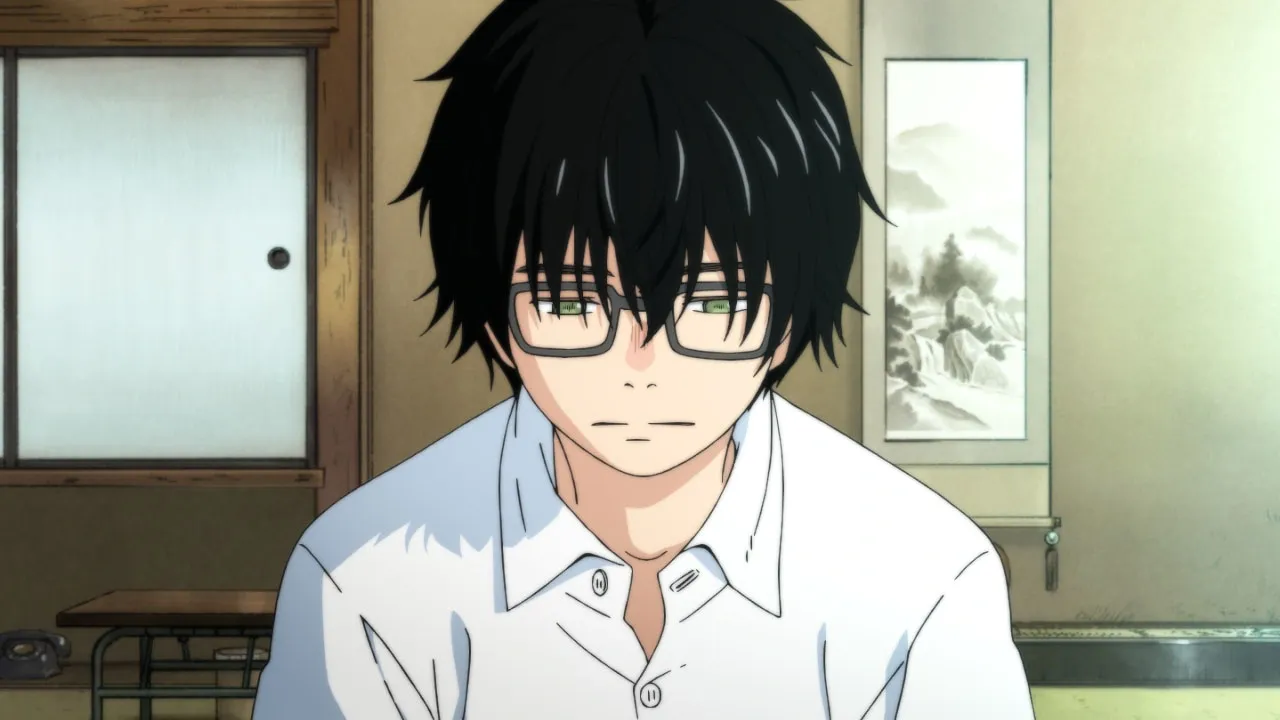

Some anime entertain. Others inspire. But March Comes in Like a Lion (3-gatsu no Lion) does something rarer—it heals. This 2016 masterpiece from Studio Shaft doesn't just depict depression; it understands it with a precision that's frequently discussed in mental health circles for its clinical accuracy.
If you've ever felt like you're drowning while everyone around you seems fine, this anime will see you—really see you—in ways few pieces of media ever can.
Why It Feels Like Sitting in a Therapist's Office
Unlike most anime that tackle mental health, March Comes in Like a Lion never names Rei Kiriyama's condition. There's no dramatic diagnosis scene. Instead, the series trusts viewers to recognize depression through lived experience.
The result? One of the most accurate depictions of depression in animation history.
The Visual Language of Depression
Studio Shaft's signature style becomes perfect for portraying mental illness:
Water metaphors - Rei describes feeling like he's drowning, with imagery of sinking, struggling to breathe, and blue bubbles floating upward representing moments he can't reach the surface.
Color desaturation - Scenes drain to black-and-white when depression overwhelms him, contrasting sharply with warm, saturated colors of the Kawamoto household.
Physical pressure - Immense weight crushing him, visualized through distorted perspectives and claustrophobic framing.
Empty spaces - His apartment contains only bare essentials—futon, instant ramen cups, shogi books scattered on floors. The emptiness itself becomes a character, showing how depression strips away not just motivation but the very texture of living.
These aren't artistic flourishes for drama. They're frighteningly accurate visualizations of how depression actually feels from the inside.
Rei Kiriyama: The Most Relatable Depressed Protagonist
Seventeen-year-old Rei is a professional shogi player living alone in Tokyo. On paper, he's successful—one of only five people who became professional players in middle school. He earns enough to support himself.
So why does he wake up every morning with no emotion, mechanically going through routines, feeling like a monster?
Trauma Layered on Trauma
Rei lost his biological family in a car accident. Relatives didn't want him. His adoptive father took him in for his shogi talent, and adoptive siblings resented him for it.
Shogi wasn't Rei's dream—it was his survival mechanism. The game gave him value when nothing else mattered. Now it defines his entire existence, and he doesn't know who he is without it.
This origin makes Rei's depression feel earned rather than melodramatic. His mental state makes complete sense given his circumstances. He's not "crazy"—he's responding rationally to irrational situations.
The Symptoms No One Talks About
March doesn't just show sadness. It shows:
Anhedonia - Rei goes days without eating or drinking. He knows he should care, but can't make himself feel hungry.
Social paralysis - Words get stuck even when he wants to speak. This portrayal of social anxiety captures the physical sensation of words refusing to come out.
Cognitive distortions - When peers offer encouragement, Rei hears insults. Depression distorts reality.
Self-isolation - He actively avoids connection, declining invitations, eating lunch alone on roofs.
Physical manifestation - Depression makes Rei physically weak. He locks himself in his room for days until he can barely stumble to a convenience store.
These are textbook DSM-5 symptoms of major depressive disorder presented with clinical accuracy.
The Kawamoto Sisters: Found Family as Treatment
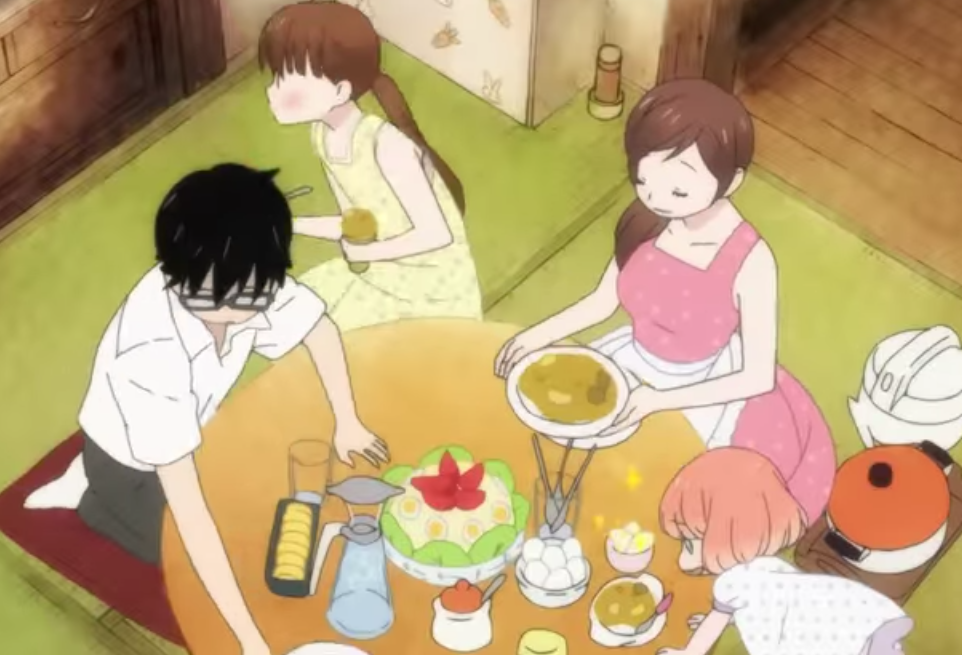
If Rei represents depression, the Kawamoto sisters represent recovery—not cure, but slow, messy learning to live again.
Akari (eldest), Hinata (middle schooler), and Momo (energetic child) live with their grandfather who runs a traditional wagashi shop. They've also lost family—mother, grandmother, father. But they've processed grief differently, creating a warm household radiating comfort.
How the Kawamotos Actually Help
The sisters don't "fix" Rei. They don't give inspirational speeches. Instead, they offer consistent, unconditional presence:
They feed him - Knowing he doesn't cook, they regularly invite him for dinner. Food becomes love language.
They don't demand explanations - When Rei looks terrible, they don't interrogate. They just make space. This acceptance mirrors healthy adult relationships rarely shown in anime.
They need him too - Rei helps with chores, babysits Momo, supports Hinata. Being needed gives purpose beyond shogi.
They respect his pace - Recovery isn't linear. Sometimes Rei withdraws. The sisters don't guilt him—they just leave the door open.
This mirrors actual therapeutic relationships. Real healing happens through consistent small acts of care.
The Shogi Metaphor: Life as Strategy
Shogi (Japanese chess) isn't just Rei's profession—it's the perfect metaphor for depression and recovery.
Captured Pieces Can Return
In shogi, captured pieces can be brought back into play on your side. This becomes symbolic: nothing Rei lost is permanently gone. Relationships can rebuild. Purpose can be rediscovered. Even what feels destroyed can return in new forms.
The shogi world provides structure when Rei's internal world feels chaotic. It's both his coping mechanism and his slow path to healing.
Studio Shaft's Visual Therapy
Director Akiyuki Shinbo uses their experimental style for emotional authenticity rather than stylistic flex.
The Drowning Imagery
Water appears constantly—blue bubbles floating upward while Rei sinks, rain pounding windows. This visual metaphor rivals Neon Genesis Evangelion's psychological symbolism.
Episode titles reference this: "Black River," "Torrent," "What Lies on the Opposite Shore."
The Warmth/Cold Contrast
The Kawamoto home uses warm watercolors, pastels, soft pencil-drawn aesthetics. Everything feels handmade, cozy, safe.
Rei's apartment and depressive episodes use harsh blacks, whites, geometric lines, cold palettes. Visual language tells you instantly where Rei's mental state stands.
The Hinata Bullying Arc: Trauma Beyond Rei
Season 2 shifts focus to Hinata Kawamoto. When she witnesses bullying and speaks up, she becomes the target.
The bullying arc is brutal—not violent, but psychologically devastating. Hinata's classmates ostracize her, spread rumors, get her suspended through false accusations.
Why This Arc Matters
Trauma is universal - Everyone carries wounds. The Kawamotos lost family. Rei's adoptive sister Kyōko is damaged by her own upbringing. Even secondary characters reveal hidden pain, similar to Pet Girl of Sakurasou's exploration of inadequacy.
Support saves lives - When Hinata breaks down, Akari, Rei, and her teacher rally around her.
Justice isn't guaranteed - The bully faces minimal consequences. Sometimes life isn't fair, and healing means accepting that while moving forward.
The arc transforms the series from "anime about one depressed boy" to "anime about how we all struggle, and how community makes survival possible."
Why Mental Health Professionals Discuss This Series
Mental health educators and therapists frequently reference March Comes in Like a Lion in professional and educational contexts:
Destigmatizes mental illness - Rei isn't "crazy." He's responding to abnormal circumstances.
Shows recovery realistically - Healing is slow, nonlinear, with setbacks. No magic cure.
Validates silent struggles - Viewers report feeling seen for the first time.
Models healthy support - The Kawamotos demonstrate how to help someone without fixing them.
According to the National Institute of Mental Health, approximately 16.1 million American adults experienced major depressive episodes in 2015. That's 6.7% who could directly relate to Rei's experience.
The Power of Small Moments
March doesn't rely on dramatic climaxes. Its power comes from tiny moments:
- Rei accepting dinner invitation even though he wants to isolate
- Hinata asking if he's eaten today
- Rei buying snacks for Momo
- Akari wordlessly making tea when he can't speak
These small gestures carry the series' weight. Not everything needs fixing; sometimes presence is enough.
What Makes It Different
Many anime tackle depression: Your Lie in April, A Silent Voice, Evangelion. March stands apart:
No romanticization - Depression isn't beautiful. It's exhausting and ugly.
No quick fixes - By series end, Rei's improving but still struggling.
Multiple perspectives - It's not just Rei's story.
Hope without toxicity - Acknowledges "it gets better" while respecting "better" doesn't mean "cured."
March treats mental illness as lived reality requiring patience and compassion, never sensationalizing it for shock value.
Who Should Watch (And Who Shouldn't)
Watch if you:
- Struggle with depression, anxiety, loneliness
- Want to understand loved ones with mental illness
- Appreciate slow, character-driven storytelling
- Value visual symbolism
Skip if you:
- Need constant action
- Find slice-of-life boring
- Can't handle mental health depictions
- Want escapist entertainment
This demands emotional investment and patience. But for those willing to engage, the payoff is profound.
The Lasting Impact
Viewers report:
- Recognizing their own symptoms
- Understanding friends'/family struggles better
- Seeking therapy after seeing recovery modeled
- Feeling less alone
- Appreciating small kindnesses more
The series reminds us everyone carries invisible burdens. That person who seems fine might be drowning.
And crucially: recovery is possible, even when it feels impossible.
Real-World Applications & Why "Therapy" Fits
Therapeutic principles translate to real life: build support systems, accept help incrementally, find purpose in small ways, remember healing isn't linear, and understand that community prevents tragedy.
Calling March "therapy" isn't dramatic. It normalizes seeking help, validates experiences by depicting symptoms accurately, models healthy coping, provides hope through gradual improvement, and creates community among viewers sharing struggles.
Real therapy requires professionals. But for a streaming subscription, this anime offers something valuable: knowledge you're not alone, that what you feel is valid, and that healing, while difficult, is possible.
Conclusion: A Gentle Hand in the Dark
March Comes in Like a Lion doesn't solve depression. It doesn't offer easy answers. What it offers is more valuable: companionship.
When you're drowning, knowing someone else felt this way—and survived—matters more than advice. When you can't explain what's wrong, seeing it visualized on screen provides validation words fail to capture.
Rei Kiriyama's journey isn't about becoming happy. It's about learning to live with pain, to accept help, to believe he deserves warmth. It's about understanding that struggling doesn't make you broken.
If you've ever felt like you're going through life's motions without actually living, this anime will meet you where you are. It won't drag you out of darkness. Instead, it'll sit beside you in it, holding a small light, reminding you daylight still exists—even when you can't see it yet.
That's what makes March Comes in Like a Lion therapy in anime form. Not because it fixes anything, but because it understands. And sometimes, being understood is the first step toward healing.