
Most anime heroes solve problems with devastating attacks or supernatural abilities. Then there's Maomao from The Apothecary Diaries, who saves lives and unravels palace conspiracies using her brain, knowledge of poisons, and unsettling enthusiasm for self-experimentation.
In a genre saturated with overpowered protagonists, The Apothecary Diaries stands out by making intelligence its greatest weapon. The anime premiered in October 2023 and immediately captured audiences with its historical mystery setting and compelling female lead. With Season 3 confirmed for October 2026 and a theatrical film scheduled for December 2026, the series continues proving that brains beat brawn.
Why Intelligence Makes Better Protagonists
Watching someone deduce truth from scattered clues, identify poisons from symptoms, and navigate dangerous intrigue through observation requires different engagement than training montages. The series centers on Maomao, a young apothecary kidnapped and sold into servitude at the Imperial Palace. She doesn't develop new powers—she uses existing knowledge of pharmacology, medicine, and human nature to solve mysteries.
Maomao's victories feel earned. When she identifies arsenic poisoning by observing decay rates or solves a "curse" through understanding chemical reactions, viewers follow her logic. The satisfaction comes from understanding how she outsmarted problems, not overpowering them. Similar to how Reigen Arataka became one of anime's best-written adults through quick thinking, Maomao proves intelligence creates compelling protagonists.
Maomao: The Protagonist Who Weaponized Knowledge
Maomao isn't your typical anime heroine. Raised by adoptive father Luomen—a doctor trained in Western medicine—she developed an obsessive fascination with poisons. She deliberately scarred her face with freckles to avoid being selected as a concubine, gets visibly excited about poison-testing, and built resistance to toxins through years of self-experimentation.
She's practical to the point of cynicism, emotionally distant, and completely uninterested in romance. What she cares about is solving puzzles and expanding pharmaceutical knowledge. When Maomao saves the emperor's infants from mysterious illness, it's not through heroic sacrifice—she observes that white lead powder in their face makeup is poisoning them. The solution is practical, scientific, understandable.
The anime never asks us to accept Maomao is special or chosen. She's extremely knowledgeable in a specific field and observant enough to apply it practically. In a world where many protagonists feel overpowered from the start, Maomao's grounded competence feels refreshing.
How The Series Makes Mystery-Solving Engaging
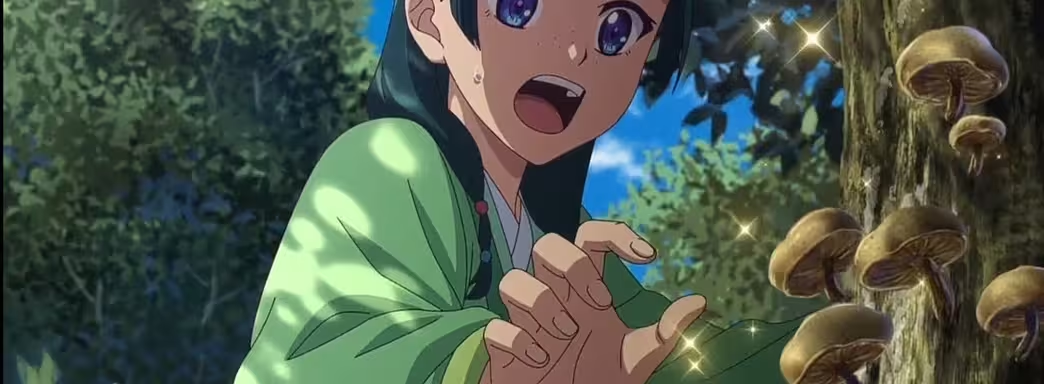
The Apothecary Diaries structures itself around episodic mysteries, each presenting medical or pharmaceutical puzzles. These range from identifying food poisoning to complex political conspiracies masked as supernatural curses.
What separates these from typical detective anime is the specific medical knowledge required. When soldiers fall ill during village inspection, Maomao determines they poisoned themselves through inhaling toxic fumes from plant combinations in cooking fires. The answer makes sense once explained but isn't immediately apparent.
This approach keeps viewers engaged mentally. You're trying to piece together solutions before Maomao reveals them. Season 2 particularly highlighted her investigative process—dusting for fingerprints, testing substances on herself, using deductive reasoning. These scenes make her feel like a legitimate forensic investigator.
The Historical Setting Enhances the Stakes
Setting the series in fictionalized Imperial China inspired by the Tang Dynasty creates unique storytelling opportunities. The rear palace is a pressure cooker where knowledge becomes power and ignorance can be fatal. Concubines compete for favor, servants navigate complex hierarchies, and medical knowledge is scarce.
This makes Maomao's intelligence more valuable than in modern settings. She can't Google symptoms or order lab tests—she relies entirely on observation, deduction, and accumulated knowledge. The series addresses darker historical aspects: treatment of courtesans, child mortality, limited options for women. Maomao isn't fixing society—she's surviving and helping individuals within an unfair system.
Why Romance Takes a Backseat
The tension works because the audience is also invited to question who Jinshi really is, not simply whether Maomao will return his interest.
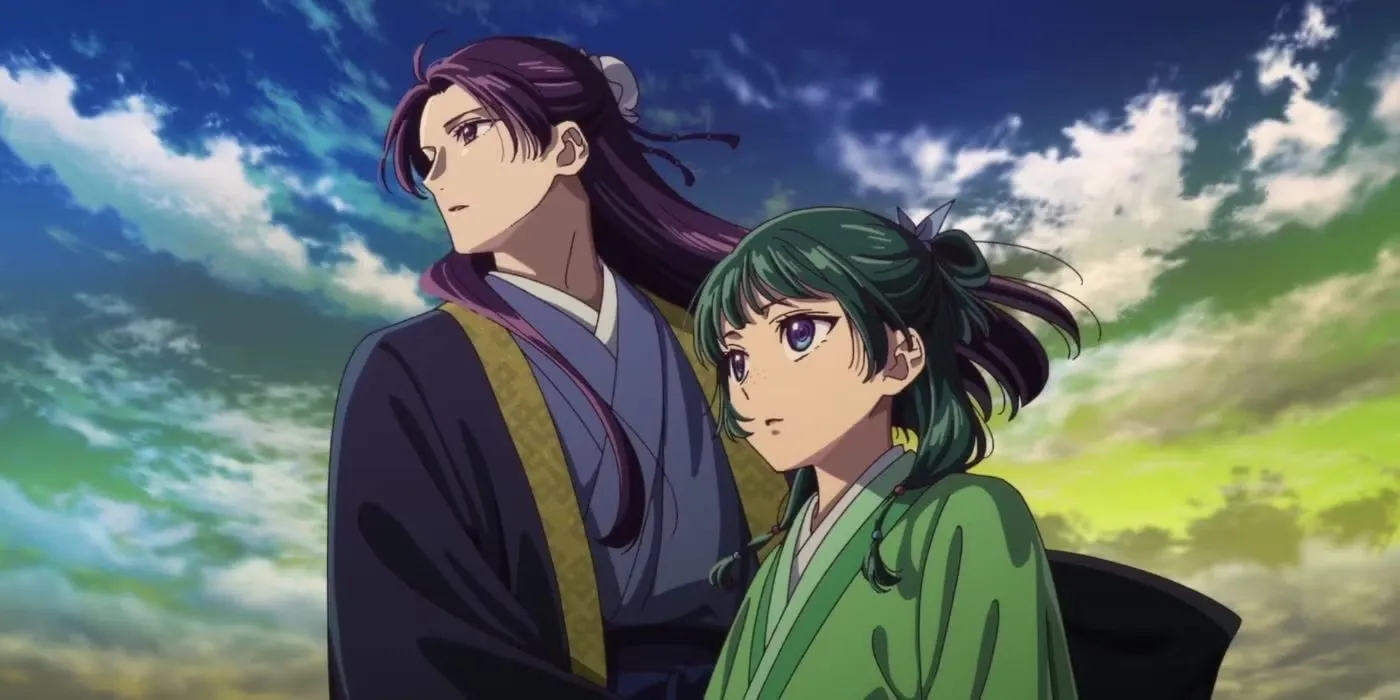
One refreshing aspect is how the series handles Maomao and Jinshi's romantic subplot. While Jinshi becomes increasingly fascinated by Maomao—because she's the only person not charmed by his appearance—she remains largely indifferent.
Maomao views Jinshi as someone providing interesting cases and rare ingredients. She has zero interest in romance when there are poisons to study. This creates comedy rather than typical tension. Their partnership is built on mutual respect for competence rather than attraction.
This mirrors how shows like Frieren handle relationships differently—prioritizing character depth over romantic development.
The Medical Mysteries That Define the Series
The series has delivered numerous memorable cases. The infant mortality mystery—where Maomao identified white lead in ceremonial face powder poisoning newborns—first brought her to Jinshi's attention. The honey trap poison involved individually harmless substances becoming toxic when combined. The dancing ghost turned out to be a concubine attempting escape.
The arsenic emperor mystery revealed why the previous emperor's body hadn't decayed—years of absorbing arsenic from poisonous art materials preserved his corpse. Each mystery reinforces that knowledge, observation, and logic are Maomao's true superpowers. The series never resorts to supernatural explanations—just pharmaceutical and medical understanding.
Character Growth Through Intellectual Challenges
Maomao doesn't grow stronger traditionally—she develops through expanding understanding of people, politics, and herself. Early on, she wants to serve her time quietly. However, seeing consequences of knowledge (or ignorance), she accepts responsibility beyond self-interest.
Her relationship with Jinshi forces confronting emotional distance. Investigation into her parentage challenges assumptions. Interactions with concubines teach her about constraints faced by palace women. The series shows Maomao grappling with knowledge limits—she can't cure everything. This development feels more realistic than power-up arcs.
Production Values That Match the Premise
The anime, produced by TOHO Animation Studio and OLM, brings the setting to life with meticulous detail. The rear palace architecture resembles the Forbidden City. Character designs balance historical accuracy with anime aesthetics—Maomao's plain appearance contrasts with Jinshi's beauty, reinforcing personality differences.
Kevin Penkin's soundtrack incorporates traditional Chinese instruments. Aoi Yuki's voice acting perfectly captures Maomao's deadpan delivery while showing passion for pharmaceutical discoveries.
What Season 3 Means for the Series
Season 3 premieres October 2026 in split cours (second part April 2027), with an original theatrical film in December 2026. This confirms the series' success and proves audiences remain engaged by intelligence-driven storytelling. The split-cour format allows proper adaptation without rushing character moments.
The franchise has sold over 45 million copies across formats, demonstrating smart protagonists can achieve mainstream success.
Why This Approach Feels Refreshing
As anime continues exploring isekai power fantasies and battle shounen power scaling, The Apothecary Diaries offers something different. It shows watching someone solve problems through knowledge can be as engaging as spectacular fight choreography.
For viewers tired of protagonists succeeding through hidden potential or convenient power-ups, Maomao's approach is refreshing. She's good because she studied and practiced for years. Her victories require effort and application of learned skills. In an era of information overload, watching methodical problem-solving feels almost radical.
The Broader Appeal of Smart Protagonists
The series' success suggests audiences are hungry for protagonists who think through challenges. While classified as seinen, it has found broad appeal across demographics who enjoy character-driven narratives.
Maomao's intelligence—practical, specialized, paired with dry humor—makes her accessible. The anime explains her reasoning without talking down to audiences. Strong supporting characters aren't dumbed down to make her look smarter. Jinshi is politically savvy, Gyokuyou demonstrates emotional intelligence, Lakan possesses strategic genius. Different types of intelligence are valued and necessary.
Final Thoughts: When Intelligence Becomes the Best Superpower
The Apothecary Diaries proves you don't need overpowered protagonists or escalating battles to create compelling anime. Sometimes all you need is a sharp-minded heroine with pharmaceutical knowledge, mysteries to solve, and patience to show realistic problem-solving.
Maomao's journey demonstrates that intelligence—when properly portrayed with clear limitations and specific expertise—can be more engaging than any power fantasy. Her victories feel earned because we watch her work through logic and apply accumulated knowledge to solve real problems.
As Season 3 approaches in October 2026, the series continues offering an alternative to power-scaling storytelling. It reminds viewers that watching someone think can be as thrilling as watching them fight, especially when that thinking is grounded in real expertise. For anime seeking intelligence and character depth, The Apothecary Diaries delivers—proving intelligence might be the most compelling superpower of all.
Want more intelligent anime? Check out why Monster feels more terrifying than any horror anime or discover how Neon Genesis Evangelion uses mecha to explore depression. For thoughtful storytelling recommendations, see our best first episodes guide.