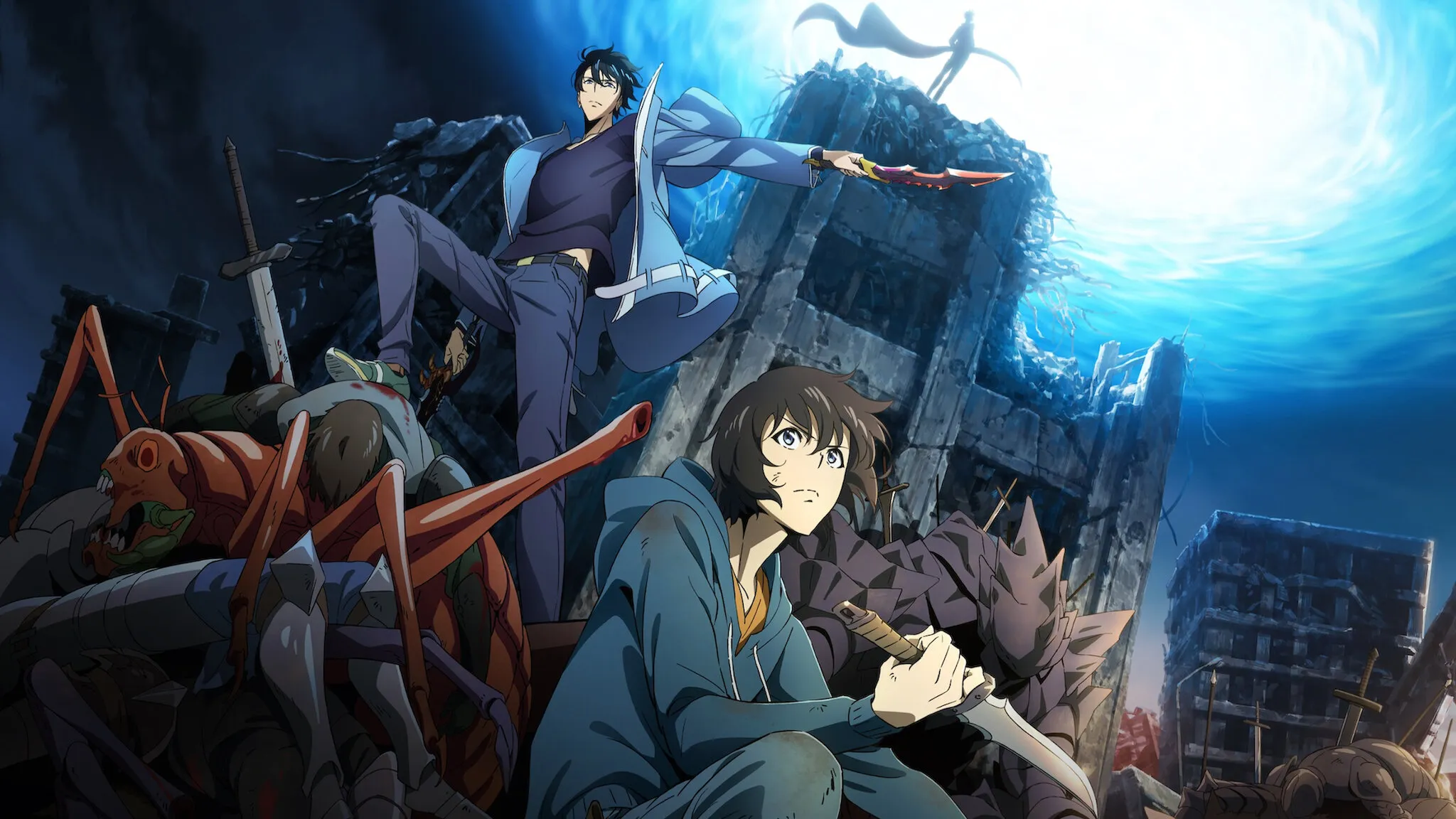

Why Solo Leveling Feels Overhyped After the First Arc
Rushabh Bhosale
Solo Leveling feels overhyped after the first arc because its power escalation removes tension, focusing more on spectacle than character depth. It’s still highly entertaining, but not as deep as the hype suggests.
Solo Leveling anime delivers stunning animation and an addictive power fantasy that hooked millions during Solo Leveling Season 1. But once you're past the initial arc, the series starts leaning heavily on spectacle over substance. It's still entertaining—just not the masterpiece the hype suggests.
Why Solo Leveling Blew Up Instantly
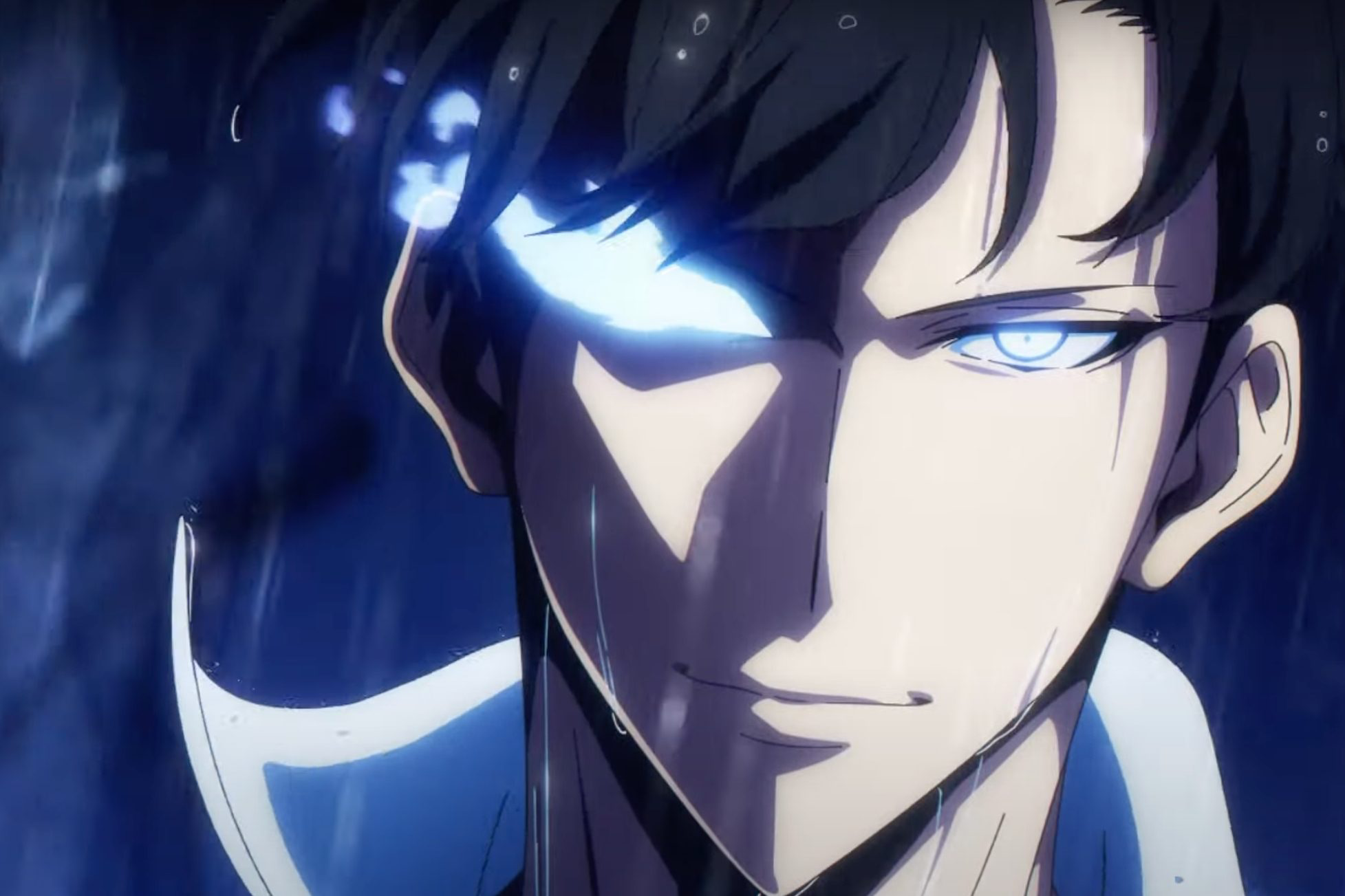
When Solo Leveling Season 1 dropped, the anime community exploded. Fans of the Solo Leveling manga finally saw Sung Jin-Woo's journey animated with jaw-dropping production quality. The premise was irresistible: the world's weakest hunter gains a mysterious leveling system and becomes unstoppable.
The animation studio A-1 Pictures nailed the aesthetic. Every fight felt cinematic. The power progression was satisfying. And Sung Jin-Woo's cold, calculating rise from zero to hero scratched that itch every anime fan has for a good underdog story.
For those wondering where to watch Solo Leveling, it's available on Crunchyroll, and the Solo Leveling anime watch experience has been incredibly accessible, contributing to its viral spread.
But here's the thing: hype isn't the same as longevity.
The Problem With Power Escalation
After the first arc, Solo Leveling faces a classic power-fantasy problem: tension evaporates.
Sung Jin-Woo becomes so overpowered that fights lose stakes. Early on, every dungeon felt dangerous. Every decision mattered. But once he unlocks his shadow army and starts steamrolling opponents, the suspense drops.
This is where Solo Leveling differs from series like Attack on Titan or Black Clover. Those shows maintain tension by surrounding their protagonists with threats that genuinely challenge them—physically, emotionally, and morally. In Solo Leveling, Sung Jin-Woo's victories start feeling inevitable.
Solo Leveling’s lack of consequence becomes clearer when you compare it to characters whose power actively reshapes their humanity. In Hunter x Hunter, Meruem’s evolution shows that strength doesn’t remove tension—it relocates it inward. As explored in Why Meruem Is More Human Than the Hunters, his growing power forces moral reckoning, empathy, and choice, rather than guaranteeing victory. Solo Leveling skips that internal conflict almost entirely, replacing uncertainty with inevitability.
Even Solo Leveling Season 2 (which adapts deeper into the source material) struggles with this. The Solo Leveling total episodes count will grow, but without meaningful obstacles, the format becomes repetitive: enter dungeon, dominate enemies, level up, repeat.
If you're reading the Solo Leveling manga or checking out the Solo Leveling Ragnarok wiki, you'll notice the same pattern continues.
Character Depth vs Visual Spectacle
Let's be honest: Solo Leveling prioritizes style over substance.
Sung Jin-Woo is cool. He's stoic, strategic, and visually iconic. But he's not particularly complex. The Solo Leveling characters around him—his family, guild members, even rival hunters—are thinly sketched. They exist to react to Sung Jin-Woo's greatness rather than drive their own arcs.
Compare this to Hunter x Hunter, where side characters like Kurapika, Leorio, and Killua have fully realized motivations and growth. Or Jujutsu Kaisen, where even secondary characters get meaningful development and emotional weight.
The Solo Leveling game adaptations have tried to expand on character backstories, but the core issue remains: the narrative is laser-focused on one character's ascension, leaving little room for ensemble storytelling.
This isn't necessarily bad—it's just a creative choice. But it does make the series feel shallower after the novelty wears off.
Comparison With Better Power-Fantasy Anime
Solo Leveling isn't alone in the power-fantasy genre, but it's instructive to see how other series handle similar concepts:
Attack on Titan works because power escalation comes at a psychological and ideological cost. Eren Yeager’s transformation doesn’t just make him stronger—it destroys the person he used to be. As discussed in Why Eren Started the Rumbling and Why It Wasn’t Just for Paradis, Eren’s power introduces moral collapse, not comfort. Solo Leveling never reaches that level of consequence, because Sung Jin-Woo’s strength isolates him from doubt rather than confronting him with it.
Jujutsu Kaisen – Yuji Itadori gets stronger, but the threats scale proportionally. The supporting cast shares the spotlight, and the stakes stay high.
Hunter x Hunter – Gon's power progression is earned through strategy, sacrifice, and consequence. The show subverts typical shonen tropes instead of leaning into them.
Solo Leveling, by contrast, delivers pure wish-fulfillment. There's nothing wrong with that—but it limits how deep the story can go.
The Solo Leveling trailer for upcoming seasons promises bigger battles and flashier abilities. But without narrative evolution, it risks becoming a visually impressive but emotionally hollow experience.
Why People Still Love It Anyway
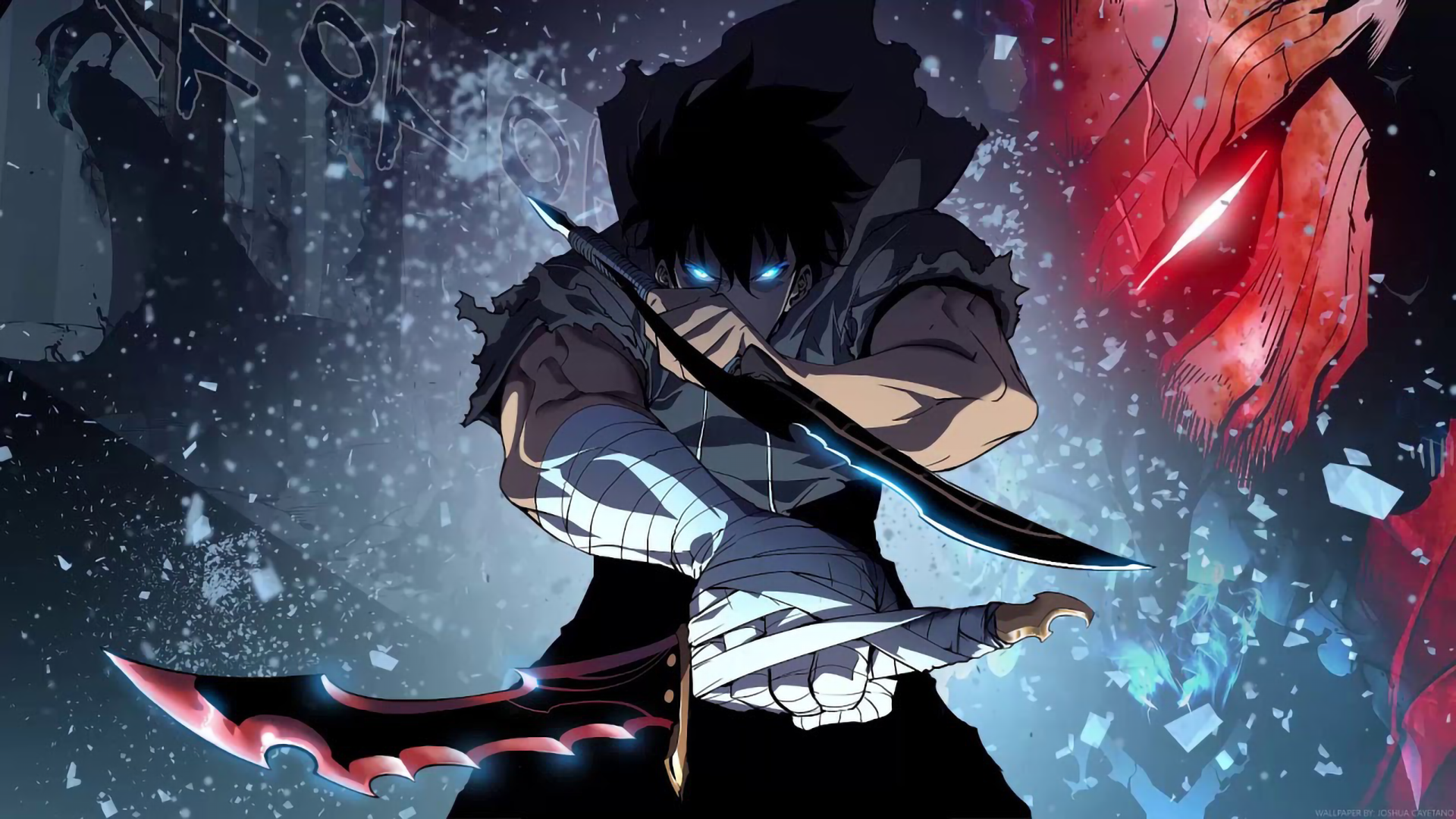
Despite its limitations, Solo Leveling remains wildly popular—and for good reason.
The animation is gorgeous. A-1 Pictures continues to deliver movie-quality fight sequences. Every shadow summon, every gate raid, every leveling-up moment feels visceral and satisfying.
It's escapism at its finest. Sometimes you don't want complexity. You just want to watch a protagonist become absurdly strong and style on everyone. Solo Leveling delivers that fantasy flawlessly.
The pacing is tight. Unlike many shonen that drag out arcs, Solo Leveling moves quickly. You're never bored.
The community is passionate. Whether you're watching Solo Leveling anime, reading the manga, or diving into fan theories on the Solo Leveling Ragnarok wiki, there's a vibrant fandom keeping the energy alive.
And yes, Is Solo Leveling worth watching? Absolutely—especially if you enjoy power-fantasy shows and don't mind prioritizing spectacle over depth.
Is Solo Leveling Still Worth Watching?
Yes, but manage your expectations.
If you're looking for a tightly animated, satisfying power-fantasy with a badass protagonist, Solo Leveling delivers. It's perfect for binge-watching, and the Solo Leveling new season announcements keep the momentum going.
Is there a season 2 of Solo Leveling? Yes—Solo Leveling Season 2 has been confirmed and will continue adapting the popular manhwa.
Is Solo Levelling has season 3? Not yet officially announced, but given the source material and popularity, Solo Leveling Season 3 is likely in the future.
However, if you're expecting the emotional complexity of Attack on Titan or the character depth of Hunter x Hunter, you'll be disappointed. Solo Leveling is more Michael Bay than Christopher Nolan—and there's a place for both.
Final Take
Solo Leveling isn't overhyped because it's bad—it's overhyped because people expect more than it's designed to deliver.
It's a slick, stylish, adrenaline-fueled power fantasy that excels at what it sets out to do. But once the novelty of Sung Jin-Woo's ascension fades, the cracks in character development and narrative tension become harder to ignore.
Still, if you want to watch a protagonist become an absolute unit with god-tier animation, Solo Leveling is one of the best options out there. Just don't expect it to redefine the genre.
The hype? Maybe a bit much. The entertainment value? Undeniable.
Tags
Frequently Asked Questions
Is Solo Leveling worth watching?
Yes. If you enjoy power-fantasy anime with top-tier animation and fast pacing, Solo Leveling is highly entertaining.
Does Solo Leveling get better after the first arc?
Visually, yes. Narratively, it becomes more repetitive as Sung Jin-Woo grows overpowered.
Is Solo Leveling overhyped?
Not because it’s bad, but because expectations are often higher than what the story aims to deliver.
Next up
Bakugo's Rivalry with Deku Is About Identity, Not Competition
Bakugo and Deku's rivalry in My Hero Academia isn't about who's stronger—it's about who they are when strength stops defining them. Bakugo's entire identity was built on being superior to everyone, especially Quirkless Deku. When Deku gains One For All and starts surpassing him, Bakugo doesn't just face defeat in competition—he faces the collapse of his entire sense of self. The rivalry explores what happens when your worth is tied to being the best, when the person you looked down on becomes your equal, and when you're forced to rebuild who you are from scratch. Unlike typical shonen rivalries driven by power scaling, Bakugo and Deku's relationship asks: if you're not the strongest, who are you? Bakugo didn’t lose to Deku. He lost the story he told himself about who he was. Streaming on Crunchyroll and Funimation. The Rivalry That Doesn't Follow the Rules Most shonen rivalries follow a template: two powerful characters push each other to greater heights through competition. Goku and Vegeta. Naruto and Sasuke. The formula works because both rivals start roughly equal. Bakugo and Deku break this completely. Their rivalry begins when one has everything and the other has nothing—built on the assumption that gap will never close. The Childhood That Set Everything Bakugo gained an inflated ego from being praised excessively for his powerful Explosion Quirk, leading him to bully Quirkless Izuku Midoriya. But the bullying wasn't just cruelty. It was self-defense. When they were children, Deku tried to help Bakugo after he fell into a river. Bakugo was offended that a weakling like Deku tried to save him and assumed he was looking down on him. This moment reveals everything. Bakugo's entire identity rested on being superior. A Quirkless kid offering help shattered that hierarchy—so Bakugo rebuilt the wall with violence and contempt. The nickname "Deku" (meaning useless) wasn't just an insult. It was Bakugo's attempt to permanently define someone who threatened his sense of self. When Your Identity Is Built on Being Better Katsuki started out believing his worth was tied to how strong he was. In My Hero Academia's society, Quirks determine value. Heroes are celebrities. Power equals worth. Bakugo absorbed this completely—his Explosion Quirk made him special, and being special became his entire personality. The Problem With Conditional Self-Worth When your identity depends on external validation—being the strongest, smartest, most talented—you're building on sand. Any threat to that superiority threatens your entire existence. Deku represented the ultimate threat: proof that Bakugo's superiority wasn't inherent. If a Quirkless nobody could become his equal, then Bakugo was never special—he just got lucky with genetics. This connects to how comparing yourself to others destroys you in The Pet Girl of Sakurasou—when your worth depends on being better than someone else, you're always one comparison away from collapse. The Identity Crisis Disguised as Competition In Episode 8, Deku defeated Bakugo in a practice exercise. But Bakugo lost not because of his power but because of his arrogance and inability to work as a team. This wasn't just a loss in training. It was existential annihilation. Bakugo's entire worldview rested on a hierarchy where he stood at the top and Deku at the bottom. When Deku wins—not through luck but through qualities Bakugo dismissed as weakness (teamwork, strategy, empathy)—the entire structure collapses. What Bakugo Actually Lost He didn't lose a fight. He lost the story he'd been telling himself about who he was. After he loses to Deku, feels he can't measure up to Todoroki, gets kidnapped, and fails his Licensing Exam, he suffers a massive identity crisis that knocks down his fragile confidence. Each defeat chips away at the foundation. If strength doesn't guarantee victory, what does it guarantee? If being talented doesn't make you special, what does? Similar to how Haikyuu explores effort without a promise of greatness, Bakugo discovers that natural talent without growth is a dead end. Why Bakugo Can't Just "Get Stronger" In a typical shonen rivalry, the solution to falling behind is training harder. Get a new technique. Unlock a transformation. Close the gap through effort. Bakugo does train harder. He does get stronger. It doesn't fix anything. The Problem Isn't Power—It's Perspective If he isn't the strongest and he isn't meant to achieve immediate greatness, then what is his role? It's something that Quirkless Midoriya had to evaluate for many years as a child. What is his purpose in a world that seems destined to leave him behind? Bakugo is forced to ask the same question Deku asked his entire childhood: who am I if I'm not what I thought I was? For Deku, that question led to discovering identity beyond Quirks—heroism as action, not status. For Bakugo, it requires dismantling everything he built his personality on. What Deku Has That Bakugo Doesn't The series explicitly contrasts their approaches to All Might, their shared idol. While Deku admired All Might's ability to save lives with a smile, Bakugo admired his strength and ability to defeat anyone. This difference is everything. Two Different Definitions of Heroism Deku sees heroism as connection—reaching people, protecting them, making them feel safe. Bakugo sees heroism as dominance—being strong enough that threats don't matter, proving yourself through victory. Neither is wrong, but only one is complete. Endeavor has a powerful quirk and is skilled at rescuing civilians, but the reason why he's unable to surpass All Might is because he fundamentally does not care about the people he's saving. Bakugo mirrors Endeavor—technically excellent, strategically brilliant, but missing the emotional core that makes All Might irreplaceable. The rivalry with Deku forces Bakugo to develop what he lacks: empathy, collaboration, the ability to see strength in vulnerability. The Fight That Changes Everything Their second major fight—where Bakugo finally admits his feelings—is when the rivalry transforms completely. Bakugo breaks down. He admits he feels responsible for All Might's retirement. He admits he doesn't understand how Deku got his Quirk. He admits he feels left behind. Vulnerability as Strength For someone whose entire identity was built on never showing weakness, this moment is death and rebirth. Bakugo's ceaseless drive forces Midoriya to become more assertive, and he eventually welcomes the rivalry. Meanwhile, Midoriya's attitude forces Bakugo into a previously unforeseen habit of contemplation. They're not just making each other stronger. They're making each other more complete. Deku learns confidence and assertiveness from Bakugo's refusal to back down. Bakugo learns empathy and teamwork from Deku's instinctive heroism. This parallels how Kids on the Slope shows that relationships force us to grow in unexpected ways—growth doesn't require perfection, just willingness to change. The Ending: Choosing to Redefine Yourself By the series' conclusion, Bakugo's transformation is complete—not because he's the strongest, but because he's rebuilt his identity on different foundations. Bakugo has been a proponent in crafting technology that allows Midoriya to potentially take a physically active role in superheroism again, meaning that the boy who once insulted a character without "powers" has now evolved into a man who wishes to find a way to bring those abilities back. From Contempt to Support The Bakugo who bullied Quirkless Deku now dedicates himself to helping Quirkless Deku become a hero again. Not because he pities him. Because he respects him. His identity is no longer built on being superior to Deku. It's built on being Deku's equal—someone who pushes him forward not through competition but through collaboration. The rivalry doesn't end. It evolves into partnership. Similar to how Bakuman shows the hidden costs of creative ambition, Bakugo discovers that identity built on relationships is stronger than identity built on dominance. What the Rivalry Actually Teaches Bakugo and Deku's relationship isn't about friendship conquering all or rivals becoming brothers. It's about what happens when the person you built your entire identity around surpasses you—and you're forced to decide who you are without that hierarchy. The Uncomfortable Truth About Conditional Identity Most people build identity on external markers: job titles, achievements, being better than peers. When those markers shift—when you get fired, when someone younger surpasses you, when your talent stops being enough—you face the same crisis Bakugo does. Who are you when the thing that made you special becomes common? When your worth can't be measured by comparison? The series doesn't offer easy answers. Bakugo's growth takes the entire series. He relapses into old patterns. He struggles with anger management. But he rebuilds anyway—slowly, imperfectly, honestly. This connects to why Eren started the Rumbling beyond just protecting Paradis—real growth is messy, incomplete, and driven by complex motivations beyond simple heroism. The Rivalry That Saved Both of Them Both young heroes look at the world's number 1 hero for inspiration. While their end goals were the same, the two determined they needed different things to get to their goals. However, as the story progresses both begin to realize that they each lack what the other has. Deku needed Bakugo's confidence, his refusal to accept limits, his aggressive drive to win. Bakugo needed Deku's empathy, his collaborative spirit, his instinct to save rather than defeat. Neither could become a complete hero alone. The rivalry forced them both to develop what they lacked—not through competition, but through recognition. By the end, they're not trying to surpass each other. They're trying to become worthy of standing beside each other. That's not a rivalry about competition. That's a rivalry about identity—and it's exactly why it works.