
The Sharingan is one of Naruto's most recognizable abilities, but it is easy to misunderstand. It does more than copy techniques, and its stronger forms are not simply a matter of training until a new eye pattern appears. The Uchiha clan's dōjutsu combines perception, illusion and a painful connection between emotional experience and power.
This guide explains the ordinary Sharingan, Mangekyō Sharingan, Eternal Mangekyō Sharingan and the relationship to the Rinnegan. It separates established rules from popular shortcuts and covers examples from Sasuke, Itachi, Obito and Kakashi. Spoilers for major Naruto and Naruto Shippuden revelations appear below, with a separate Boruto section near the end.
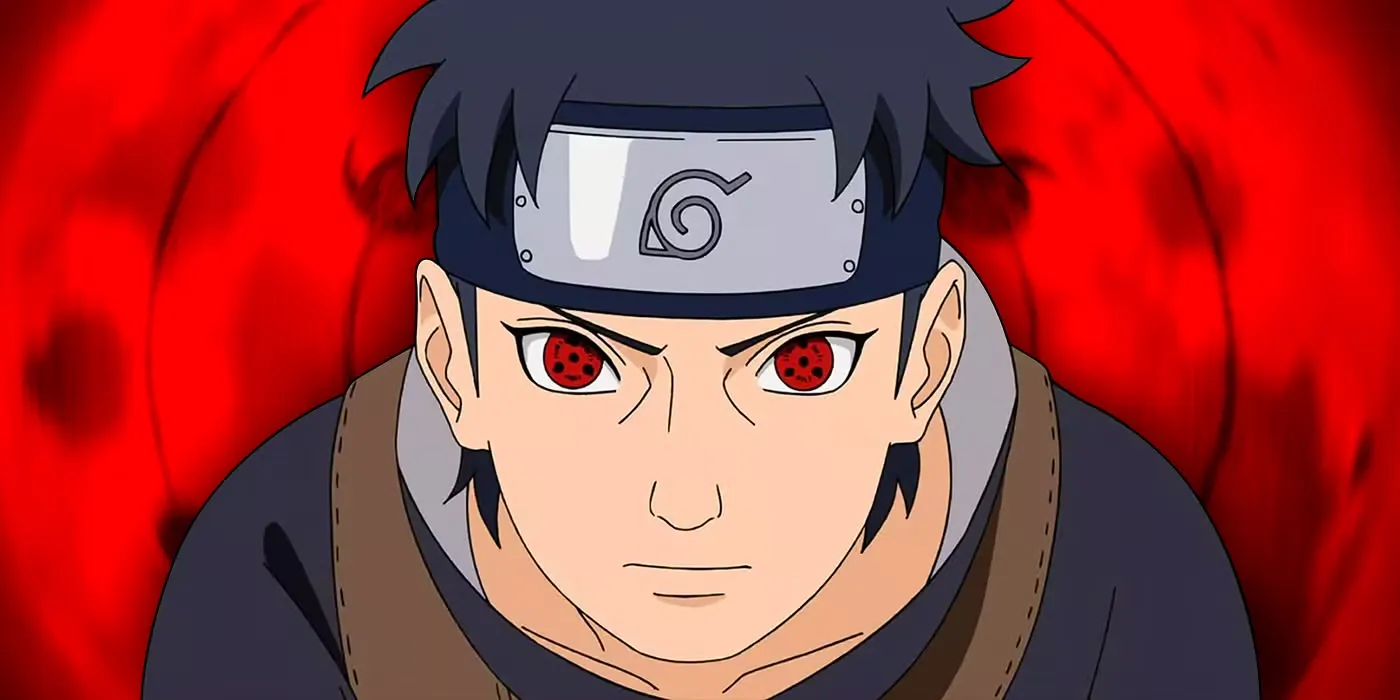
What is the Sharingan in Naruto? The Sharingan is a hereditary eye technique, or dōjutsu, associated with the Uchiha clan. When activated, its red iris and dark tomoe signal enhanced visual perception and the ability to interpret chakra and movement in ways ordinary eyes cannot. It is not a separate pool of unlimited power. Its usefulness depends on the wielder's experience, reflexes, chakra and judgment.
The Sharingan is often called a copying eye because a skilled user can observe hand signs and physical techniques, then reproduce techniques that their own body and chakra can perform. That last condition matters. Seeing a technique does not automatically grant the genetics, elemental aptitude, stamina or specialized body required to execute it. A Sharingan cannot simply copy every bloodline ability.
What can the normal Sharingan actually do? Its most immediate advantage is perception. The user can notice small motions, follow fast exchanges and anticipate where an opponent is likely to move. That is why Sasuke's early battles show such a dramatic improvement when his visual understanding catches up with the fight. However, knowing that a punch is coming does not mean the body is fast enough to dodge it.
The eyes also support genjutsu, illusions that interfere with a target's senses and perception. Eye contact can be an effective route for Sharingan-based genjutsu, but the precise conditions vary by technique. The ability to read chakra and recognize deceptive movements makes the eye valuable for both offense and counterplay.
Copying is its most famous application. Kakashi earns his reputation as the Copy Ninja by using Obito's transplanted Sharingan, not because he is secretly an Uchiha. The official Naruto retrospective describes Obito awakening his eye while protecting his teammates and giving the left eye to Kakashi after a devastating injury. That history explains both Kakashi's unusual talent and the eye's personal significance.
What do the one, two and three tomoe mean? Tomoe are the comma-shaped marks that appear around the Sharingan pupil. In the ordinary form, their number generally reflects developing visual ability and mastery. A three-tomoe Sharingan is the familiar mature version, offering the range of perception and genjutsu associated with an experienced wielder.
These marks are not a simple power-level chart. A person with three tomoe is not guaranteed to defeat everyone with fewer, and two users with the same pattern may have very different combat skills. Experience, chakra reserves and the opponent's abilities still decide battles. The tomoe stages also should not be confused with the radically different Mangekyō pattern.
How does someone awaken the Sharingan? The series connects awakening to powerful emotional experiences and the Uchiha's particular chakra response. The trigger is not limited to hatred or murder. In the official Obito birthday retrospective, Obito first awakens his Sharingan when he is desperate to protect Kakashi and Rin. His concern for other people is the immediate catalyst.
That detail is important because the story repeatedly shows characters misinterpreting the clan's power through a cycle of trauma and revenge. A person cannot reliably manufacture an awakening by following a checklist, and a strong emotion does not guarantee every Uchiha will immediately unlock every form.
What is the Mangekyō Sharingan? The Mangekyō Sharingan is a rarer transformation with a distinctive eye pattern and access to extraordinary techniques. It is associated with overwhelming emotional loss or upheaval. Itachi once tells Sasuke that killing a best friend is the route to the Mangekyō, but that statement should not be treated as a universal mechanical requirement. The story itself provides counterexamples to that oversimplification.
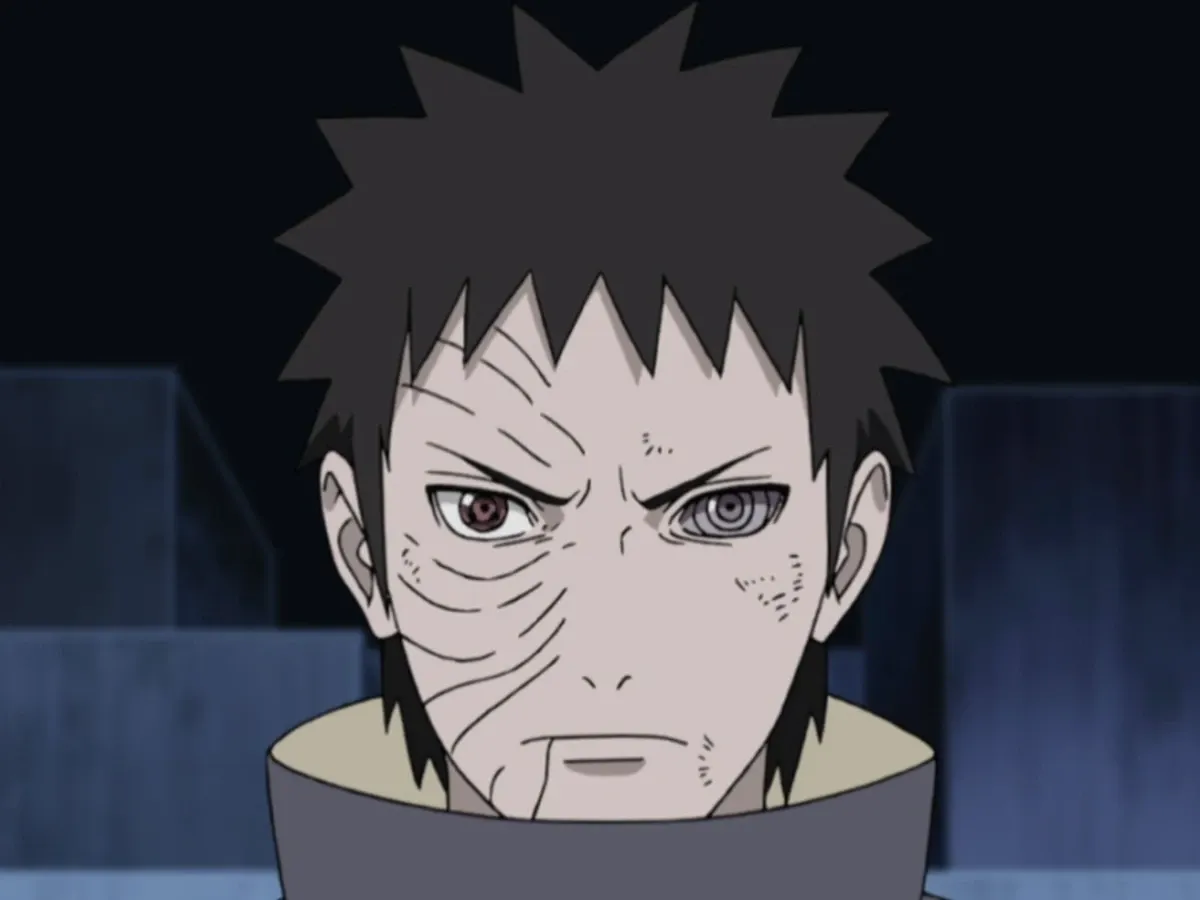
Obito's Mangekyō awakens after he witnesses Rin's death. The official Naruto retrospective identifies that moment directly, connecting it to Naruto manga chapter 605. The event is traumatic, but it does not mean every Mangekyō user personally murdered someone to obtain it. The emotional shock and the individual's circumstances matter.
Mangekyō powers differ by user and sometimes by eye. They are not a standardized list that everyone receives in exactly the same way. Certain abilities, including Susanoo, are associated with sufficiently developed Mangekyō users, but the series treats individual techniques and conditions as significant.
What are Amaterasu, Tsukuyomi, Kamui and Susanoo? Itachi's Tsukuyomi is a terrifying illusion technique, while Amaterasu creates persistent black flames. During the brothers' confrontation, the official Naruto anniversary recap describes the fight shifting from illusions to Amaterasu and finally to Itachi's Susanoo. These techniques demonstrate why Mangekyō is more than a sharper version of ordinary Sharingan sight.
Obito and Kakashi use Kamui, a space-time technique linked to Obito's eyes. Its applications differ depending on which eye is involved. Obito's ability to make parts of himself seem untouchable is not the same use as Kakashi's long-range warping. Their shared eye origin is essential to understanding how the abilities connect.
Susanoo manifests a protective warrior-like chakra construct and can provide formidable offensive and defensive options. It is not simply another genjutsu. It also carries an enormous combat cost. The official series finale retrospective recounts Kakashi briefly using Susanoo after receiving Obito's Mangekyō chakra during the battle against Kaguya, an exceptional event rather than proof that anyone can learn it normally.
Why does the Mangekyō Sharingan cause blindness? The Mangekyō's power comes with severe strain. Repeated use can damage the wielder's eyesight and eventually lead to blindness. This is not merely a fan theory or an anime-only exaggeration. The official Naruto and Boruto database explicitly describes the progressive eyesight deterioration associated with Mangekyō use.
There is also a chakra cost. Powerful ocular techniques can exhaust a user even before their vision becomes the main problem. The exact burden differs between people and situations, so it is misleading to assign a universal number of safe uses. A fight involving repeated Mangekyō techniques is dangerous even when the user seems to be winning.
What is the Eternal Mangekyō Sharingan? The Eternal Mangekyō Sharingan, often shortened to EMS, is the form associated with transplanting compatible Mangekyō eyes from a close blood relative. Sasuke obtains it using Itachi's eyes. The result preserves the powerful ocular techniques while overcoming the ordinary Mangekyō's progressive blindness problem.
Eternal does not mean infinite chakra, invulnerability or automatic victory. Sasuke must still make tactical decisions, and the body still has limits. The important distinction is that this form addresses the vision-destroying drawback that makes prolonged ordinary Mangekyō use so costly.
The official Naruto site refers to Sasuke's Eternal Mangekyō form in its character material. Readers wanting the emotional context should follow the Uchiha brothers' battle and the later revelations about Itachi. Our Itachi's decision to destroy the Uchiha clan guide explains the political tragedy behind that relationship.
Is the Rinnegan the final stage of the Sharingan? Not in the ordinary sense. The Rinnegan is a separate legendary dōjutsu with an exceptional connection to the Six Paths and Ōtsutsuki lineage. It should not be described as a reward that every three-tomoe or Eternal Mangekyō user can earn by training harder.
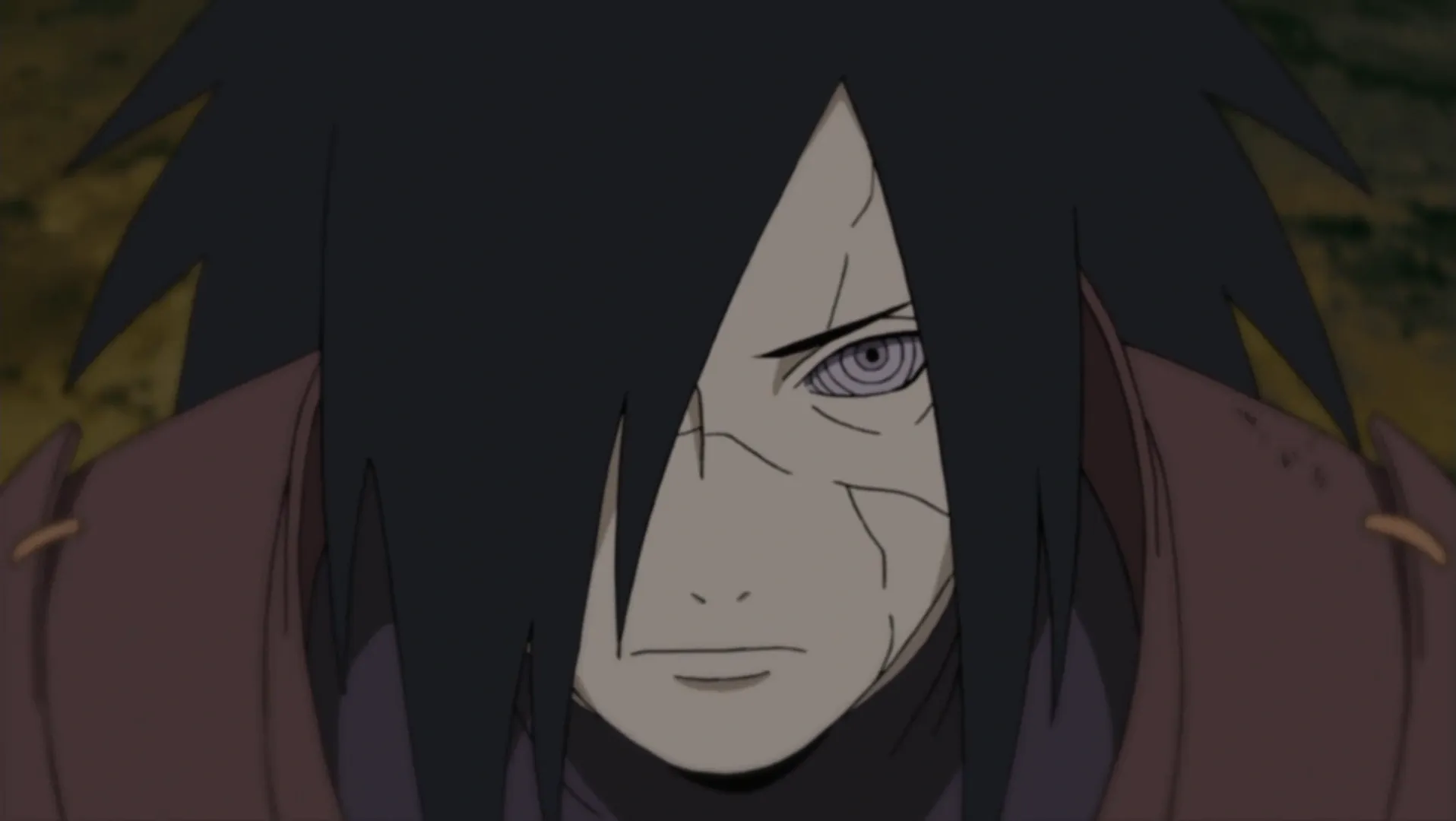
Madara's and Sasuke's circumstances involve rare Six Paths-related power rather than a standard clan progression. The official Naruto finale recap treats Sasuke's Rinnegan and inherited Six Paths abilities as extraordinary. A useful comparison is that Sharingan, Mangekyō and Eternal Mangekyō form a recognizable family of developments, while Rinnegan requires an explanation beyond that ladder.
This also explains why Sasuke's decision to leave Konoha cannot be reduced to collecting stronger eyes. His evolving abilities follow his changing goals, the truth about Itachi and the wider shinobi war.
Can non-Uchiha use the Sharingan? Yes, through exceptional circumstances such as transplantation. Kakashi is the clearest example. Obito gives him a Sharingan, and Kakashi becomes famous for using it despite not being born into the Uchiha clan. The official retrospective explicitly traces that gift to their wartime mission.
But transplantation does not make the recipient biologically Uchiha. Kakashi's eye has an unusually heavy chakra burden, and he cannot manage it in precisely the same way as a natural wielder. The temporary dual-Mangekyō episode during the Kaguya battle is also a special spiritual and chakra-related event, not a normal eye transplant.
For more background on the emotional history behind those eyes, read our explanation of Obito's fall. His story is central to why Kakashi's Sharingan matters beyond its fighting utility.
What are Izanagi and Izanami? Izanagi and Izanami are unusual Uchiha ocular techniques associated with grave sacrifices, rather than standard attacks every Sharingan user throws around. Izanagi can alter an outcome for its user under specific conditions. Izanami traps a target in a repeating experience until they confront the truth of their situation.
The official Shippuden episode titled "Izanagi and Izanami" explains that Itachi uses Izanami against Kabuto and describes its original purpose as checking abuses of Izanagi. These techniques are easy to confuse with ordinary genjutsu, but their rules, consequences and narrative roles are different.
What changes in Boruto? (Manga spoilers) The Uchiha eye story continues through Sarada. The official Naruto and Boruto database names her Mangekyō ability Ohirume and describes gravitational spheres she can control. That is a concrete example of a Mangekyō ability that differs from Itachi's or Obito's techniques.
The same official database warns that her ability consumes tremendous chakra and carries the familiar eyesight risk. It is therefore inaccurate to assume newer Mangekyō powers automatically remove the older form's drawbacks. Readers following only the Naruto anime should treat this section as a spoiler for later manga developments.
Why the Sharingan matters beyond power scaling The Sharingan gives Naruto a visual language for the Uchiha clan's complicated relationship with love, grief and responsibility. Itachi, Sasuke and Obito are not interchangeable simply because they share red eyes. Their choices give the abilities their meaning, and the story repeatedly asks what happens when suffering is mistaken for proof of strength.
The eye is also a reminder that the best power systems create trade-offs. Better perception cannot replace physical speed. A devastating technique can destroy its user's vision. An inherited advantage cannot resolve a broken relationship. If you are exploring other paths to strength, our guide to Naruto's Sage Mode explains a very different approach based on balancing natural energy rather than ocular inheritance.
Frequently asked questions
Frequently asked questions
Frequently asked questions
Can the Sharingan copy any jutsu?
No. It helps a user observe and reproduce suitable techniques, but it cannot grant missing bloodline traits, physical abilities or chakra reserves.
Does a person have to kill a friend to awaken Mangekyō Sharingan?
No. Itachi's statement to Sasuke is not a universal rule. Obito's Mangekyō awakening is tied to witnessing Rin's death.
Why does Mangekyō Sharingan make users blind?
Repeated use strains and progressively damages the user's vision. The Eternal Mangekyō form addresses that particular drawback.
How did Kakashi get the Sharingan?
Obito Uchiha gave Kakashi his left Sharingan after suffering a crushing injury during a wartime mission.
Is Rinnegan stronger Sharingan?
The Rinnegan has extraordinary abilities, but it is not an automatic next step of the normal Sharingan. Its origins involve exceptional Six Paths-related circumstances.
Sources & references8 sources
- Naruto Official: Obito birthday retrospective
- Naruto Official: Sasuke and Itachi fight retrospective
- Naruto Official: Shippuden finale retrospective
- Naruto Official: Izanagi and Izanami episode
- Naruto Official: Mangekyo Sharingan episode
- Naruto Official: Boruto database Ohirume
- VIZ: Naruto Volume 42
- VIZ: Naruto Volume 43