What Are Devil Fruits in One Piece? All 3 Types Explained
Rushabh Bhosale
Updated
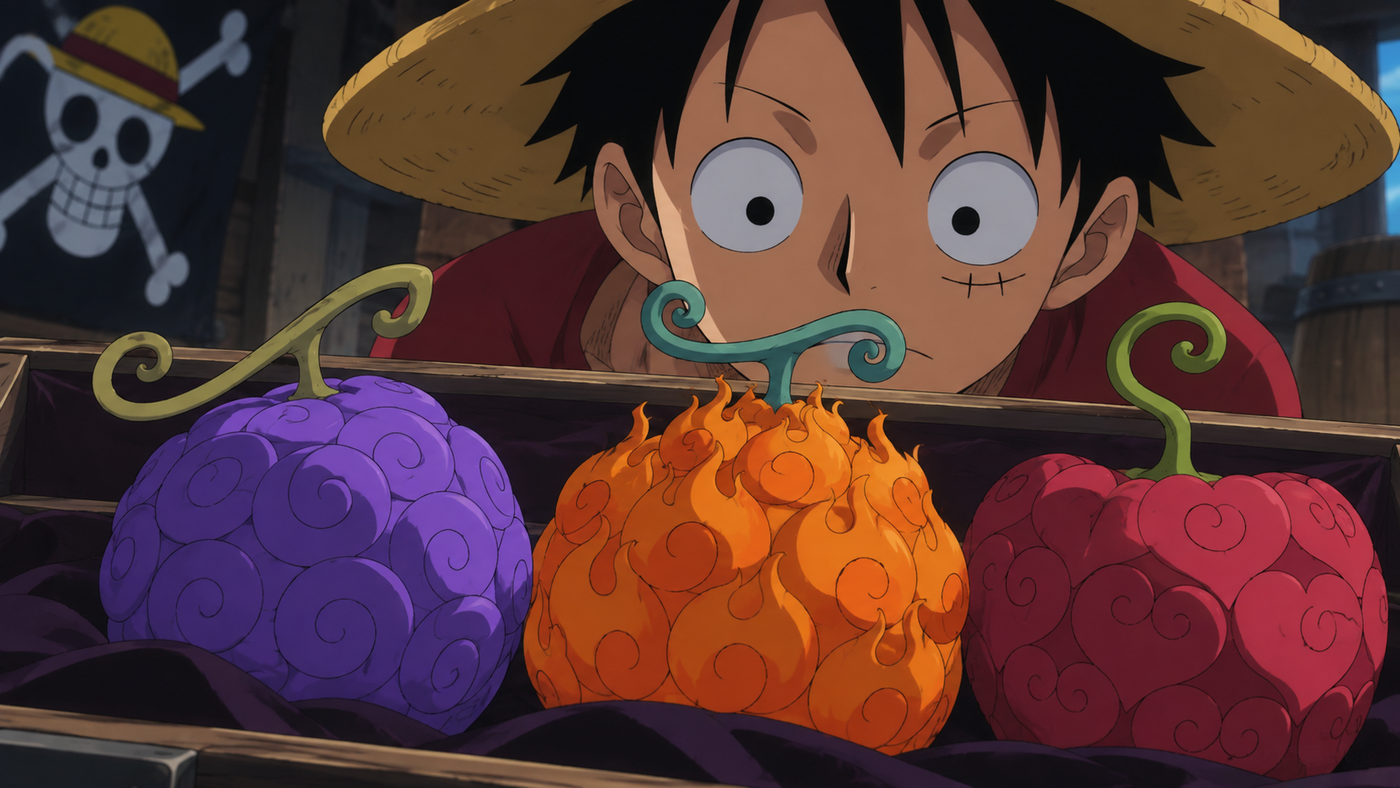
Devil Fruits are mysterious fruits in One Piece that grant a person a supernatural ability after they eat one. The trade-off is severe: the user loses the ability to swim and becomes weakened by the sea. Most Devil Fruits fall into three classes, Paramecia, Zoan and Logia, but One Piece has spent decades adding subtypes, artificial versions, awakenings and unusual exceptions to those basic rules.
The easiest way to understand the system is not to memorize every fruit. Start with what the three classes change: Paramecia grants an enormous range of unusual abilities, Zoan transforms the user into an animal or creature, and Logia lets the user create, control and become a natural element or substance.
How do Devil Fruits work?
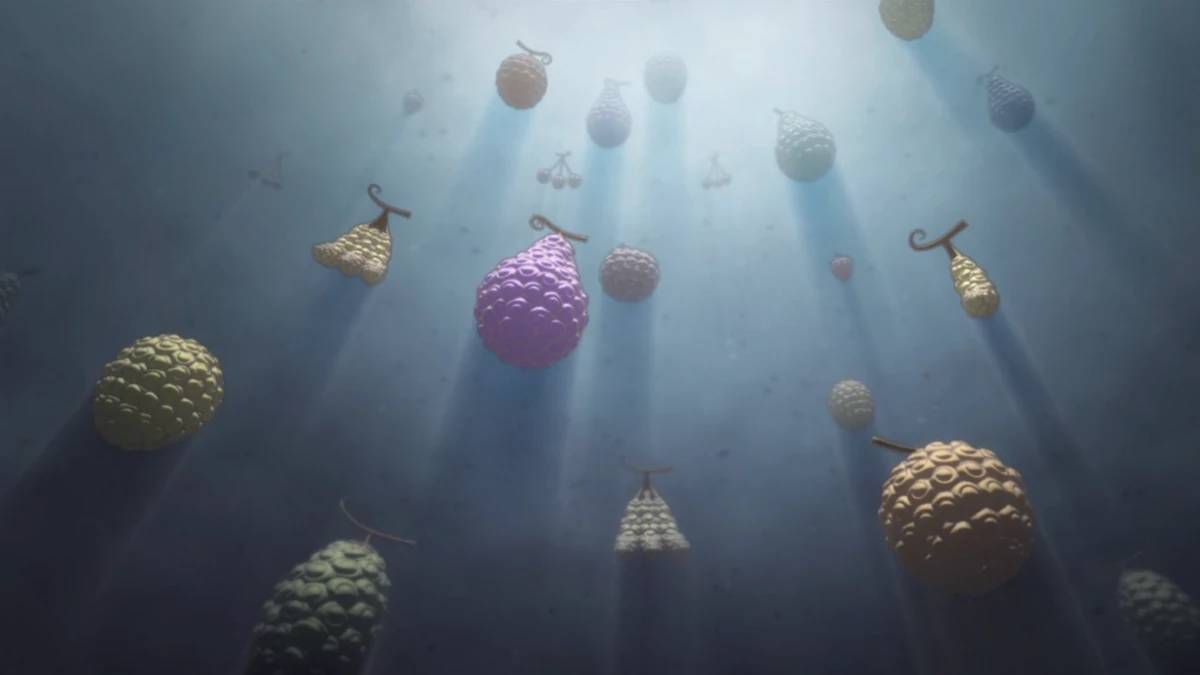
A Devil Fruit’s power is acquired by eating it. One bite is enough for the ability to transfer to the eater, so sharing the rest of the fruit afterward does not create multiple users of the same power. Each naturally occurring Devil Fruit is associated with its own ability, although different fruits can produce powers that look similar.
When a Devil Fruit user dies, the power does not simply disappear from the world. The fruit can reappear and be eaten by a new user. Ace’s Mera Mera no Mi eventually returning to circulation is one of the clearest examples shown in the story.
Why can’t Devil Fruit users swim?
The sea rejects Devil Fruit users. When sufficiently submerged, they lose strength and cannot move normally, which makes drowning a uniquely dangerous weakness in a story dominated by pirates and ocean travel. The weakness is not limited to dramatic ocean battles. Large bodies of standing water can also sap a user’s strength when enough of the body is submerged.
Seastone reproduces properties associated with the sea and can weaken Devil Fruit users through contact. That is why the World Government and Marines can use seastone restraints against prisoners whose abilities would otherwise make ordinary handcuffs useless.
Paramecia Devil Fruits explained
Paramecia is the broadest and most varied Devil Fruit class. If an ability is not a conventional animal transformation and does not fit the Logia model, it often falls under Paramecia. That makes the category less intuitive than the other two.
Paramecia powers can alter the user’s body, generate or manipulate substances, affect people and objects, or create highly specific rule-based effects. Buggy’s Bara Bara no Mi allows his body to separate into pieces, while Trafalgar Law’s Ope Ope no Mi gives him extraordinary control over targets inside his ROOM. The category is defined by variety rather than one visual transformation.
Charlotte Katakuri’s Mochi Mochi no Mi is particularly unusual because it is classified as a Special Paramecia. Its ability to create, control and transform into mochi resembles the behavior viewers normally associate with Logia powers.
Zoan Devil Fruits explained
Zoan fruits let their users transform into animals or animal-like beings. A typical Zoan user can access a normal form, a transformed animal form and a hybrid form combining traits of both. The hybrid form is especially useful in combat because it can combine physical advantages with the user’s normal fighting skills.
Zoans also have important subcategories. Ancient Zoans are based on extinct creatures such as dinosaurs and mammoths. Mythical Zoans are based on legendary or divine beings and can grant additional supernatural abilities beyond transformation. Marco’s phoenix fruit is a well-known example.
Luffy’s fruit is the biggest spoiler-sensitive example. The story eventually reveals that the power long presented as the Gomu Gomu no Mi has a much more important classification connected to the Hito Hito no Mi, Model: Nika. That reveal changes how viewers should understand both Luffy’s transformations and the World Government’s interest in his fruit.
What are artificial Zoan and SMILE fruits?
One Piece also explores attempts to reproduce Devil Fruit powers artificially. Vegapunk created an artificial fruit based on Kaido’s power that Momonosuke later ate. Caesar Clown and Doflamingo’s SMILE system produced artificial Zoan abilities for Kaido’s forces, but with a terrible failure rate and consequences for people who consumed defective fruits.
SMILEs matter because they show that Devil Fruit abilities can be studied and partially replicated, while also emphasizing how difficult it is to reproduce the original phenomenon perfectly.
Logia Devil Fruits explained
Logia fruits generally allow users to create, control and transform their bodies into a natural element or phenomenon. Fire, smoke, sand, ice, lightning and light are familiar examples. Because the user can transform into the element itself, ordinary physical attacks can pass through many Logia users without causing damage.
That apparent invulnerability is not absolute. Armament Haki can allow fighters to strike the real body of a Logia user, and certain abilities can also have natural counters or unusual interactions. As Haki becomes more important, Logia powers remain dangerous without automatically deciding every fight.
What is Devil Fruit awakening?
Awakening is an advanced stage of Devil Fruit power that pushes an ability beyond its ordinary limits. One Piece does not present every awakening in exactly the same way. Awakened Paramecia users such as Doflamingo and Katakuri can extend their abilities into the surrounding environment, while awakened Zoans are associated with major physical enhancement and recovery.
The key point is that awakening is not simply a second named attack. It represents a deeper level of compatibility or mastery between the user and the fruit. The exact expression depends on the fruit and its class, so it is safer to judge confirmed awakenings individually rather than assume one universal rule.
Can someone eat two Devil Fruits?
The established rule is that a person cannot safely possess multiple Devil Fruit powers. Blackbeard is the extraordinary exception. He possesses both the Yami Yami no Mi and the Gura Gura no Mi, but the story has not yet reduced the reason he can do this to a simple, universally confirmed explanation.
That distinction is important because theories about Blackbeard’s body, lineage or abilities are popular, but theories should not be presented as settled canon. His exception remains one of One Piece’s major Devil Fruit mysteries.
Are Devil Fruits stronger than Haki?
Neither system automatically outranks the other. Devil Fruits can provide extraordinary versatility, while Haki gives powerful fighters tools that do not depend on eating a fruit. Some of the strongest figures in the series have reached the top without confirmed Devil Fruit powers, which prevents the story from turning fruit ownership into a simple power ranking.
That balance remains important as the anime continues through the Elbaph arc, where the series’ oldest mysteries and highest-level fighters increasingly intersect.
The simplest way to remember the three Devil Fruit types
Paramecia is the broad category for unusual superhuman abilities, Zoan is transformation into animals or mythical creatures, and Logia is creation, control and bodily transformation into natural elements or phenomena. From there, subtypes and awakenings add complexity.
Devil Fruits work so well as a power system because the fruit rarely determines a fight by itself. Creativity, experience, Haki, matchup and the user’s understanding of their own ability all matter. A seemingly strange fruit can become terrifying in the hands of the right person, while an overwhelmingly powerful fruit can still be countered by someone who understands its rules.
Tags
Sources
Frequently Asked Questions
What are the three types of Devil Fruits in One Piece?
The three main Devil Fruit classes are Paramecia, Zoan and Logia. Paramecia covers varied supernatural abilities, Zoan grants transformations, and Logia generally lets users create, control and become natural elements or phenomena.
Why can’t Devil Fruit users swim?
Eating a Devil Fruit causes the user to lose strength when sufficiently submerged in the sea or other standing water, leaving them unable to swim normally.
Can a person have two Devil Fruit powers?
Normally no. Blackbeard is the known exception because he possesses both the Yami Yami no Mi and Gura Gura no Mi. The full reason for his exception remains a major mystery.
Next up
Chainsaw Man’s Four Horsemen Explained: Who Are They?
Who are the Four Horsemen in Chainsaw Man? Control, War, Famine and Death explained, including Makima, Nayuta, Yoru, Fami, their powers and Pochita connection.