What Does the D Mean in One Piece? The Will of D Explained
Rushabh Bhosale
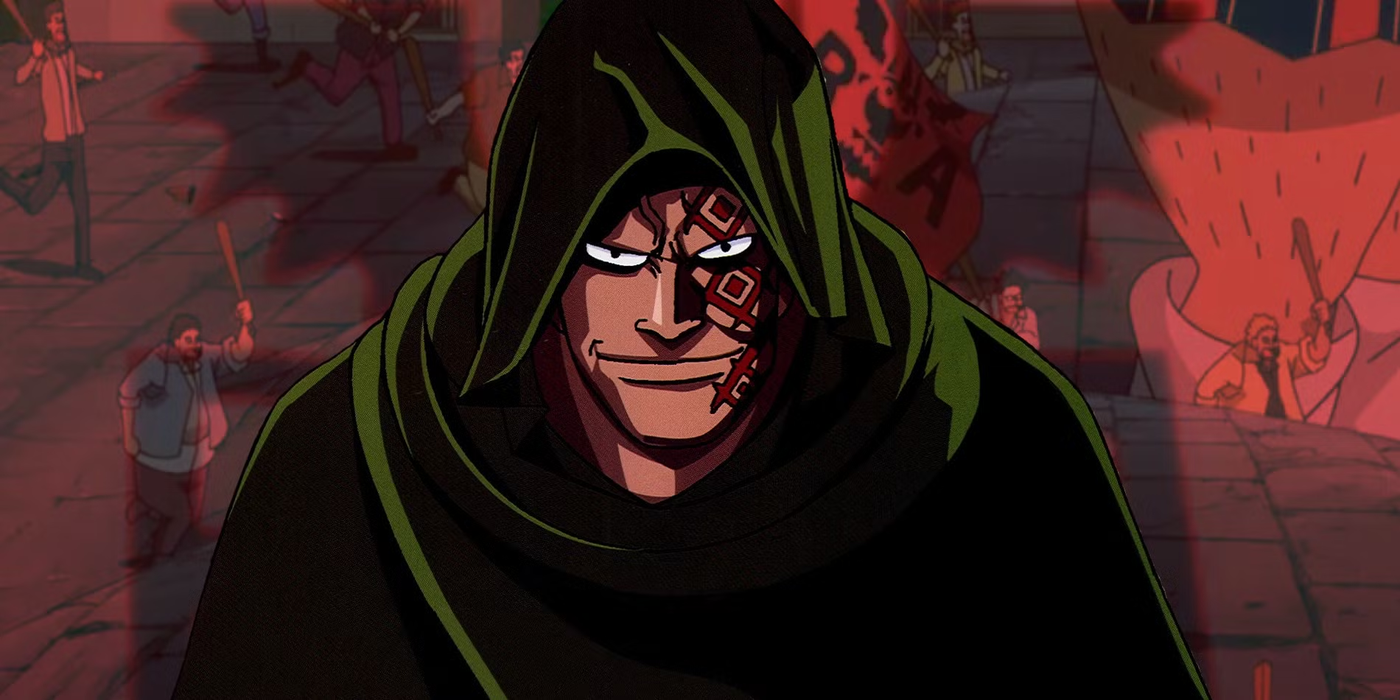
The “D.” in names such as Monkey D. Luffy, Gol D. Roger and Trafalgar D. Water Law is one of One Piece’s oldest unresolved mysteries. The anime has confirmed that it is more than an ordinary middle initial: it is inherited across multiple family lines, the World Government has reasons to fear it, and people carrying it repeatedly appear at turning points in history.
What One Piece has not yet given anime viewers is the simplest answer: the exact word the letter D represents. That distinction matters because theories such as “Dawn” are popular and thematically plausible, but they are still theories. The safest way to understand the Will of D is to separate what the story has actually revealed from what fans are trying to solve.
What is the Will of D in One Piece?
The Will of D is the name used for the mysterious inherited D carried by certain people and families throughout the One Piece world. It is not a pirate crew, formal organization or single bloodline that has been fully mapped. Its bearers include pirates, Marines, revolutionaries and people from very different backgrounds.
That diversity is important. Luffy and Roger share the initial despite belonging to different families. Law was taught to keep his full name, Trafalgar D. Water Law, secret. Garp serves the Marines while carrying D openly. Blackbeard carries it too despite being one of Luffy’s greatest rivals. Whatever D ultimately means, it does not automatically make its bearers allies or morally similar people.
Does One Piece reveal what the D stands for?
No definitive expansion of the letter has been confirmed in the anime. One Piece has steadily revealed more about the people who carry D and why the name matters, but the literal meaning remains protected as a final-saga mystery.
This is where search results can become misleading. “Dawn,” “Dream,” “Destiny” and other words are often proposed by fans. Dawn has especially strong thematic support because One Piece repeatedly uses the image of bringing a new dawn to the world. But thematic evidence is not the same as an explicit reveal. Until the story states the answer, it should be treated as interpretation rather than fact.
Why does the World Government fear the D?
One of the clearest clues comes from Corazon’s explanation to Law. In his homeland, people were taught that those bearing D were the “natural enemies of the gods.” In One Piece, the ruling Celestial Dragons call themselves gods, so the phrase immediately gives the D a political meaning as well as a mysterious one.
The Government’s behavior reinforces that connection. Roger’s true name was Gol D. Roger, yet the world commonly knew him as Gold Roger. Law’s family treated the D in his name as something that should remain hidden. These details suggest that the initial is connected to knowledge or history the current world order would rather suppress.
That makes the Will of D difficult to separate from the Void Century. The erased century contains the origins of the World Government, Joy Boy’s era and the ancient conflict that shaped the modern world.
Who has the D in One Piece?
The best-known anime-confirmed bearers include Monkey D. Luffy, Monkey D. Garp, Monkey D. Dragon, Gol D. Roger, Portgas D. Ace, Portgas D. Rouge, Marshall D. Teach, Trafalgar D. Water Law and Jaguar D. Saul. The story has also expanded the mystery through additional historical revelations as the final saga develops.
The list itself tells us something useful. D appears in multiple surnames and across very different races, generations and allegiances. Roger became Pirate King. Garp became a legendary Marine. Dragon leads the Revolutionary Army. Luffy seeks freedom on his own terms. Teach also pursues enormous ambition, but in a way that makes him a direct threat to Luffy.
So “the D clan” is convenient shorthand, but it can create the wrong impression if it is understood as one ordinary extended family. One Piece has shown inheritance within individual families, yet it has not explained the complete relationship connecting every bearer.
Why do so many D bearers smile in the face of death?
One of the most famous recurring patterns is the calm or smiling response several D bearers show when facing death. Roger smiled at his execution. Luffy smiled when he believed Buggy was about to execute him at Loguetown. Saul’s final moments also made smiling an emotionally important part of Robin’s story.
It is tempting to turn this into a supernatural rule, but One Piece has not established that every person with D must smile before death. It works better as a recurring motif: these characters often possess an unusual acceptance of risk, freedom and inherited purpose. The pattern connects them thematically without proving that the initial magically controls their behavior.
Is Luffy the person who inherited Roger’s will?
Luffy clearly echoes Roger in ways noticed by people who knew the Pirate King, but inherited will in One Piece is broader than reincarnation or direct succession. Dreams and promises can survive the people who began them. Roger inspired an entire era, while Luffy follows his own dream rather than trying to imitate Roger’s life step by step.
This is also why the D mystery matters beyond Luffy alone. Teach carries D but represents a radically different path. Law carries D without sharing Luffy’s exact goal. The story appears interested in how inherited history can produce different choices, not in turning every D bearer into the same archetype.
How is the Will of D connected to Joy Boy and the Void Century?
The anime’s Egghead revelations make the ancient-history connection increasingly important. Vegapunk confirms that Joy Boy lived during the Void Century and describes him as the first person to be called a pirate. The conflict of that era eventually led to the world order that exists today.
The story has not yet provided a neat equation saying “Joy Boy equals the origin of D.” What it has done is move Joy Boy, the erased history, the World Government’s fear of certain inherited names and Luffy’s role toward the same central mystery. The closer the Straw Hats get to the truth of the old world, the harder it becomes to treat these threads as unrelated.
That connection should become even more relevant as the anime advances into the Elbaph arc, where ancient history and inherited stories remain central to the larger final-saga direction.
Does having D give someone special powers?
There is no confirmed D-specific combat ability. Luffy’s strength comes from his Devil Fruit, Haki, training and creativity. Law’s techniques come from the Op-Op Fruit. Garp is famous for overwhelming physical strength and Haki. Teach’s unusual abilities involve Devil Fruits and mysteries specific to him, not a power that every D bearer shares.
For the mechanics of those systems, AnimeSparks separately explains Haki and its advanced forms as well as the three main Devil Fruit types. D is better understood as a historical and thematic mystery than as another battle-power category.
What are the strongest theories about the meaning of D?
The “Dawn” theory remains popular because the series repeatedly frames liberation and the arrival of a new era as a dawn. Luffy’s adventures repeatedly free countries from oppressive rulers, and the broader story keeps returning to the idea that the world is waiting for a major change.
Other theories attempt to connect D to ancient symbols, the shape of the moon, a forgotten kingdom or a specific word from the Void Century. None should be written as established canon. A good theory has to explain not only Luffy and Roger, but also Teach, Law, Saul, Garp and the Government’s centuries-long anxiety about the name.
What the Will of D most likely represents right now
Based on what the anime has actually established, the safest conclusion is that D marks an inherited connection to a buried historical will that threatens the order created after the Void Century. Its bearers are not automatically allies, relatives or heroes, and the letter does not grant a shared superpower. What connects them is deeper history and the repeated tendency to appear when the established world is being challenged.
The unanswered part is intentional. One Piece has spent decades giving viewers consequences before causes: the Government fears D, Roger knew the world’s hidden history, certain families preserve the initial, and Luffy is moving toward the same truth Roger reached. The final meaning of the letter is likely to matter because it will explain why those clues have survived across centuries, not simply because it will reveal a single word.
Frequently Asked Questions
What does the D stand for in One Piece?
The exact word represented by D has not been definitively revealed in the anime. The story has established that the initial is inherited by multiple families and is feared by the World Government, but theories such as Dawn remain theories unless the series confirms them.
Why is the Will of D important?
People carrying D repeatedly appear around major changes in world history. The name is linked to the World Government’s enemies, the hidden history surrounding the Void Century and figures such as Luffy, Roger, Law and Blackbeard.
Are all people with D related?
Not as one confirmed biological family. Several separate family lines carry D, including the Monkey, Gol, Portgas and Trafalgar families. The series has not established that every D bearer is a close blood relative.
Is D short for Dawn?
Dawn is a popular fan theory because the idea of a new dawn repeatedly appears in One Piece, but it should not be presented as confirmed. The exact meaning of the initial remains one of the series’ unresolved mysteries.
Official sources
- crunchyroll.com
- crunchyroll.com
- crunchyroll.com
- one-piece.com
More from One Piece
What Is the Void Century in One Piece? What We Know So Far
September 10, 2026
What Are Devil Fruits in One Piece? All 3 Types Explained
September 9, 2026
What Is Haki in One Piece? All 3 Types and Advanced Forms Explained
September 5, 2026
How Long Does It Take to Watch One Piece? Full Watch-Time Guide
August 26, 2026

One Piece Film God Valley Release Date: Summer 2027
August 24, 2026
Next up
Chainsaw Man’s Four Horsemen Explained: Who Are They?
Who are the Four Horsemen in Chainsaw Man? Control, War, Famine and Death explained, including Makima, Nayuta, Yoru, Fami, their powers and Pochita connection.