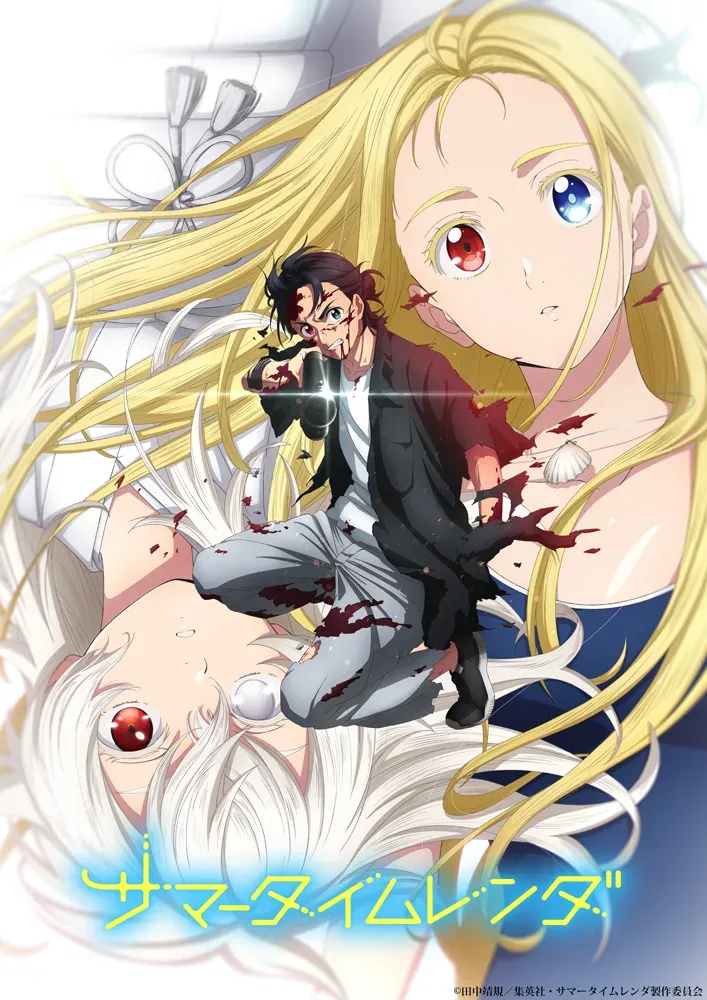

Summer Time Rendering ends with Shinpei returning to a new timeline in which the Shadow tragedy never happened, Ushio is alive, and the people killed during the loops have been restored. The final victory does not merely rewind time. By defeating Shide and resolving Haine’s centuries-long tragedy at its origin, Shinpei and Shadow Ushio remove the cause of the disaster itself. That creates a peaceful version of Hitogashima where the characters can finally live without being trapped inside the same cycle of death. The final scene confirms that Shinpei and Ushio still retain an emotional connection to the erased timeline, even if their memories return only gradually.
Major spoilers ahead: This article explains the ending of Summer Time Rendering, including the final battle, the new timeline, Haine’s past and Ushio’s return.
What Happens at the End of Summer Time Rendering?
In the final confrontation, Shinpei and his allies pursue Shide beyond ordinary time and space. Shide reveals that his true goal is not survival in the normal sense. He wants to force reality toward an ending that satisfies him, even if that means destroying the world and reducing everyone else to pieces in his private game.
Shinpei defeats him with the help of Shadow Ushio, who uses Haine’s eye and her rendering ability to reach the origin of the tragedy. Instead of only stopping the current version of Haine, Ushio travels back to the moment when Hiruko first arrived on the island centuries earlier.
There, she prevents the event that would eventually create the violent Shadow system. This is the decisive move. Once the source of the disaster is removed, the future built upon it can no longer exist in the same way.
Shinpei is then sent back to Hitogashima on 22 July. The island looks familiar, but almost everything that caused the story’s suffering has changed:
| Ending question | Answer | |---|---| | Is Ushio alive? | Yes, the human Ushio is alive in the final timeline. | | Did Shinpei create another loop? | Not exactly. He returns to a rewritten timeline where the original cause of the Shadow disaster was removed. | | Are the dead characters restored? | Yes. Characters killed because of the Shadow conflict are alive again. | | Does Ushio remember the old timeline? | Her memories appear to return through dreams and emotional recognition. | | Is Shadow Ushio still alive? | Her separate existence disappears after she completes her role, but her memories and feelings reach the human Ushio. | | Is Shide gone? | Yes. His plan and the system that allowed him to persist are erased. |
How Did Shinpei Create the Final Timeline?
That contrast is useful beside Subaru’s Return by Death in Re:Zero, whose rules are deliberately less controllable for the person trapped inside them.
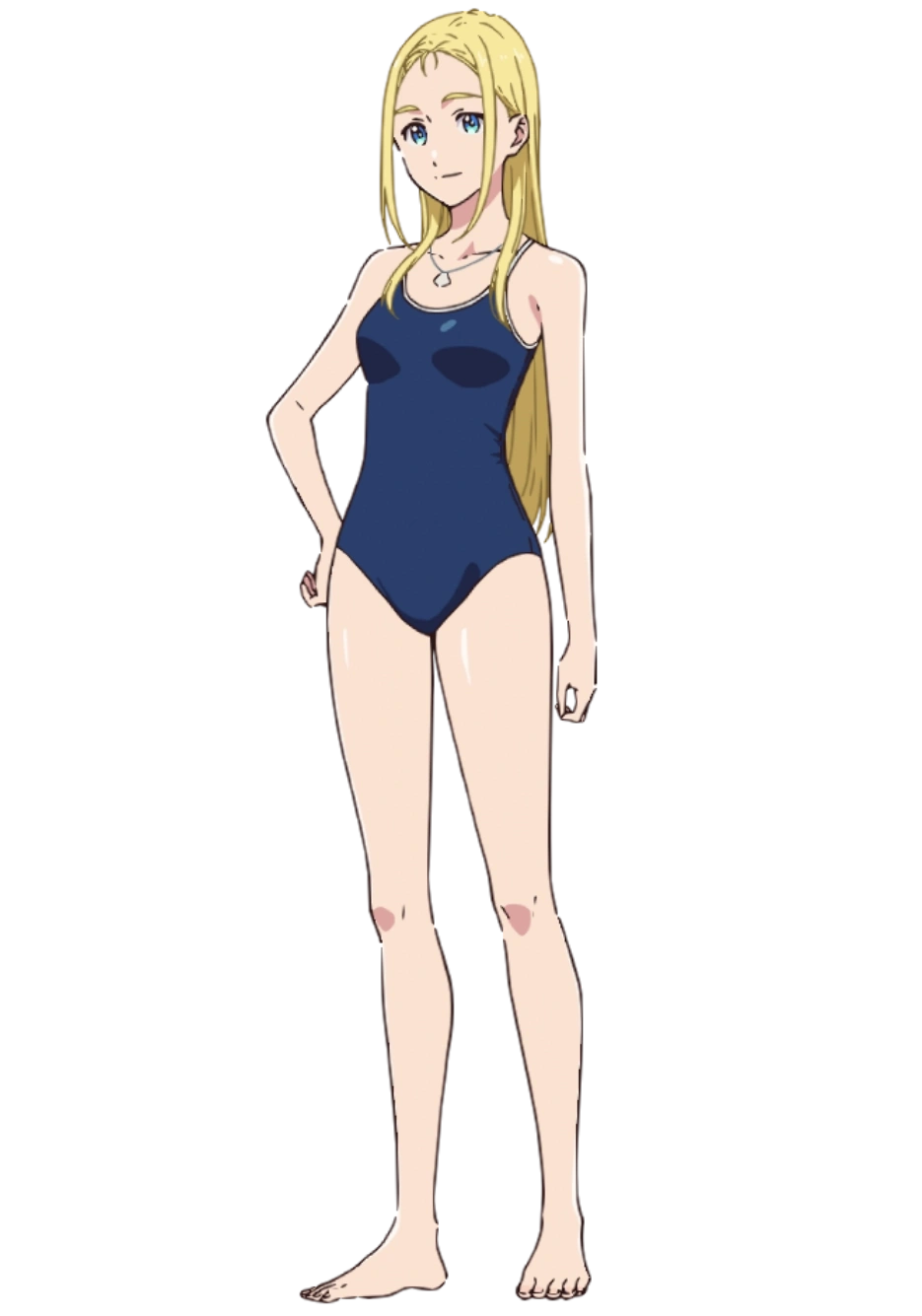
Shinpei does not personally rewrite every event. The final timeline is created because Shadow Ushio changes the past at the point where the entire Shadow history began.
Throughout the anime, Shinpei’s time loops work like retries. He dies, returns to an earlier point and tries to produce a better outcome. However, each loop still takes place inside the same damaged history. Haine exists, Shide continues manipulating events, and the massacre remains possible.
The ending goes deeper than another retry. Ushio uses the power of Haine’s eye to reach the root event itself. By intervening before Hiruko becomes the force that will feed upon and copy the island’s inhabitants, she removes the foundation beneath Shide’s plan.
That distinction explains why the ending feels so different from the previous loops. Shinpei is not returning to a slightly improved version of the same nightmare. He wakes in a world whose history has been rebuilt without the central curse.
Why Is Ushio Alive Again?
The Ushio who drowned before the story began is alive because her death was tied directly to the Shadow conflict.
In the original timeline, Ushio died while protecting Shiori from Shadow Shiori. Once the Shadow disaster is prevented at its origin, that confrontation never occurs. Human Ushio therefore has no reason to die on the beach.
This also restores other characters whose deaths were caused by Haine, Shide or the Shadows. Hizuru, Nezu, Tokiko’s parents and the rest of the island are no longer casualties of a battle that never took place.
The ending is generous, but it is not completely arbitrary. Every restored life follows from the same causal change: remove the Shadows, and the deaths caused by them disappear as well.
Is the Ushio at the End Human Ushio or Shadow Ushio?
The Ushio at the festival is the human Ushio of the rewritten timeline. Shadow Ushio no longer exists as a separate duplicate because the event that created the Shadow conflict has been erased.
However, Shadow Ushio’s experiences are not entirely lost.
The anime suggests that the human Ushio receives fragments of those memories through dreams. Her sudden recognition of the promise about takoyaki is the clearest evidence. Shinpei also remembers the same promise, and the moment triggers the return of everything they endured together.
This means the ending does not ask viewers to choose between “human Ushio” and “Shadow Ushio” as though only one can matter. The final Ushio is human, but she inherits the emotional truth of Shadow Ushio’s journey.
Shadow Ushio spent the series becoming more than a copy. She chose her own loyalties, rejected Haine’s command and repeatedly sacrificed herself for Shinpei. The final timeline allows those choices to survive as memory, even after her physical form disappears.
Why Do Shinpei and Ushio Remember the Previous Timeline?
The series never explains the memory transfer with a rigid scientific rule, but it gives enough clues to make the ending understandable.
Shinpei’s consciousness has repeatedly crossed time through Haine’s eye. Ushio also possesses a rendering power capable of recording, copying and transferring information. Their memories are therefore not ordinary memories contained only within one timeline.
By the final battle, both characters have existed outside the usual flow of cause and effect. When the timeline is rewritten, their conscious recollections initially become dreamlike impressions rather than clear memories.
The takoyaki promise acts as a trigger because it belongs specifically to their erased journey. Once both repeat it, the emotional pattern reconnects them to what happened.
The point is less that every memory returns in perfect chronological order and more that the bond created across the loops cannot be erased as easily as the events themselves.
What Happened to Haine?
Haine is one of the most tragic figures in Summer Time Rendering. She is both the source of the island’s horror and a victim of forces she does not fully understand.
The Haine seen through most of the story is connected to Hiruko, the otherworldly being that arrived on Hitogashima centuries earlier. Her hunger, damaged identity and dependence on Shide gradually turn that connection into a cycle of violence.
In the final sequence, Ushio reaches young Haine before that cycle is fully established. She tells her to return home and prevents the future in which Haine becomes trapped as the mother of the Shadows.
This does not simply kill Haine. It releases her from the role that Shide exploited.
That is why the ending resolves Haine’s story through compassion rather than revenge. Shinpei and Ushio defeat the threat, but they also recognise that the child at the centre of it was manipulated for centuries.
What Was Shide’s Real Goal?
Shide’s goal is deliberately selfish and nihilistic. After living through repeated generations, he becomes obsessed with avoiding an ending he cannot control.
His relationship with Haine allows his identity to continue through the Karikiri bloodline. Yet immortality does not give his life meaning. It only deepens his fear of a future in which he is no longer the one deciding how the story ends.
He eventually chooses destruction because he would rather end the world himself than allow time to move beyond him.
This makes Shide the opposite of Shinpei.
Shinpei also repeats time and tries to alter outcomes, but he does so to preserve other people’s futures. Shide uses repetition to trap the world inside his own desire. Shinpei accepts that life must continue beyond his control; Shide cannot.
Their conflict is therefore not just hero versus villain. It is a conflict between two ways of responding to mortality:
- Shinpei accepts loss, learns from it and keeps moving.
- Shide treats loss as an insult and tries to destroy anything he cannot possess.
Why Was Shide Defeated for Good?
Earlier victories against Shide fail because the heroes are fighting only one manifestation of him. His continued existence depends on the system built through Haine, Hiruko and the Karikiri family.
The final battle succeeds because Shinpei and Ushio attack both the immediate enemy and the historical cause that sustains him.
Once Ushio alters the origin of the Shadows, Shide loses the mechanism that lets him persist across generations. There is no longer a Haine for him to exploit in the same way, no Shadow network to preserve his plan and no future massacre to engineer.
His defeat is permanent because the story removes his foundation rather than merely destroying his current body.
What Does the Seashell Mean?
The seashell is one of the ending’s most important symbols.
At the beginning of the story, Shinpei returns to the island because Ushio is dead. His journey begins with absence. By the end, the shell represents the opposite: a memory that survives even after the timeline containing it has disappeared.
The ocean repeatedly functions as both a boundary and a connection in the series. It separates Hitogashima from the outside world, hides Hiruko’s arrival and becomes the place associated with Ushio’s death. The shell transforms that threatening space into something intimate.
It carries the suggestion that the past can leave a trace without continuing to control the future.
That is also why the final festival matters. The characters are not simply returned to an ordinary day. They are allowed to reclaim the summer that the Shadows stole from them.
Is the Ending a Reset Button?
It is easy to describe the ending as a reset because nearly every death is undone. However, calling it only a reset overlooks what Shinpei and Ushio had to accomplish.
A weak reset ending erases consequences without changing the characters. Summer Time Rendering does something more deliberate. Shinpei and Ushio earn the final timeline by understanding the enemy, surviving repeated failures and reaching the source of the tragedy.
The erased events still matter because they shape the two people who remember them. Shinpei’s decisions in the final timeline carry the emotional weight of every loop, even though the people around him no longer share that history.
The ending therefore preserves consequence in memory rather than in death.
That choice also fits the series’ larger theme. The purpose of remembering pain is not to remain trapped inside it. It is to prevent the same suffering from happening again.
Why the Happy Ending Works
The ending could have felt too convenient if the series had restored everyone without explaining the change. Instead, the story makes the happy conclusion the result of solving the central mystery at the deepest possible level.
The heroes do not merely win the last fight. They discover why the cycle exists, who benefits from it and where it began.
That structure is one reason the anime works so well as a thriller. Its supernatural rules are not separate from its emotional resolution. The same investigation that reveals how the Shadows copy people also reveals how their history can be undone.
Our broader review, *Summer Time Rendering Is the Best Thriller Anime Most Fans Missed*, explores how the series combines mystery, horror and time travel without losing sight of its characters. The ending is the clearest example of that balance: it resolves the mechanics of the loops while completing Shinpei and Ushio’s relationship.
Does the Anime Fully Adapt the Manga Ending?
The television anime was announced as a 25-episode adaptation covering the story through its conclusion. Its final episode reaches the manga’s core ending rather than stopping at an incomplete point.
The anime and manga share the same essential resolution:
- Shide is defeated.
- Ushio changes the origin of the Shadow tragedy.
- Shinpei returns to a peaceful Hitogashima.
- The dead are restored.
- Shinpei and Ushio recover the connection formed in the erased timeline.
The anime gives these moments additional force through performance, music and visual callbacks, but it does not replace the manga’s ending with a fundamentally different conclusion.
Final Meaning of the Summer Time Rendering Ending
The ending of Summer Time Rendering is ultimately about escaping repetition without erasing love.
Shinpei begins the story trapped inside a series of deaths. Each loop teaches him more, but knowledge alone cannot save the island. He succeeds only when he stops treating the crisis as a puzzle confined to the present and confronts the history that produced it.
Ushio’s final act completes that idea. She does not preserve the timeline in which she became a hero. She gives it up so the human Ushio and everyone else can live.
That sacrifice is why the last scene feels earned. The peaceful festival is not a denial of everything that happened. It is the future those events made possible.
Shinpei and Ushio may no longer carry every memory in the same way, but they recognise one another. After a story built around copies, replacements and stolen identities, that recognition becomes the most important proof of all: their connection was real.
Frequently asked questions
Frequently asked questions
What happens at the end of Summer Time Rendering?
Shinpei and Shadow Ushio defeat Shide, then Ushio changes the past at the origin of the Shadow tragedy. Shinpei returns to a peaceful timeline where Ushio and the other victims are alive.
Why is Ushio alive in the final timeline?
Ushio’s original death was caused by the Shadow conflict. Once the origin of that conflict is removed, the confrontation that killed her never happens.
Is the Ushio at the end human Ushio or Shadow Ushio?
She is the human Ushio of the rewritten timeline, but the ending suggests that Shadow Ushio’s memories and feelings reach her through dreams and emotional recognition.
Why do Shinpei and Ushio remember the erased timeline?
Both characters were connected to Haine’s eye and existed outside normal time. Their memories initially survive as dreams and return when the takoyaki promise triggers their emotional recognition.
Does the Summer Time Rendering anime have a complete ending?
Yes. The 25-episode anime adapts the manga’s main story through its conclusion rather than ending on an unresolved cliffhanger.