
Most anime heroes are still in school when their lives change. These ten series start after that point: the characters already have shifts to finish, customers to answer, deadlines to meet, or careers that are not going according to plan. Some are funny, some are painfully recognizable, and a few are about learning that a job does not have to become your whole identity.
If you want anime about working adults rather than another classroom romance, start with Shirobako for teamwork, Aggretsuko for office frustration, or Wotakoi for dating after work. The ranking below favors stories where employment changes the characters' decisions, not shows that merely give a character a job title.
How We Ranked These Workplace Anime
This is an editorial ranking, not a popularity chart or a claim about what Japanese workplaces are universally like. Each show was judged on three questions: Does the work itself matter to the plot? Do we see the emotional or practical cost of that work? And does the story remember that adults have relationships, hobbies, and lives outside their jobs? A series can be excellent without being a documentary; the distinction is part of the recommendation.
The Quick Pick Guide
Best for understanding how anime gets made: Shirobako. Best for a terrible day at the office: Aggretsuko. Best adult romance: Wotakoi. Best quiet professional drama: The Great Passage. Best career reinvention: Space Brothers. Best creative burnout story: Barakamon. Best chaotic career pivot: Wave, Listen to Me! Best for work-life imbalance: Hataraki Man. Best low-stakes public-office comedy: Servant x Service. Best gentle fantasy office romance: The Ice Guy and His Cool Female Colleague.
10. Servant x Service
Job: local-government office staff. Mood: light ensemble comedy. Lucy Yamagami joins a ward office in Hokkaido, where helping residents means dealing with paperwork, eccentric colleagues, and a workplace that has developed its own peculiar rhythm. Unlike an action show that treats the office as scenery, the public-service setting supplies the jokes and the relationships.
What it gets right is the way colleagues become a miniature society. You learn who can be relied on, who avoids responsibility, and how much of an ordinary day is spent negotiating personalities rather than performing a glamorous job description. It is not a serious account of bureaucracy, and the characters are deliberately exaggerated. Watch it when you want the experience of having coworkers without the dread of opening your actual inbox.
9. The Ice Guy and His Cool Female Colleague
Job: office coworkers. Mood: very gentle supernatural romance. Himuro's emotions create snow and miniature blizzards because he descends from a snow spirit; Fuyutsuki is the composed colleague who catches his attention. That fantasy gimmick makes every ordinary office interaction feel momentous, from a conversation at a desk to a small kindness on the way to work.
This is the least realistic workplace on the list, and that is exactly the point. There is little interest in salaries, career ladders, or managerial pressure. Instead, it captures a softer adult fantasy: being noticed for small acts of care during a routine week. Pick it for comfort, not a hard-hitting portrait of corporate life.
8. Hataraki Man
Job: magazine editor. Mood: sharp, anxious, and often exhausting. Hiroko Matsukata is a 28-year-old editor whose reputation rests on working extraordinarily hard. The series understands a problem many career stories skip: being good at a job does not mean the rest of your life is going well.
Hiroko's drive can be admirable in one scene and troubling in the next. The show is most interesting when professional pride collides with intimacy, rest, and the expectation that a successful worker should always be available. Its early-2000s media-office setting is a period piece now, but the central question is evergreen: when people praise your productivity, who notices what it costs you?
7. Wave, Listen to Me!
Job: restaurant worker turned radio personality. Mood: loud, messy adult comedy. After a night of venting about her love life, Minare Koda hears her words broadcast on the radio and gets pulled toward an unexpected career behind the microphone. She is not a poised prodigy who discovers a perfect calling. She is impulsive, frustrated, funny, and frequently responsible for her own problems.
The workplace angle is less about learning the correct professional technique than about discovering a skill in an embarrassing accident and then having to do something with it. Radio gives Minare a place where her restless voice is an asset, even when the rest of her life is chaotic. If Shirobako is about teams making a product, Wave, Listen to Me! is about a person discovering that the part of herself she cannot control might actually be useful.
6. Barakamon
Job: professional calligrapher. Mood: restorative, funny, and reflective. Seishuu Handa's career crisis begins when criticism of his technically polished but impersonal work sends him to a remote island. The series does not solve burnout with a motivational speech. It lets children, neighbors, routines, and unfamiliar surroundings interrupt the habits that made his work feel empty.
It earns a place here even though there is no conventional office. Freelancers and artists can recognize the danger of tying identity entirely to output. The story asks whether getting better at a craft is the same as getting happier while doing it. For a deeper reading of its creative struggle, see our Barakamon review on burnout and perfectionism.
5. Space Brothers
Job: astronaut candidate and space-industry professional. Mood: hopeful but patient. At 32, Mutta Nanba attempts to become an astronaut after watching his younger brother Hibito reach the career they once dreamed of sharing. The age matters: this is not a school club discovering its first ambition, but an adult trying to rebuild a path after setbacks and comparisons.
The series makes preparation and persistence interesting. Exams, training, teamwork, and uncertainty are the story, not obstacles to skip before a launch sequence. Its unusually long run is a commitment, so it is not the best choice for a weekend binge. But for someone who worries that changing careers means being late to life, Mutta's attempt is a more useful fantasy than instant success. If you like this kind of anxiety about opportunities slipping away, our Run with the Wind analysis explores a different, university-age version of it.
4. The Great Passage
Job: dictionary editors and publishing staff. Mood: quiet, meticulous drama. Mitsuya Majime moves from sales into a team trying to create a new dictionary. A project that sounds comically uncinematic becomes compelling because every definition requires decisions about meaning, evidence, and how people actually use words.
Few workplace anime make expertise look so ordinary and so valuable. The drama comes from years of sustained attention rather than a single genius breakthrough. Colleagues bring different strengths, and progress depends on work that most outsiders would never notice. It is the strongest pick here for readers who love editing, research, language, or any job where precision is the product. It is slow by design; that patience is its reward.
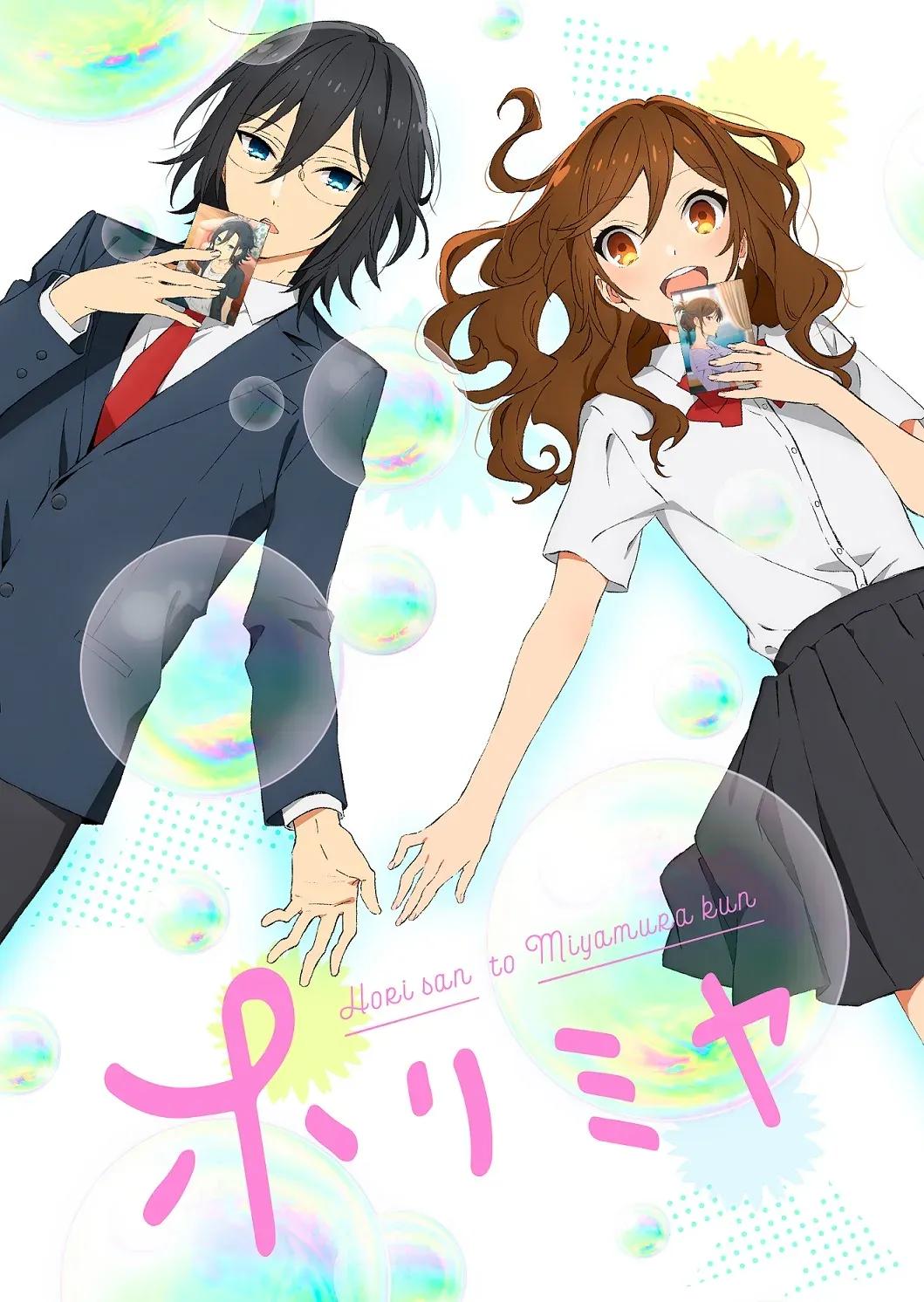
3. Wotakoi: Love Is Hard for Otaku
Job: office employees. Mood: affectionate adult romantic comedy. Narumi changes jobs and reconnects with Hirotaka, an old friend whose gaming obsession matches her own hidden fandom. They begin dating while navigating coworkers, hobbies, and the awkward difference between who they are at the office and who they are after hours.
Wotakoi is less interested in the mechanics of office work than in how adults arrange a life around it. The couple can have a bad day, go home, and still have the difficult conversation that teenage romances often postpone for an entire season. It is a particularly easy entry point for viewers tired of school settings. The anime does not adapt the full manga, so do not expect complete long-term closure from the TV run alone. We also included it in our romance anime with happy endings guide, with that adaptation caveat explained.
2. Aggretsuko
Job: accounting and corporate office work. Mood: satirical, angry, and surprisingly vulnerable. Retsuko is a red panda who survives an unappreciative office job by screaming death metal at karaoke. The animal designs make the premise approachable; the frustrations beneath them are familiar to anyone who has dealt with office politics, bad managers, or the pressure to remain agreeable.
The series works because karaoke is not a magic solution. Retsuko's anger needs somewhere to go, but her work relationships, financial choices, and uncertainty about the future do not disappear after one song. Across its five seasons, the story expands beyond a single awful boss into the larger question of what a stable adult life is supposed to look like. It can become broad and melodramatic, yet its core insight stays sharp: a professional smile and a private self are not always the same person.
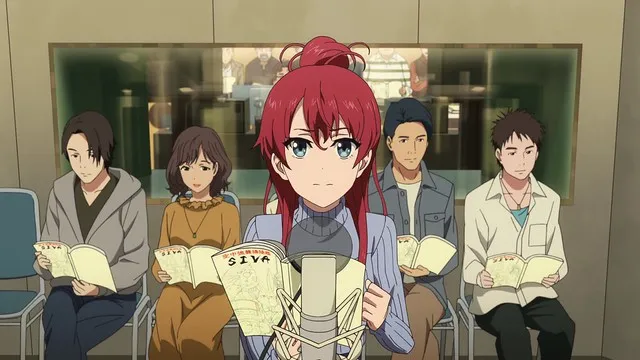
1. Shirobako
Job: anime production staff. Mood: energetic ensemble workplace drama. Aoi Miyamori and her friends try to build careers in animation, and the series follows the unglamorous chain of work behind the shows fans watch: scheduling, production coordination, drawing, recording, and solving problems when plans break. Deadlines are not decorative; they force characters to make decisions and ask one another for help.
Shirobako takes the top spot because it treats labor as collective. A beautiful finished episode is not credited to one visionary; it emerges from people with different specialties, uneven confidence, and competing priorities. The series can romanticize endurance, and viewers should not mistake its drama for a comprehensive account of labor conditions in Japan's animation industry. Still, it is unusually good at showing why competence, communication, and trust matter when a project is too big for one person.
The 24-episode television series is the place to start, followed by the later film if you want to continue. For franchises with movies, specials, and confusing sequel labels, AnimeSparks' anime watch-order guide can help you check release order before starting a longer watch.
Which One Should You Watch After a Long Workday?
If you want to feel understood rather than energized, try Aggretsuko or Hataraki Man. If you want to remember why making things with other people can be satisfying, choose Shirobako or The Great Passage. If work has drained your creative confidence, Barakamon is the gentlest place to start. If you need laughter and a little romance, Wotakoi and The Ice Guy are easy recommendations.
For readers who want stories about adulthood without the workplace premise, our feature on Reigen as a believable adult and our underrated anime recommendations take that conversation in different directions. The common thread is not that these characters have everything figured out. It is that they keep living while they figure things out.
What Counts as a Workplace Anime?
For this list, the job must shape the character's daily choices or relationships. That includes a freelancer's creative practice in Barakamon and an astronaut applicant's training in Space Brothers, not only stories set in cubicles. It excludes school-club series even when their characters work very hard, and it does not imply that every entry is a realistic documentary. The distinction helps separate anime about work from anime that merely happen to feature adults.
Final Recommendation
Start with Shirobako if you want the strongest all-round workplace story, Aggretsuko if you want catharsis after a frustrating shift, and Wotakoi if you mostly want grown-up characters enjoying life outside their jobs. The rest of the list offers a useful reminder: adulthood is not one genre. It can be a radio studio, a government counter, a dictionary office, a rocket program, or a calligraphy desk on an island.
Frequently asked questions
Frequently asked questions
What is the best anime about working adults?
Shirobako is our top all-round recommendation because it shows teamwork, deadlines, and the everyday process of making anime. Aggretsuko is better for office satire, while Wotakoi is better for adult romance.
Are there anime about office workers instead of students?
Yes. Aggretsuko, Wotakoi, Servant x Service, Hataraki Man, and The Ice Guy and His Cool Female Colleague all center adult characters in workplace settings.
Which anime handles career burnout well?
Barakamon examines creative burnout, Aggretsuko explores corporate frustration, and Hataraki Man shows the costs of overwork. They take different tones rather than offering one universal solution.
What is a good workplace anime for a short watch?
Wotakoi, The Great Passage, Servant x Service, and Barakamon have relatively short television runs compared with long-form series like Space Brothers. Availability varies by region.
Sources & references11 sources
- Aniplex of America, Servant x Service series information
- Crunchyroll, The Ice Guy and His Cool Female Colleague series
- Crunchyroll News, Hataraki Man career editor and anime
- Crunchyroll News, Wave Listen to Me radio premise
- Crunchyroll, Barakamon episode and calligraphy premise
- Crunchyroll, Space Brothers series and Mutta's age
- Crunchyroll Store, The Great Passage editorial team synopsis
- Prime Video, Wotakoi series synopsis
- Netflix, Aggretsuko official series page
- Crunchyroll News, Shirobako anime production and film
- Crunchyroll News, Shirobako 24 episode original series