
The Twelve Kizuki, also called the Twelve Demon Moons, are Muzan Kibutsuji's elite demons in Demon Slayer: Kimetsu no Yaiba. They are divided into six Upper Ranks and six Lower Ranks. Their numbers are not a simple list of villains: the hierarchy shows how much stronger Muzan's closest servants are than the demons Tanjiro encounters at the beginning of his journey.
This guide identifies the major members, explains how their ranking works, and separates the original lineup from later replacements. The first sections contain spoilers through the Entertainment District and Swordsmith Village arcs. A clearly marked section near the end discusses the Infinity Castle manga storyline.
What are the Twelve Kizuki in Demon Slayer?
The Twelve Kizuki are a select group of demons directly serving Muzan. They receive his blood, pursue his objectives, and possess Blood Demon Arts that make them far more dangerous than most ordinary demons. Their titles are written in their eyes, which helps establish their status when they confront Demon Slayers. The organization is sometimes called the Twelve Demon Moons in English.
The Upper Ranks are numbered One through Six, with Upper One holding the highest position. The Lower Ranks are also numbered One through Six, with Lower One strongest among that group. The important detail is the gap between groups: Lower One is not almost as strong as Upper Six. The Upper Ranks have survived battles against Hashira for generations, while the lower group proves far less reliable.
Upper Ranks versus Lower Ranks: what is the difference?
Upper Ranks possess exceptional speed, regeneration, and specialized Blood Demon Arts. Their abilities often demand coordinated attacks, special tactics, or a Hashira's intervention. Lower Ranks are still deadly to ordinary Demon Slayers, but their performance repeatedly disappoints Muzan. The Crunchyroll demon guide explains the split and notes the extraordinary stability of the Upper Ranks before the main story's events.
After Rui's defeat, Muzan summons the remaining Lower Ranks and kills almost all of them, sparing only Enmu for a final assignment. That scene is the clearest demonstration that Kizuki membership is a privilege Muzan can revoke instantly. He values results rather than loyalty alone. By contrast, the fall of an Upper Rank is such a rare event that it disrupts the balance of the entire organization.
Who are the six Upper Rank demons?
Upper Rank One: Kokushibo
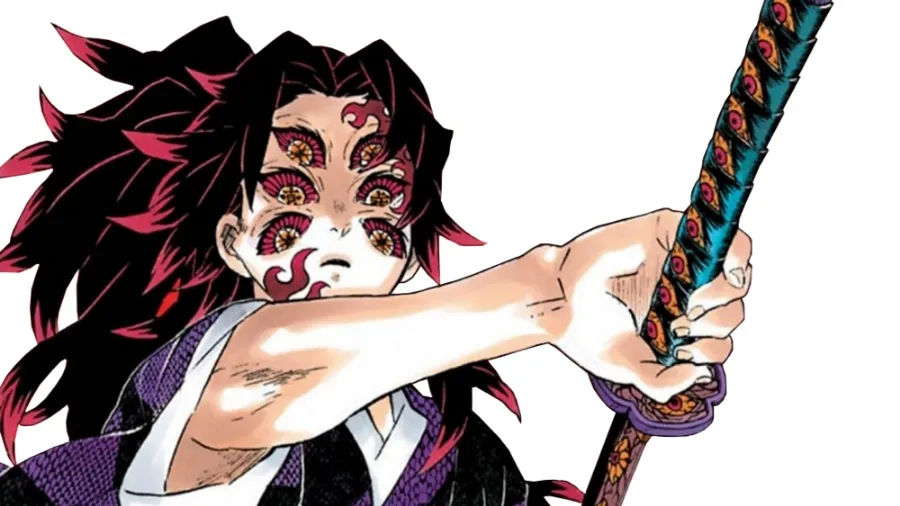
Kokushibo is the highest-ranked Kizuki and one of Muzan's most formidable fighters. His six eyes and swordsmanship distinguish him from demons who rely entirely on monstrous transformations. His connection to the history of Breathing techniques becomes especially important late in the story. Readers exploring that history can start with our guide to Yoriichi Tsugikuni and Sun Breathing.
Upper Rank Two: Doma
Doma presents a cheerful, almost welcoming face while showing little genuine empathy. His ice-based Blood Demon Art is devastating because it can control space and interfere with opponents' breathing. The contrast between his friendly manner and his cruelty is central to his role. VIZ's Volume 17 description identifies Doma as Upper Rank Two during Shinobu's confrontation with him.
Upper Rank Three: Akaza
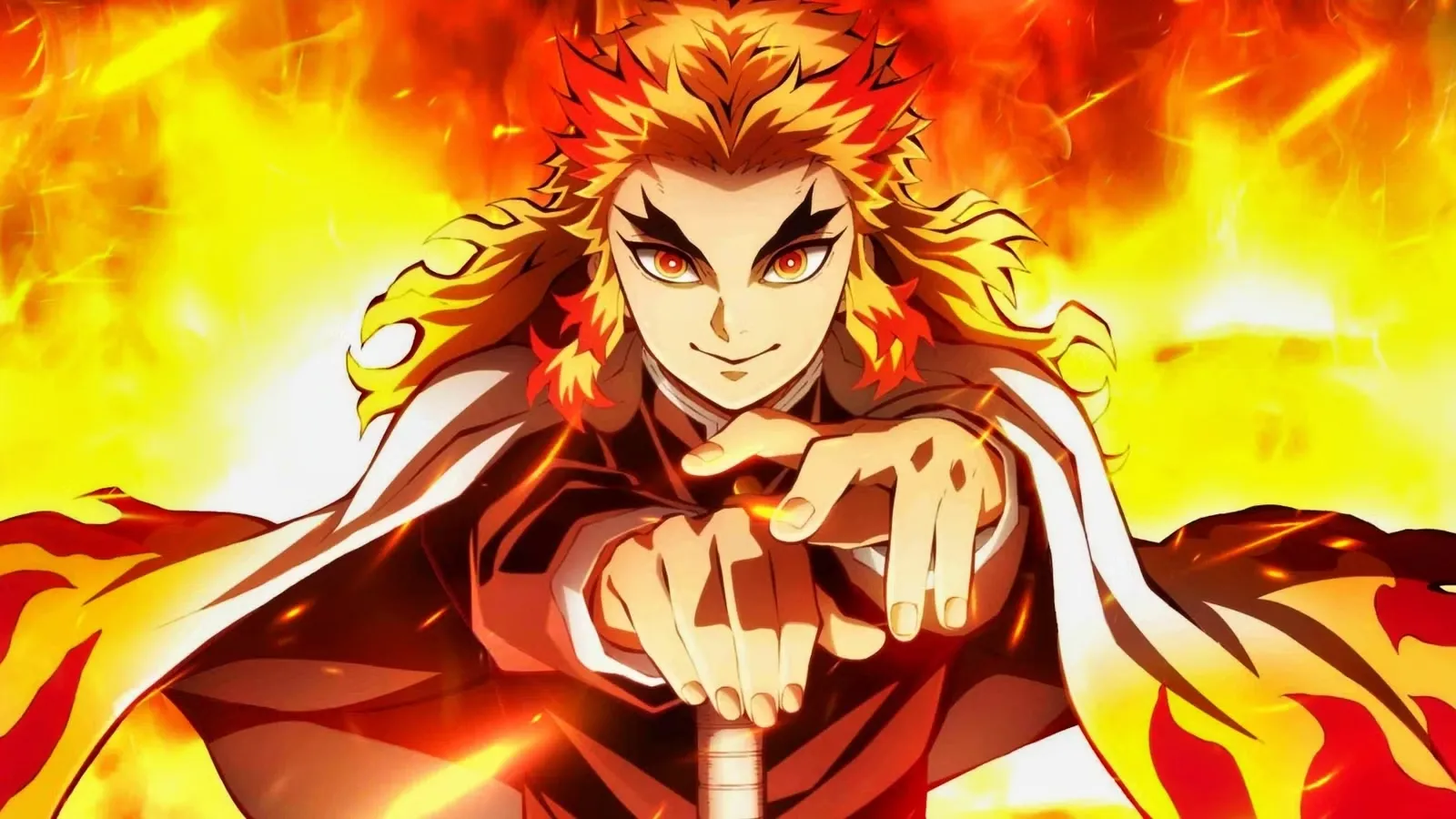
Akaza specializes in close combat and seeks powerful opponents. His destructive martial arts and rapid recovery make him terrifying even without weapons. He is the demon who fights Flame Hashira Kyojuro Rengoku after the Mugen Train mission. The battle establishes what an Upper Rank can do to an accomplished swordsman; our separate analysis explains why Rengoku died against Akaza without reducing the encounter to a power ranking.
Upper Rank Four: Hantengu
Hantengu's apparently helpless appearance conceals an elaborate survival strategy. His Blood Demon Art produces manifestations of different emotions, forcing his enemies to fight multiple threats while searching for the true body. The Swordsmith Village arc uses him to show that identifying a demon's weakness can matter as much as raw strength. VIZ Volume 15 follows Tanjiro's pursuit of Hantengu's main body.
Upper Rank Five: Gyokko
Gyokko is a grotesque artist whose pots function as weapons, hiding places, and routes for sudden attacks. His Blood Demon Art produces aquatic creatures and other disturbing transformations. He clashes with Mist Hashira Muichiro Tokito during the Swordsmith Village arc. The fight also shows why a Hashira's abilities can change dramatically under extreme conditions; see our Demon Slayer Mark guide for that separate power system.
Upper Rank Six: Daki and Gyutaro
The original Upper Six position is shared by siblings Daki and Gyutaro. Daki attacks with deadly obi sashes, while Gyutaro wields poisoned blood sickles. Their shared existence complicates a seemingly straightforward beheading strategy: both heads must be removed in the same confrontation. The Entertainment District arc builds its climax around discovering and exploiting that weakness. The official English anime site explicitly identifies Daki as Upper Six.
Who are the Lower Rank demons?
The Lower Ranks matter most early in Tanjiro's journey. Rui, Lower Five, commands a twisted spider family on Mount Natagumo and attacks with razor-sharp threads. His defeat requires Giyu Tomioka's intervention. Enmu, Lower One, manipulates dreams and later merges with the Mugen Train. He is the only Lower Rank Muzan spares after dissolving the group, and his assignment sets up the film and television arc.
The other Lower Ranks present at Muzan's meeting are Rokuro (Lower Two), Wakuraba (Lower Three), Mukago (Lower Four), and Kamanue (Lower Six). They receive much less development because Muzan eliminates them during the meeting. This is why lists of the Twelve Kizuki can feel incomplete: the story never gives all twelve equal screen time, and some positions are vacant or replaced as events unfold.
Why does Muzan have twelve ranked demons?
Muzan's organization turns exceptional demons into instruments of his long-term survival. Its members hunt humans, remove threats, and carry out assignments that advance his search for a way to overcome sunlight. The rankings also reflect his obsession with control. He distributes power but expects obedience, and his treatment of the Lower Ranks makes clear that failure can mean death at his own hands.
Not every demon with a striking ability belongs to the Kizuki. Tamayo, Yushiro, and Nezuko have different relationships to Muzan's rule. Nor does possessing a Blood Demon Art automatically confer a rank. Nezuko's unusual relationship with sunlight is especially important to Muzan's goals; our article on Nezuko's sunlight resistance explores that question independently.
Can a Lower Rank become an Upper Rank?
Rank is not an immutable species or evolution stage. Demons can grow stronger, receive additional blood, and potentially challenge other ranked demons. The title is a position in Muzan's hierarchy, not a biological classification. However, moving from Lower to Upper is not portrayed as an easy or routine promotion. The difference in power, combat experience, and survival is enormous.
This also explains why the Corps does not defeat Upper Ranks by using one universal technique. The decisive factor changes with the opponent: coordinated decapitation against the Upper Six siblings, locating Hantengu's true body, and specialized tactics against later enemies. Understanding the slayers' Breathing Styles provides useful context, but Breathing alone does not erase the gap.
Manga spoilers: which Upper Ranks are replaced?
Major Infinity Castle and late-manga spoilers begin here. After Hantengu's defeat, Nakime eventually assumes Upper Rank Four. Her biwa-based ability manipulates the Infinity Castle itself, making her influence strategic rather than simply physical. Kaigaku, a former Demon Slayer associated with Thunder Breathing, later occupies Upper Rank Six. These are replacements, not additional permanent slots beyond the original six.
The late story also reveals more about Kokushibo's past and his relationship to the earliest swordsmen. VIZ Volume 20 describes the battle against him as a confrontation with Muzan's most powerful demon. Meanwhile, VIZ Volume 18 documents the concurrent fights against Akaza and Doma. The rankings explain their status, but their individual histories explain why those confrontations carry emotional weight.
Why the Twelve Kizuki hierarchy matters
The Twelve Kizuki provide a clear escalation from early missions to the final battles without making every fight feel identical. Rui tests Tanjiro's understanding of family, Enmu attacks his mind, Akaza challenges a Hashira's ideals, and Hantengu turns the act of finding the real enemy into a puzzle. The Upper Ranks also embody different ways demons cling to identity, pride, or fear.
The simplest way to remember the hierarchy is this: Upper One through Six are Muzan's strongest ranked servants, Lower One through Six form a weaker and eventually dismantled tier, and the membership changes as demons die or receive promotions. Muzan himself sits above the group and is not one of the Twelve Kizuki. That distinction keeps both the power ranking and the story's timeline clear.
Frequently asked questions
Frequently asked questions
What does Twelve Kizuki mean?
It is the name of Muzan's elite group of twelve ranked demons, also called the Twelve Demon Moons.
Who is the strongest Upper Rank in Demon Slayer?
Kokushibo holds Upper Rank One, the highest position in Muzan's Twelve Kizuki.
Is Akaza Upper Rank Two or Three?
Akaza is Upper Rank Three. Doma is Upper Rank Two.
Who are the Upper Rank Six demons?
Originally the siblings Daki and Gyutaro share Upper Rank Six. Kaigaku takes that position later in the manga.
Why did Muzan kill the Lower Ranks?
After Rui's defeat, Muzan loses patience with their repeated failures and eliminates the remaining Lower Ranks except Enmu.
Is Muzan one of the Twelve Kizuki?
No. Muzan commands the group and stands above its Upper and Lower Ranks.
Sources & references9 sources
- Crunchyroll News, Guide to the Demons of Demon Slayer
- Demon Slayer official English website, Daki Upper Six announcement
- VIZ Demon Slayer Volume 9
- VIZ Demon Slayer Volume 10
- VIZ Demon Slayer Volume 12
- VIZ Demon Slayer Volume 15
- VIZ Demon Slayer Volume 17
- VIZ Demon Slayer Volume 18
- VIZ Demon Slayer Volume 20