
KonoSuba Season 4 has been officially announced as of January 13, 2026, during the franchise's 10th anniversary livestream. While no exact release date has been confirmed, based on typical anime production timelines and Studio Drive's recent output, the season is expected to premiere in mid to late 2026.
The wait is finally over for fans of one of anime's most beloved comedy series. After the massive success of Season 3 in 2024, Kazuma and his dysfunctional party are returning for another round of chaotic adventures in this wonderful world.
Is KonoSuba Season 4 Officially Confirmed?
Yes. KonoSuba Season 4 was officially confirmed during a special 10th anniversary livestream on January 13, 2026. The announcement was made by Kadokawa and Studio Drive, sending waves of excitement through the anime community. This quick sequel confirmation represents a significant shift from the seven-year gap fans endured between Season 2 and Season 3.
KonoSuba Season 4 Release Date: When Can We Expect the Isekai Parody to Return?
As of now, no official release date for KonoSuba Season 4 has been announced. However, industry patterns and production cycles suggest a likely release window of mid to late 2026. This timeline is based on several factors:
Studio Drive has maintained production momentum following Season 3's conclusion in 2024 and has already demonstrated its capability by successfully handling both the main series and the Megumin-focused spinoff, An Explosion on This Wonderful World, which aired in 2023. The quick announcement following Season 3 suggests the studio is avoiding lengthy production gaps.
Typical anime production for established franchises with confirmed source material usually spans 12 to 18 months from announcement to premiere. Given the January 2026 announcement, a fall 2026 or winter 2027 release appears most probable, though fans should wait for official confirmation from Kadokawa or Studio Drive before marking calendars.
For those eager to catch up before the fourth season arrives, all three seasons of KonoSuba: God's Blessing on This Wonderful World are currently streaming on Crunchyroll, along with the Legend of Crimson movie and the explosive spinoff series.
The Path to Season 4: How We Got Here
The journey to this announcement began on March 14, 2025, when the official KonoSuba X account teased a sequel during the Bonus Stage OVA screening in Japan. Those two special episodes, titled Red Stream Explosion and Beware of Fakes, premiered theatrically before being released on Blu-ray in April 2025, keeping fans engaged while waiting for news about the main series continuation.
The 10th anniversary celebration proved to be the perfect moment for Kadokawa and Studio Drive to reward the franchise's dedicated fanbase with the Season 4 confirmation they'd been desperately hoping for.
What Made Season 3 a Must-Watch Success

Before diving into what Season 4 might bring, it's worth examining why Season 3 resonated so strongly with both longtime fans and newcomers to the isekai genre. The third season adapted volumes 6 and 7 of Natsume Akatsuki's light novel series, delivering the perfect blend of comedy, character development, and fantasy adventure that defines this wonderful world.
Much like The Pet Girl of Sakurasou, Season 3 proved that even comedy-focused anime can deliver surprisingly sincere emotional beats without losing their identity.
Season 3 introduced compelling plot elements involving Princess Iris, Chris's secret mission, and Darkness's family drama, providing more narrative depth than previous seasons. The Princess Iris arc showcased Kazuma's interactions with the 12-year-old royal who dreams of adventure, while the Darkness wedding arc gave the masochistic crusader her moment in the spotlight.
Fans praised Season 3 as "one of the few anime that saved this season," with viewers laughing until the very end and finding it exceeded their expectations. The animation quality from Studio Drive received particular acclaim, especially during Megumin's iconic explosion scenes that anime fans have come to love.
Critics noted that while Season 3 maintained the series' signature erotic gags and slapstick comedy, it also delivered heartfelt slice-of-life moments, from Princess Iris's desire for freedom to Darkness abandoning her friends to fulfill a family debt. These emotionally charged situations added weight to the otherwise comedic fantasy world.
The Cast: Your Favorite Voice Actors Return
While official cast announcements for Season 4 haven't been made yet, it's highly likely the beloved voice cast will return to breathe life into our dysfunctional adventuring party:
- Jun Fukushima as Kazuma Satou, the sharp-tongued protagonist who somehow keeps this chaotic party together
- Sora Amamiya as Aqua, the useless goddess whose tantrums are as legendary as her party tricks
- Rie Takahashi as Megumin, the one-hit wonder mage obsessed with her signature spell
- Ai Kayano as Darkness, the crusader with questionable preferences and unwavering loyalty
Production staff from Season 3 are expected to return, including chief director Takaomi Kanasaki and series composer Makoto Uezu, ensuring the comedy timing and character dynamics that made the previous season successful remain intact.
Season 4 Plot Predictions: What Light Novel Content Awaits
Based on the anime's adaptation pattern, Season 4 is expected to adapt volumes 8 and 9 of the light novel series, which many readers consider peak KonoSuba content. With 17 total volumes in the completed light novel series and only 7 adapted so far, there's substantial source material for multiple future seasons.
Volume 8 likely centers on a conflict between Aqua's Axis Church and the rival Eris Church during the annual Eris Appreciation Festival. Expect Aqua to be at her absolute worst and most uselessly hilarious as she attempts to one-up the competition. The story also appears to involve Kazuma teaming up with a certain silver-haired thief for schemes that will inevitably go sideways.
These volumes promise pure KonoSuba chaos from start to finish, with the series maintaining its razor-sharp parody of isekai tropes while delivering genuine character moments. The dysfunctional energy between Kazuma's greed, Aqua's ego, Megumin's explosion obsession, and Darkness's masochistic tendencies will likely reach new heights.
Why KonoSuba Remains the Ultimate Isekai Parody
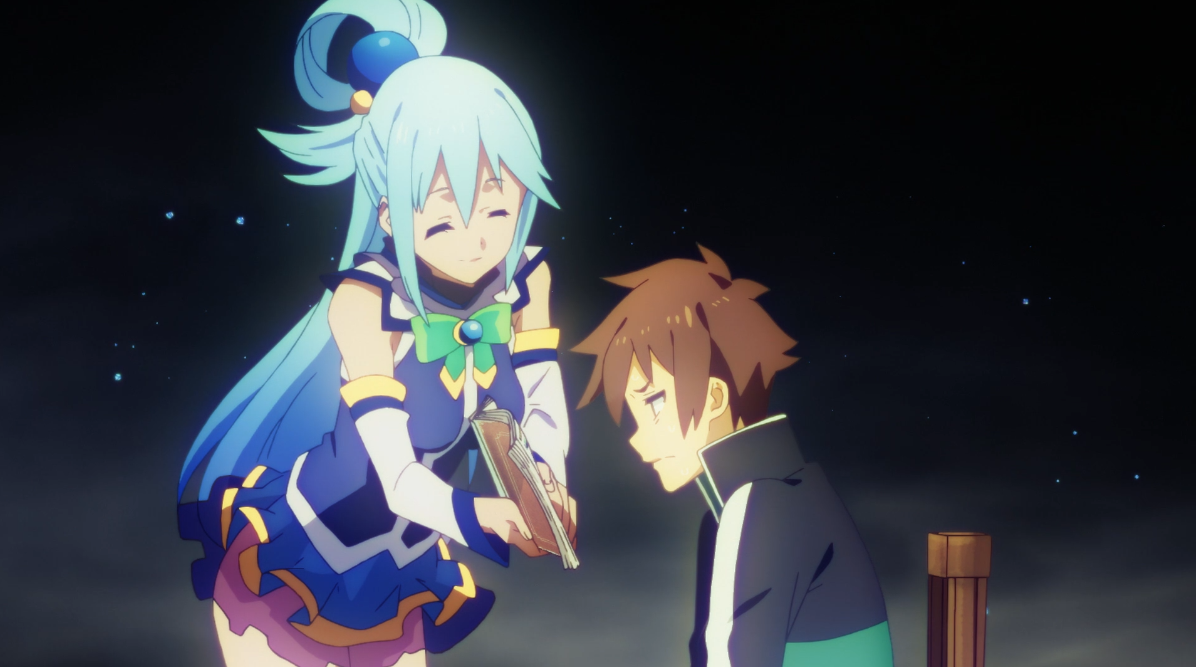
Since its debut in 2016, KonoSuba has revolutionized the isekai genre by fearlessly mocking the very conventions it employs. The series has accumulated over 10 million copies in circulation by November 2021, proving that audiences crave self-aware comedy in their fantasy adventures.
What sets this anime apart from countless other isekai titles flooding the market each season? The answer lies in its commitment to subverting expectations at every turn. Kazuma isn't an overpowered hero—he's a NEET with high luck stats and low moral standards. Aqua isn't a wise divine guide—she's a whining, crying goddess who causes more problems than she solves. Megumin sacrifices versatility for explosive power, literally. And Darkness... well, the less said about her particular interests, the better.
Unlike more abstract and introspective takes on youth and displacement seen in series like Sonny Boy, KonoSuba thrives on chaos and self-awareness, choosing to ridicule escapism rather than romanticize it.
KonoSuba's biggest impact on the isekai genre has been the codification of comedy as central to what modern isekai can achieve. The rapid-fire dialogue, constant subversion of RPG mechanics, and the antagonistic dynamic between party members have influenced countless anime that followed.
In 2019, KonoSuba was voted as the favorite isekai series in Funimation's Decade of Anime fan polls, cementing its status as more than just another fantasy anime—it's a cultural phenomenon that redefined what the genre could be.
The Technical Excellence Behind the Laughter
The quieter, character-driven moments in Season 3 occasionally echo the grounded emotional atmosphere found in Kids on the Slope, reminding viewers that KonoSuba knows when to pause the jokes and let relationships breathe.
While comedy drives the series, the technical craftsmanship shouldn't be overlooked. Music composer Masato Koda has been with the anime since its inception, consistently elevating each season with his score. The opening and ending themes have become beloved by fans, with Season 3's country-style ending song proving particularly memorable.
Studio Drive did impressive work with Season 3's animation, especially with magical effects during the beloved explosion scenes. The studio made the deliberate choice to emphasize character individuality over traditionally pretty artwork, showing characters at their most human—including their unflattering traits and distressed moments. This animation style perfectly complements the comedy-focused narrative.
What Season 3 Taught Us About Season 4's Potential
Season 3 demonstrated significant character development, particularly for Kazuma through his interactions with Iris, Chris, and Darkness. While Aqua and Megumin took a backseat this season after receiving focus in previous arcs and the Legend of Crimson movie, Season 4 will likely shift the spotlight once again.
The introduction of new supporting characters like Princess Iris, her bodyguard Claire, and the increased prominence of adventurer Dust added fresh dynamics without overcrowding the cast. This careful balance suggests Season 4 will continue expanding the world while keeping the core party's chaotic chemistry front and center.
The Hydra battle in Season 3's midpoint proved that KonoSuba can deliver impressive action sequences when needed, though the comedy always remains paramount. Expect Season 4 to continue this trend of mixing spectacular fights with hilarious consequences.
The 10-Year Journey of This Wonderful World
The 10th anniversary celebration marks a remarkable milestone for a franchise that has expanded far beyond its original web novel roots. From Studio DEEN's initial two seasons to J.C. Staff's Legend of Crimson movie, and now Studio Drive's ongoing work, KonoSuba has maintained its quality and humor across multiple production teams.
The franchise now includes three seasons of the main anime, a theatrical film, a spinoff series focusing on Megumin's backstory, multiple OVAs, and 17 completed light novel volumes. The series has also crossed over with other popular isekai in Isekai Quartet, further solidifying its place in anime culture.
The anime won BookWalker's 2016 Grand Prix Award and was voted the tenth-best TV anime in the Newtype 2015-16 Awards, with characters like Megumin consistently ranking high in popularity polls and best girl competitions across the anime community.
Where to Watch and Catch Up Before Season 4
For fans new to the series or those wanting to refresh their memories before Season 4 arrives, Crunchyroll remains the primary streaming destination for all KonoSuba content in most regions. The platform hosts all three seasons, the Legend of Crimson movie, and An Explosion on This Wonderful World spinoff.
The Bonus Stage OVA episodes that bridged Season 3 and the Season 4 announcement are available on Blu-ray and select digital platforms. These two special episodes provide additional context and comedic adventures that fans won't want to miss.
Final Thoughts: Why This Announcement Matters
The quick sequel announcement serves to keep momentum going and assures the massive global fanbase that more hilarious suffering for Kazuma is on the way. After the seven-year drought between Seasons 2 and 3, this rapid confirmation feels like a gift to patient fans who never stopped believing in this wonderful world.
KonoSuba Season 4 represents more than just another anime continuation—it's a celebration of a series that dared to laugh at the conventions everyone else took seriously. In an era where isekai anime releases by the dozens each season, KonoSuba remains the gold standard for comedy in the genre, the show that reminds us that sometimes the best fantasy adventures are the ones that don't take themselves too seriously.
The franchise has proven that audiences don't always want overpowered protagonists saving the world with unwavering determination. Sometimes they want a NEET, a useless goddess, an explosion-obsessed mage, and a masochistic crusader stumbling through quests, drowning in debt, and somehow making it all work through sheer dysfunctional chemistry.
As we await official confirmation of the exact release date, cast details, and trailer reveals, one thing remains certain: Kazuma and his party will return to deliver the same irreverent humor, sharp isekai parody, and unexpected heart that has made KonoSuba a beloved cornerstone of modern anime.
Stay tuned for updates on KonoSuba Season 4 release date announcements, new trailers, and additional cast confirmations. Follow the official KonoSuba social media channels and Crunchyroll for the latest news about your favorite isekai comedy anime.
Frequently asked questions
Frequently asked questions
Is KonoSuba Season 4 confirmed?
Yes, KonoSuba Season 4 was officially confirmed on January 13, 2026, during the franchise's 10th anniversary livestream.
When is KonoSuba Season 4 coming out?
No official release date has been announced yet. Based on typical production timelines, the season is expected to premiere in mid to late 2026 or early 2027.
Which light novel volumes will Season 4 adapt?
Season 4 is expected to adapt volumes 8 and 9 of Natsume Akatsuki's light novel series, though this hasn't been officially confirmed.
Will the original voice cast return for Season 4?
While not officially confirmed, it's highly likely that Jun Fukushima (Kazuma), Sora Amamiya (Aqua), Rie Takahashi (Megumin), and Ai Kayano (Darkness) will reprise their roles.
Where can I watch KonoSuba before Season 4?
All three seasons, the Legend of Crimson movie, and the Megumin spinoff are available to stream on Crunchyroll in most regions.
How many episodes will Season 4 have?
The episode count for Season 4 hasn't been announced. Previous seasons had 10-11 episodes each, so a similar length is expected.