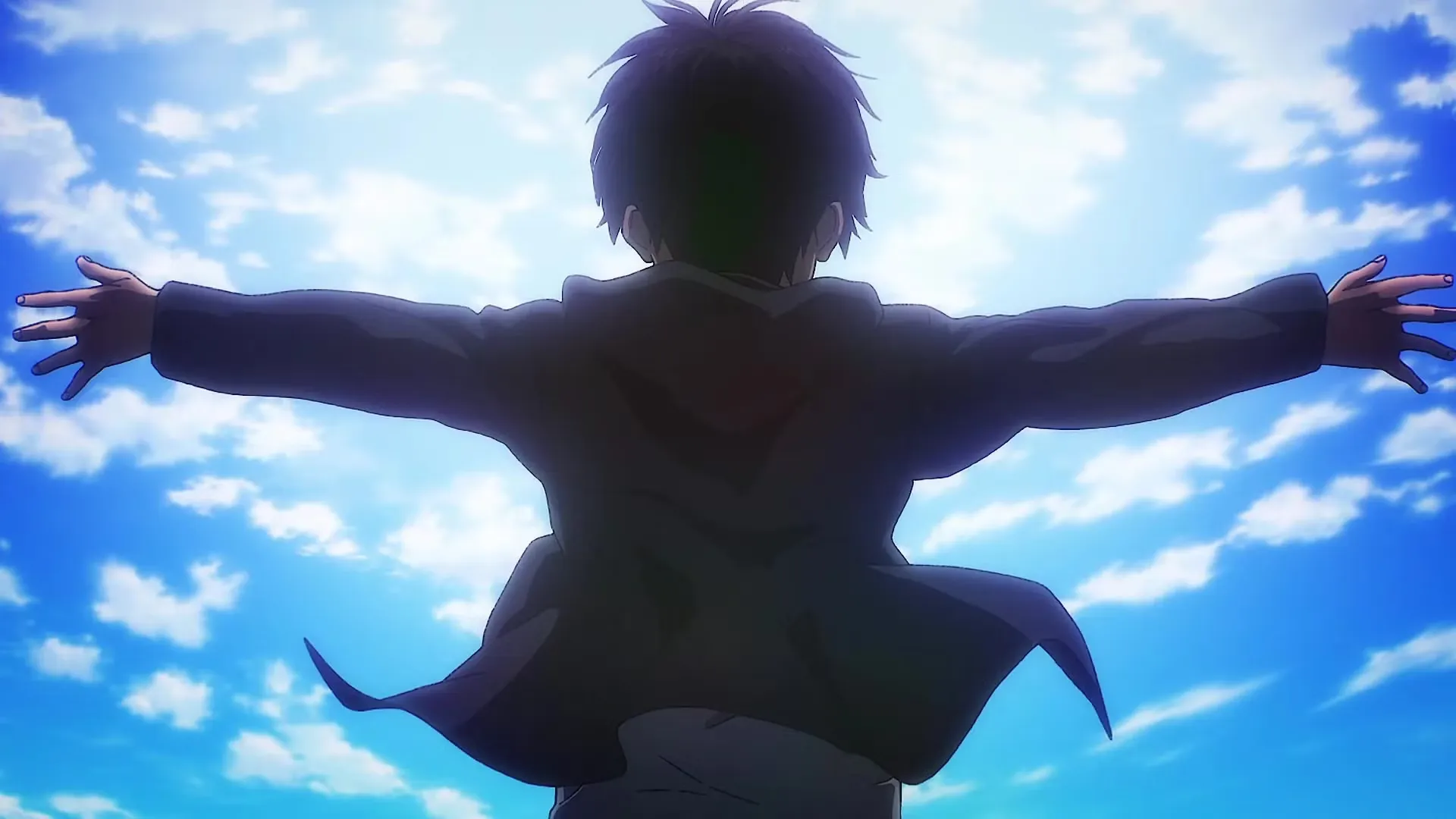

Attack on Titan ended in 2023, but in 2026 it still dominates anime discussions. From Eren Yeager's controversial ending to its deep themes and unforgettable characters, AoT refuses to fade.
Open any anime subreddit and you'll find people still arguing about Eren's motivations. Scroll through anime Twitter and someone is posting a Levi edit with three million views. Walk into any convention and the Survey Corps jacket is still one of the most common cosplays on the floor.
The Beyond the Walls concert tour is selling out 18 U.S. cities. A franchise that's technically over is more culturally present than most anime currently airing. That's not nostalgia. That's something deeper.
Attack on Titan Changed What Anime Could Be
Before AoT, anime had mainstream moments. Dragon Ball Z was a cultural event. Naruto had its era. But Attack on Titan broke through in a way that fundamentally changed the medium's position in global entertainment.
It wasn't just popular — it was prestige. The New York Times covered it. BBC Culture wrote about it. University courses analyzed its themes of nationalism, cyclical violence, and propaganda. Fashion brands like Uniqlo and Adidas did official collaborations.
Hajime Isayama wrote a story that functioned simultaneously as a visceral action thriller and a political philosophy text. You could watch it for the ODM gear sequences and Titan fights. Or you could watch it for the slow, devastating realization that the walls don't just keep monsters out — they keep truth in.
The show worked on both levels, and that dual appeal is why Attack on Titan reached audiences that typical shounen never touched.
The AoT Ending That Won't Stop Being Debated
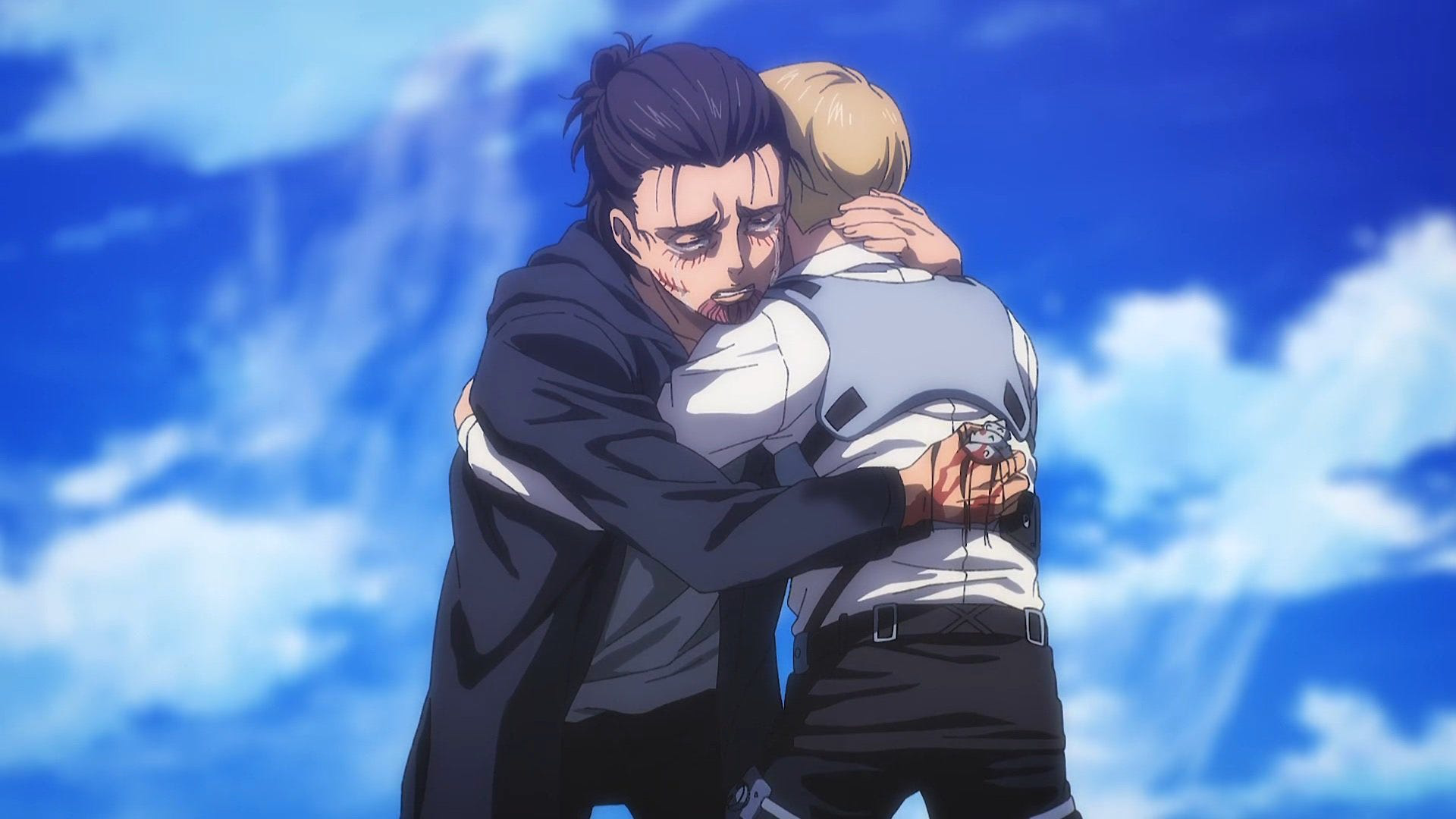
Most anime endings generate discussion for a few weeks. The Attack on Titan ending has been debated for over four years and shows no sign of stopping.
Eren Yeager's final arc divided the fanbase completely. He went from humanity's rage-filled hope to a genocidal force who admitted his motivations were partly selfish, partly fatalistic, and partly incomprehensible even to himself. Some fans saw tragic brilliance. Others saw narrative betrayal.
That's the mark of genuinely provocative storytelling. Safe endings get praised and forgotten. Challenging endings get argued about forever. The Sopranos. Lost. Game of Thrones. Attack on Titan belongs in that company — stories where the conclusion forces the audience to sit with discomfort. That refusal to give clean answers is what separates good anime from the kind that haunts you for years.
Eren's final conversation with Armin in the Paths realm encapsulates everything. He admits he doesn't fully understand why he did what he did — only that he had to keep moving forward. It's not a hero's confession or a villain's justification. It's something messier and far harder to process.
Eren Yeager Is an Unrepeatable Protagonist
Part of why the discussions persist is that anime hasn't produced another protagonist like Eren since.
Most shounen protagonists follow a recognizable arc: underdog discovers power, trains hard, protects friends, defeats evil. Eren starts that way. Then the story peels back layer after layer until the boy who wanted to save humanity becomes the person destroying it.
His transformation isn't sudden. It's built across four seasons of accumulating information, shifting perspectives, and quiet moments where his eyes change before his actions do. By the time Eren initiates the Rumbling, the audience has enough context to understand how he got there — even if they can't agree with it.
That kind of character writing requires a complete story planned from the beginning. Isayama seeded Eren's fate in chapter one. That structural ambition is rare in serialized storytelling, where characters often drift from their original conception as series extend beyond their planned scope.
AoT's Characters Feel Like War Survivors
Attack on Titan's cast doesn't behave like anime characters. They behave like people trapped in a world trying to kill them.
Levi Ackerman is the strongest soldier alive, and he's exhausted. Not in a cool, mysterious way. In the way a person who has watched everyone they care about die would be exhausted. His quiet moments — sitting alone, carrying decisions that cost lives — are what make him iconic.
Reiner Braun might be the most psychologically realistic character in anime. A soldier who committed atrocities, developed a split personality to cope, and spends the final arc hoping someone will kill him. That's not standard character writing — that's trauma literature.
Erwin Smith commands an army into certain death with a speech that's half inspiration, half funeral oration. Most anime glorifies sacrifice. Attack on Titan acknowledges it while showing the full cost. That honesty echoes what the best stories about competition and ambition do — refusing to romanticize the price people pay.
AoT's World-Building Rewards Rewatches
Some anime worlds fall apart when you think about them. Attack on Titan's gets richer.
The transition from survival horror to geopolitical conspiracy was one of the boldest structural shifts in anime history. When the basement reveal landed — showing that Titans aren't mysterious monsters but weapons created by human conflict across the sea — it recontextualized everything.
Every fight, every death, every political decision from the first three seasons gained new meaning. The Marley arc extended the world beyond the walls and forced viewers to empathize with the "enemy." Suddenly, the people who created the Titans weren't faceless villains — they were a nation with their own fears and children raised to hate.
That moral complexity puts AoT in the same conversation as anime that explore what happens when communities are shaped by inherited conflict and propaganda. The parallels to real-world cycles of violence aren't subtle — and they shouldn't be.
The Soundtrack Outlived the Show
Hiroyuki Sawano's compositions didn't just accompany the story — they defined its emotional texture. "Vogel im Käfig" made the fall of Shiganshina feel like the end of the world. "Call Your Name" turned quiet moments into devastating experiences. Kohta Yamamoto's "My War" captured the dread of Eren's transformation perfectly.
These tracks have transcended the anime entirely. They're used in sports arenas, protest videos, viral edits, and fan content detached from the original context. When a soundtrack becomes bigger than the show it was made for, that's a sign of something genuinely transcendent. The music keeps Attack on Titan alive in spaces where the anime itself isn't being discussed.
New Fans Keep the Cycle Going
Here's the underrated factor. Attack on Titan is now a completed series available across Netflix, Crunchyroll, and Hulu. New viewers can experience the entire story without waiting years between seasons. And they do — constantly.
Netflix consistently lists it among its most-watched anime titles. Season one maintains steady monthly viewership that outperforms many currently airing shows. The binge-friendly structure makes it an ideal recommendation for newcomers. Every new viewer who finishes becomes a participant in the discourse. They post reactions. They argue about the ending. They share moments. The audience isn't shrinking — it's perpetually regenerating.
This is the advantage of being a tightly plotted, completed series in an era of endless seasonal content. While newer anime come and go each quarter, Attack on Titan sits on every major platform waiting for the next person to press play. Plenty of great anime on Netflix right now owe their audience partially to the pipeline Attack on Titan created — viewers who watched AoT first and then wanted more.
It Made the Industry Evolve
Attack on Titan's production history shaped the anime industry itself. WIT Studio's first three seasons set visual standards for action anime. When MAPPA took over for the final season, the transition sparked conversations about studio capacity, CGI usage, and animator working conditions that are still relevant in 2026.
MAPPA's work on Attack on Titan directly led to them landing Jujutsu Kaisen, Chainsaw Man, and Solo Leveling. The studio's current dominance traces back to proving they could handle a franchise this massive. Attack on Titan didn't just make itself successful — it shaped the studio that would define the next era of anime. The ongoing conversation about how the industry balances quality with sustainable production schedules started in large part because of what happened behind the scenes during AoT's final season.
Is Attack on Titan Still Worth Watching in 2026?
Absolutely. Attack on Titan remains one of the most complete anime experiences ever made. With all seasons available to stream on Netflix, Crunchyroll, and Hulu, new viewers can experience the full story without waiting years between arcs.
Its mix of action, politics, character depth, and philosophical weight makes AoT one of the easiest anime to recommend — even years after it ended. The tightly plotted structure means no filler, no padding, and every episode matters. If you haven't watched it yet, 2026 is the best time to start. And if you have, a rewatch will show you things you missed the first time.
Why AoT Won't Fade Anytime Soon
Attack on Titan endures because it asked questions most stories avoid. Can freedom justify annihilation? Is peace possible without forgetting? When every side has blood on its hands, who gets to claim moral authority?
These aren't questions with answers. They're invitations to think. And thinking doesn't have an expiration date.
Shows that comfort you are forgotten. Shows that challenge you become permanent. Attack on Titan challenged everyone who watched it. That's why, in 2026 and beyond, the conversations it started aren't ending — they're evolving, just like the story always did.
Frequently asked questions
Frequently asked questions
What anime should I watch after Attack on Titan?
Jujutsu Kaisen shares AoT's dark themes and willingness to kill characters. Vinland Saga explores violence and pacifism with similar depth.