Spoiler warning: This article discusses major reveals from Link Click Seasons 1 and 2, the Bridon Arc, and the setup of Season 3.
Link Click Season 3 is no longer simply asking whether Cheng Xiaoshi and Lu Guang can change the past. Its bigger question is whether the timeline we have been watching is already the product of someone repeatedly trying to change it.
That distinction became impossible to ignore after Season 2 revealed that Lu Guang has already experienced Cheng Xiaoshi’s death and returned to the past in an attempt to save him. The Bridon Arc then pushed the story farther backward, using a photograph connected to Cheng Xiaoshi’s parents to send the pair to Bridon and expose people who appear to know far more about time, fate and their powers than the protagonists do.
Season 3, which began its first part in August 2026, picks up those threads directly. Bilibili’s official synopsis says that after the Li Tianchen case, Xia Fei’s disappearance pulls the Time Photo Studio back into danger. Vein returns, Qiao Ling’s powers awaken, the mystery of the Bahati fire becomes central, and Cheng Xiaoshi’s parents are increasingly connected to the case. Liu Xiao and the newly introduced Inspector Jae add still more uncertainty.
The result is a season where the timeline itself has become the mystery.
Link Click Season 3 Timeline — The Short Version
The easiest way to understand the story is to separate chronological history from the order in which the audience learns it.
At some point in the past, events involving Cheng Xiaoshi’s parents, Bridon and the Bahati fire take place. The Bridon Arc revisits part of this earlier period after Lu Guang has already lived through a later tragedy.
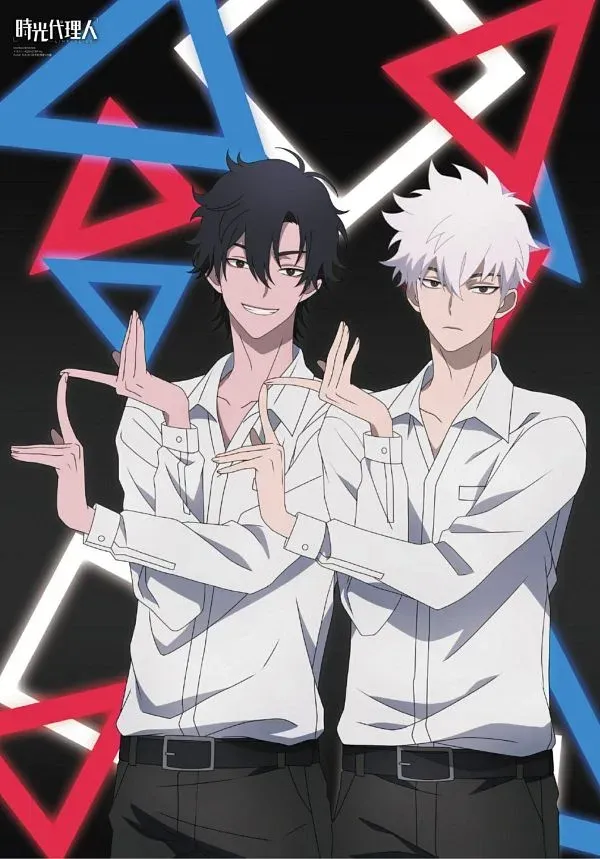
Years later, Cheng Xiaoshi and Lu Guang operate Time Photo Studio with Qiao Ling. Their photo-diving cases lead into the events of Seasons 1 and 2, including the conflict surrounding Li Tianchen and Li Tianxi.
But Lu Guang’s perspective does not begin where Cheng Xiaoshi thinks it does. The Season 2 ending reveals that Lu Guang has memories of Cheng Xiaoshi dying in a previous course of events. He then returns to an earlier point and tries to prevent that outcome.
That means the series we have watched may already be taking place inside an altered branch of events created by Lu Guang’s intervention.
The Bridon Arc is especially important because it takes place in an earlier period while being motivated by Lu Guang’s knowledge of what happens later. Season 3 then returns the mystery to the present and begins connecting those older events to Cheng Xiaoshi’s family.
If you enjoy stories where a time loop is less a gimmick than a source of escalating tragedy, AnimeSparks’ guide to the best anime like Re:Zero with time-loop concepts explores several series built around the same tension between knowledge and consequence.
What Exactly Are Cheng Xiaoshi and Lu Guang’s Powers?
The original premise makes their abilities look complementary and relatively simple.

Cheng Xiaoshi can enter a photograph and inhabit the person who took it, experiencing the world from inside that moment. Lu Guang can observe the events contained within a photograph and guide Cheng Xiaoshi through what happened.
Their famous rule is essentially built around restraint: they should fulfill the client’s request without changing key events.
The problem is that Cheng Xiaoshi is emotionally incapable of treating the past like a museum exhibit. He meets people who are alive to him in the moment, feels their fear and grief, and naturally wants to intervene. Every attempt to help raises the possibility of changing what comes afterward.
Lu Guang appears colder because he understands the danger more clearly. Season 2 recontextualizes that behavior. His insistence on preserving events is not merely professional discipline. He has personal experience with what happens when the timeline reaches a point he cannot accept.
That contradiction is now the heart of Link Click: Lu Guang tells Cheng Xiaoshi not to change the past while secretly living inside his own attempt to change it.
The Biggest Reveal: Lu Guang Is Trying to Save Cheng Xiaoshi
The final revelation of Season 2 changes how almost every earlier interaction between the two protagonists can be read.
Lu Guang has seen Cheng Xiaoshi die.
Rather than accepting that outcome, he returns to the beginning and starts again along the path of fate. Bilibili’s official description of the Bridon Arc explicitly frames the story around this objective: Lu Guang goes back in order to save the deceased Cheng Xiaoshi.
This explains why Lu Guang often seems to know more than he should. His fear is not abstract. He is navigating events with knowledge of a future in which his closest partner does not survive.
The crucial mystery is how many times he has done this.
The series has confirmed that he returned to the past, but it has not given viewers a complete ledger of every possible reset, branch or failed attempt. Until Season 3 provides that information, claims that Lu Guang has repeated the timeline a specific number of times remain theory rather than confirmed canon.
That uncertainty is what makes the reveal so effective. We know enough to reinterpret Lu Guang, but not enough to map his entire history.
Is Link Click Using One Timeline or Multiple Timelines?
This remains one of the most important unresolved questions.
The show has repeatedly warned that changing important events can create consequences, but it has not yet delivered a complete technical explanation of whether its universe operates through one mutable timeline, branching timelines, overwritten histories or some hybrid rule.
Lu Guang’s reset is the strongest evidence that history can be revisited on a scale much larger than an ordinary photo dive. What remains unclear is what happens to the abandoned future when he does it.
Does that future cease to exist? Does it continue as a separate branch? Is Lu Guang overwriting his own past while retaining memories? Or is the entire idea of “changing” fate more limited than he believes?
Season 3 is increasingly positioned to answer that question because Qiao Ling, Liu Xiao and the mystery surrounding Cheng Xiaoshi’s parents all suggest that the protagonists are not the only people whose relationship with time matters.
For comparison, Summer Time Rendering’s final timeline shows how another thriller makes its reset mechanics explicit by the ending. Link Click is deliberately withholding that clarity for now, turning uncertainty about the rules into part of the suspense.
Why Cheng Xiaoshi’s Parents Matter So Much
Cheng Xiaoshi’s parents have always been an emotional absence in his life. Season 3 is turning that absence into plot.
The Bridon Arc begins when a photograph containing clues about his parents appears at Time Photo Studio. Lu Guang and Cheng Xiaoshi travel to Bridon to investigate, where they encounter Xia Fei, Vein and Liu Xiao.
Season 3’s official synopsis goes further. It connects the investigation of the Bahati fire with Cheng Xiaoshi’s father, Cheng Weimin, and mother, Shao Yuanyuan.
That changes the central question from “where did Cheng Xiaoshi’s parents go?” to something much more dangerous: what did they know about the events that shaped the current timeline?
At this stage, the official synopsis establishes their connection to the case but does not fully explain their role. That distinction matters. Season 3 is clearly building toward answers, but theories about them possessing the same powers, engineering the timeline or belonging to Liu Xiao’s organization should remain theories until the series confirms them.
What Is the Bahati Fire?
The Bahati fire is emerging as one of Season 3’s central historical mysteries.
Bilibili’s synopsis explicitly says Cheng Xiaoshi and Lu Guang begin uncovering the truth behind the Bahati fire and that Cheng Xiaoshi’s parents appear closely connected to the incident.
The fire matters because Link Click rarely introduces an old tragedy as isolated backstory. Past disasters tend to create chains of consequences that reach directly into the protagonists’ present.
If the Bahati case connects Cheng Xiaoshi’s family, Bridon, Liu Xiao and other ability users, it may become the event that explains why so many of the show’s mysteries are converging around the same people.
What should not be assumed yet is the exact cause. Season 3 is an ongoing mystery, and the official material frames the fire as something the characters are still investigating.
Why the Bridon Arc Is Essential Before Season 3
The Bridon Arc is not optional side content.
Its entire premise is built around Lu Guang trying to save Cheng Xiaoshi and investigating a photograph connected to Cheng Xiaoshi’s parents. It introduces or develops figures such as Xia Fei, Vein and Liu Xiao, all of whom matter to the larger mystery.
The arc also makes Lu Guang’s behavior much more revealing. Because viewers now know he is acting with knowledge of Cheng Xiaoshi’s death, seemingly small moments carry a second meaning. He is not merely helping investigate Cheng Xiaoshi’s family; he is trying to understand a path that may lead toward the future he desperately wants to prevent.
Season 3 then builds directly on this foundation, particularly through Xia Fei’s disappearance, Vein’s return and Liu Xiao’s continuing plans.
Anyone jumping straight from Season 2 to Season 3 risks missing the context that turns these characters from mysterious newcomers into pieces of the central timeline puzzle.
What Happened to Xia Fei?
Season 3 begins with Xia Fei’s disappearance disrupting the apparent peace after the Li Tianchen case.
The official synopsis deliberately treats his disappearance as the event that pulls the characters back into the web of fate. That makes Xia Fei more than a leftover Bridon character; whatever happened to him appears connected to the larger investigation.
Because Season 3 is still unfolding, the safest approach is to distinguish what has been established from what the disappearance may imply. We know it motivates renewed investigation. We do not yet have enough confirmed information to reduce it to a single culprit or explanation without spoiling developments as they air.
Qiao Ling’s New Power Changes Everything
One of Season 3’s most important developments is the awakening of Qiao Ling’s supernatural ability.
For much of Link Click, the central supernatural partnership belonged to Cheng Xiaoshi and Lu Guang, while Qiao Ling grounded the story in the ordinary present. Season 2 began destabilizing that balance through her contact with Li Tianxi’s power, and Season 3’s official synopsis now explicitly refers to Qiao Ling’s awakened ability.
That matters for both plot and structure.
Qiao Ling may now be able to participate in the supernatural side of the investigation in a way she could not before. More importantly, her power could give the story another perspective on information, memory and the timeline—areas that Lu Guang has controlled through what he chooses not to tell Cheng Xiaoshi.
The more people who can access information that should be hidden, the harder it becomes for Lu Guang to maintain his version of events.
Who Is Liu Xiao, and What Does He Want?
Liu Xiao is one of the characters most clearly positioned as a long-term mystery.
The Bridon Arc introduces him as an enigmatic figure whose motives are difficult to read. Season 3’s official synopsis describes him as a member of a mysterious organization who begins putting his own plan into motion.
That wording is significant because it confirms that Liu Xiao is not operating entirely alone.
What remains unclear is the organization’s full purpose and how much it understands about the supernatural abilities surrounding photographs, possession and time. Liu Xiao’s confidence suggests access to information the protagonists lack, but the series has not yet supplied a complete explanation of his endgame.
This makes him especially dangerous in a story where information is often more valuable than raw power.
Who Is Jae?
Season 3 introduces Inspector Jae, a Bridon police officer whose intervention adds another variable to the search for the truth.
Jae was teased before Season 3 as a new character, and Bilibili’s current synopsis confirms that the inspector becomes involved as the Bahati investigation deepens.
The key word is “variable.” Link Click repeatedly builds tension by introducing people whose knowledge and objectives do not align cleanly with either the protagonists or obvious antagonists. Jae’s position in law enforcement potentially gives the investigation access to a different kind of evidence from the supernatural information Cheng Xiaoshi and Lu Guang normally rely on.
Whether Jae becomes an ally, obstacle or something less predictable is one of Season 3’s open questions.
Vein’s Return Is Probably Not Accidental
Vein’s return is specifically highlighted in the official Season 3 description.
The Bridon Arc establishes him as an eccentric and formidable figure connected to Chinatown. Bringing him back while the story investigates Xia Fei’s disappearance and the Bahati fire suggests that Bridon’s unresolved relationships are becoming relevant again.
But Link Click rewards caution. A character being present around a mystery does not automatically prove that character caused it. Vein’s knowledge may be more important than his guilt or innocence.
The more useful question is what Vein knows about the people who were active around the earlier Bridon events—and whether that knowledge overlaps with what Lu Guang is trying to keep hidden.
Cheng Xiaoshi’s Past May Be the Key to His Future Death
The biggest structural reason Season 3 is digging into Cheng Xiaoshi’s childhood is that his past may explain the future Lu Guang is trying to prevent.
Lu Guang knows Cheng Xiaoshi dies in at least one course of events. The Bridon investigation uncovers clues about Cheng Xiaoshi’s parents. Season 3 links those parents to the Bahati fire while introducing a mysterious organization and expanding the number of people with supernatural abilities.
Those facts do not yet prove a single causal chain. But narratively, they are converging.
The obvious possibility is that Cheng Xiaoshi’s death is not an isolated tragedy. It may be the endpoint of a conflict that began years earlier, before he understood his own powers and perhaps before he even met Lu Guang.
If so, saving Cheng Xiaoshi requires more than preventing one fatal moment. Lu Guang may have to understand the origin of the entire chain of events.
That would explain why repeated intervention is so dangerous: changing the final event without understanding its cause may simply create another path toward the same destination.
Can Lu Guang Actually Change Cheng Xiaoshi’s Fate?
This is the emotional question underneath every timeline theory.
Lu Guang believes action is necessary because he has already refused to accept Cheng Xiaoshi’s death. Yet the series has repeatedly emphasized the danger of changing important events. His entire mission therefore violates the principle he spent so long teaching Cheng Xiaoshi.
That hypocrisy is intentional.
Lu Guang can sound rational when discussing someone else’s tragedy. When the person he loves most as a partner dies, rational distance collapses. He does exactly what Cheng Xiaoshi has always wanted to do for clients: he goes back and tries to save someone.
The question is whether fate in Link Click behaves like a fixed point. If Cheng Xiaoshi’s death keeps reappearing through different circumstances, Lu Guang may be fighting something larger than one bad decision.
But the series has not confirmed that Cheng Xiaoshi is absolutely destined to die in every possible timeline. “I have seen this happen” and “this must always happen” are not the same statement.
Season 3’s mystery depends on that difference.
Why Link Click’s Time Travel Feels Different
Many time-travel stories are ultimately puzzles about mechanics. Link Click uses mechanics, but its strongest conflicts are ethical.
Knowing the future creates responsibility. Entering the past creates intimacy with people who may already be dead. Saving one person may change another person’s life. Refusing to intervene can feel morally unbearable even when intervention is dangerous.
That is why Cheng Xiaoshi and Lu Guang make such an effective pair. Cheng Xiaoshi experiences the emotional immediacy of the past; Lu Guang tries to preserve the larger structure of events. Season 2 reveals that even Lu Guang cannot maintain that philosophy when the cost becomes personal.
AnimeSparks’ piece on why Steins;Gate remains one of the best sci-fi anime explores a related strength: time travel becomes compelling when the rules force characters to confront grief rather than simply solve a science-fiction puzzle.
Link Click reaches the same territory through photographs, memory and friendship rather than a machine.
The Biggest Mysteries Season 3 Still Needs to Answer
Season 3 has several major questions hanging over it:
- How many times has Lu Guang returned or reset events?
- What exactly caused Cheng Xiaoshi’s death in the future Lu Guang remembers?
- Are there multiple timelines, or does each intervention overwrite one history?
- What happened to Cheng Xiaoshi’s parents?
- How are Cheng Weimin and Shao Yuanyuan connected to the Bahati fire?
- What exactly can Qiao Ling do after her power awakening?
- What organization is Liu Xiao part of, and what does it want?
- Why did Xia Fei disappear?
- What does Vein know about the larger conspiracy?
- What role will Inspector Jae play?
- Can Cheng Xiaoshi learn the truth about Lu Guang without changing the future again?
The important thing is that these questions no longer feel separate. Season 3 is beginning to tie the family mystery, supernatural abilities and Lu Guang’s reset into the same structure.
What Season 3 Is Really About
On the surface, Season 3 is about solving the Bahati fire, finding Xia Fei and uncovering the truth about Cheng Xiaoshi’s parents.
Underneath that, it is about who has the right to decide which version of the past should survive.
Lu Guang has already made that decision once by returning to save Cheng Xiaoshi. Cheng Xiaoshi has repeatedly tried to make it during photo missions. Other ability users introduce their own relationships with memory, possession and information. Qiao Ling’s awakening means even the person who once stood outside the supernatural system may now be pulled into it.
That is why the series’ timeline is becoming increasingly complicated without becoming meaningless. Each new layer of chronology is attached to a character trying to protect, recover or control someone else.
The mystery works because the emotional motive remains simple: Lu Guang does not want to live in a future without Cheng Xiaoshi.
Everything else—the photographs, Bridon, the Bahati fire, Liu Xiao, Cheng Xiaoshi’s parents and the possibility of another reset—spirals outward from that refusal.
Final Thoughts
Link Click Season 3 is turning the show’s biggest twist into its central story. Lu Guang is no longer merely the cautious guide warning Cheng Xiaoshi not to alter history. He is a man who has already broken his own rule because Cheng Xiaoshi died.
The Bridon Arc revealed that Cheng Xiaoshi’s family history is connected to mysteries Lu Guang needs to understand. Season 3 now brings those threads together through the Bahati fire, Xia Fei’s disappearance, Vein’s return, Qiao Ling’s awakened powers, Liu Xiao’s organization and Inspector Jae’s intervention.
The timeline remains deliberately incomplete. We still do not know the full circumstances of Cheng Xiaoshi’s death, how many times Lu Guang has interfered, or whether the story operates through branches or overwritten history.
But that uncertainty is no longer a weakness in the explanation. It is the point. The central mystery of Link Click has become whether Lu Guang can understand the past well enough to create a future in which Cheng Xiaoshi survives—and what that future will cost everyone else.