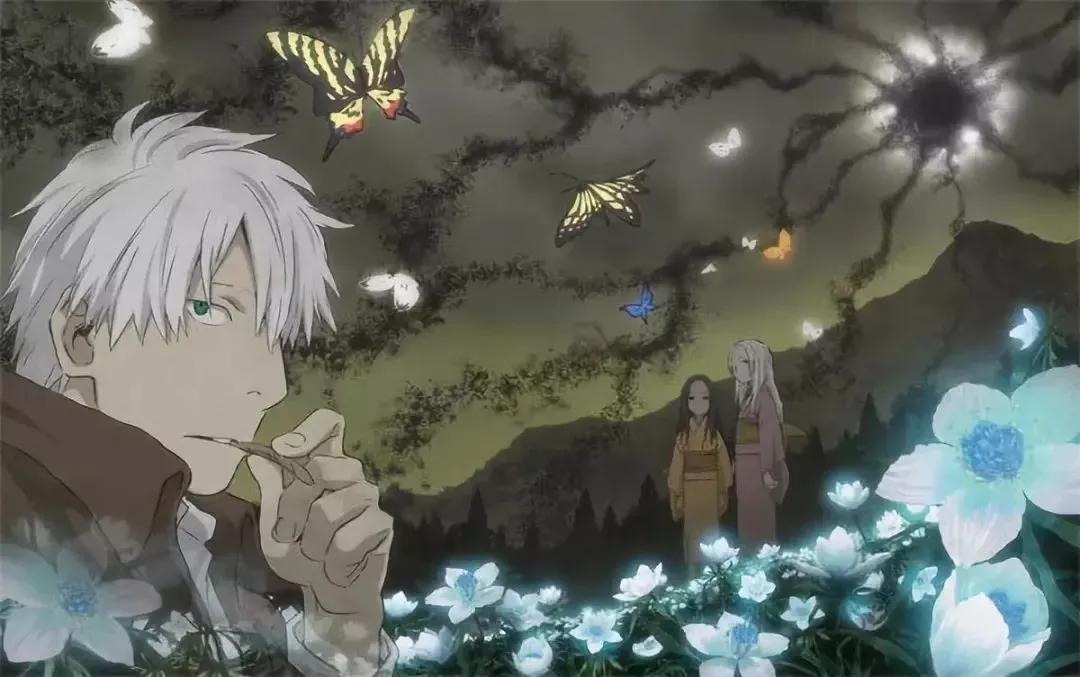

Mushishi Shows That Some Problems Are Not Meant to Be Fixed
Home/Anime Reviews/Mushishi Shows That Some Problems Are Not Meant to Be Fixed

Mushishi Shows That Some Problems Are Not Meant to Be Fixed

R

Rushabh Bhosale

4 views
Share:

Most anime give you problems with solutions.

Mushishi gives you problems with consequences.

This is what makes it uncomfortable. Not scary—uncomfortable. Because it refuses to promise that understanding a problem means you can fix it.

This quiet refusal to offer solutions is why Mushishi feels closer to lived reality than escapism, sharing DNA with stories like why Frieren feels different from other fantasy anime, where understanding doesn’t erase loss.

Sometimes, the only answer is learning to live with it.

Ginko Is Not a Hero

When Ginko arrives in a village, people expect him to cure their affliction. Remove the mushi. Restore normalcy.

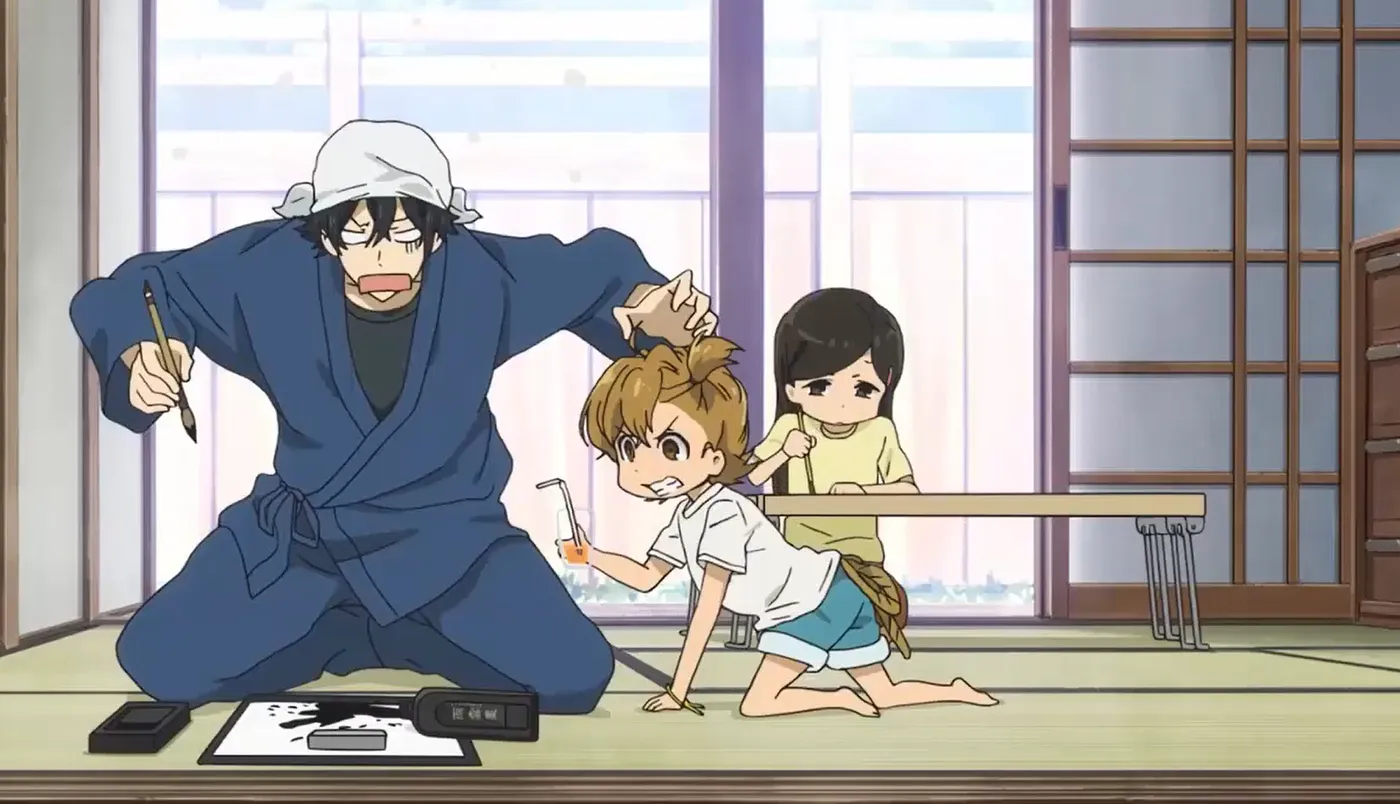
Ginko’s role isn’t to conquer the supernatural but to coexist with it, a philosophy that stands in stark contrast to more conventional narratives and aligns with the emotional restraint seen in Barakamon, where healing comes through adjustment rather than victory.

And sometimes he does.

But just as often, he doesn't. Not because he's incompetent, but because removal isn't always possible. Or safe. Or even the right choice.
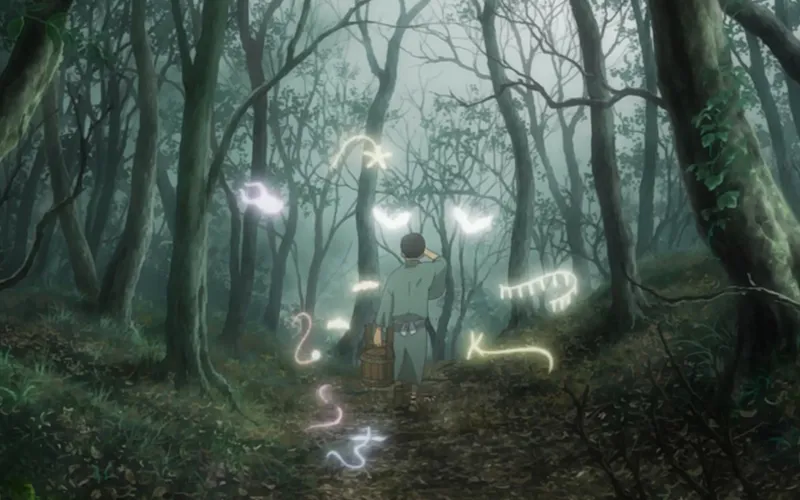
Ginko Mushishi
Ginko Mushishi

This is what separates Mushishi anime themes from typical supernatural anime. Ginko isn't an exorcist. He's closer to a naturalist who happens to understand forces most people can't see.

He explains. He mitigates. He helps people adapt.

But he doesn't promise happy endings.

In one episode, a girl carries a mushi that brings rain wherever she goes. The sky darkens when she enters a village. Crops flood. Wells overflow. She can hear the whispers, see the fear in people's eyes before they ask her to leave.

Ginko can't remove it without killing her. The solution isn't to fix the problem—it's to keep moving so the rain doesn't destroy any one place.

She'll carry this burden her entire life. Never settling. Never belonging. And the show doesn't frame this as tragic. It frames it as her reality.

Mushi Are Not Villains

Here's what Mushishi understands that most supernatural anime don't:

Nature isn't malicious. It's indifferent.

Mushi aren't demons or curses. They're closer to bacteria, weather patterns, or geological processes—lifeforms that exist according to their own needs, completely unconcerned with human welfare.

They don't hate you. They don't even notice you.

You're just in the way.

This is why Mushishi philosophical anime discussions always return to the same point: the show rejects the idea that humans are owed solutions. We're part of an ecosystem, not the center of it.

When a mushi causes harm, it's not punishment for wrongdoing. It's just what happens when two incompatible forms of life occupy the same space.

And sometimes, coexistence means one of you has to leave. Or change. Or suffer.

The show never apologizes for this.

Some Episodes Don't End Well

Mushishi doesn't promise closure.

Some episodes end with people healing. Others end with people learning to grieve. A few end with people losing everything despite doing nothing wrong.

A man loses his memory every time he sleeps because of a mushi infection. Ginko can't cure it. The man writes himself notes, builds routines, tries to hold onto who he is.

The episode doesn't end with him regaining his memory. It ends with him accepting that he won't.

There's no miracle. No breakthrough. Just a man learning to function within the limits of his condition.

Acceptance Is Not Defeat

Western storytelling treats acceptance as giving up.

Mushishi treats it as maturity.

The show understands that you don't get to control everything. And trying to control forces beyond your understanding often makes things worse.

This separates Mushishi from anime like Barakamon, where burnout is solved through reconnection and rediscovery. In Barakamon, stepping back heals you. In Mushishi, some conditions don't have a healing arc—they have an adjustment period.

Ginko's role is to help people understand what they're dealing with so they can make informed decisions—not to impose solutions from outside.

Sometimes the best decision is to leave the mushi alone. Sometimes it's to relocate. Sometimes it's to accept permanent change.

The Show Never Moralizes

Mushishi’s refusal to judge its characters mirrors the narrative restraint seen in Kaiba, where choices are shown with their costs but never framed as right or wrong.

Mushishi doesn't tell you how to feel about its stories.

It presents situations. Shows you the trade-offs. Then moves on.

A woman can see the future because of a mushi in her eye. Ginko can remove it, but she'll lose the ability. She chooses to keep it, knowing it will eventually consume her vision entirely.

The show doesn't say whether this is right or wrong. It just shows you someone deciding what they're willing to trade for what they value.

Why It Feels Like Meditation

Mushishi episodic anime structure is deliberate.

Each story is self-contained. No overarching plot. No character arcs that span seasons. Just Ginko, traveling from place to place, encountering people whose lives intersect briefly with forces they don't understand.

This format does something most serialized anime can't: it creates space to think.

You're not rushing toward a climax. You're not waiting for answers to build across episodes. Each story ends when it ends, and you sit with it.

The pacing is slow. The dialogue is minimal. The soundtrack is quiet—mostly ambient piano and environmental sounds that make you aware of silence.

This contemplative approach shares something with Frieren—both understand that not every story needs urgency. Frieren uses time to examine loss and memory; Mushishi uses it to examine humanity's relationship with the incomprehensible. Both trust you to sit with discomfort rather than resolving it quickly.

You're not watching to feel better. You're watching to sit with uncomfortable truths in a way that feels bearable.

Coexistence Over Conquest

Most anime frame conflict as something to overcome.

Mushishi frames it as something to navigate.

Because the world of Mushishi isn't built for human convenience. It's built for balance. And balance doesn't care about individual suffering.

A village might need to abandon their home because a mushi has claimed the land. A person might lose an ability they relied on because the mushi sustaining it is killing them.

These aren't punishments. They're adjustments.

The ecosystem correcting itself.

And the show suggests that fighting this correction is often what causes the real damage. Not the mushi itself, but human refusal to accept limits.

This is why Mushishi best episodic anime discussions always return to Shinto and ecological philosophy—the show is steeped in the idea that humans are not separate from nature, and our attempts to dominate it only create new problems.

What Mushishi Offers Instead of Hope

What Mushishi is really about isn't solving problems—it's understanding your relationship to them.

The show gives you perspective, not optimism.

It tells you that your problem might not have a solution. That loss is sometimes permanent. That the world will continue regardless of your suffering.

And then it shows you people who keep living anyway.

Not because they've been rewarded. Not because they've found meaning. But because living is what you do when the alternative is nothing.

This isn't inspirational. It's grounding.

It reminds you that most of human history has been people enduring things they couldn't fix. And that endurance, by itself, has value.

Mushishi meaning explained comes down to this: some problems are not meant to be fixed because they're not problems—they're conditions. And conditions don't respond to willpower or cleverness or hope.

They respond to acceptance.

Not passive acceptance, where you stop trying. Active acceptance, where you acknowledge reality and decide what you can live with.

Why It Stays With You

Most anime fade after you finish them.

Mushishi lingers.

Not because it's dramatic or emotionally manipulative, but because it reflects something true about being alive: that control is an illusion, that suffering is often random, and that meaning isn't given—it's made.

The show doesn't comfort you with guarantees. It just shows you people navigating uncertainty with as much grace as they can manage.

And the older you get, the more that resonates.

Because you've already learned that some things can't be fixed. That effort doesn't always lead to resolution. That sometimes the best you can do is understand what you're dealing with and adjust accordingly.

Mushishi doesn't teach you this. It just acknowledges that you already know it.

And there's something quietly powerful in seeing a story that doesn't lie to you about how hard it is to accept what you cannot change.

Tags

Frequently Asked Questions

What is Mushishi really about?

Mushishi is about coexistence with forces beyond human control. It's not about fixing every problem, but learning to live alongside them. Mushi aren't evil—they're natural phenomena that exist whether we understand them or not.

Is Mushishi a sad anime?

Mushishi is melancholic, not tragic. Many episodes don't end happily, but they end honestly. The show treats loss, compromise, and acceptance as natural parts of life rather than failures.

Why doesn't Ginko fix everything in Mushishi?

Because not everything can be fixed. Ginko's role isn't to eliminate problems but to help people understand and adapt to them. Some mushi situations require acceptance, not intervention.

What makes Mushishi different from other anime?

Mushishi rejects binary morality and neat resolutions. There are no villains, no power-ups, no narrative guarantees. It treats nature as indifferent rather than hostile, and acceptance as wisdom rather than defeat.

Is Mushishi worth watching?

Yes, if you appreciate slow-paced, atmospheric storytelling that values questions over answers. It's contemplative rather than dramatic, offering meditative episodic stories about humanity's place in nature.
Why Made in Abyss Is Beautiful and Horrifying
Next in Anime Reviews

Next up

Why Made in Abyss Is Beautiful and Horrifying | Studio Ghibli Meets Body Horror

Made in Abyss (2017) weaponizes the contrast between its childlike Studio Ghibli-inspired art style and its brutal body horror to create uniquely unsettling storytelling. The series follows children Riko and Reg descending into a mysterious pit called the Abyss, where cute character designs collide with graphic violence, psychological trauma, and existential dread. The beauty—hand-painted backgrounds, whimsical creatures, wonder-filled exploration—makes the horror hit harder. When characters suffer horrific injuries or transformations, the contrast between what you see (adorable kids) and what happens to them (dismemberment, body horror, death) creates cognitive dissonance that haunts viewers long after watching. This isn't accidental—it's the core of what makes Made in Abyss both a masterpiece and deeply controversial. Since its 2017 release, Made in Abyss has maintained an 8.6+ rating on MyAnimeList and won the 2018 Anime of the Year award at Crunchyroll, proving its impact despite—or because of—its controversial content. The Deceptive First Impression Made in Abyss draws viewers in with delicate, storybook visuals and a childlike sense of wonder. The first episodes feel cozy—quirky interactions, whimsical creature designs, and soft character expressions that give off a sense of safety and innocence. The chibi-style animation reminds viewers of Studio Ghibli's warmest works. Hand-painted backgrounds rival theatrical productions. Sunlight hits the town of Orth beautifully, rivers weave through districts, and everything looks meticulously crafted. Then episode 10 happens. When the Mask Falls Off What appears at first to be a cutesy adventure story evolves into a claustrophobic, disturbing fable of single-minded determination and a desperate struggle against overwhelming odds that portrays both brutal violence and severe bodily mutilation involving children. The tonal shift doesn't arrive gradually. It lands with disturbing force—sudden violence, brutal injuries, psychological trauma, and body horror creep into the narrative, shattering any expectation of a fun adventure. Similar to how Evangelion uses mecha to explore depression, Made in Abyss uses its genre trappings (adventure anime) to smuggle in much darker themes about human cost and sacrifice. The Studio Ghibli Aesthetic Hiding Cosmic Horror The comparison to Studio Ghibli isn't superficial. Made in Abyss deliberately evokes that aesthetic—the organic, curvilinear art style, the fantasy environments, the attention to environmental detail that makes worlds feel lived-in. But where Ghibli uses that style to create comfort and wonder, Made in Abyss uses it as camouflage. Art Style as Weapon The art isn't just beautiful—it's strategically beautiful. The cuter the characters look, the more disturbing it becomes when terrible things happen to them. The Puni Plush aesthetic can be misleading. Made in Abyss is in fact a full-throated Cosmic Horror Story with a caliber of body horror and ultra-violence comparable to some of anime's most uncompromising dark fantasy. This creates cognitive dissonance. Your brain sees adorable children with big eyes and soft features. Then those same children suffer injuries depicted in agonizing, unflinching detail—bones breaking, flesh tearing, bodies transforming into something unrecognizable. The contrast makes both elements stronger. The beauty emphasizes the horror. The horror makes the beauty feel fragile, temporary, a thin veneer over something monstrous. The Abyss Itself: Beauty That Kills The Abyss is the series' central metaphor—a massive, mysterious pit filled with ancient relics, strange creatures, and otherworldly beauty that hides its grim nature. No one knows how deep it goes or how it came to be. It's an Eldritch Location that causes phenomena by sheer proximity. Time moves strangely in the depths. Trying to ascend causes life-threatening symptoms called "the Curse." The Descent as Metaphor Going into the Abyss is a one-way journey. Each layer down increases danger. The Curse ensures that returning becomes progressively impossible—mild nausea at shallow depths, intense pain deeper, hallucinations deeper still, and eventually death or transformation into something no longer human. This "no going back" motif solidifies the horror. You're stuck in your pursuit, trapped in Dante's Inferno's downward spiral with no escape route. This connects to how Mushishi shows problems that can't be fixed—some journeys don't have happy endings, some costs can't be undone. When Body Horror Happens to Children The series' most controversial aspect is its willingness to depict graphic violence and body horror involving child characters. The Poison Scene That Changes Everything Episode 10 features Riko being poisoned by an Orb Piercer. The poison works fast—her hand balloons grotesquely, blood pours from her eyes and ears. To save her life, Reg must break her arm with a rock, then amputate it while she screams in agony. The scene is brutal, extended, and unflinching. Smashing, screaming, and shredding fill the soundscape with disturbing vibes. It's rough and ugly in ways that would benefit from leaving elements implied rather than displayed. But that's the point. Made in Abyss refuses to look away. The series argues that if you're going to show children in danger, you have to show the actual consequences—not sanitized action-hero injuries that heal by next episode. This parallels the dark side of competition shown in 100 Meters anime—both series refuse to prettify suffering. Bondrewd: The Monster Who Loves The character who embodies Made in Abyss's thematic horror is Bondrewd, a White Whistle explorer who conducts human experimentation in the Abyss's depths. He's polite, articulate, even gentle in manner. He seems like a stand-up character. But he's responsible for atrocities carried out under the guise of progress and paternal care. The Mitty and Nanachi Tragedy Bondrewd tells two children—Mitty and Nanachi—that he'll send them deep into the Abyss then bring them back up to study the Curse's effects. When they ascend, Mitty takes the full force of the Curse. Her body transforms into a blob-like creature in constant pain, unable to die, screaming as Nanachi is forced to watch helplessly. Bondrewd then experiments on Mitty's immortal body, destroying and regenerating her organs repeatedly. The horror isn't just the body horror—it's that Bondrewd genuinely believes his work is righteous. He's the most memorable villain in recent memory, in the worst way. Despite the horror of his actions, he genuinely believes that his work is for progress, even as it destroys countless lives. The series questions whether intent matters when the outcome is monstrous. The Curse of the Abyss: Consequences That Matter Unlike most adventure anime where injuries heal conveniently, Made in Abyss enforces permanent consequences through the Curse system. How the Curse Works Each layer of the Abyss has a "Curse"—symptoms that occur when ascending: Layer 1: Mild dizziness and nausea Layer 2: Heavy nausea, headache, numbness Layer 3: Vertigo, hallucinations, balance loss Layer 4: Intense pain throughout body, bleeding from every orifice Layer 5: Complete sensory deprivation, self-harm, loss of humanity Layer 6: Death or loss of humanity/transformation into something monstrous This creates constant dread. Every step deeper makes returning more impossible. Characters can't just decide to leave—physics itself prevents escape. The Curse turns adventure into trap. Similar to why Monster feels more terrifying than horror anime, the horror comes from inevitability, not jump scares. Why the Beauty Makes the Horror Worse The series maintains visual beauty throughout its darkest moments. Even in the deepest, most dangerous layers, the Abyss remains stunning. Bioluminescent creatures glow softly. Underground ecosystems burst with color. Ancient ruins inspire awe. When Reg and Riko share quiet moments discovering new creatures, when they laugh together despite everything, when they create temporary safety in hostile territory—these moments make the horror that follows unbearable. You care about these characters. You want them to be okay. The series gives you reasons to hope, then systematically destroys that hope in ways that feel earned, not exploitative. For viewers seeking similar tonal whiplash, 10 underrated anime you probably missed includes other series that balance beauty with darkness. The Music That Shouldn't Work But Does Composer Kevin Penkin created a soundtrack that matches the visual contrast—beautiful, sometimes playful orchestration accompanying horrific scenes. The song "Underground River" begins slow and quiet, builds to sharp and blaring intensity, then mellows out. It contains meaningful lyrics highlighting themes of descent and discovery. "Hanezeve Caradhina" plays during tragic moments with haunting vocals that sound both ancient and alien. The music treats the Abyss as sacred, not evil—a place of wonder that happens to kill people. This creates emotional whiplash that reinforces the series' core tension: beauty and horror aren't opposites here. They're the same thing. Who Should (and Shouldn't) Watch This Watch If You: Appreciate anime that takes creative risks Can handle graphic content if it serves thematic purpose Enjoyed other "cute exterior, dark interior" series like Madoka Magica Want fantasy adventure that respects consequences Can separate art style from content maturity Skip If You: Can't handle body horror or child endangerment Prefer sanitized adventure stories Need happy resolutions to justify dark content Are sensitive to graphic depictions of suffering Expect art style to indicate content rating This connects to how Chainsaw Man feels wrong on purpose—discomfort can be intentional artistic choice. What Made in Abyss Actually Achieves The series succeeds at something rare: making beauty and horror inseparable. Most anime separate them—beautiful moments provide relief, horrific moments create contrast. Made in Abyss refuses this separation. Despite its heavy themes, the series maintains delicate balance through pacing that alternates between wonder, tension, and horror—preventing darker elements from becoming overwhelming while never sanitizing consequences. Nearly a decade after its 2017 premiere, Made in Abyss remains both celebrated and controversial. Its refusal to look away from the costs of adventure created something that haunts viewers in ways typical horror anime can't achieve. Because when horror wears the face of wonder, you can never look at wonder the same way again.

Filed 11 Feb 2026