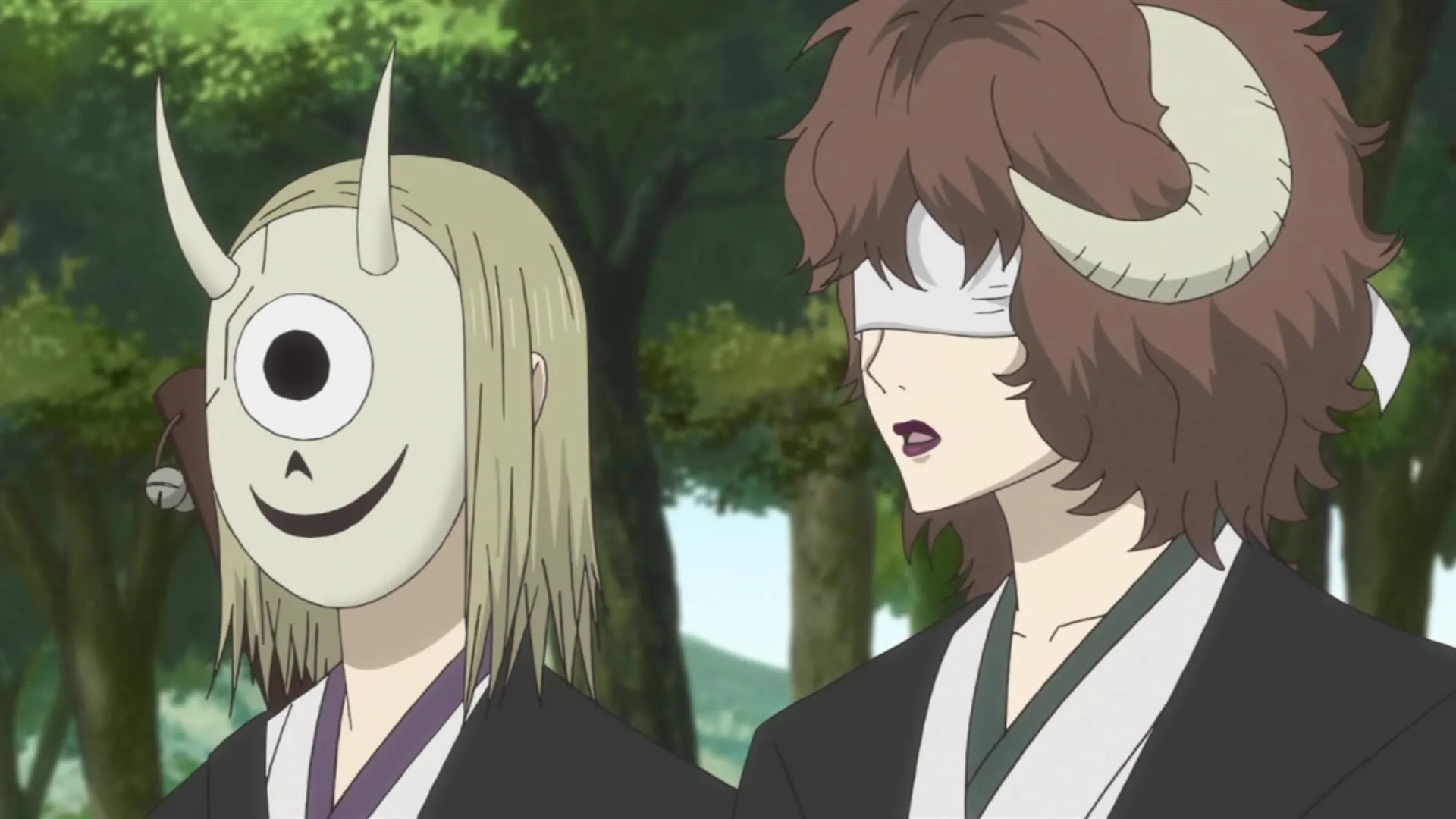

In Death Parade, Decim makes recently deceased people play games because the afterlife's arbiters use extreme pressure to expose memories, emotions and choices before judging their souls. The games are not contests to win a second life. The guests have already died, and the real decision is whether they will be sent toward reincarnation or the void. Crucially, the series also questions whether judging people at their worst is fair.
Spoiler warning: what does this explanation reveal?
The basic premise appears in the opening episodes, but this explanation discusses the judgment system, Decim's changing outlook and Chiyuki's role through the 12-episode television series. The final section includes major spoilers for episode 12. If you are only beginning the anime, the first three sections explain the rules without giving away the ending.

Why do the guests have to play games?
Queen Decim, the bar where Decim works, receives people after death. Most guests do not arrive with a clear understanding of where they are or what has happened to them. The games create situations that feel urgent and frightening, drawing out responses that ordinary conversation might not reveal. The players may believe they are gambling with their lives, even though their lives have already ended.
The official Nippon TV synopsis describes two dead souls entering the bar, playing games and having their true colors revealed as Decim judges them. It establishes the setup, not a scientific claim that games can objectively reveal a person's entire character. The anime deliberately makes the difference important.
Does winning the game determine who gets reincarnated?
No. A high score or a technical victory is not a guaranteed route to reincarnation. The game is an instrument of judgment, and the arbiter interprets what happens during it. A contestant may act cruelly out of terror, another may sacrifice an advantage for someone else, and neither response is meaningful without the circumstances behind it.
That is why treating Death Parade as a tournament anime misses its central premise. The competition creates pressure, but the dramatic question is how an arbiter can interpret a complicated human life from a deliberately distorted final encounter. Even viewers who disagree with a judgment can understand why the show invites that disagreement.
What are reincarnation and the void?
The two outcomes represented by the elevators are reincarnation and the void. Reincarnation means the soul receives another life; the void is presented as a fate without that return. These are the fictional afterlife's judgments, not a statement about real-world religion or what happens after death. The series uses the distinction to give each decision irreversible emotional weight.
The masks associated with the elevators visually signal the outcomes, but the series' larger concern is not a neat sorting chart. It is whether the person making the decision has understood the guest. The official broadcaster describes Decim as a judge whose outlook changes through his contact with a dark-haired woman, which is a clue to the show's real conflict.
Why are memories hidden or recovered during the games?
Guests arrive without a complete account of their deaths. Fragments of memory emerge as they react to the game and each other. This lets the audience reassess a person after learning what happened before the bar. Someone who initially looks selfish or aggressive may have been responding to fear, guilt or an incomplete understanding of another person's actions.

Memory recovery is not the same as a perfect transcript of a life. The arbiter still has to decide how to weigh intent, harm, remorse and context. The story's suspense depends on that uncertainty: new information can transform the meaning of a scene without erasing what the characters actually did.
Why does Decim begin questioning the judgment system?
Decim is an arbiter trained to evaluate humans from a position of detachment. Yet the dark-haired woman who works beside him challenges the assumption that intense negative emotion reveals a person's complete nature. Fear can make someone cruel for a moment; shame can make a person conceal a truth; grief can turn an ordinary choice into something desperate.
His growing discomfort is the point of the series rather than a contradiction in its rules. A system designed to force out the worst in people may end up rewarding an oversimplified idea of who they are. Decim gradually learns that understanding a human being requires more than provoking an ugly reaction and treating it as a verdict.
For another story that examines judgment and moral certainty through a very different supernatural system, AnimeSparks' Death Note rules explainer contrasts rules that are explicitly written down with the human choices made around them.
Is Death Parade saying that the judges are always wrong?
Not exactly. The show does not prove that every verdict is mistaken, nor does it offer viewers a complete replacement system. It asks whether arbiters who lack human experience can fairly interpret the people they judge. The distinction matters: questioning a process is not the same as declaring that every result must be reversed.
Death Parade is especially effective because its visitors cannot usually explain their lives in a calm, orderly hearing. The games encourage emotionally charged decisions, and the judges must work from limited information. That imbalance is why the audience is invited to examine the method itself instead of simply guessing which elevator each guest will take.
Readers interested in similarly difficult questions about guilt, loss and the consequences of decisions can explore AnimeSparks' psychological drama recommendations; that guide also places Death Parade among stories that challenge simple moral labels.
What does Chiyuki change in the final episode? Major spoilers
Chiyuki's presence gives Decim a human perspective that his training cannot supply. In episode 12, he confronts her with an apparent chance to return to life at the cost of someone else's. The situation is an illusion designed as a test. Her response shows how a person's anguish and their concern for others can coexist, rather than fitting into a single category of good or evil.
Chiyuki is ultimately sent toward reincarnation. Decim's visible emotional response matters as much as the decision: the arbiter who was supposed to remain detached has learned to recognize another person's pain. The ending does not establish that every future judgment will be correct. It suggests that empathy might change how judgments are made.
That focus on loss and human connection also makes Death Parade relevant to AnimeSparks' guide to anime about grief and loss even though its setting is an invented afterlife rather than a realistic account of bereavement.
The answer in one sentence
Decim uses games to expose the emotions and memories of people who have already died, but Death Parade ultimately asks whether such high-pressure tests can ever provide enough understanding to judge an entire human life fairly.