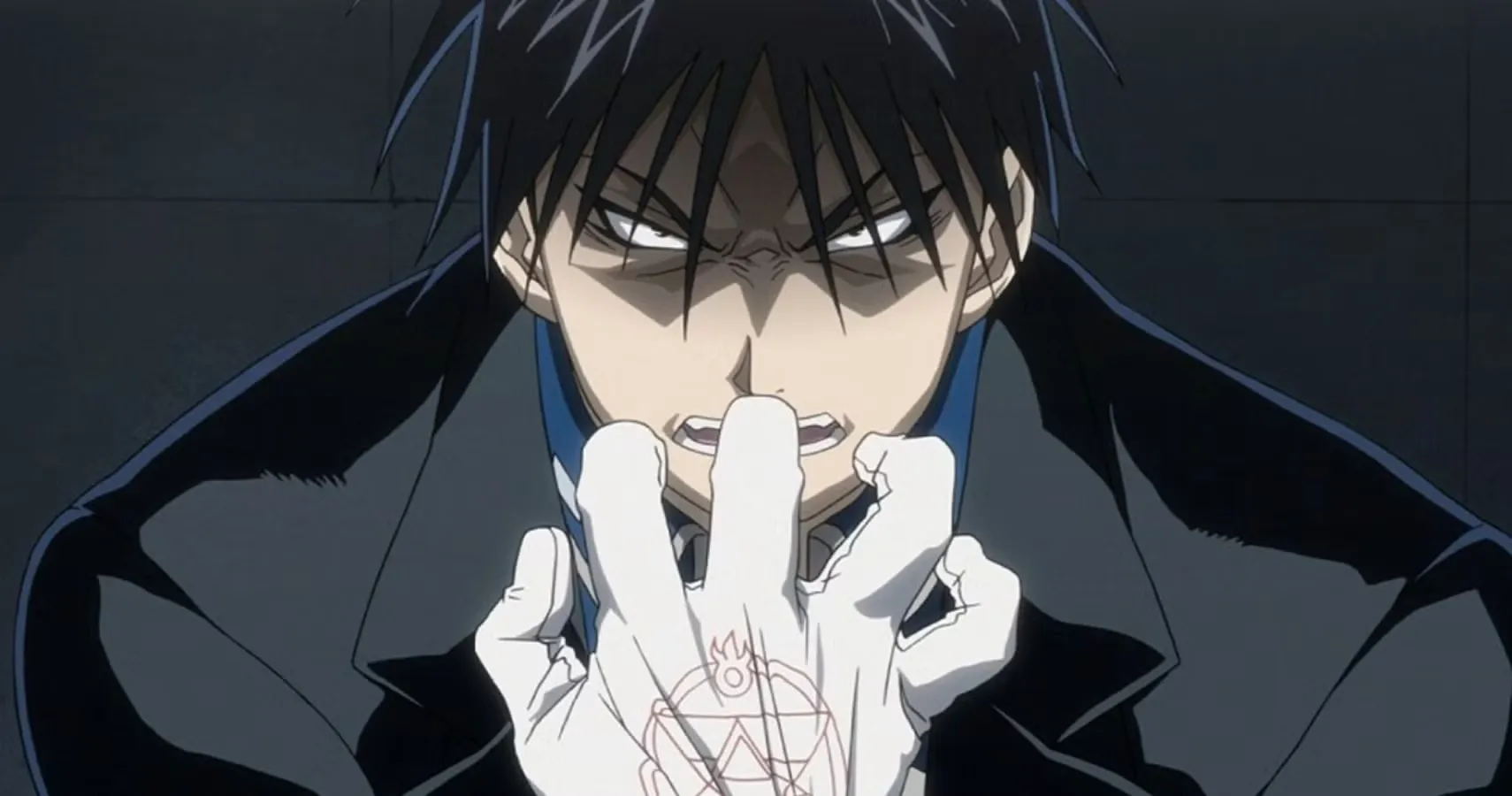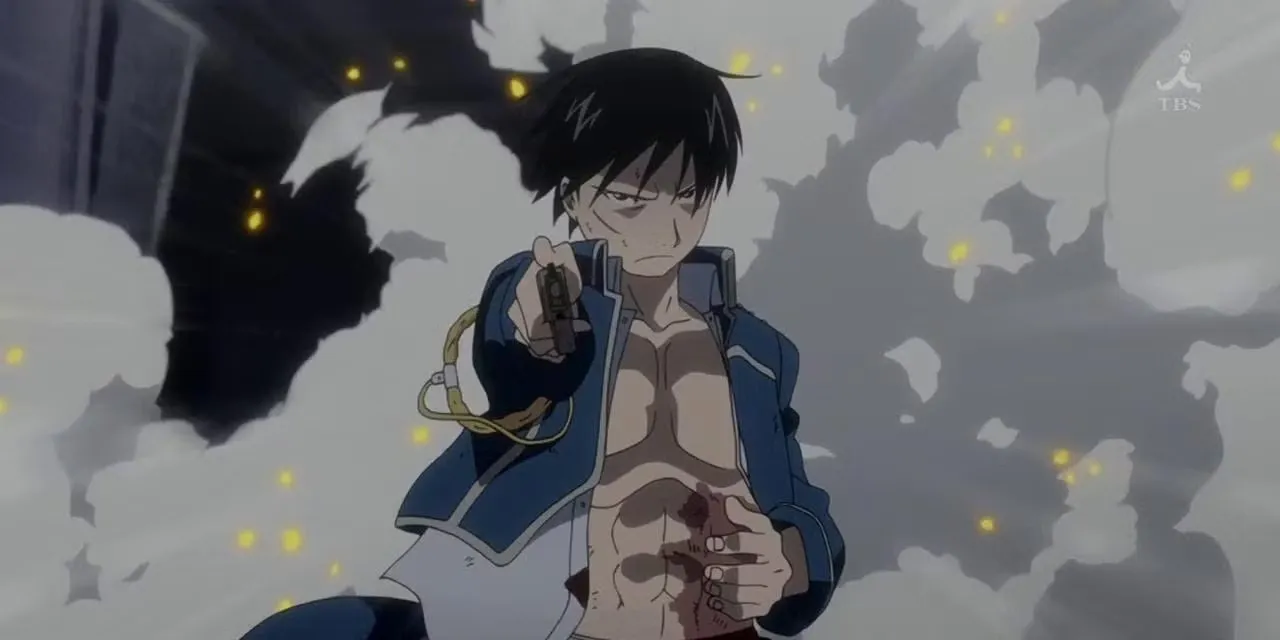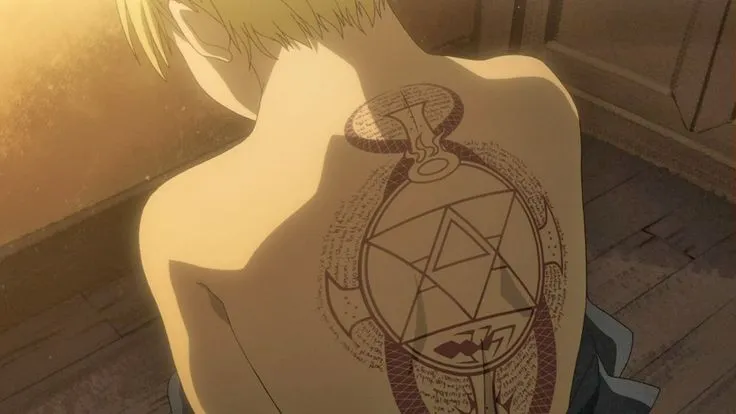

Riza Hawkeye has a large tattoo on her back because her father preserved his research into Flame Alchemy there. After his death, she entrusted that knowledge to Roy Mustang. When Mustang used Flame Alchemy during the Ishvalan war, she came to regret how the technique had been weaponized. She later asked him to burn part of the tattoo so its secrets could not simply be passed on. This explanation contains major spoilers for Fullmetal Alchemist: Brotherhood episodes 30 and 54.
What exactly is written on Riza's back?
The design is not an ordinary decorative tattoo or a symbol of military rank. It encodes the late Hawkeye family's Flame Alchemy research. Riza's father had studied alchemy and taught Roy Mustang, but the completed method was entrusted to his daughter in a form that made her body the physical record of his work. That is why the design resembles an elaborate alchemical diagram rather than a simple emblem.
The distinction matters: carrying a diagram does not mean Riza herself performs Flame Alchemy. Her expertise in the story is marksmanship, judgment and protecting others. The tattoo represents knowledge she has inherited, not a supernatural power she activates in combat. VIZ's description of Fullmetal Alchemist Volume 15 identifies Hawkeye as the person who recounts Mustang's role in the Ishvalan campaign, the crucial context for understanding her decision.
Why did she give the research to Roy Mustang?
Roy was her father's pupil, and Riza initially trusted his stated ambition to use his abilities to protect people and change Amestris for the better. After her father died, she chose to share the research with him. The choice helped turn Roy into the formidable Flame Alchemist viewers know, but it also gave a military officer a terrifyingly effective weapon.
This is not a story in which Riza unknowingly handed over an innocent family heirloom. The series makes her decision part of her moral responsibility. She believed in Roy's potential and later had to face the consequences of the power she helped him acquire. For the wider rules of transmutation, AnimeSparks' explanation of how alchemy works in Fullmetal Alchemist gives the necessary background.
Why did Mustang burn the tattoo?
The answer comes after the devastation of the Ishvalan war. Riza had served as a sniper, while Mustang's flames had been used against Ishvalans. Both recognized that their skills had contributed to a campaign of mass killing. Riza wanted to prevent her father's technique from becoming a transferable weapon for another Flame Alchemist, and she asked Roy to destroy the written research on her back.
Mustang complied, leaving the visible burn scars that interrupt the tattoo. The act did not erase Roy's own knowledge or undo the harm already done. It was a limited, painful attempt to stop the complete research from being copied by someone else. Treating the burns as a magic seal, a punishment imposed by the government, or proof that Riza could use fire herself misses what the scene actually establishes.
Brotherhood reveals the damaged tattoo in episode 30, The Ishvalan War of Extermination, and revisits the decision through a flashback in episode 54, Beyond the Inferno. The latter episode also places Riza's past choice beside her effort to stop Mustang from surrendering to revenge against Envy. Crunchyroll's episode description confirms that she intervenes when his anger threatens to overwhelm him.
Does burning the tattoo mean Flame Alchemy disappears?
No. Roy remains capable of using Flame Alchemy after the tattoo is damaged. The research on Riza's back was a way of recording and transmitting the method; it was not a fuel source, a battery or a device that controlled Roy's abilities at a distance. Once he had learned the technique, destroying the original written record could not make him forget it.
That distinction also explains why his gloves and transmutation circles still matter. The circles are part of how he carries out his technique, but the series does not establish that copying a visible glove design alone would reproduce every detail of the original research. Claims that the damaged tattoo guarantees Flame Alchemy can never be rediscovered go further than the story proves. Riza's intention is clear; the absolute effectiveness of her precaution is not.
What does the tattoo reveal about Riza and Roy's relationship?
The tattoo ties them together through a decision neither can take back. Riza trusted Roy with her father's research; Roy later had to face what he did with it. Their bond is not simply a commander relying on a skilled subordinate. They share responsibility for the past and an agreement that future power must be exercised differently.
The contrast is especially sharp in episode 54. In the past, Riza asks Roy to burn away a source of destructive knowledge. In the present, she confronts him when he is prepared to let vengeance dictate his actions. The point is not that she alone can decide whether Roy deserves redemption. It is that she refuses to treat his power, his rank or his personal suffering as excuses for losing his judgment.
This makes the tattoo a useful way to understand Mustang's larger character arc. His ambition to lead Amestris is inseparable from the question of accountability. Readers interested in the risks of power can also explore AnimeSparks' explanation of the Philosopher's Stone, another example of alchemy whose apparent usefulness hides an enormous human cost.
Is the tattoo story the same in the 2003 anime?
The explanation here refers specifically to Hiromu Arakawa's manga and its Brotherhood adaptation. The 2003 Fullmetal Alchemist television series develops a substantially different continuity and should not be treated as interchangeable evidence for these later manga events. If you are checking the scenes described here, use Brotherhood episode 30 for the Ishvalan background and episode 54 for the direct request to destroy the research.
The short answer
Riza's tattoo preserved her father's Flame Alchemy research, which she entrusted to Mustang. After seeing what his flames did in Ishval, she asked him to burn the design so the complete method would be harder to pass on. The scars are a lasting reminder of the knowledge they shared, the harm they helped cause and their determination not to repeat it.