
Roy Mustang is the more dangerous fighter at a distance, but Edward Elric is the more adaptable alchemist. In a straightforward dry-weather duel with their usual equipment, Roy has the stronger opening advantage: he can attack without first closing the gap. Give Edward cover, a disrupted ignition source or room to reshape the battlefield, and the contest becomes far less predictable. That is an analysis of their demonstrated abilities in Fullmetal Alchemist: Brotherhood, not an officially declared canon winner.
This comparison uses Hiromu Arakawa's manga and the 2009 Brotherhood adaptation. It does not mix in the separate 2003 anime's continuity. Mild battle spoilers follow, with a clearly marked ending-spoiler section near the bottom.
The verdict at a glance
Raw ranged offense: Roy. Improvised defenses and terrain manipulation: Edward. Hand-to-hand fighting and mobility: Edward. Military experience and prepared tactics: Roy. Dependence on specialized equipment: Roy is more vulnerable. Overall in a dry, open arena: Roy has the edge. In a complex environment with cover or rain: Edward's chances improve substantially. These are qualitative judgments, not canon statistics or numerical win percentages.
What Roy Mustang's flame alchemy actually does
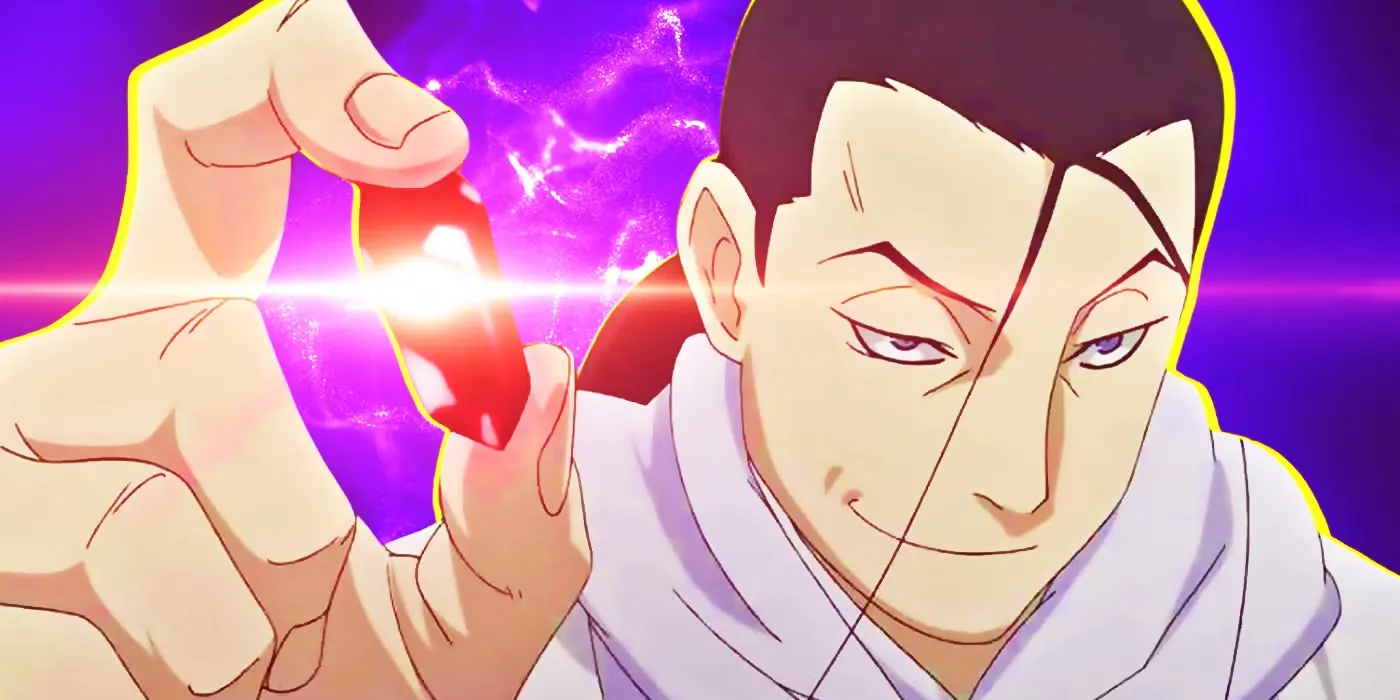
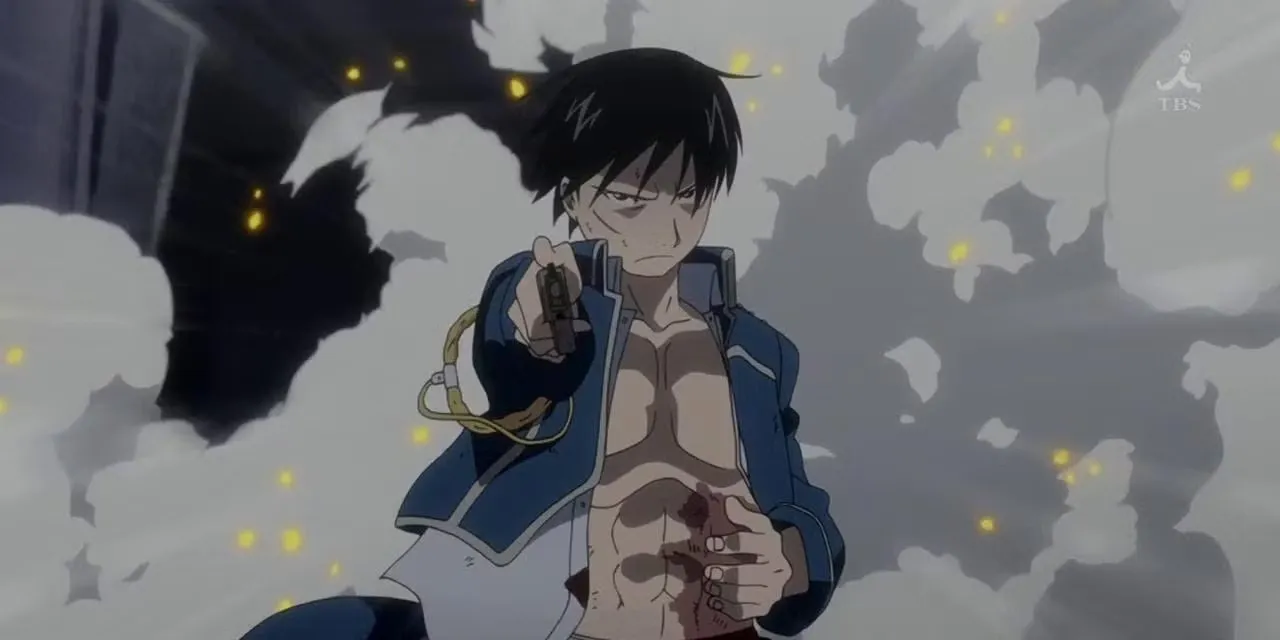
The official Fullmetal Alchemist: Brotherhood character guide describes Mustang as the Flame Alchemist, a colonel who creates sparks using special gloves bearing transmutation circles and manipulates oxygen around a target to trigger explosive flames. The critical detail is that he can threaten an opponent from a distance without having to build a weapon from the ground first.
Roy's attack is frightening because its visible beginning can be small. A snap is not merely theatrical: his ignition equipment and practiced transmutation let him produce a targeted flame attack. That makes a direct rush dangerous. Edward cannot assume that being quick on his feet is enough to avoid an attack aimed into the space around him.
Roy is not a generic fire wizard, however. His technique has a mechanism, and that mechanism creates vulnerabilities. Wet ignition gloves are a famous limitation. A prepared Roy may improvise around damaged equipment, so rain is not a universal automatic victory for anyone fighting him; it does change what he can do immediately with his normal setup. For the rules behind these techniques, see AnimeSparks' guide to alchemy and Equivalent Exchange.
What Edward Elric brings to a fight
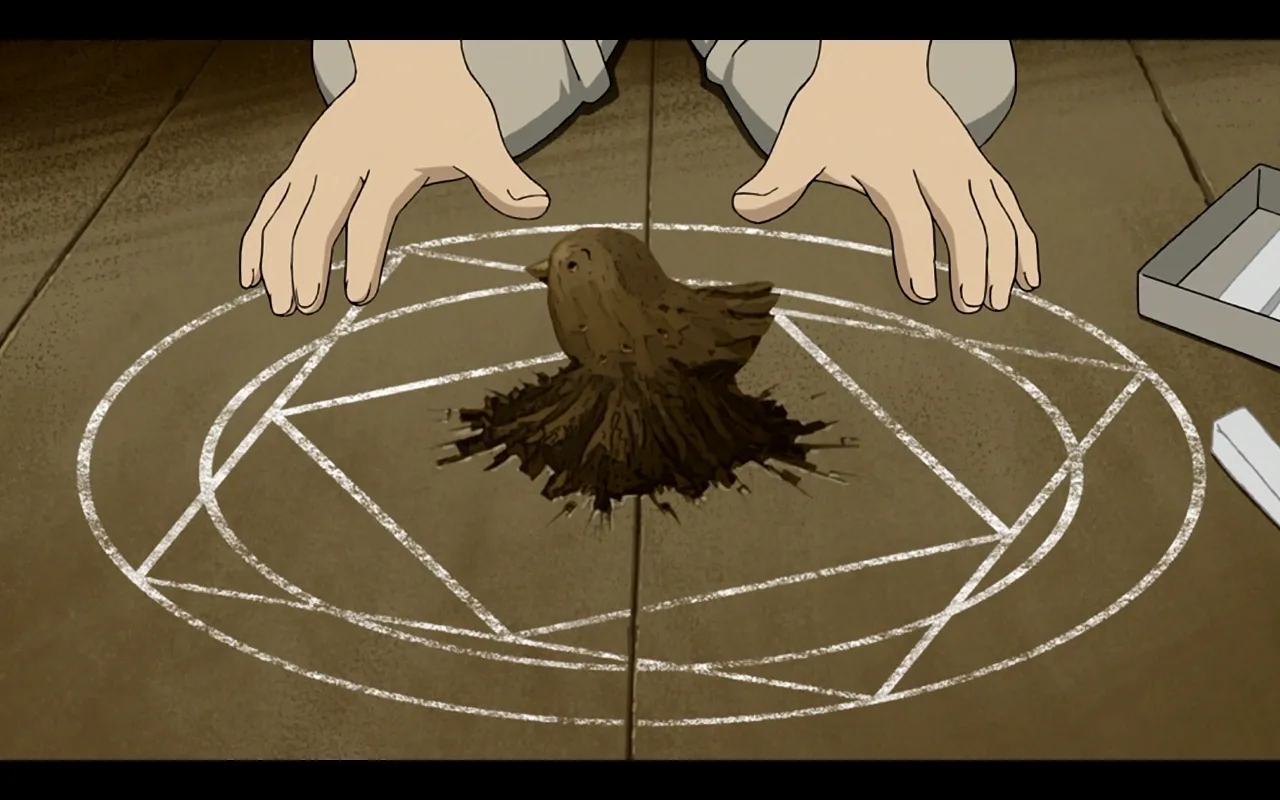
Edward is an unusually gifted State Alchemist who can transmute without drawing a conventional circle after encountering the Gate of Truth. He commonly reshapes available material into barriers, spikes, blades, or changing terrain. Unlike Roy, he does not rely on one signature offensive technique to solve every encounter.
That versatility matters in a duel. Edward can change the shape of the ground, obstruct a line of attack and force movement through inconvenient spaces. His automail also makes close-range fighting a credible option. The official Brotherhood character biography identifies his exceptional talent and prosthetic limbs, although it does not assign him an objective combat ranking against Roy.
Edward's flexibility has limits. He still needs suitable material, knowledge and time to respond. An improvised stone wall does not automatically neutralize every flame attack, especially if the attack is already developing around him. Saying Edward can make a barrier is not the same as proving he can reliably do so before Roy fires.
Head-to-head comparison: five factors that matter
1. Opening speed and range
Roy's normal attack pattern favors an early ranged exchange. His transmutation circle is already on his glove, so he does not need to stop and draw one. Edward can clap and transmute rapidly too, but he usually needs to decide what structure will protect or advance him. In open ground, Roy's ability to threaten the space around Edward is the decisive initial advantage.
2. Defense and battlefield control
Edward's best route is not to absorb Roy's attacks. It is to alter the battlefield before Roy can settle into an uninterrupted rhythm: create obstructions, change elevation, use corners and exploit environmental distractions. Roy has tactical intelligence of his own, so cover helps Edward without guaranteeing that he will win.
3. Close combat
If Edward reaches grappling distance, his physical training and automail make him dangerous. Roy is a capable officer rather than helpless without flames, but his signature advantage is much less straightforward when the two are entangled at close range. Edward's challenge is surviving the approach.
4. Equipment and weather
A dry, functional pair of ignition gloves is a meaningful advantage for Roy. Soaked gloves, damage to the transmutation arrays or a lack of an immediate spark can interrupt his normal technique. Edward's alchemy is less dependent on a single carried tool, though his automail can itself be damaged and his surroundings determine which transmutations are practical.
5. Judgment under pressure
Roy has command experience, operational planning skills and a willingness to act decisively against lethal threats. Edward is exceptionally inventive and often identifies a material or mechanical weakness that a more specialized fighter overlooks. Which style matters more depends on whether the fight begins as a sudden exchange or becomes a prolonged contest of adaptation.
Three scenarios, three different answers
Scenario A: dry open courtyard, no preparation
Roy is favored. Edward has limited cover, and the distance between them works in Roy's favor. This is the scenario behind the straightforward answer that Mustang is more dangerous in a duel. It is not evidence that Roy defeats Edward in every possible setting.
Scenario B: dense streets or an industrial complex
The outcome is less clear. Edward can exploit walls, floors, pipes and multiple routes to change the geometry of the fight. Roy remains threatening wherever he can use his flame alchemy, but he has more variables to track. An extended chase rewards Edward's improvisation, while an exposed crossing rewards Roy.
Scenario C: heavy rain and compromised gloves
Edward has a stronger opening opportunity. Roy's standard ignition method is impaired, and Edward can continue to manipulate nearby material. The result still depends on whether Roy has a working alternate ignition method or time to improvise. 'Roy is useless in the rain' is a memorable joke, not a complete analysis of every possible contingency.
What their Homunculus battles prove, and what they do not
Roy's confrontation with Lust demonstrates how devastating sustained flame alchemy can be against an enemy who normally regenerates. His later conflict with Envy shows how overwhelming that same ability can become when he attacks relentlessly. AnimeSparks' guide to the seven Homunculi explains why their regenerative reserves matter.
Edward's encounters with Greed and other powerful opponents show a different strength: he investigates how an ability works, then adapts the material or environment to counter it. Those feats support his ingenuity, but neither character's victory over a third party translates into a mathematically certain result against the other. Opponent abilities and circumstances differ.
Does their rivalry establish a canon winner?
Not for the hypothetical, evenly specified duel examined here. Their relationship includes teasing, military hierarchy and moments of competition, but treating every comedic or differently staged confrontation as an official final power ranking would flatten the story. The manga and Brotherhood never provide a universal rule that one of them wins under all conditions.

Important ending spoiler: does Edward still have alchemy?
Major Brotherhood and manga ending spoilers begin here. At the conclusion, Edward sacrifices his Gate of Truth and thereby gives up his ability to perform alchemy to restore Alphonse. That means a post-ending hypothetical duel is a different question from a comparison of the two at their active State Alchemist peaks. If the comparison assumes both characters have their familiar alchemical abilities, it must be set before Edward's final exchange. For more on that cost, read the Philosopher's Stone guide and its discussion of the series' ending.
Why the better fighter is not necessarily the better alchemist
Roy specializes in an exceptionally effective combat application. Edward demonstrates broader improvisation and an intense drive to understand how materials and techniques work. A duel rewards different skills from research, rescue work or solving the ethical problem at the center of the series. The answer to 'Who would win?' therefore should not be mistaken for the answer to 'Who understands alchemy better?'
This distinction is also what makes the matchup useful beyond power-scaling. Fullmetal Alchemist's rules make conditions important. Rather than inventing an exact score, a careful comparison asks which conditions each fighter can control and which weaknesses the opponent can realistically exploit.
Final verdict: Roy in the open, Edward when conditions change
Roy Mustang has the edge in a conventional dry-weather duel at range because his flame alchemy can strike quickly and decisively. Edward Elric's best chances come from interrupting that attack pattern, controlling terrain and closing distance. Neither outcome is an official canon result, and both are contingent on equipment, environment and the point in the story being compared.
Frequently asked questions
Is Roy Mustang stronger than Edward Elric?
Roy has the stronger direct ranged attack in their typical combat styles. Edward is more versatile at reshaping his surroundings. 'Stronger' depends on whether you mean immediate offense, adaptability or a specific fight.
Can Edward block Roy Mustang's flames?
Edward can create obstacles with alchemy, but that does not establish that every barrier will stop Roy's oxygen-directed flame attacks. Timing, materials and positioning matter.
Can Roy Mustang use alchemy in the rain?
Wet ignition gloves disrupt his usual spark-based technique. That is a major weakness, but a prepared alternate ignition source or improvised technique changes the scenario.
Does Edward lose his alchemy at the end?
Yes, in the Brotherhood and manga ending he sacrifices his Gate of Truth and gives up alchemy to restore Alphonse. This is a major ending spoiler.
Is this comparison the same in Fullmetal Alchemist (2003)?
No. The 2003 series follows a different continuity. This article evaluates the manga and Brotherhood versions rather than merging feats and endings from separate adaptations.
Frequently asked questions
Frequently asked questions
Is Roy Mustang stronger than Edward Elric?
Roy has the stronger direct ranged offense; Edward is more adaptable. A duel depends on conditions.
Can Roy Mustang use alchemy in the rain?
Wet ignition gloves disrupt his usual technique, though preparation can change the circumstances.