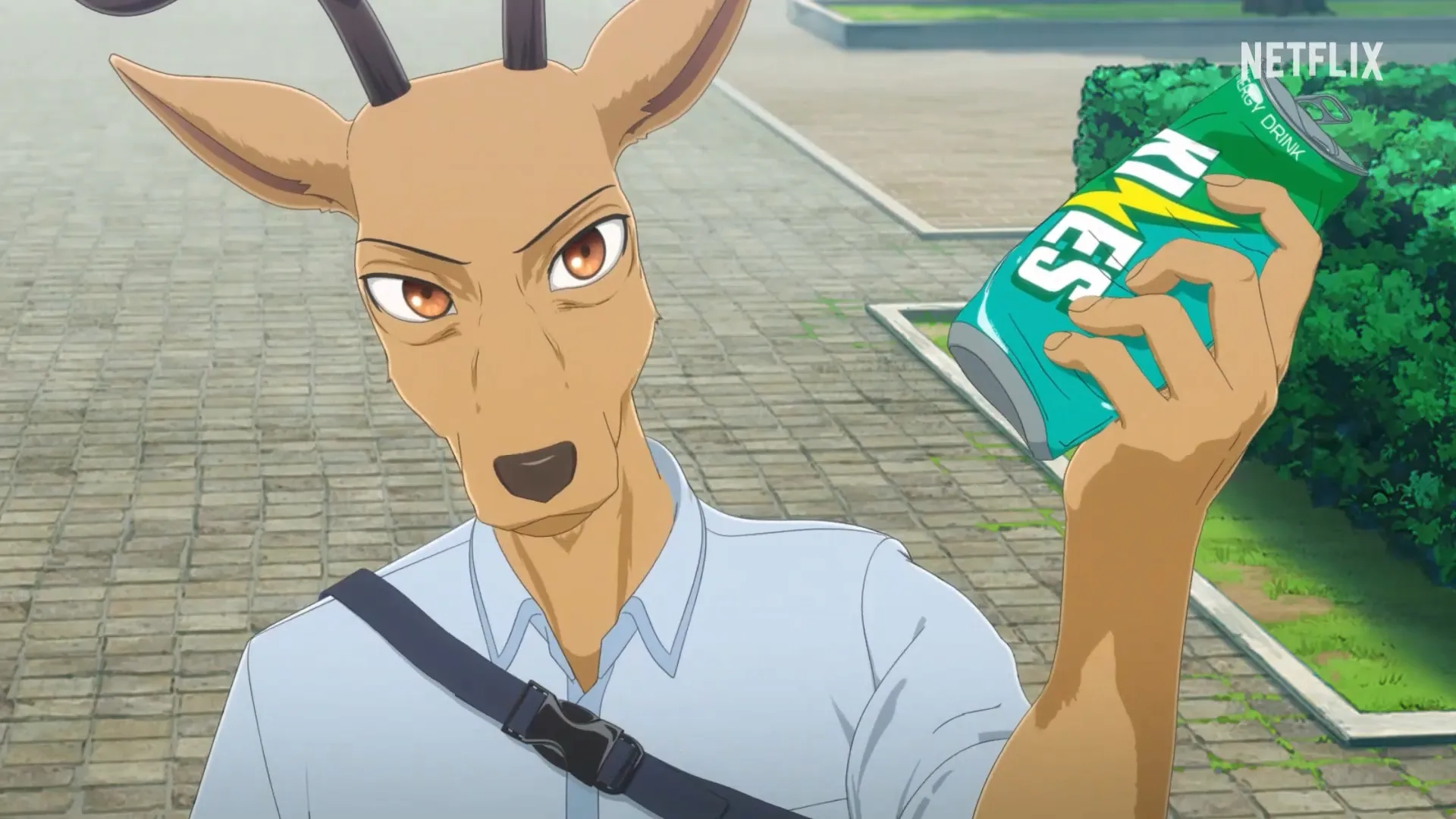

CG anime is not automatically inferior to hand-drawn anime. Studio Orange's Land of the Lustrous, BEASTARS and Trigun Stampede make a more useful case: the question is whether the chosen technique gives characters convincing expressions, movement and visual identity. Some computer-generated scenes feel stiff or disconnected from their surroundings, while others use depth and camera movement to tell stories that would be difficult to stage the same way in traditional production. That distinction matters more than the label 'CGI'.
Why the argument became so heated
For many viewers, the familiar look of anime is tied to drawings: deliberate poses, expressive faces, controlled timing and compositions that resemble manga panels. A digital character model can preserve its proportions across angles, but that consistency is not automatically appealing. When its movement, lighting or surface shading clashes with the background, the result can feel detached from the world. Those objections are about visible execution, not simply hostility to new technology.
There is also an expectation problem. Audiences encountering a new adaptation may already imagine how the original character designs should move. A three-dimensional redesign is judged against that mental image before its storytelling has a chance to establish a style of its own. Conversely, calling every successful CG shot 'basically 2D' ignores the craft that made the result convincing.
Land of the Lustrous uses the material itself as an advantage
Haruko Ichikawa's Land of the Lustrous follows gemstone-like beings whose translucent surfaces and brittle bodies are central to the story. Orange's CG approach gives those materials distinctive light, reflections and motion. The shimmering hair and dramatic camera movement are not decorative technical tricks; they help define a world where beauty and physical fragility exist together.
The series also demonstrates why the choice cannot be reduced to a binary between computers and drawing tablets. Production reporting describes how 2D expression work and hand-drawn planning contributed to the final images. What viewers see is an integrated artistic process. The most interesting question is how the techniques cooperate, not which software category deserves credit.
BEASTARS needs acting, not just detailed fur
BEASTARS has a different challenge. Its anthropomorphic characters must convey awkwardness, attraction, fear and restraint through faces that are not fully human. A perfectly realistic animal model would not solve that dramatic problem. Orange instead designed animation around recognizable behavior and readable performance. Studio representatives have discussed adapting the manga's personalities rather than reproducing every drawing literally.
That priority is especially important in conversations and quiet scenes. Large action sequences can impress with movement, but a drama lives or dies by small pauses, eye direction and body language. The show's CG is valuable when it makes those choices legible. It is less useful to judge the work by the number of polygons or how convincingly it imitates live-action animals.
Readers interested in the author's creative approach can also read our Beastars creator interview coverage. The underlying themes of the work and the visual decisions of its adaptation are related, but they are not interchangeable.
Trigun Stampede turns camera freedom into storytelling
Trigun Stampede takes a more kinetic approach. Its desert environments, mechanical details and elastic character performances allow for sweeping movement through action scenes. The camera can travel around bodies and architecture in ways that highlight speed and distance. Yet the show's most important achievement is not merely having a virtual camera: it uses that freedom to communicate how Vash navigates danger while trying to avoid killing.
Producer Yoshihiro Watanabe has discussed Orange's willingness to combine techniques instead of treating CG as an exclusive ideology. That philosophy is a stronger explanation of the studio's visual identity than the assumption that computer animation is a cheap shortcut. Building expressive models, rigs and scene-specific performances requires substantial artistic labor.
The best criticism of CGI is specific
A productive critique asks whether the facial acting matches the emotion, whether characters feel grounded in the scene, whether lighting unifies the image, and whether the action is readable. It can also ask whether a sequence relies on continuous motion when a held pose would carry more impact. Those standards apply to hand-drawn animation too, even though the failure modes can look different.
There is room for disagreement about taste. Some viewers prefer the texture and imperfections of drawn lines; others enjoy the dimensionality and elaborate camera work of CG. Neither preference proves that a medium is incapable of good storytelling. Comparing Jujutsu Kaisen and Demon Slayer on animation and story, as we have done elsewhere, is useful for the same reason: visual spectacle is only one criterion in judging an anime.
Does better CGI mean every anime should use it?
No. A studio should select tools that suit its designs, schedule and storytelling goals. A restrained character drama might benefit from expressive drawings; a show built around complex materials or continuously moving spaces might benefit from three-dimensional assets. Many productions use both. The danger is treating the technique as a substitute for direction, rather than one of the director's tools.
Our guide to anime about art and creativity offers another perspective on the labor behind finished images. Animation, like the creative pursuits portrayed in those shows, depends on iteration and decisions that are often invisible to audiences. Technology changes the workflow, but it does not eliminate the need for taste.
The verdict
Studio Orange has not ended the CGI debate, and it does not need to. Land of the Lustrous, BEASTARS and Trigun Stampede succeed in different ways because their visual strategies respond to different stories. It is reasonable to criticize a jarring model or awkward motion. It is less useful to assume the entire method is defective before asking what the scene is trying to achieve. Judge the animation on its performance, composition and emotional clarity. Then argue about the results.
Sources & references4 sources
- https://www.animeherald.com/2025/05/17/the-studio-orange-staff-talks-with-anime-herald/
- https://www.crunchyroll.com/news/interviews/2022/9/1/interview-trigun-stampede-producer-yoshihiro-watanabe-on-the-senses-of-animation-his-favorite-vtubers-and-more
- https://www.slashfilm.com/1184803/how-3d-anime-specialists-studio-orange-created-the-world-of-trigun-stampede/
- https://www.polygon.com/anime/445499/studio-orange-cg-criticism-beastars