
Tournament arcs endure because they give an action story a clear structure while leaving room for surprising character decisions. The audience understands the rules of advancement, but the interesting question is not always who wins. Dragon Ball uses martial-arts competitions to reveal growth across years of training. My Hero Academia makes a school sports festival a public test of ambition. Hunter x Hunter uses Heaven's Arena to show Gon and Killua that physical talent is not the same as understanding a fight. Those three examples demonstrate why the format remains useful even when a favorite seems destined for the final.
A smaller prize can create more personal stakes
Not every fight needs to threaten the world. A tournament can put reputation, confidence, opportunity and friendship on the line. That often gives writers more freedom than a battle against an obvious villain. A character may lose a match and still accomplish something important, such as proving that a new technique works or earning the respect of a rival. A winner may discover a serious weakness. These outcomes are meaningful because victory and growth are not identical.
The bracket also provides a rhythm. Preparation leads to a confrontation, and the result changes what the next confrontation means. But the format has a weakness: if early opponents are disposable and nothing changes after their matches, the event becomes a delay rather than a story. A tournament earns its length through consequences, not the number of fights it can fit.
Dragon Ball makes improvement visible
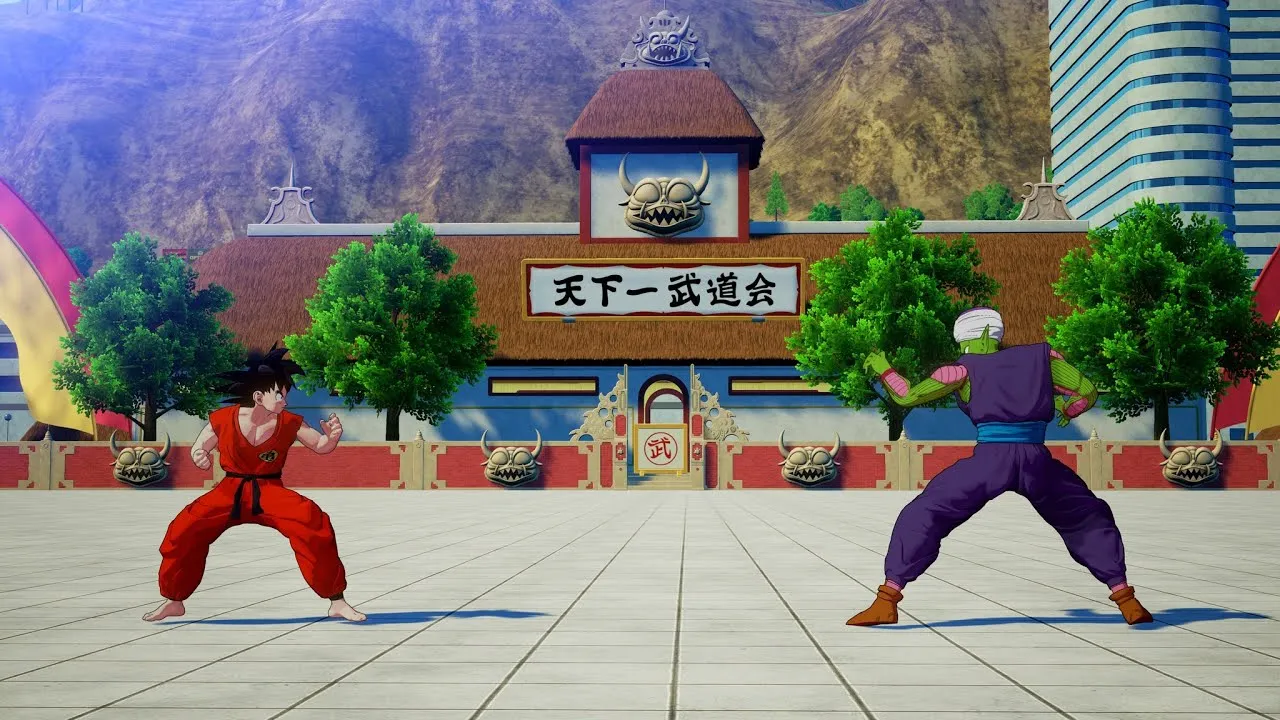
The original Dragon Ball's World Martial Arts Tournaments repeatedly bring familiar fighters together after periods of training. Their techniques and attitudes reveal how much they have changed. Goku's growth is measured against recognizable opponents rather than described only in dialogue. The arena can support comedy, rivalry and genuine martial-arts philosophy in the same event. Its fights have stakes, but not every contest requires an apocalyptic threat.
This is why an apparently predictable winner does not automatically spoil a tournament. Watching how a fighter adapts, handles pressure or respects an opponent can be more rewarding than a surprising result. For a narrower comparison of the franchise's most famous rivalry, AnimeSparks has separately examined Goku and Vegeta's canon fights. The broader tournament question is about how competition changes everyone involved, not merely which hero has the highest power level.
My Hero Academia turns competition into public judgment
U.A.'s Sports Festival is a school event, but its students are preparing for a profession in which reputation matters. The obstacle race and subsequent competitions expose strengths that classmates may not have recognized. The contestants are peers and potential rivals at once. That creates tension between personal ambition and relationships, especially when someone wants to win without abandoning the values that motivated them to become a hero.
The event also asks a sharper question than who can throw the strongest attack: how does a young person perform when the world is watching? The festival's audience and professional implications give ordinary school competition a social dimension. A student's choices become evidence of character. That makes the arc interesting even to viewers who do not treat every result as a definitive ranking of abilities.
Hunter x Hunter uses the arena to teach limits
Heaven's Arena works differently from a straightforward elimination bracket. Gon and Killua climb a tower of progressively tougher opponents while learning that they lack crucial knowledge. Nen changes how combat works, and the controlled setting lets the story introduce that system through practical encounters. The arena is partly a classroom: it demonstrates why confidence based on earlier victories can be misleading.

This educational approach can also slow the narrative. Some viewers prefer the immediate danger and varied challenges of the Hunter Exam to extended training and rule explanations. That is a legitimate pacing preference. Heaven's Arena succeeds when its lessons make later conflicts more understandable, not because an arena is inherently more exciting than another setting. AnimeSparks' Netero-versus-Meruem comparison shows how the series later complicates the idea that winning a fight is the same as achieving one's objective.
The problem with bad tournament arcs
Weak tournaments often repeat three mistakes. They introduce too many opponents who vanish after losing, invent exceptions that undermine established rules, and pause the main story without changing any relationships. The solution is not necessarily a shorter bracket. A long event can justify itself if each significant match changes the audience's understanding of a character. Conversely, a short competition can feel pointless if its result has no effect beyond a trophy.
Rules are particularly important. Viewers should know enough to appreciate tactical decisions and recognize when a fighter takes a risk. If victory depends on a convenient new ability revealed without preparation, suspense becomes arbitrary. But total predictability is not the answer either. The strongest fights establish a framework and then let personality, strategy and imperfect judgment create surprises within it.
The best tournament prize is character development
Dragon Ball emphasizes progress over time, My Hero Academia examines ambition under public scrutiny, and Hunter x Hunter turns competition into a lesson about knowledge. They are different answers to the same storytelling problem: how do you make a series of fights matter? The best tournament arcs leave characters with changed goals, strained friendships, earned respect or a clearer sense of their limits. When those changes survive the final match, the arc has done more than determine a champion.