
Space anime can mean radically different things. One show treats orbit as a workplace where a loose bolt threatens lives; another imagines entire fleets debating the future of democracy. Others use the stars as a backdrop for people who cannot escape their past, a group of stranded students learning to cooperate, or a brother struggling to qualify for a job on the Moon. That range is why a generic list of the highest-rated science-fiction shows rarely answers the question viewers actually have: what kind of space story should I watch next? This guide compares eight accessible starting points by what they do with the setting, not by invented scientific-accuracy scores or popularity figures.
The selections span workplace drama, astronaut training, political space opera, mystery, adventure and quiet science fiction. Some are grounded in recognizable engineering problems; others are unapologetically fantastical. A show with faster-than-light travel is not necessarily less thoughtful than one about orbital debris. What matters here is whether its setting changes the characters' decisions, creates meaningful constraints and rewards the audience's investment. The descriptions avoid major ending spoilers and flag where a longer franchise or unfinished adaptation changes the viewing commitment.
How we ranked the space anime
Four editorial criteria guide the order: the importance of space to the actual story; how convincingly the series establishes its own rules and limitations; the depth of its character or political conflicts; and whether the experience delivers a satisfying entry point for the viewer it targets. This is an interpretive comparison, not a claim that one fictional technology is physically possible. For quick selection, choose Planetes for work and orbital hazards, Space Brothers for an astronaut career, Cowboy Bebop for episodic character drama, Legend of the Galactic Heroes for politics, Astra Lost in Space for a contained survival mystery, Yamato 2199 for a mission-driven voyage, Outlaw Star for adventurous pulp and Space Dandy for absurdist comedy.
8. Space Dandy makes the galaxy an unpredictable playground
Space Dandy follows an alien hunter whose adventures regularly abandon ordinary continuity in favor of strange new planets, comic disasters and shifts in visual style. That makes it a poor choice for anyone expecting a carefully mapped interstellar economy or a single suspense plot. Its appeal is precisely the freedom to turn the next destination into a completely different kind of story. The series treats space as an invitation for animators and storytellers to experiment, not merely as a black background behind a spaceship.
The episodic approach also makes this one of the easiest entries to sample. You can discover whether its humor and changing tone work for you without committing to a long mythology. Some episodes have surprisingly reflective ideas about identity and connection; others are deliberately silly. It ranks eighth for readers looking for a sustained space narrative because it rarely builds the cumulative stakes that distinguish the higher entries. But for viewers tired of solemn galactic wars, its refusal to take the cosmos seriously can be refreshing. Best for adventurous comedy and stylistic variety, not hard science.
7. Outlaw Star delivers a scrappy space adventure
Gene Starwind and his companions become involved with a remarkable ship and the search for the Galactic Leyline. Outlaw Star is a space western with a restless, treasure-hunting spirit. Its world mixes futuristic travel, criminal underworlds and fantastical elements rather than following a single rigorous engineering model. The crew's differing personalities matter because the adventure repeatedly asks them to trust people they did not initially choose as partners. The fun comes from a ship that feels like a precarious opportunity instead of a perfectly organized military vessel.
Its 1990s pacing and tonal shifts may feel uneven to viewers accustomed to tightly serialized modern thrillers. Yet that looseness also leaves room for banter, dangerous detours and an appealing sense that the next port might change everything. Choose Outlaw Star when you want momentum, eccentric worldbuilding and the camaraderie of an unlikely crew. Its strongest comparison is not with astronaut training stories but with other adventures about people building a makeshift home while traveling. AnimeSparks has a separate guide to the emotional mechanics of found-family anime; the connection here is the crew dynamic, not a claim that every space adventure is a family drama.
6. Space Battleship Yamato 2199 gives the voyage a deadline
Star Blazers: Space Battleship Yamato 2199 reimagines the classic Yamato story around a desperate mission: a crew must travel across space in pursuit of a way to save an endangered Earth. That objective gives the series a useful narrative spine. The destination matters, the route is dangerous, and the ship becomes a community forced to make decisions under pressure. Rather than using space only to stage spectacular battles, the story ties its military action to the human cost of a mission whose failure would be catastrophic.
The 2012-2013 remake is a more approachable starting point for many contemporary viewers than navigating decades of earlier Yamato material, although its world remains firmly in the tradition of dramatic space opera. Expect battles, command decisions and melodrama, not a documentary about propulsion or orbital mechanics. Its greatest strength is the feeling that every stop and sacrifice belongs to one continuous journey. It ranks below the top five because its urgent mission leaves less room for the everyday texture of life in space, but that same urgency makes it the right choice for viewers who want a clear plot and escalating stakes.
5. Astra Lost in Space makes survival depend on trust
Astra Lost in Space begins with a group of students stranded far from where they should be, forced to cooperate and find a route home. The setup combines a survival problem with a mystery about how the situation arose. Resources, travel decisions and unfamiliar environments give the characters practical challenges, while the larger questions test how much they can trust one another. Unlike an open-ended galaxy-spanning epic, Astra is built around a focused goal, which makes it an approachable recommendation for viewers who want an identifiable beginning and end.
Its tone can move quickly from light group comedy to suspicion and danger, and some solutions are deliberately heightened for dramatic effect. It should not be mistaken for a technical survival manual. What distinguishes it is the way the mystery and team dynamics reinforce each other: cooperation is necessary, yet not every question can be resolved by good intentions. Choose it for a compact, twist-oriented adventure with an ensemble cast. Readers who primarily enjoy plans, deductions and characters solving constrained problems may also like AnimeSparks' ranking of intelligent anime protagonists; that page serves a different search intent and is offered as a related reading path.
4. Space Brothers makes becoming an astronaut the adventure
Space Brothers follows Mutta Nanba, who tries to revive an old promise to become an astronaut after his younger brother Hibito has already moved ahead in that dream. Its appeal is the unusual decision to treat preparation, selection, training and professional uncertainty as dramatic events. Instead of racing immediately to an alien planet, the series spends time on the emotional and practical hurdles that stand between an ordinary adult and an extraordinary career. Ambition is not enough; people need patience, skills, mentors and a willingness to accept setbacks.
That emphasis makes Space Brothers one of the best recommendations for someone fascinated by the human side of real space programs. The anime is lengthy and does not adapt the entire ongoing manga story, so it is not the fastest route to a fully concluded narrative. Its comedy and gradual pacing also require more patience than a survival thriller. But its strength is the credibility of the aspiration, not a promise that every depicted training exercise matches a specific space agency's procedures. The show asks a more grounded question than most of this list: what would it take to earn a place on a mission in the first place?
3. Legend of the Galactic Heroes turns space into a political system
Legend of the Galactic Heroes uses an interstellar conflict between the Galactic Empire and the Free Planets Alliance to examine institutions, leadership and the price of war. Reinhard von Lohengramm and Yang Wen-li represent different ambitions and approaches to power, but the series is not simply a competition to crown the cleverest commander. Their decisions are shaped by politics, history, supply lines and people who may misunderstand or misuse their strategies. The galactic setting creates a scale at which private convictions and public consequences become impossible to separate.
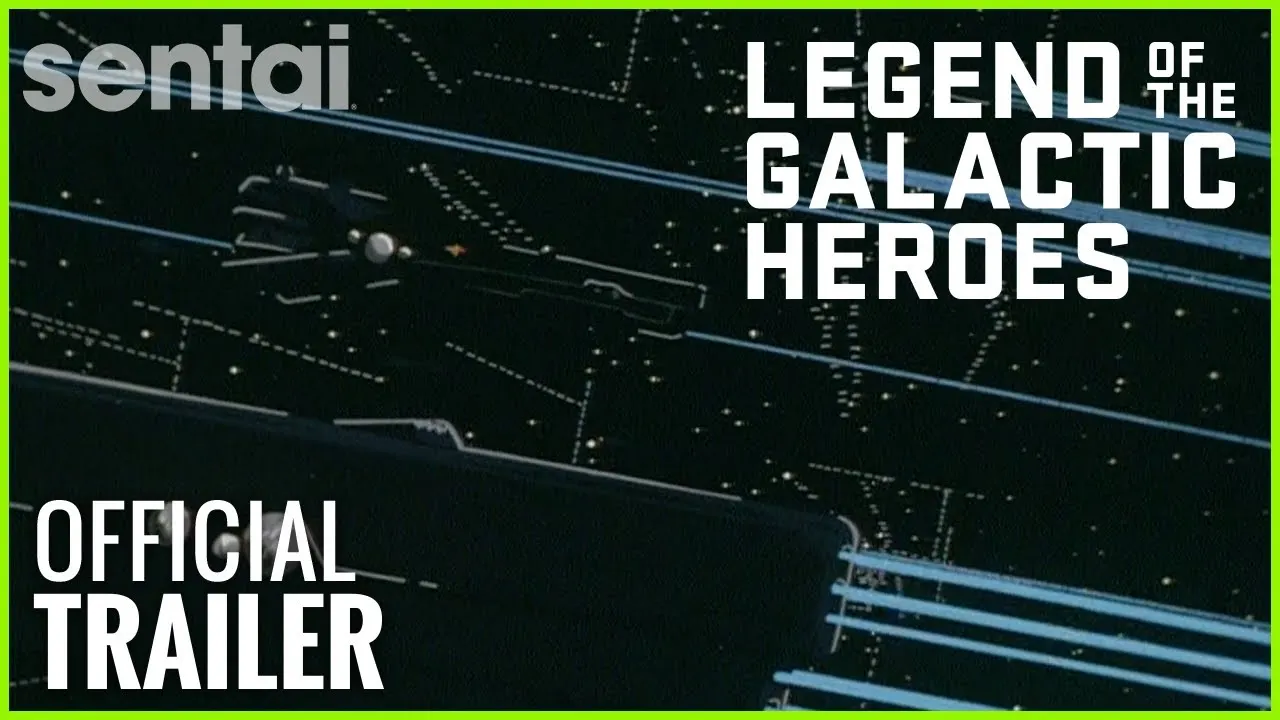
The original series is a major commitment, and its dense cast, dialogue and older animation style are real barriers for some newcomers. There is also the later Die Neue These adaptation, which should not be casually conflated with the original when discussing episode counts or coverage. If you want constant dogfights, you may find its political conversations slow. If you want to see how a fictional society functions across an enormous war, very few anime devote comparable attention to competing systems of government. For a narrower look at strategic problem-solving, AnimeSparks' smart-protagonist comparison discusses Yang alongside characters from other genres.
2. Cowboy Bebop makes a crowded solar system feel lonely
Cowboy Bebop follows a small group of bounty hunters taking jobs across a populated solar system. The premise offers plenty of action, but the series is most distinctive when a new location or assignment reveals what a character is trying to avoid. Jazz, noir and western influences shape its atmosphere without turning it into a simple genre exercise. Space travel is ordinary enough that people still struggle with debt, failed relationships, employment and regret. That contrast makes the futuristic setting emotionally recognizable.
Its largely episodic structure can frustrate viewers who want every installment to advance one central mystery. The crew also does not always behave like a warm, supportive household; their distance is part of the story. The series earns its place near the top because its planets and stations feel inhabited by people with lives beyond the main cast, while its characters carry unresolved histories from place to place. Choose it for mood, memorable short stories and mature character drama. If you want more suggestions in a similar atmosphere, the AnimeSparks recommendation finder lets you start from Cowboy Bebop and compare related series by genre and theme.
1. Planetes finds the extraordinary in ordinary orbital work
Planetes imagines a future in which commercial space activity has made orbital debris a serious workplace hazard. The Toy Box crew collects dangerous objects that could damage spacecraft, while its members navigate low status, poor pay, personal ambition and competing ideas about what space exploration should mean. This is an unusually effective premise because the setting determines the work rather than merely decorating it. A routine assignment can be risky, and the people performing it are not celebrated heroes. Their labor makes other people's grand ambitions possible.
The show does not claim to predict the precise future of the space industry. Its technology and social structures are fiction, and some dramatic developments extend beyond the day-to-day debris-collection premise. Nevertheless, it pays attention to the fact that space exploration would require maintenance, rules, institutions and ordinary workers. That combination makes its world persuasive without needing to be perfectly realistic. Its characters disagree about idealism and self-interest, and the story gives those conflicts room to evolve. Planetes ranks first because it links physical environment, workplace organization and personal growth more consistently than any other entry here. Crunchyroll's official series description independently confirms the debris-collection setting and the crew's everyday concerns.
Quick comparison: which space anime should you start with?
For grounded work and engineering constraints, choose Planetes. For the path toward an astronaut career, choose Space Brothers. For a contained survival mystery, choose Astra Lost in Space. For political history and competing ideologies, choose Legend of the Galactic Heroes. For stylish episodic drama, choose Cowboy Bebop. For a mission with a destination and deadline, choose Yamato 2199. For a rough-and-ready treasure hunt, choose Outlaw Star. For unpredictable comedy and experimental animation, choose Space Dandy. These are editorial distinctions, not numerical scientific-accuracy ratings. A realistic-looking show can still take creative liberties, and a fantastical one can ask serious questions.
Frequently asked questions
What is the most realistic space anime on this list?
Planetes is the clearest starting point if your interest is recognizable orbital work and the problem of space debris. Space Brothers is better if you care about the human path toward astronaut selection and training. Neither should be used as a substitute for current aerospace guidance, and 'realistic' here describes the narrative focus rather than a measured physics score.
Which space anime is best for beginners?
Cowboy Bebop works well for viewers who enjoy self-contained episodes, while Astra Lost in Space offers a focused mystery with a clear group objective. Space Brothers is inviting but longer, and the original Legend of the Galactic Heroes demands the greatest patience with political exposition.
Do I need to watch older versions before Yamato 2199?
Yamato 2199 retells the foundational voyage, so it can serve as an entry point without first watching the 1970s series. Viewers interested in franchise history can explore the earlier production separately. Do not confuse the remake with its subsequent sequels or recap films.
The best space anime is the one that uses its setting well
The genre is at its strongest when space changes what characters can do and what their choices cost. Planetes finds meaning in maintenance; Space Brothers in preparation; Legend of the Galactic Heroes in institutions; Cowboy Bebop in distance and memory. The others offer distinct pleasures in suspense, exploration and comedy. Rather than selecting a show solely because it contains spacecraft, decide whether you want to understand the people who work in space, survive there, govern it or simply wander through it. That choice will do more to improve your next watch than any generic ranking score.