
Some anime heroes win because they can overpower an enemy. Others win because they notice a pattern, understand a person, or plan around a weakness nobody else sees. If you are searching for anime with smart main characters, the most satisfying examples make intelligence visible in the decisions characters take, not merely in dialogue calling them geniuses.
This ranking favors demonstrated reasoning, meaningful limitations, and how clearly the story lets viewers follow a plan. It includes detectives, scientists, gamblers, tacticians and problem-solvers. Being clever does not make a character morally good, and a supernatural advantage is not itself proof of intelligence. The descriptions avoid major ending spoilers.
How we ranked these intelligent anime protagonists
We used four editorial criteria: evidence of independent problem-solving; how often a character adapts when a plan fails; whether the anime communicates enough information for viewers to appreciate the thinking; and how much their choices shape the story. We deliberately did not invent IQ scores or treat an unverified numerical IQ as a universal comparison across unrelated fictional worlds.
There is also a difference between intelligence and winning. A character with perfect knowledge, a magical command ability, or a narrative advantage can defeat a more resourceful opponent. Our ranking rewards ingenuity under constraints rather than an imaginary cross-series tournament. The strongest recommendation for you depends on whether you prefer mysteries, psychological warfare, strategy or science.
Quick picks by the kind of intelligence you want
For psychological duels, start with Death Note or One Outs. For tactical leadership, choose Code Geass or Legend of the Galactic Heroes. For scientific ingenuity, Dr. Stone is the clearest entry point. For detective reasoning, try The Apothecary Diaries or Detective Conan. For competitive social manipulation, Classroom of the Elite is a natural fit. The ranking below explains what each series does differently.
10. Kiyotaka Ayanokoji, Classroom of the Elite
Ayanokoji's defining strength is not a public display of brilliance. He operates inside a school whose class rankings, incentives and interpersonal rivalries turn ordinary student life into a strategic contest. He observes what classmates want, what they fear and how rules can be exploited without making himself the obvious center of attention.
This makes Classroom of the Elite appealing to readers who like concealed intentions and shifting alliances. Its weakness as a pure logic showcase is that the audience is not always allowed to see every step before a reveal. Some victories feel like demonstrations of an extraordinary hidden ability rather than problems viewers could solve alongside him. Choose it for social chess, not for a fair-play detective puzzle.
9. Shiro and Sora, No Game No Life
The sibling pair known as Blank excel in a fantasy world where disputes are settled through games. Shiro contributes extraordinary calculation and pattern recognition, while Sora understands incentives, bluffs and human behavior. Their combined strengths are the point: one character alone would not make the same team.
The series delights in elaborate rules and reversals, but its spectacle is intentionally exaggerated. It is not a realistic lesson in probability or competitive gaming. It belongs on this list because it makes collaboration between different kinds of intelligence entertaining. If you enjoy a protagonist explaining how an apparent disadvantage can become leverage, the series delivers that feeling repeatedly.
8. Maomao, The Apothecary Diaries
Maomao approaches palace mysteries with knowledge of medicine, poisons, observation and human habits. Her curiosity is practical: she studies symptoms, materials and motives rather than waiting for a magical revelation. Crucially, she understands that knowing the truth and being safe enough to say it are different problems in a rigid court hierarchy.

Her intelligence is grounded in accumulated expertise and careful skepticism, which makes it easier to appreciate than a claim that she is simply smarter than everyone around her. The social environment creates real limits: rank, reputation and access to information matter. AnimeSparks has explored why Maomao deliberately plays down her abilities, a useful companion to this ranking.
7. Shinichi Kudo, Detective Conan
Shinichi, operating for much of the story as Conan Edogawa, brings forensic observation and deductive reasoning to criminal mysteries. His unusual predicament forces him to solve cases while managing the gap between what he knows and what the adults around him will believe. The best mysteries give viewers clues to inspect before the solution.
The series' enormous size means the quality and realism of individual cases vary. Some methods rely on heightened genre conventions, and a surprising trick is not the same as an airtight deduction. Still, Detective Conan is an essential recommendation if your preferred smart protagonist explains evidence rather than winning by force. Its episodic structure also makes it easier to sample than a single long conspiracy.
6. Tokuchi Toua, One Outs
Tokuchi is a pitcher whose greatest weapon is his understanding of people. One Outs uses baseball as the framework for wagers, incentives and psychological pressure. Instead of relying only on athletic talent, Tokuchi reads what an opponent expects, identifies the rules that govern a situation and manipulates decisions under stress.
That is why One Outs is a stronger recommendation for mind-game fans than its sports label might suggest. You do not need advanced baseball knowledge to understand the central tension: a batter or manager can lose before the decisive pitch if they misunderstand what the other side is trying to achieve. The show's stylized gambles are dramatic fiction, not a guide to real gambling or professional sport.
5. Senku Ishigami, Dr. Stone
Senku begins with an extraordinary scientific education but almost no modern infrastructure. The central challenge is not merely remembering a formula. He needs materials, labor, processes and people who can reproduce a result. Dr. Stone makes intelligence collaborative: craftsmanship, communication and experimentation matter as much as one prodigy's knowledge.
The series simplifies and accelerates real-world engineering for storytelling, so its projects should not be treated as safe or complete laboratory instructions. What it does exceptionally well is show why a sequence of small advances can unlock something much larger. AnimeSparks' science-in-anime comparison is a useful follow-up for readers who want to separate entertaining demonstrations from practical accuracy.
4. Yang Wen-li, Legend of the Galactic Heroes
Yang's intelligence is most visible in military decisions and his understanding of institutions. He studies history, recognizes the incentives facing opposing commanders and works within political systems that often make sensible action difficult. He does not control events simply because he can predict a battle; strategy is constrained by logistics, loyalty and authority.
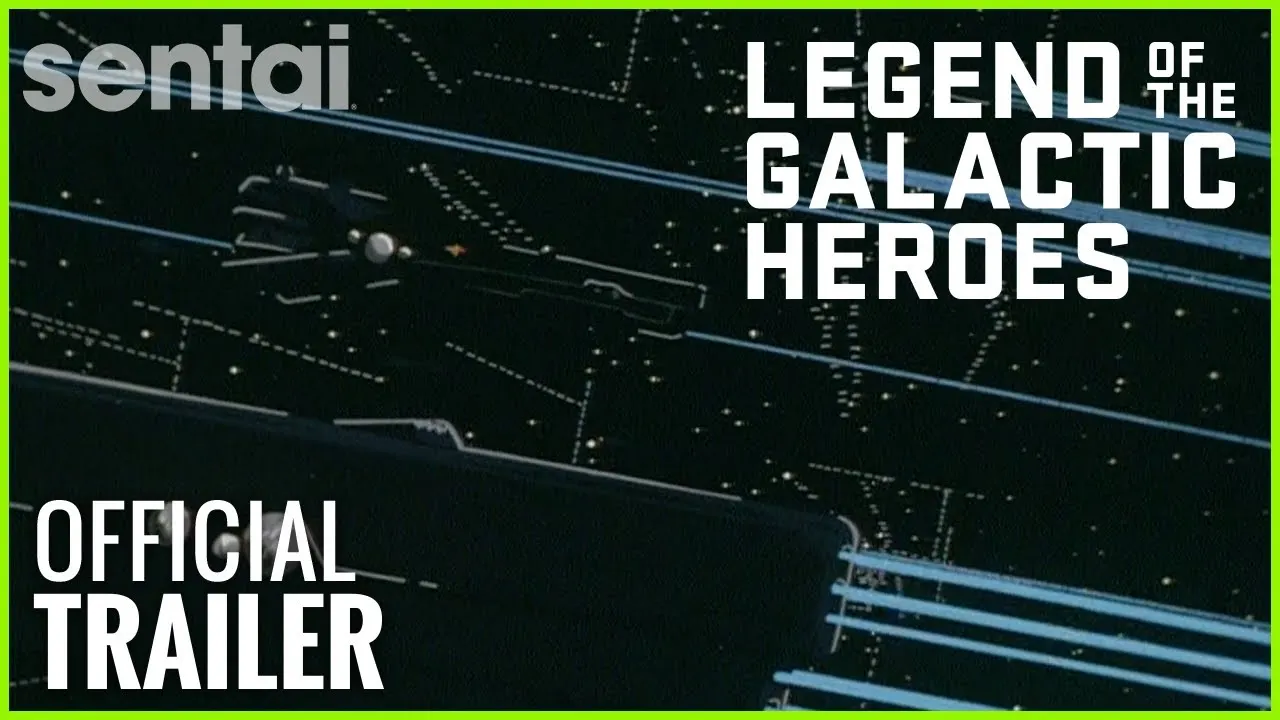
That makes him a more grounded strategist than many supposedly unbeatable masterminds. His decisions have consequences beyond a duel between two gifted individuals. Legend of the Galactic Heroes is the recommendation here for viewers who want long-form political and military analysis. Expect a large cast, deliberate pacing and a substantial commitment rather than rapid-fire twists.
3. Lelouch Lamperouge, Code Geass
Lelouch blends theatrical deception with battlefield planning. He understands symbols, morale and the power of an identity that can mobilize people. His Geass grants a supernatural command ability, but that does not automatically solve the practical problems of organizing a rebellion, protecting allies and responding when information changes.
The strongest parts of Code Geass show how strategic brilliance can coexist with arrogance and emotional miscalculation. Lelouch is not an error-free chess engine; his blind spots create some of the series' central conflicts. That is why he ranks highly without topping a list about reasoning under constraints. Readers interested in the boundary between intelligence and supernatural advantage can explore AnimeSparks' explanation of Geass and its rules.
2. Light Yagami and L, Death Note
Death Note is difficult to discuss as a smart-protagonist story without acknowledging its central intellectual rivalry. Light uses a supernatural notebook while L uses investigation, inference and controlled tests to narrow a seemingly impossible case. Their methods differ sharply, and the conflict forces both to react to information that threatens their assumptions.
The appeal is not that either character has a trustworthy IQ number. It is the sustained pressure of evidence, suspicion, deception and pride. Light's access to an extraordinary killing mechanism is a massive advantage, while L's reasoning is often limited by what he can prove to others. Their clash also raises the question of whether being clever makes a person wise. AnimeSparks' Death Note review examines why this contest remains compelling, while its guide to the notebook's rules clarifies the supernatural constraints.
1. Okabe Rintaro and the lab, Steins;Gate
Okabe does not begin as the most academically gifted person in his circle. That is precisely what makes his problem-solving story compelling. Steins;Gate combines scientific experimentation, imperfect understanding and difficult choices under changing conditions. Kurisu and other lab members contribute knowledge that Okabe cannot simply replace with confidence or determination.
The story's speculative time-travel mechanisms are fiction, not established physics. Within its rules, however, knowledge has a cost: learning what can happen does not guarantee that a character can prevent it. Okabe's growth involves listening, testing assumptions and accepting the emotional burden of decisions. This is the strongest recommendation for viewers who want intelligence to feel like a process of learning rather than an effortless superpower.
Steins;Gate is also slower to reveal its full structure than Death Note or One Outs. The opening spends time establishing the lab and its relationships, which later gives its decisions weight. AnimeSparks has a separate guide to the show's world lines and time-travel rules for viewers who want to unpack its fictional mechanics after watching.
Comparison: what each protagonist is actually good at
Ayanokoji: social manipulation and concealed incentives; the limitation is restricted audience access to his plans. Sora and Shiro: complementary gaming skills; the limitation is exaggerated fantasy logic. Maomao: evidence-based medical deduction; the limitation is palace hierarchy. Conan: case-by-case detection; the limitation is variable mystery realism. Tokuchi: psychological tactics; the limitation is a highly stylized sporting world.
Senku: applied scientific problem-solving; the limitation is compressed engineering timelines. Yang: historical and military strategy; the limitation is political control. Lelouch: large-scale planning and persuasion; the limitation is emotional blind spots and reliance on Geass. Light and L: adversarial deduction; the limitation is unequal information and supernatural rules. Okabe and his collaborators: experimentation and adaptation; the limitation is incomplete knowledge and personal cost.
Which anime should you watch first?
If you want a gripping first episode and a constant contest of minds, choose Death Note. If you want tactical rebellion and moral compromises, choose Code Geass. For a less conventional but tightly focused psychological contest, One Outs is an excellent surprise. Dr. Stone works best when you enjoy seeing practical steps accumulate, while The Apothecary Diaries suits a preference for mysteries solved through observation and expertise.
For viewers who value a long emotional arc over nonstop clever reveals, Steins;Gate is the strongest fit. No ranking can establish a single smartest character across unrelated fictional universes; what matters is whether the series makes the thinking enjoyable to watch.
Frequently asked questions
What anime has a genius main character?
Death Note, Code Geass, Dr. Stone, Classroom of the Elite and One Outs all feature protagonists whose unusual intelligence drives the story. They emphasize different skills, from scientific knowledge to deception and strategy.
What anime is most like Death Note for mind games?
One Outs is an especially good choice for psychological manipulation, while Code Geass offers larger-scale strategy and moral conflict. Neither reproduces Death Note's exact detective-versus-suspect structure.
Is Senku smarter than Lelouch?
There is no canon cross-series answer. Senku demonstrates scientific and engineering expertise, while Lelouch specializes in strategic leadership and deception. Their abilities are not measured by a shared standard.
Are the scientific methods in Dr. Stone accurate?
The series draws on recognizable scientific ideas but compresses practical work and omits safety and logistical complexity. Treat it as science-themed entertainment, not an instructional manual.
Editorial sources and limitations
We checked current competitor lists and series descriptions to distinguish this selection from rankings that simply repeat popular genius characters. Character abilities and premises should be cross-checked against official series materials. This is a qualitative editorial ranking, not an IQ dataset, audience survey or scientific comparison.