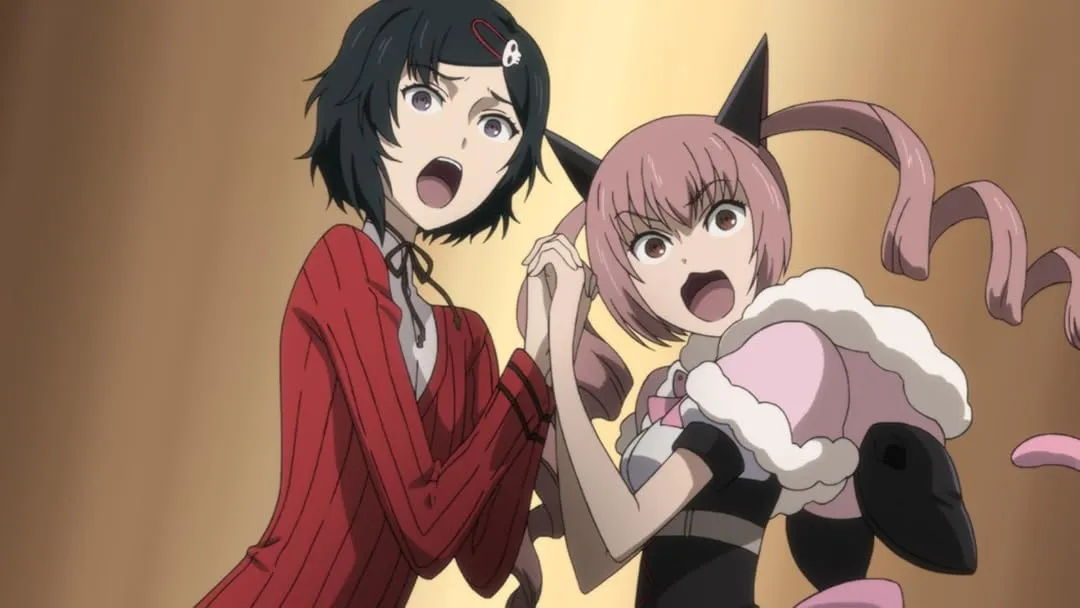

Steins;Gate time travel works by changing which version of history is active. A message sent into the past can rewrite the present. Most people remember only the new history, while Rintaro Okabe remembers the one that disappeared. That difference turns a science-fiction puzzle into a story about carrying memories nobody else shares.
The essential terms are D-Mail, time leap, world line, attractor field, divergence and Reading Steiner. They describe different parts of the same fictional system. This guide explains the rules first, then the ending. The final sections contain major spoilers for the original anime and Steins;Gate 0.
What is a world line in Steins;Gate?
A world line is a possible history. On one line, a conversation happens; on another, it never takes place. Sending information to the past can change someone's decision and shift reality to another world line. Differences range from small details to the survival of important characters or the course of an entire country's future.
Crucially, Steins;Gate generally treats only one world line as active at a time. When reality shifts, history is rewritten to match the new line. Okabe is not simply visiting simultaneously running universes filled with duplicates of his friends. Crunchyroll's world-line guide explicitly explains this distinction.
How does D-Mail change the past?
D-Mail means a message sent into the past. The Future Gadget Laboratory discovers the phenomenon using its PhoneWave, a modified microwave connected to a phone. The sender does not travel physically. Instead, information arrives earlier than it should, allowing the recipient to make a different choice. Episode 6's official synopsis describes the lab establishing a reliable D-Mail method.
Not every D-Mail produces a major shift. Its impact depends on the message, the recipient and what the recipient actually does. An ignored warning may change little, while a seemingly harmless instruction can alter several lives. The official English visual novel website emphasizes how phone-based choices affect history.
Undoing a D-Mail is therefore not like pressing a reset button. The lab must work out which decision the earlier message changed, then find a way to reverse its consequences. Even knowing the original message does not guarantee that the previous history can be restored exactly.
What is the difference between D-Mail and time leaping?
D-Mail transmits a short message to an earlier phone. Time leaping transmits recorded memories into the same person's brain at an earlier point. The person's body does not travel back. They instead experience a familiar moment while remembering events that, in that moment, have not happened yet.
This difference matters. A D-Mail relies on someone acting on the information. A time leap allows Okabe to try a new approach personally, retaining knowledge from a failed attempt. Crunchyroll's Episode 12 synopsis confirms Kurisu's completion of the Time Leap Machine and its compressed-memory premise.
Physical time travel is a third mechanism. Suzuha's machine transports a person, rather than just a message or memories, into another point in time. The three technologies have different limitations and narrative uses. Treating them as identical makes later plot developments unnecessarily confusing.
What are attractor fields and convergence?
An attractor field is a grouping of world lines that share certain major outcomes. Small events can differ while a decisive event keeps occurring. Imagine several roads taking different turns before reaching the same bridge. You can change the route without escaping the bridge unless you find a road outside that network.
Within the Alpha attractor field, Okabe repeatedly confronts Mayuri's death and a future shaped by SERN's control of time travel. Changing details or time leaping again does not reliably prevent the loss. His failures do not mean choices are meaningless; they show the limits of changing events without escaping the field.
Within the Beta attractor field, Mayuri can survive, but Kurisu's death and the threat of a future world war become central. The two fields are not proof that the universe requires one friend to die. They are the two tragic sets of possibilities Okabe has learned to navigate.
What does the divergence meter measure?
The divergence meter displays a number identifying how a world line differs from a reference. Alpha lines are often associated with values below 1 percent and Beta lines with values around or above that threshold. The reading is a fictional story device, not a real scientific measurement of how much history changed.
A small change in the number can have enormous consequences for one person. Meanwhile, visible differences need not indicate that the story has escaped an attractor field. The useful question is whether the shift avoids a convergent tragedy, not how dramatic the new surroundings appear.
What is Reading Steiner, and why does Okabe remember?
Reading Steiner is Okabe's name for his ability to retain memories when the active world line changes. Other people normally remember the rewritten history. Okabe remembers events that no longer belong to the shared past, making him the only person who can fully understand some of the consequences of a shift.
The story does not definitively establish the scientific origin of Reading Steiner. Crunchyroll's background explainer notes a possible connection to Okabe's childhood illness without treating it as settled fact. Other characters can sometimes experience fragments or déjà vu, so their memories are not always perfectly blank.
Reading Steiner is also emotionally punishing. Okabe can grieve a death nobody else remembers or recall a promise the other person never made in the active history. Our Steins;Gate retrospective explores that emotional dimension, while this guide focuses on the rules behind it.
Why can't Okabe keep retrying until everyone survives?
Repeated attempts inside the same attractor field tend to converge on the same critical outcome. Okabe may delay an incident, change a conversation or discover a clue, but those changes do not necessarily escape the field. He needs information and a plan that change the decisive conditions, not just another attempt at the same moment.
That differs from Subaru's Return by Death in Re:Zero, where death sends Subaru back to an uncontrolled checkpoint. It also differs from Attack on Titan's future memories, which participate in a largely closed causal structure. These are distinct fictional time systems, not interchangeable versions of one rule.
How does the Steins Gate world line solve the ending? (Spoilers)
The final goal is neither Alpha nor Beta. It is the Steins Gate world line, where both Mayuri and Kurisu can live and the disastrous futures can be avoided. The solution depends on changing the crucial outcome while preserving the earlier circumstances that motivate Okabe's actions.
Operation Skuld requires Okabe's earlier self to believe he witnessed Kurisu's death without Kurisu actually dying. The earlier Okabe still sends the message that starts the familiar chain of events, but the reality behind his observation has changed. This is a carefully targeted intervention, not a magical undoing of every previous mistake.
Steins Gate is the name given to that desired world line, not an equation viewers must calculate. Crunchyroll's October 19, 2026 watch-order guide also explains how Episode 23β and Steins;Gate 0 connect to the resolution.
Where does Steins;Gate 0 fit?
Steins;Gate 0 explores a Beta-line Okabe who fails to save Kurisu and initially gives up. His experiences eventually help make the successful plan possible. It is not simply a sequel taking place after the original anime's happy ending, and it does not imply that every visual-novel route is simultaneously active.
The original game offers branching choices and multiple endings, whereas the anime follows a particular narrative. Remembering that difference helps explain why a game route, alternate episode or companion series can portray events differently. Finishing the original anime before Steins;Gate 0 remains the clearest viewing path.
Is Steins;Gate based on real science?
The story borrows ideas from causality and theoretical physics, but D-Mail, Reading Steiner and its world-line mechanics are fictional. It does not establish that microwaves can send memories into the past. SERN is also a fictional organization inspired by CERN, not a factual claim about CERN's research.
The official Japanese franchise overview describes the work as science-fiction suspense built around scientific phenomena. That captures its appeal: the technology feels systematic without being real. The rules make Okabe's decisions meaningful because changing a detail is not the same as escaping a fate.
The rules in one paragraph
D-Mail sends information into the past; time leaping sends memories to an earlier self; a physical machine transports people. World lines are possible histories, attractor fields group histories with shared outcomes, divergence labels differences, and Reading Steiner explains Okabe's retained memories. For another anime with a very different rewritten-history ending, see Summer Time Rendering's final timeline.
Frequently asked questions
Frequently asked questions
What is a world line in Steins;Gate?
A possible history. Time travel can switch the active history, rewriting reality and most people's memories.
What is the difference between D-Mail and time leaping?
D-Mail sends a message into the past; time leaping sends memories to the user's earlier self.
Why does Okabe remember other world lines?
Reading Steiner lets him retain memories across world-line shifts. Its precise origin is not confirmed.
What is an attractor field?
A group of world lines that share major outcomes despite differences in smaller events.
Can Mayuri and Kurisu both survive?
Yes. The ending reaches the Steins Gate world line, outside the disastrous Alpha and Beta outcomes.
Is Steins;Gate 0 set after the original ending?
No. It explores a Beta-line path where Okabe initially fails to save Kurisu.
Sources & references8 sources
- STEINS;GATE official English visual novel website
- MAGES STEINS;GATE official Japanese series website
- Crunchyroll: Episode 6, Butterfly Effect's Divergence
- Crunchyroll: Episode 12, Dogma in Ergosphere
- Crunchyroll News: Steins;Gate 0 background guide
- Crunchyroll News: Steins;Gate watch order, October 19, 2026
- STEINS;GATE original visual novel publisher listing
- Crunchyroll: STEINS;GATE official series page