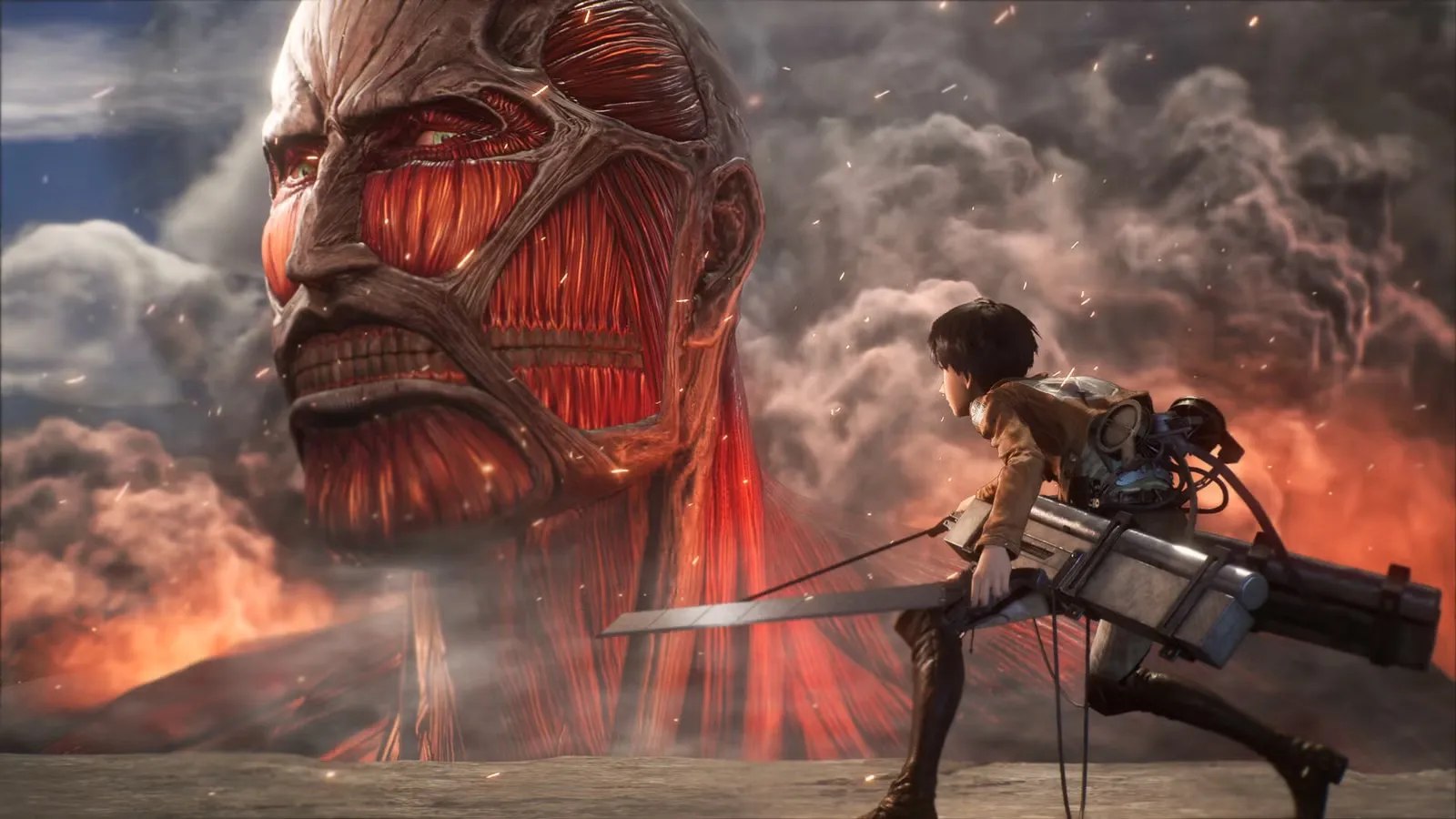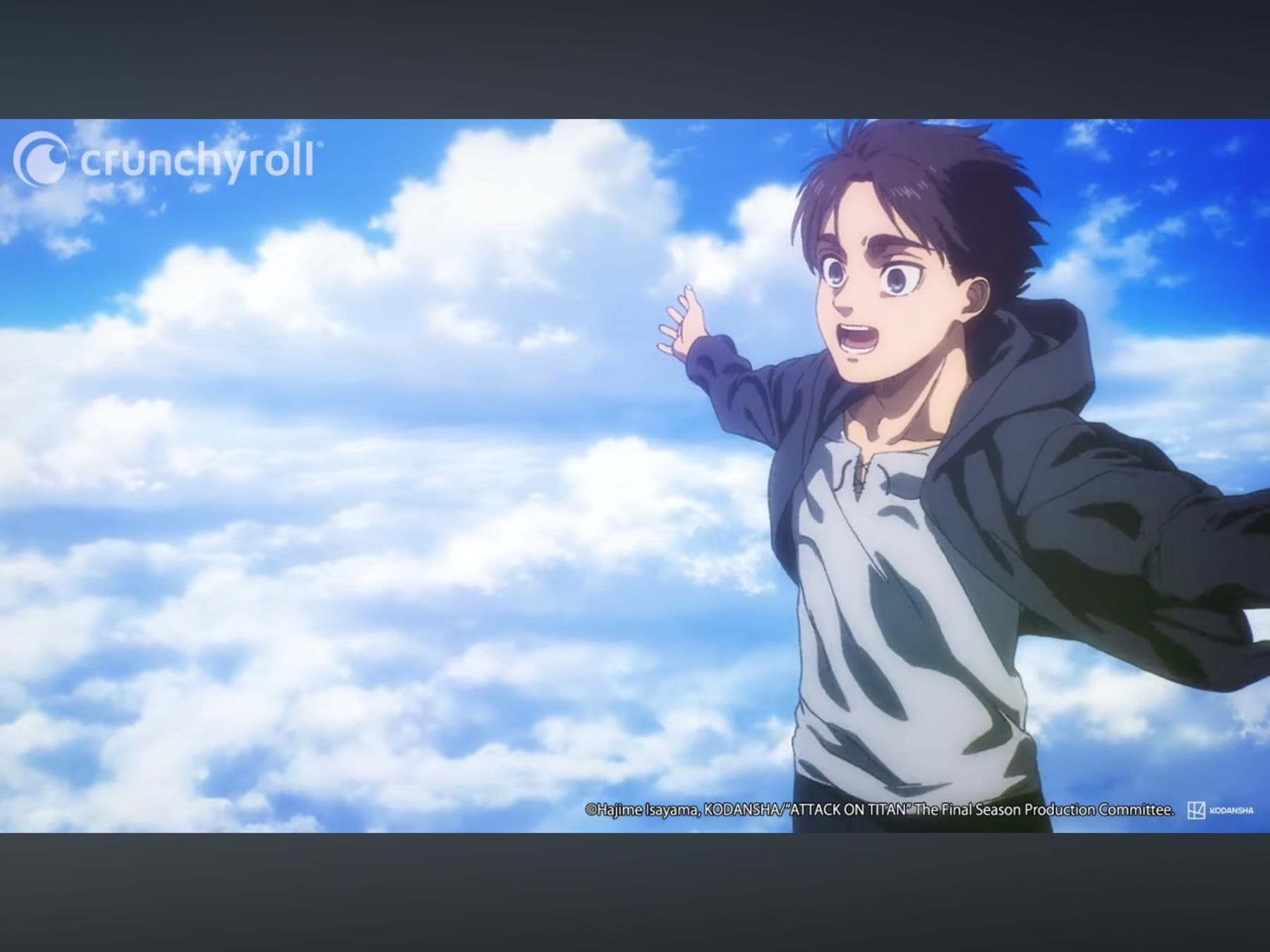

Attack on Titan makes Eren Yeager look as though he can walk into the past and change history. The truth is stranger: the Attack Titan can receive memories from future inheritors, while the Paths let Eren and Zeke experience Grisha's memories in a realm that does not obey ordinary time. Eren does not physically travel back to the Reiss chapel. Yet his future perspective helps shape a decision his father made years earlier. That distinction is the key to understanding the series' most confusing reveal.
This explanation contains major spoilers for Attack on Titan's final season and manga ending, particularly chapters 88, 90, 120–122 and 139. The central answer is that the story uses a closed causal loop built around inherited memories, not a conventional time machine with alternate timelines.
Does Eren actually travel back in time?
No scene establishes Eren physically returning to an earlier year and walking around the real world as his younger or older self. In the episode “Memories of the Future,” Zeke takes Eren through their father's recollections inside the Paths. The two are witnessing a record of Grisha's life, not arriving at the chapel as ordinary visitors. Nevertheless, Grisha appears to respond to Eren, making it seem that a conversation is happening across years.
The explanation depends on the Attack Titan's unusual inheritance ability. Most Titan shifters can access fragments of predecessors' memories. Attack Titan holders can also receive memories belonging to inheritors who come after them. A memory of future Eren's viewpoint can therefore reach Grisha in the past. What Grisha perceives is information from another time, rather than a visitor who has literally stepped through a portal.
What are the Paths in Attack on Titan?
The Paths are an invisible network connecting the Subjects of Ymir. The series eventually depicts their convergence as a vast, seemingly timeless landscape associated with the Founder Ymir and the Coordinate. Memories, Titan power and the Founding Titan's commands can pass through this network. Its strange relationship with time explains why an experience that appears to last much longer within the Paths need not correspond to the same duration outside them.
This does not mean every Eldian can browse the future at will. The Founding Titan, the Attack Titan and royal-blood conditions matter in different ways. Crunchyroll's official series explainer describes the Paths as the connection underlying the Founder's reach across Eldians. The Attack Titan's future-memory inheritance is a more specific power, revealed through Grisha's experience. Treating those two abilities as identical is one of the easiest ways to misunderstand the plot.
How did Eren influence Grisha in the Reiss chapel?
Zeke enters Grisha's memories believing he can show Eren that their father brainwashed him. Instead, he learns that Eren has been directing events. At the underground chapel, Grisha initially recoils from killing the Reiss family. Eren pushes him to remember his mission and the people lost along the way. Grisha then attacks, takes the Founding Titan from Frieda Reiss and sets in motion the inheritance that eventually gives Eren both Titans.
The crucial mechanism is perspective. While Eren and Zeke are looking into Grisha's past, Grisha can receive future Eren's memories through the Attack Titan. That offers a coherent explanation for why he seems to notice Zeke when Eren can see him. The exact sensory mechanics are not exhaustively diagrammed in the manga, so claims that Grisha physically touched a time-traveling Zeke go further than the text establishes.
Grisha's reaction makes the scene especially tragic. He is horrified by glimpses of what Eren will do and asks Zeke to stop him. He has not been shown a complete, objective recording of every future event. He has seen selected pieces, enough to fear the outcome but not enough to control it. This matters because Eren's apparent knowledge can look like perfect foresight when it is actually partial and selective.
Why did Eren see the future when he kissed Historia's hand?
At the medal ceremony following the return to Shiganshina, Eren touches Historia's hand and reacts to an inherited memory connected to Grisha. Later revelations clarify that the memory contains a glimpse of Eren's own future as seen through Grisha's access to future Attack Titan memories. It is effectively a memory nested inside another memory: Eren sees what his father once saw of a future Eren.
That is why the hand-kiss scene is not a sudden discovery of unlimited prophecy. Eren does not immediately know every detail of the coming war, who will survive or how every confrontation will unfold. He gains unsettling fragments and spends subsequent years acting with knowledge that others lack. His secrecy is a character choice as well as a narrative device, and the show reveals the context only much later.
The closed loop: which event comes first?
In ordinary chronological order, Grisha takes the Founding Titan, later passes his powers to young Eren, and Eren eventually enters the Paths with Zeke. From Eren's perspective inside the Paths, he influences the earlier Grisha whose actions made Eren's later inheritance possible. The cause appears to depend on its own result. This is often called a causal or bootstrap loop: events reinforce a history that already occurred rather than creating a visibly separate timeline.
The story never introduces a second timeline where Grisha refuses and an alternate Eren grows up. Nor does it show Eren resetting the world repeatedly until he finds the preferred outcome. Its tragedy comes from characters learning pieces of an apparently fixed history while still making consequential choices inside it. The loop is internally unsettling, but it is not a conventional branching-time-travel plot.
Why did Kruger mention Mikasa and Armin?
Long before the final-season reveal, Eren Kruger tells Grisha to protect Mikasa and Armin, names belonging to people who have not yet entered Grisha's life. Kruger does not understand where those words came from. The moment is an early clue that future inheritors' memories can surface in earlier Attack Titan holders. It is not evidence that Kruger personally met the children or visited their future.
Seen after chapter 121, Kruger's line becomes a carefully planted rule rather than a random prophecy. The Attack Titan's memories do not arrive like a searchable archive. They appear as fragments, sometimes without context or certainty about their source. The distinction helps explain why neither Kruger nor Grisha can simply read ahead and avoid every disaster.
Are the Attack Titan and Founding Titan doing the same thing?
No. The Attack Titan's defining revelation concerns memories of future inheritors. The Founding Titan has a broader connection to the Paths and the Subjects of Ymir, with royal blood central to the conditions under which Eren first accesses its power. Eren possesses both, which makes his experiences unusually complex. Saying “the Founding Titan lets everyone see the future” confuses a special inheritance mechanism with the Founder's different range of abilities.
In the finale, Eren describes experiencing past, present and future in a way that further blurs their separation. That is connected to his extraordinary access to the Founder's power, not proof that the Reiss chapel scene was physical time travel. The ending deepens the question of how much Eren could perceive or influence; it does not retroactively turn the Paths into an ordinary machine for rewriting history.
Did Eren have free will if he saw the future?
This is where the series moves from mechanics into character. Knowing a possible or apparently inevitable outcome is not the same as wanting it. Eren's future memories do not excuse the harm he causes. The narrative repeatedly links his decisions to his obsession with freedom, his fear for his friends and his willingness to inflict suffering. Readers can debate whether he could have chosen otherwise without pretending the story gives a simple scientific answer.
The separate question of why Eren ultimately starts the Rumbling deserves its own discussion. Our explanation of Eren's motivations explores his personal desires and the wider conflict rather than treating future memories as an automatic command. Understanding the memory loop clarifies how he reached that point; it does not settle whether his choices were morally defensible.
What the anime confirms and what remains interpretation
The clearest confirmed facts are these: Attack Titan inheritors can receive future inheritors' memories; Zeke and Eren examine Grisha's past through the Paths; Eren's influence contributes to Grisha taking the Founder; and Eren had already seen important future fragments after touching Historia. The exact visual mechanism by which Grisha perceives Zeke is a strong reading of the scene, not a separately published technical rulebook.
The safest way to understand Attack on Titan's time mechanics is to separate what characters see from what they physically do. Memories can cross the normal direction of time. Bodies are not shown hopping between years. The story's devastating loop works because those memories affect decisions, and those decisions produce the very future from which the memories came.
Frequently asked questions
Can Eren change the past in Attack on Titan?
He influences events in the past through future memories, especially Grisha's decision in the Reiss chapel. The series does not show him replacing that past with a different timeline.
Can every Attack Titan holder see the entire future?
No. The ability concerns inherited future memories, which appear as incomplete fragments. It is not presented as unlimited, controllable foresight.
Why could Grisha see Zeke?
The most consistent explanation is that Grisha perceived a future memory from Eren's viewpoint while Eren was looking at Zeke inside the Paths. The manga does not give a complete technical breakdown of the interaction.
Was the Historia hand-kiss a vision of the future?
Yes, but indirectly. Eren accessed Grisha's memory, which contained fragments of future Eren's experiences passed through the Attack Titan.
Which episode explains Eren and Grisha's memories?
Attack on Titan episode 79, “Memories of the Future,” adapts the central revelation from manga chapter 121. The surrounding episodes and the manga's final volume provide additional context.
Where to read or watch the key scenes
Start with Kodansha's Attack on Titan volume 22 for the earlier revelation about inherited memories, then volume 30 for chapters 120–122 and the Paths confrontation. Episode 79, “Memories of the Future,” is the clearest anime adaptation of Eren and Grisha's interaction. Volume 34 adds the ending's perspective on Eren's experience of time. Availability of anime streams and manga editions varies by country, so consult local licensed services.
If you are revisiting the whole series, our look at why Attack on Titan remains popular explores how the story plants details that acquire new meaning on a rewatch. For a contrast with fiction that foregrounds explicit time-travel experimentation, our Steins;Gate retrospective examines a very different approach to cause and consequence.
Frequently asked questions
Frequently asked questions
Can Eren change the past in Attack on Titan?
He influences Grisha through future memories, but the series does not establish a separate rewritten timeline.
Can every Attack Titan holder see the entire future?
No. Future memories arrive in fragments rather than as unlimited foresight.
Why could Grisha see Zeke?
The likely explanation is that Grisha receives Eren's future viewpoint through an Attack Titan memory while Eren is looking at Zeke.
What did Eren see when he kissed Historia's hand?
He accessed Grisha's memories, including fragments of future Eren's experiences that Grisha had received.
Which episode reveals the memory loop?
Episode 79, Memories of the Future, adapts the key revelation from manga chapter 121.