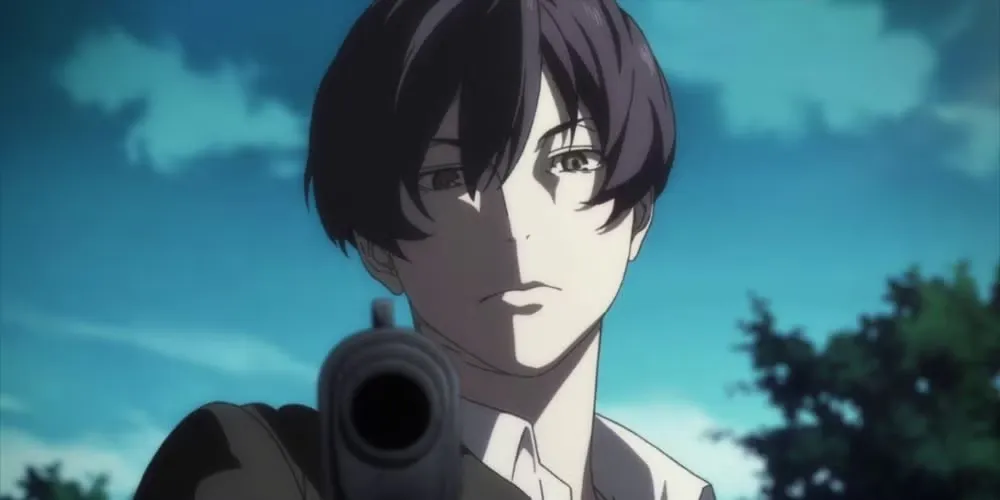

Revenge anime are often sold as stories about a character finally getting even. The most memorable ones are more complicated. They ask what a grudge does to friendships, whether punishment can repair a loss, and how a person lives when the enemy who organized their days is gone. That is why a mafia thriller, a historical adventure and a political rebellion can all belong in the same conversation without delivering the same emotional experience. This guide ranks ten anime by the way revenge changes the story, not by body counts or the power of their protagonists.
Quick picks: start with 91 Days for a concentrated crime vendetta, Vinland Saga for the long aftermath of hatred, Dororo for the uneasy price of reclaiming what was stolen, or Code Geass for revenge entangled with revolution. Choose Blade of the Immortal for a grim swordswoman's quest, Gungrave for a friendship broken by ambition, Gankutsuou for a flamboyant literary adaptation, and Attack on Titan for a story that interrogates cycles of retaliation on a massive scale. These are recommendations, not a claim that every series endorses vengeance.
How this ranking works
Four criteria guide the order. First, revenge must meaningfully shape the premise rather than appear as a passing motive. Second, the series should make the pursuit difficult, with decisions that alter relationships or loyalties. Third, consequences must remain visible instead of disappearing after a victorious fight. Finally, the work should offer a distinctive viewing experience, whether a compact crime mystery or a long moral transformation. The ordering is an editorial judgment, not an audience poll, scientific score or official studio ranking. Major endings are not revealed, although the motivations and broad character trajectories are discussed.
At a glance: which revenge anime should you watch?
For a short, focused crime story, choose 91 Days. For an expansive character journey, choose Vinland Saga. For dark historical fantasy, choose Dororo. For a political chess match, choose Code Geass. For morally tangled science fiction, choose Attack on Titan. For intimate betrayal inside an organized-crime world, choose Gungrave. For a stylized mystery, choose Gankutsuou. For relentless swordplay, choose Blade of the Immortal. For a supernatural family tragedy, choose Demon Slayer. For a revenge motive that eventually competes with protecting others, choose Fullmetal Alchemist: Brotherhood. These labels describe the kind of experience, not interchangeable plots.
10. Demon Slayer: anger that has to coexist with compassion
Tanjiro Kamado's journey begins with the murder of his family and the transformation of his sister Nezuko into a demon. Revenge is an understandable part of the emotional foundation, but Demon Slayer does not reduce his identity to wanting an enemy dead. His immediate goal is also to find a way to restore Nezuko's humanity. That difference matters: his mission is shaped by care for someone still living, not only rage at someone responsible for a loss.
The series frequently contrasts Tanjiro's determination to fight with his capacity to recognize suffering in opponents. Recognition is not forgiveness, and the story does not pretend dangerous demons should be left free to hurt people. Instead it asks whether empathy can survive a necessary battle. Viewers seeking spectacular action and a clear emotional through-line will find this approachable; those seeking a sustained, morally ambiguous vendetta should start higher on this list.
9. Fullmetal Alchemist: Brotherhood: revenge inside a larger search for justice
Scar's attacks on State Alchemists are rooted in the destruction of Ishval and the violence inflicted by Amestris. His anger has an identifiable political and personal history, yet the series challenges the idea that selecting individual targets can address the system that enabled those atrocities. Scar is neither simply an obstacle for the Elric brothers nor an uncomplicated avenger. His changing relationships force the audience to distinguish accountability from repeating violence against people who share a uniform.
This is an ensemble story rather than a dedicated revenge thriller, which is why it sits lower despite its depth. Its strength is context: militarism, state power, personal responsibility and collective trauma make revenge part of a wider moral argument. The series is a good choice for readers who want a substantial adventure with consequences rather than an unbroken sequence of retaliatory attacks. For more on what change requires, see AnimeSparks' ranking of redemption arcs.
8. Gankutsuou: The Count of Monte Cristo: revenge as an elaborate performance
Gankutsuou reimagines Alexandre Dumas's revenge narrative in a lavish science-fiction setting. The Count of Monte Cristo enters the orbit of young Albert Morcerf, whose admiration makes him particularly vulnerable to a world of secrets, social maneuvering and old grievances. The series is less interested in a straightforward hero confronting a villain than in the terrifying patience of someone who can turn another person's entire social life into a weapon.
Its visual design is unusually conspicuous, with patterned textures and theatrical compositions that make aristocratic luxury feel unstable. That presentation is not a substitute for the plot: it mirrors a society where appearances conceal motives. It is a strong pick for viewers who enjoy psychological suspense and morally uneasy manipulation. The important viewing question is not simply whether the Count's plan works, but who gets treated as expendable while it unfolds.
7. Gungrave: a broken friendship beneath the gunfire
Gungrave begins with a science-fiction action frame, but much of its emotional force comes from Brandon Heat and Harry MacDowell, two friends who enter the criminal organization Millennion and gradually take different paths. Loyalty, ambition and betrayal shape a revenge story that is more intimate than its gun battles suggest. The central fracture matters because it develops from a relationship the audience has time to understand, rather than from an anonymous villain's opening act.
The show's structure asks viewers to invest in its past before judging its violent present. It is therefore better approached as a tragedy about incompatible choices than as nonstop action. Its older animation and melodramatic tone will not suit everybody, but its emotional logic remains distinctive. If 91 Days appeals because friendship and betrayal complicate revenge, Gungrave is a useful next stop with a more overtly fantastical presentation.
6. Blade of the Immortal: a quest that refuses to make killing simple
Rin Asano seeks revenge after her parents are killed and her family's sword school is destroyed. She enlists Manji, a swordsman whose immortality makes him an extraordinary protector but does not make violence painless or morally clean. The relationship between an inexperienced avenger and a fighter burdened by his own history creates the series' central tension. Rin wants justice for a specific atrocity; the journey forces her to encounter people who cannot be sorted neatly into monsters and innocents.
The 2019 adaptation is a dark, often graphic historical action series. Its intensity is not an endorsement of every choice its characters make. It is best for viewers comfortable with severe violence and ethical discomfort, not for those seeking a reassuring triumph. The revenge plot is most compelling when it makes the act of pursuing a target feel different from understanding what that target represents.
5. Attack on Titan: when retaliation becomes a worldview
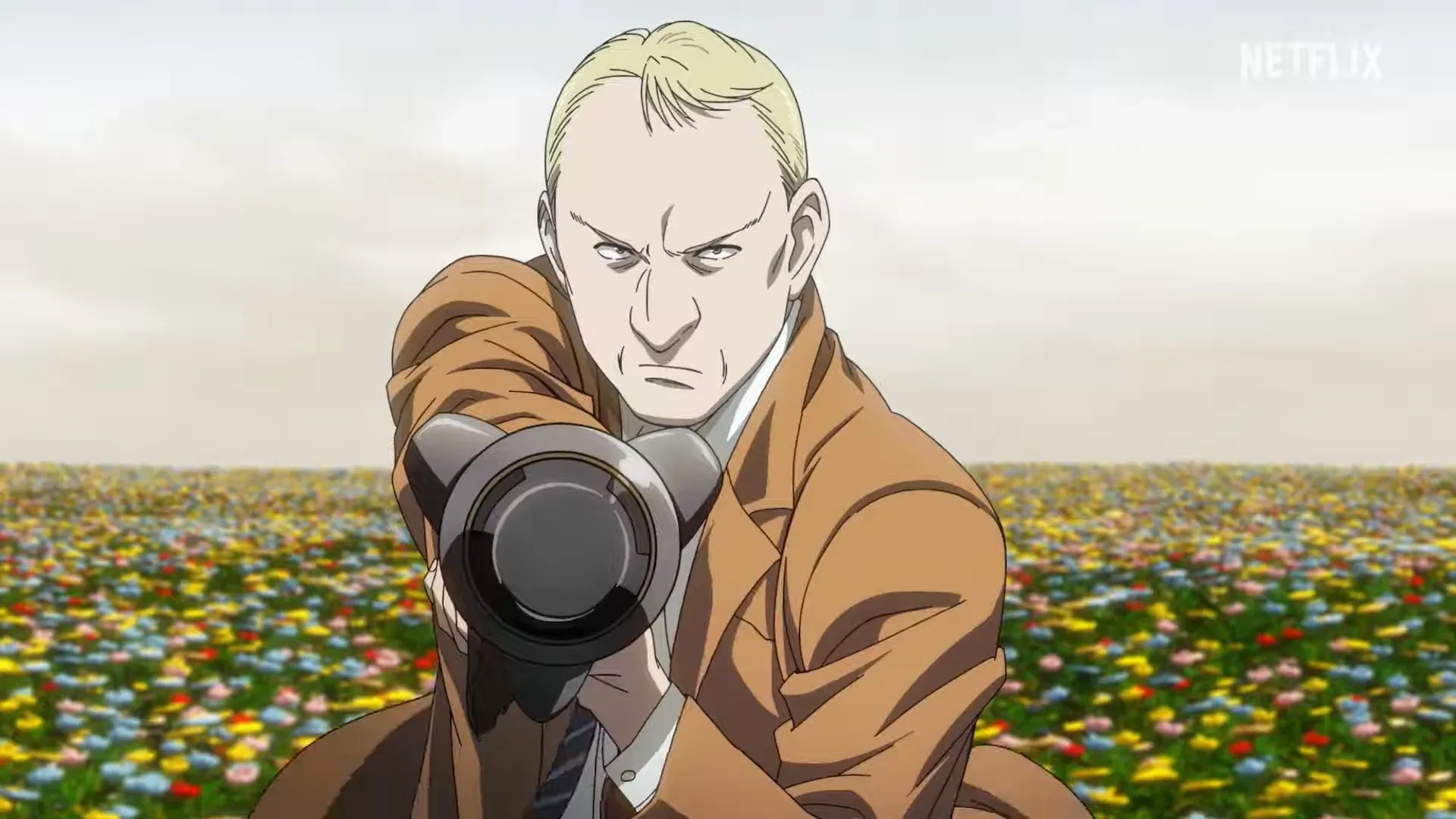
Eren Yeager's initial hatred of Titans grows out of a catastrophe that destroys his home and family. That direct emotional motivation gives the opening episodes their urgency, but the anime steadily expands its understanding of enemies, history and inherited violence. As new information changes the scale of the conflict, a simple revenge premise becomes a disturbing question about what people permit themselves to do when they believe survival is at stake.
Attack on Titan belongs here because it is exceptionally concerned with cycles of harm, not because it remains a conventional revenge quest throughout. It is a long, demanding watch with war, persecution and mass violence. Readers interested in how Eren's reasoning develops can continue with our analysis of his decision to start the Rumbling, which contains major story spoilers. This recommendation deliberately avoids revealing the series' final resolution.
4. Code Geass: Lelouch of the Rebellion: private anger, public revolution
Lelouch's opposition to the Britannian Empire is tied to his family's history and his desire to create a safer future for his sister Nunnally. With the power of Geass, he can turn political resistance into a campaign of intricate tactics. Yet his plans also involve allies who have their own commitments and ordinary people who bear consequences they did not choose. The appeal is the collision between an intimate motive and a movement far larger than one person.
Code Geass is not only about revenge. Questions of occupation, leadership, sacrifice and the use of coercive power make the conflict more complicated than a personal score. Its cliffhangers and dramatic reversals can be exhilarating, but the story also repeatedly tests whether clever strategy is the same as good judgment. Choose it if you want a theatrical political thriller where victory may cost more than its architect expects.
3. Dororo: reclaiming a stolen body without losing yourself
Hyakkimaru's father bargains away parts of his son's body to demons in exchange for prosperity. Surviving with prosthetics, Hyakkimaru travels to confront those demons and recover what was taken from him. His companion Dororo helps make the journey more than a chain of battles. Every recovery raises questions about identity, dependency and what a community may demand from a person it has already wronged.
The 2019 anime draws from Osamu Tezuka's work while shaping its own adaptation. It is a revenge-adjacent story, but reclaiming bodily autonomy is not identical to punishing an enemy. That distinction is central to its moral force. The harsh setting includes violence and suffering, yet the partnership between its leads provides an emotional counterweight. Watch it if you want historical fantasy that asks whether a supposedly greater good can justify sacrificing an individual.
2. Vinland Saga: the life that remains after hatred
Thorfinn spends his youth pursuing Askeladd, the man responsible for his father's death. His obsession gives him purpose but also keeps him close to the very violence he hates. Instead of growing toward a glorious duel as the ultimate answer, the series eventually forces him to confront the emptiness of a life organized around revenge. That change is what makes Vinland Saga an unusually powerful recommendation for people interested in character development rather than simple payback.
The second season is deliberately quieter, asking what responsibility looks like after someone has participated in harming others. It does not erase the earlier suffering or pretend that refusing violence solves every conflict. For a deeper spoiler-aware discussion, read what Thorfinn means by having no enemies. If you want a revenge story that is willing to question its own premise, this is the strongest long-form choice.
1. 91 Days: the purest revenge thriller on this list
Avilio returns to the Prohibition-era town of Lawless after receiving a letter that draws him back toward the mafia family responsible for his family's murder. He infiltrates the Vanetti organization and befriends Nero, the boss's son. The setup is simple enough to understand immediately, but the consequences become painful because trust is both the tool of Avilio's plan and something he can no longer treat as harmless.
Unlike sprawling adventure series, 91 Days keeps its attention on a concentrated chain of choices. Each new act of violence reshapes the relationships that make the next act possible. The result is tense without requiring supernatural powers, and morally uneasy without pretending that every participant is equivalent. Its greatest achievement is making the viewer understand the desire for revenge while doubting the promise of satisfaction. For a closer look at the crime setting and character dynamics, read why 91 Days works as a mafia anime.
Revenge, justice and redemption are not the same thing
These stories work best when they keep three ideas separate. Revenge centers the injured person's desire to retaliate. Justice asks what accountability or repair might be possible for a wider community. Redemption concerns whether someone who has caused harm can change. A protagonist can want all three, but the goals may conflict. Scar's story is not interchangeable with Thorfinn's; Hyakkimaru's recovery is not the same as Avilio's infiltration. Calling every painful decision 'morally gray' would flatten those differences.
The useful comparison is what each series lets its characters imagine beyond punishment. Some characters can picture a future, some cannot, and some discover that the people around them refuse to fit the categories their anger created. That makes revenge anime a surprisingly broad recommendation category. For a different kind of viewing experience, AnimeSparks' recommendation finder lets you filter by dark, emotional or mind-bending moods rather than relying on this one theme.
Frequently asked questions
What is the best revenge anime for beginners?
91 Days is a clear starting point if you want a focused, self-contained crime story. Demon Slayer is easier to recommend to viewers who prefer action and a compassionate hero, while Code Geass suits people who enjoy elaborate strategy. The best choice depends on whether you want a vendetta, an adventure or a political thriller.
Which revenge anime has the strongest character growth?
Vinland Saga is the standout here because its story allows Thorfinn's understanding of strength and responsibility to change substantially. Fullmetal Alchemist: Brotherhood also explores change through Scar, though revenge is only one part of its larger ensemble narrative.
Are all revenge anime violent?
Many contain significant violence, but they differ in presentation and emphasis. Gankutsuou favors psychological manipulation, while 91 Days uses grounded crime suspense. Blade of the Immortal and Attack on Titan are much harsher viewing experiences. Check local content advisories before watching, especially if graphic injury or family trauma are concerns.
Is Vinland Saga still a revenge anime after season one?
Its early narrative is driven by revenge, but later material deliberately examines what happens when that motivation no longer offers a viable future. That transition is the reason it belongs in a guide about the cost of revenge, rather than only in a list of action shows.
The takeaway
For the tightest revenge plot, start with 91 Days. For the most sustained examination of what revenge does to a person, watch Vinland Saga. Dororo, Code Geass and the other selections offer different answers because their protagonists lose different things and have different choices available afterward. The most rewarding revenge anime do not merely ask whether the target falls. They ask who is left standing, and what kind of life that person can still build.