
86 Eighty-Six (2021) disguises a brutal anti-war story about institutional racism and dehumanization as a mecha anime. While giant robots called Juggernauts appear throughout, they're set dressing for a narrative about the Republic of San Magnolia forcing minority "86" citizens to pilot supposedly "unmanned" drones in a war against the Legion, all while denying their humanity. The series explores how propaganda, privilege, and systematic discrimination enable entire societies to accept atrocities, drawing parallels to real-world genocides and discrimination. With stunning animation by A-1 Pictures and a powerful score by Hiroyuki Sawano, 86 earned Crunchyroll's Best Drama nomination and maintains an 8.2 rating on IMDb for its unflinching portrayal of war's human cost and the systems that perpetuate it.
Since its 2021 release, 86 has sparked discussions about how anime tackles themes of racism, discrimination, and warfare with uncommon depth and maturity.
86 Eighty-Six is streaming on Crunchyroll with English subtitles and dub.
What 86 Actually Is (Beyond the Mecha)
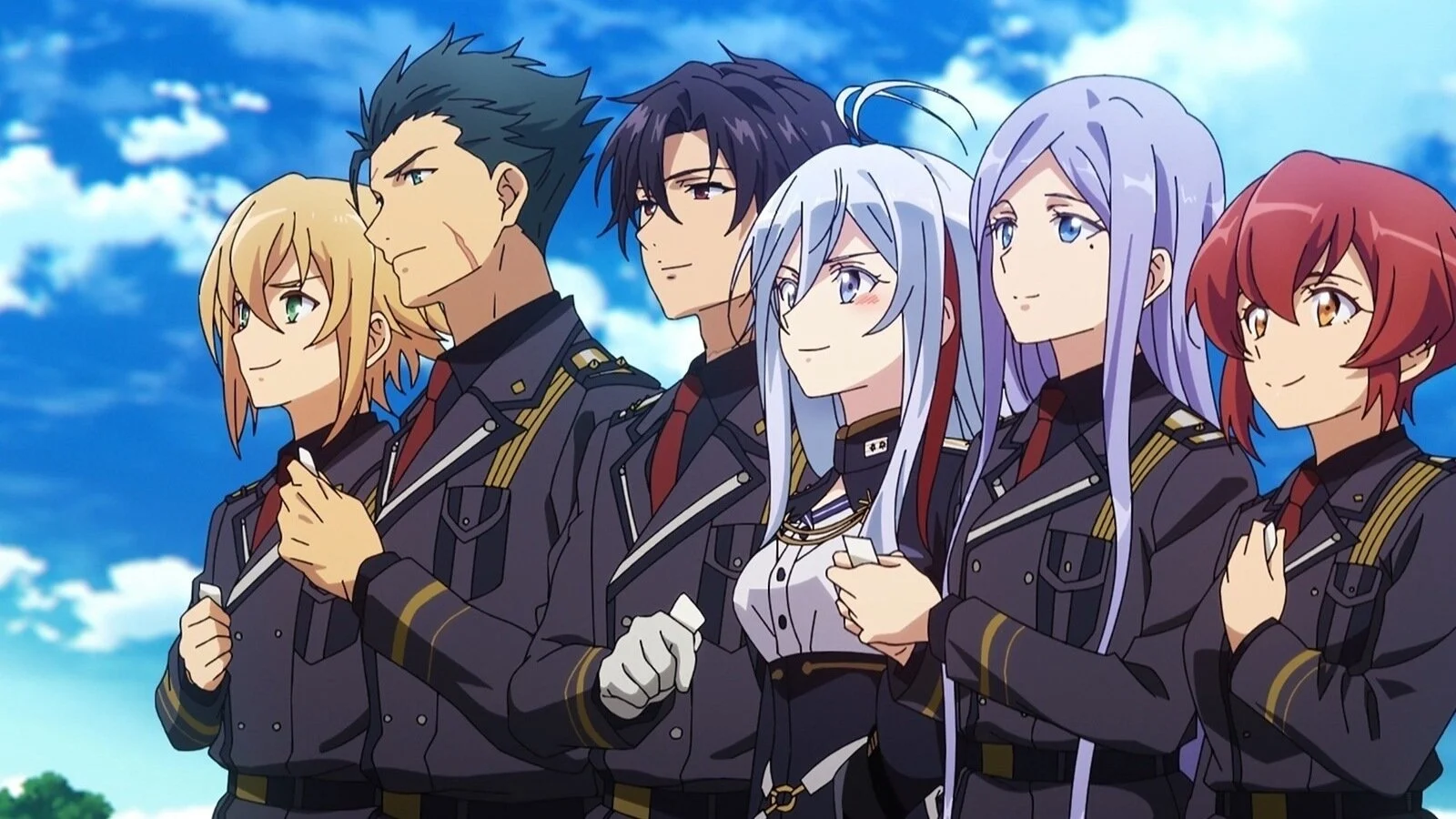
86 Eighty-Six presents itself as a military mecha anime. The Republic of San Magnolia fights the neighboring Empire of Giad's autonomous war machines called the Legion using their own unmanned drones—Juggernauts.
Except the Juggernauts aren't unmanned.
They're piloted by the "86"—citizens from the Republic's 86th district, composed of people with different hair colors, eye colors, and skin tones than the silver-haired, silver-eyed Alba majority. The Republic doesn't consider the 86 human. They're officially classified as livestock, their deaths not counted as casualties.
The Setup That Reveals Everything
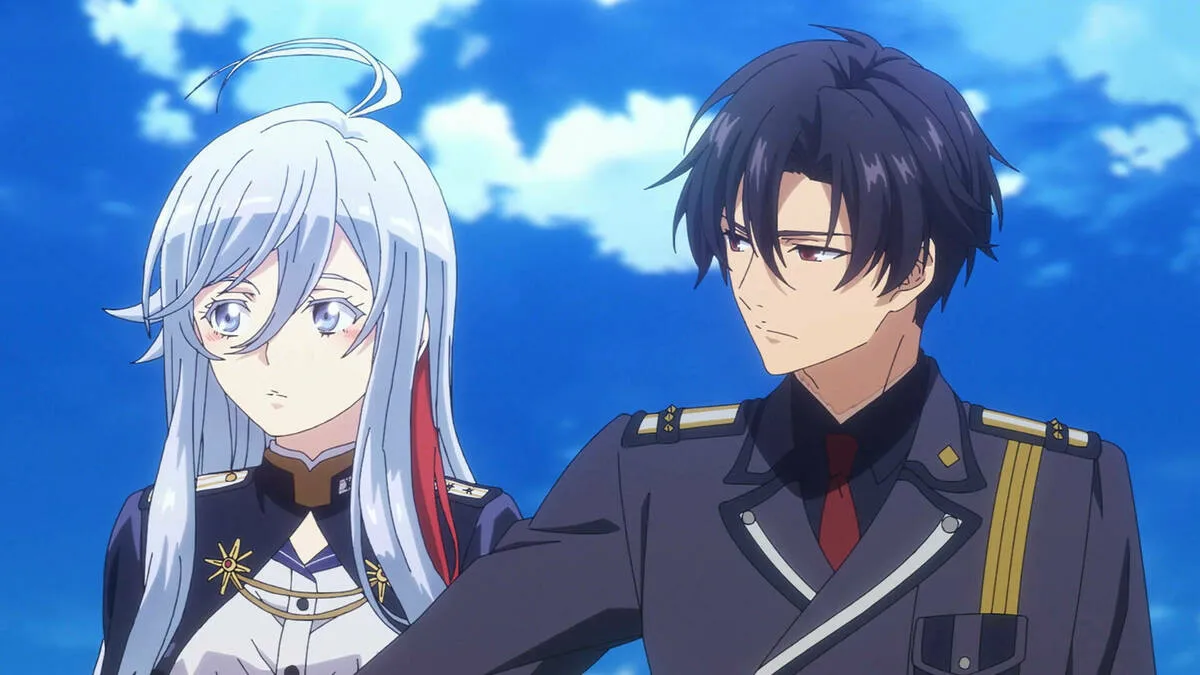
The series follows two perspectives: Vladilena "Lena" Milizé, a young Alba major who serves as a Handler (remote commander) for the 86, and Shinei "Shin" Nouzen, leader of the elite Spearhead Squadron on the frontlines.
Lena believes the 86 are human and deserve better treatment—a stance that makes her colleagues mock her. Shin and his squadron know they're being sent on a suicide mission. They've watched friends die for years while the Republic celebrates "zero casualties."
This isn't setup for a mecha action series. It's setup for examining how entire societies participate in dehumanization.
Similar to how Evangelion uses mecha to explore depression, 86 uses its genre as vehicle for much heavier themes about identity, trauma, and systematic oppression.
The Mecha Are Props, Not the Point
In typical mecha anime like Gundam or Code Geass, the giant robots drive the narrative. Battles showcase tactical brilliance. New mobile suit models arrive as power-ups. Technical specifications matter.
86's Juggernauts are spider-like tanks—mechanically interesting but narratively unimportant. The series spends minimal time on technical details. Battles are brief, brutal, and horrifying rather than thrilling spectacles.
What the Juggernauts Actually Represent
The Juggernauts are metaphors for disposability. They're deliberately designed to be vulnerable, ensuring high casualty rates among 86 pilots. The Republic wants the 86 to die—that's the system's intended function, not an unfortunate side effect.
When a Juggernaut is destroyed, Shin retrieves a piece of it to honor the fallen pilot. He carries these fragments, literally bearing the weight of his dead comrades. This ritual has nothing to do with mecha fandom—it's about refusing to let people be erased.
The action sequences, while visually stunning thanks to A-1 Pictures' production quality, exist to show war's cost rather than glorify combat. Pilots die screaming. Bodies are crushed. The survivors carry trauma.
Institutional Racism as the Real Antagonist
The Legion—the autonomous enemy machines—are the obvious threat. But 86's real antagonist is the Republic itself and how it enables genocide through normalized discrimination.
The Alba citizens genuinely believe the 86 aren't human. This isn't cartoonish villainy—it's normalized through education, media, and social conditioning.
Students learn that 86 are "humanoid pigs." News celebrates "zero casualties" while thousands of pilots die. Families discuss the war over dinner like entertainment, completely disconnected from people dying to protect them.
The series draws explicit parallels to Nazi Germany's treatment of Jewish citizens and references All Quiet on the Western Front in showing how propaganda creates the conditions for atrocity.
This connects to why Made in Abyss feels horrifying beneath its beauty—aesthetic beauty can disguise brutal subject matter, making the horror hit harder.
Lena: The "White Savior" Who Gets Destroyed
Vladilena Milizé checks every box of the problematic "white savior" trope. She's privileged, well-connected, idealistic, and believes treating the 86 kindly makes her different from other Alba.
Then the Spearhead Squadron destroys that fantasy.
The Confrontation That Defines the Series
When Lena is assigned to command Spearhead, she expects gratitude for being "one of the good ones." Instead, the 86 mock her. They fake politeness before turning vicious, calling out her privilege, her naivety, and her assumption that sympathy without action means anything.
One pilot asks if she's ever seen the battlefield. Another points out that her "kindness" changes nothing about their situation. Shin tells her bluntly that they don't need her pity—they need the system to stop treating them as disposable.
The series refuses to let Lena off the hook. Her good intentions don't erase that she benefits from the system killing the people she claims to care about. Being "less racist" than her peers doesn't make her an ally—it makes her complicit in a slightly more palatable way.
The Growth That Actually Matters
Lena's arc isn't about the 86 learning to trust her. It's about her recognizing her own participation in their oppression and figuring out what actually helping looks like beyond kind words and symbolic gestures.
She eventually uses her privilege and connections to fight the system rather than just feeling bad about it. But the series never lets her forget that this was always an option—she just had to be willing to sacrifice her comfort and status.
This nuanced portrayal of privilege and discrimination feels rare in anime, which often oversimplifies these dynamics into good guys vs bad guys.
The 86 Aren't Monolithic Heroes Either
86 avoids portraying the oppressed as uniformly noble. The Spearhead Squadron members have complicated relationships with the Alba, each other, and their own trauma.
Shin was raised by Alba who protected him at great personal cost. He understands not all Alba are the enemy, even while recognizing the system is. Kurena remains deeply bitter toward all Alba after enduring horrific abuse. Her anger is justified, and the series doesn't ask her to forgive for narrative comfort.
The squadron also displays internal prejudice—some 86 discriminate against other 86 from different backgrounds, showing that victimization doesn't automatically create solidarity.
Similar to how Bakugo's rivalry explores identity through conflict, 86 shows how trauma shapes people differently rather than creating uniform responses.
The Scene That Breaks You
Episode 11 contains the moment that defines what 86 actually is.
Kaie, one of the few female members of Spearhead, dies during a routine mission. Not heroically. Not dramatically. A Legion unit she didn't see crushes her Juggernaut in seconds.
Shin retrieves what's left—a fragment of metal bent beyond recognition. Back at base, he adds it to a growing pile of similar fragments, each one a person he couldn't save.
Then he sits alone and cries.
Not cinematic tears with swelling music. Just quiet, exhausted sobbing in an empty room. The camera holds on his face. No cuts. No relief. Just a 16-year-old boy who's killed dozens of his dying friends, carried their remains, and has no idea how to stop.
The scene lasts maybe thirty seconds. It contains no dialogue, no explanation, no narrative purpose beyond showing what this does to him.
That's the entire series. Not battles or politics or mecha—just the unbearable weight of being treated as disposable and having to keep going anyway because stopping means everyone else dies too.
Similar to how Monster treats death with appropriate weight, this moment refuses to look away from grief's reality.
The Production That Elevates Everything
A-1 Pictures delivered stunning animation throughout 86's 23-episode run. But more importantly, they understood what kind of story they were telling.
Hiroyuki Sawano's Score
Composer Hiroyuki Sawano (Attack on Titan, Kill la Kill) created a soundtrack that treats war as tragedy rather than adventure. The opening theme "Avid" is hauntingly beautiful, setting the tone immediately.
During battles, the music swells not with excitement but with dread and loss. The emotional beats hit harder because the score understands the series is about people, not robots.
Visual Storytelling That Shows, Doesn't Tell
The series uses visual details to convey information rather than exposition. Graffiti on walls reveals how Alba citizens view the 86. The pristine white aesthetic of the Republic's inner districts contrasts with the gray, worn battlefields where the 86 fight.
Early episodes alternate perspectives without the characters meeting, emphasizing the disconnect between Lena's privileged world and Shin's war-torn reality. This structural choice reinforces the series' themes more effectively than dialogue could.
The Second Season Shift
Season 2 moves the surviving Spearhead members to the Giad Federacy, the former enemy nation that's actually treating them as human. But the series doesn't let them have easy peace.
Trauma Doesn't Disappear
Despite being offered comfortable civilian lives, the survivors can't adjust. They're conditioned for war. They don't know how to exist without fighting. Rather than portray this as noble warrior spirit, the series treats it as tragedy—they've been damaged in ways that can't be undone.
They choose to reenlist not because they love battle but because it's all they know. The series asks uncomfortable questions about what happens to child soldiers even after the war ends, even when they're finally treated as human.
Why 86 Hits Harder Than Typical Mecha
Most mecha anime use war as backdrop for cool robot fights. Political conflicts exist to justify battles. Themes about the cost of war are present but secondary to spectacle.
86 inverts this completely. The mecha are backdrop for examining how societies enable atrocities, how propaganda normalizes dehumanization, and what it costs to be treated as disposable.
Who Should Watch This
Watch If You:
- Want mature exploration of racism and institutional oppression
- Appreciate war stories that don't glorify combat
- Can handle heavy themes and character deaths
- Value substance over spectacle in mecha anime
- Enjoyed psychological depth in series like Run with the Wind's portrayal of adults missing their prime
Skip If You:
- Want traditional mecha action and technical battles
- Prefer lighter, escapist entertainment
- Can't handle systematic racism as central theme
- Need hopeful resolutions to dark content
What 86 Actually Achieves
86 Eighty-Six proves mecha anime can be about more than giant robots punching each other. It uses the genre's trappings to smuggle in unflinching examination of discrimination, dehumanization, and war's true cost.
The series respects its audience's intelligence. It doesn't preach or provide easy answers. It shows systems of oppression functioning and leaves viewers to grapple with uncomfortable questions about complicity.
Nearly four years after its premiere, 86 remains one of anime's most powerful war stories precisely because it understands war isn't about battles—it's about what we're willing to do to people we've decided don't count as human.
The mecha were never the point.
They're just what we use to kill people more efficiently while pretending we're not killing people at all.