
Major spoilers: This comparison discusses the Return to Shiganshina arc, the identity of the Colossal Titan's successor, and the broad direction of Attack on Titan's ending. If you have not reached Season 3 Episode 18, "Midnight Sun," return after watching it.
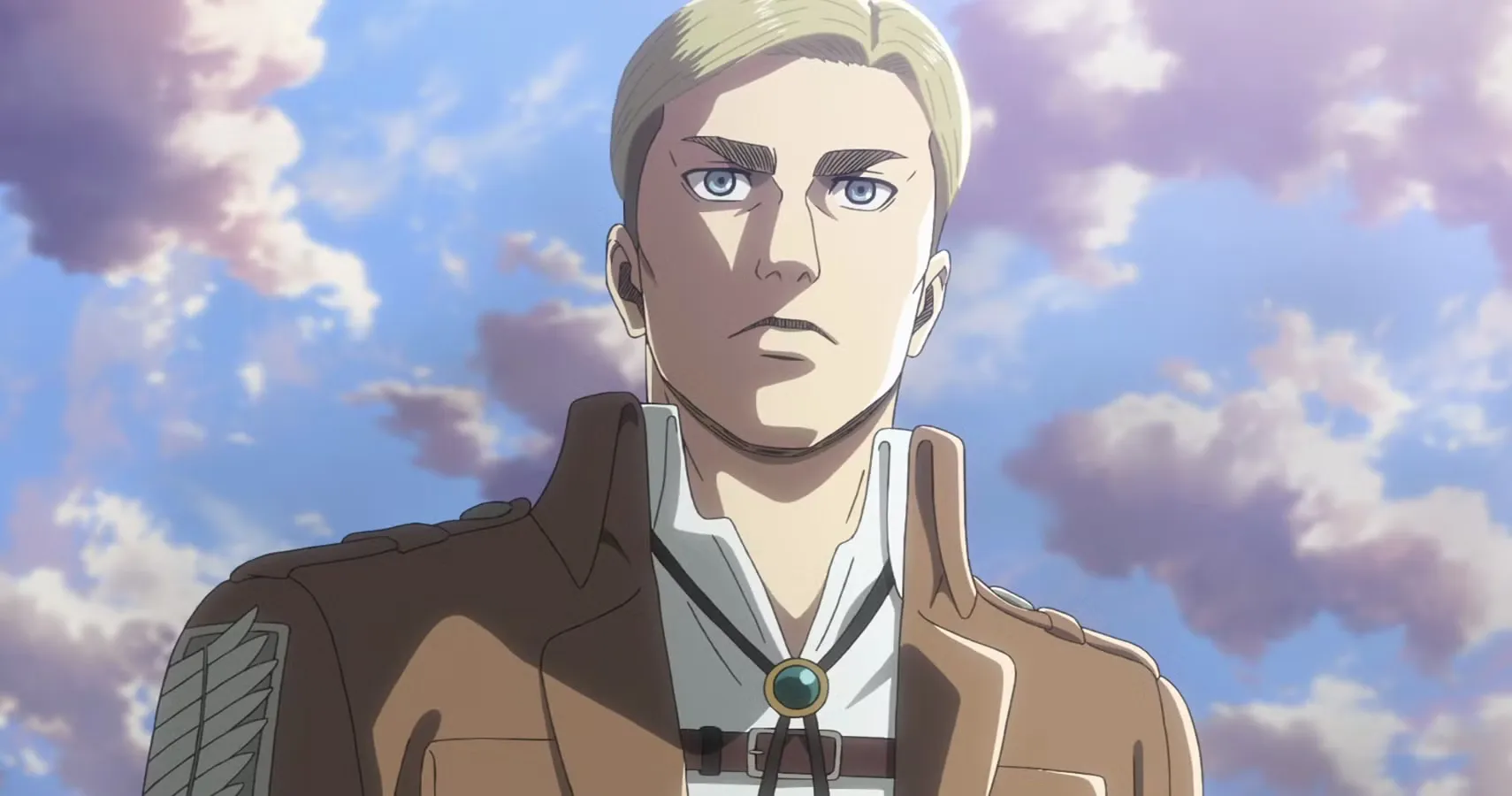
Erwin Smith was the proven commander. Armin Arlert was the young strategist who helped defeat the Colossal Titan. When both lay dying after Shiganshina, Levi had one Titan serum injection and one captured shifter, Bertholdt. He saved Armin. Was that the correct choice? The most defensible answer is that Erwin had the stronger record of military command, but Levi was not conducting a talent contest. He chose not to condemn Erwin to another lifetime of sacrifice, and he accepted the risk of trusting Armin's untested future.
The difference between what Levi knew in that moment and what viewers learn afterward is the key to the argument. This comparison uses a decision ledger, episode references and two separate verdicts rather than treating a character preference as proof.
The short answer: who was better, Erwin or Armin?
For immediate military leadership, Erwin. He had organized the Scouts, taken responsibility for disastrous expeditions and persuaded frightened soldiers to follow an almost suicidal charge against the Beast Titan. Armin had brilliant tactical instincts but no equivalent command record.
For unconventional problem-solving, both have evidence. In Episode 54, "Hero," Armin devises a way to expose Bertholdt while Erwin creates the opening for Levi to attack Zeke. Their plans work on different fronts and both depend on extraordinary personal sacrifice. One success does not prove the other person was expendable.
For Levi's actual decision, neither résumé settles the issue. He could have selected the more experienced leader and still have acted cruelly toward a friend who had already given everything. He could have saved Armin and still have accepted a serious military risk. The story is built around that conflict.
What happened in the serum scene?
The sequence spans three crucial episodes of Season 3 Part 2. In Episode 53, "Perfect Game," the Scouts are trapped by the Beast Titan's barrage and Erwin proposes the charge that can give Levi a chance. In Episode 54, "Hero," Erwin's recruits ride into lethal fire while Armin draws Bertholdt's attention and endures the Colossal Titan's heat so Eren can strike. Episode 55, "Midnight Sun," forces Levi to decide which mortally wounded soldier receives the injection.
The original manga places the choice in Chapter 84, also titled "Midnight Sun," collected in Kodansha's Volume 21. This matters because it anchors the debate in a specific canonical event, not an invented alternate battle or a later fan theory.
Levi initially moves toward Erwin. Eren and Mikasa plead for Armin, while Floch insists humanity needs the commander capable of becoming a ruthless devil. As Levi approaches Erwin, the unconscious commander raises his arm and recalls a childhood classroom question. The scene evokes Erwin's long pursuit of the truth about the world. It is not reliable evidence that Erwin consciously rejected treatment.
Levi gives Armin the serum. Armin becomes a Pure Titan, consumes the captured Bertholdt and inherits the Colossal Titan. Erwin dies before reaching the basement. The mechanics are not merely a convenient medical rescue: one person must inherit a power by consuming its existing holder. Our guide to Nine Titans and the Colossal Titan's powers explains the distinction between a Pure Titan and an intelligent inheritor.
Decision ledger: what was known then versus what hindsight adds
A useful way to judge the decision is to keep two columns separate: evidence available to Levi on the rooftop and knowledge the audience gains after the basement. The following five criteria are editorial comparisons, not numerical power ratings or a scientific probability model.
1. Proven leadership
Known then: Erwin had years of command experience, political judgment and the ability to make terrible decisions under pressure. Armin had shown initiative in Trost and Shiganshina, but had not led an army or negotiated the Scouts' position in government. Hindsight: Armin eventually assumes greater responsibility, but that later development cannot retroactively erase Erwin's advantage at the moment of the choice. Edge at the time: Erwin.
2. Tactical creativity
Known then: Armin had identified weaknesses in enemies, read battlefield situations and constructed the plan that allowed Eren to defeat Bertholdt. Erwin had repeatedly taken high-risk gambles that changed the course of the war. Hindsight: Their strengths remain different. Armin excels at noticing an unexpected path; Erwin excels at turning an entire force toward one dangerous objective. Verdict: no clean winner across every kind of problem.
3. Readiness to continue
Known then: Erwin was exhausted by the weight of his dead soldiers and obsessed with confirming his father's suspicion that humanity existed outside the Walls. Armin still imagined a world beyond the basement, including the sea. Hindsight: We cannot know whether learning the truth would have renewed Erwin's purpose or left him directionless. Saying he definitely would have retired or become useless is speculation. Edge in visible future-oriented curiosity: Armin; long-term outcome unknown.
4. Emotional and ethical cost
Known then: Levi had personally asked Erwin to abandon his dream and lead the charge. Bringing him back could mean forcing the same man to bear yet more losses. Saving Armin meant accepting the death of a commander the Scouts needed. Hindsight: Isayama's later remarks, reported from the Attack on Titan Character Directory, reinforce the reading that Levi recognized Erwin's humanity and allowed him to rest. This is the strongest explanation of Levi's choice, not a claim that Armin was objectively smarter.
5. Ability to handle the world beyond the Walls
Known then: Neither candidate understood the full political history outside Paradis. The Scouts expected the basement to reveal a truth; they did not yet know how profoundly that truth would change their enemies and alliances. Hindsight: Armin becomes an important advocate for negotiation. But claiming Erwin would certainly have prevented the Rumbling, or would certainly have supported it, invents a future the series never shows. Verdict: fundamentally unknowable.
Erwin's case: the Scouts needed a commander, not just a clever mind
The strongest argument for Erwin is practical rather than nostalgic. He could turn partial information into coordinated action, carry political responsibility and inspire a broken military unit. When the Scouts needed to retake Shiganshina, he understood that an impossible choice still required someone to decide. His final charge was not a demonstration of raw strength; it was a demonstration of command under catastrophic uncertainty.
Floch's objection deserves serious consideration. From the surviving soldiers' perspective, losing Erwin could mean losing the person most capable of confronting the next crisis. Armin had not yet proved he could command a whole organization or manage rival political interests. Choosing the younger soldier was therefore not an obvious strategic upgrade.
There is a limit to this case. Erwin's willingness to sacrifice lives was a tool forged for a war against seemingly mindless Titans. The enemy beyond the Walls would be human states, ideologies and competing interests. Experience in one kind of conflict is valuable, but it does not guarantee sound judgment in every new one.
Armin's case: he saw options other people missed
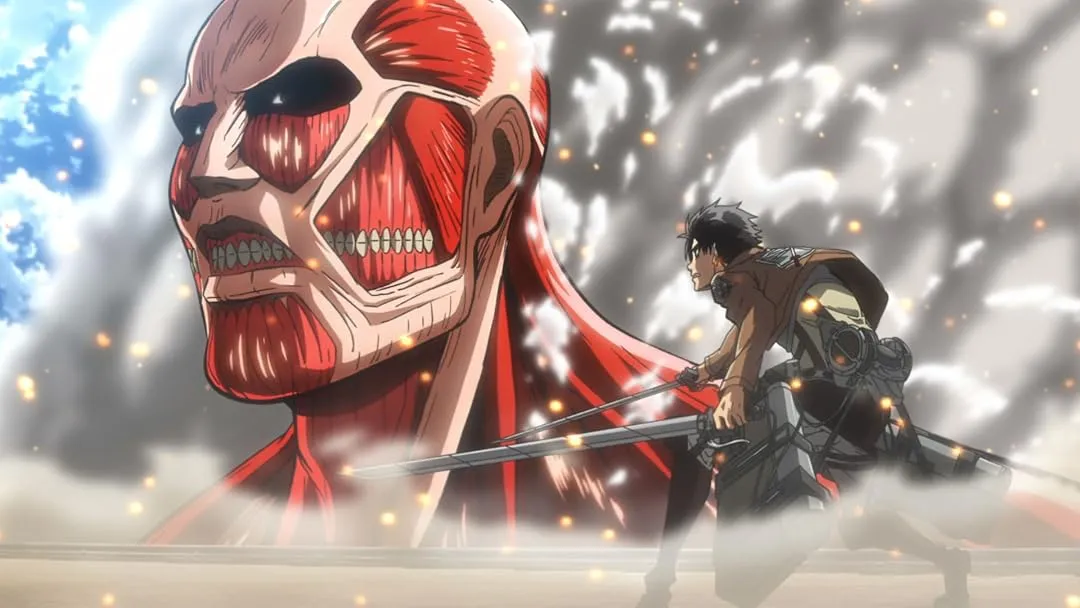
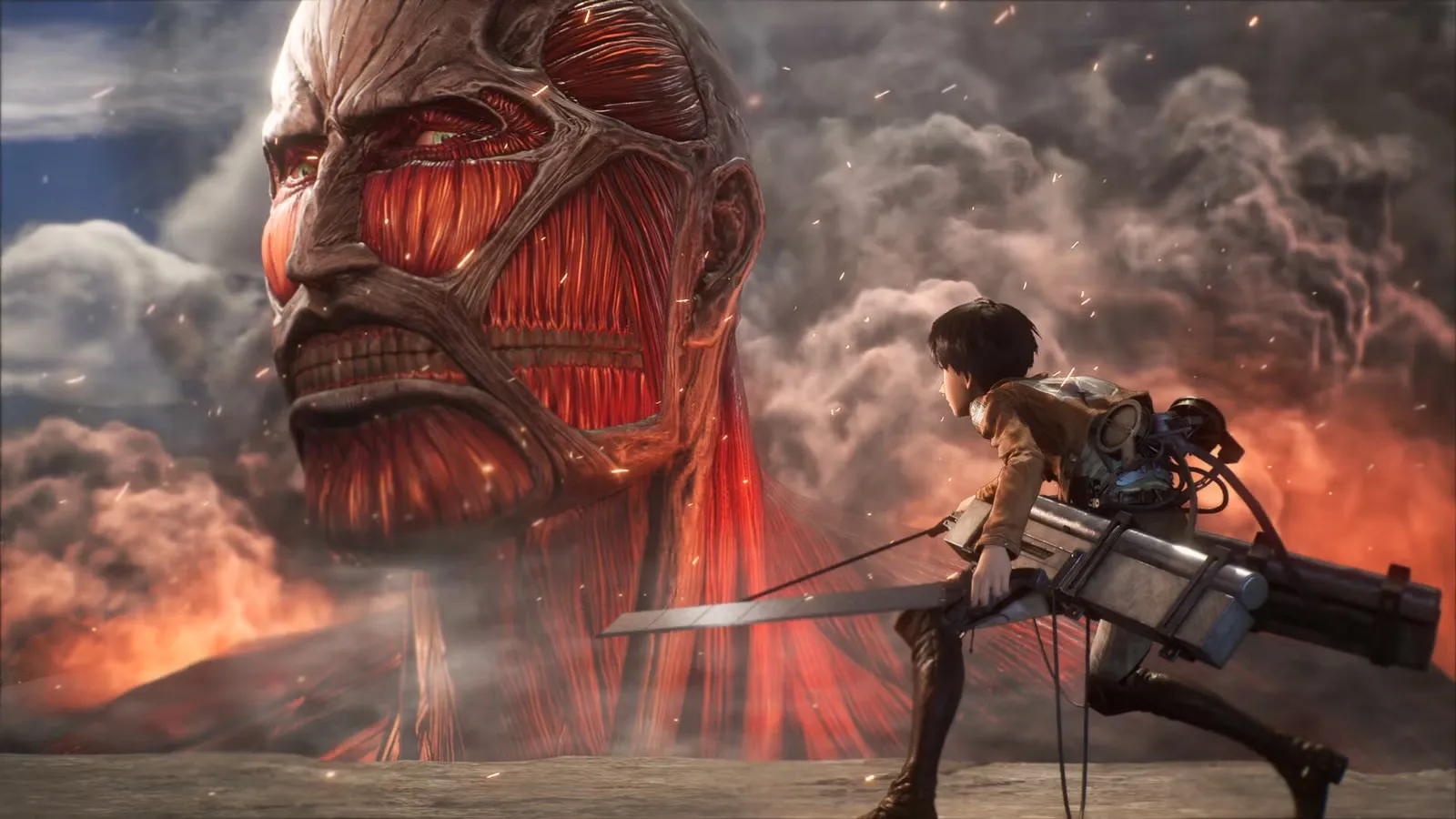
Armin was never simply the sentimental choice because Eren and Mikasa loved him. His tactical record mattered. He recognized Annie's suspicious behavior, contributed to several survival plans and, most importantly here, found a way to exploit the Colossal Titan's steam defense. In "Hero," he deliberately pays the personal cost of his plan while Eren takes the opening.
What separates Armin from Erwin is not a simple intelligence ranking. Armin often questions whether the apparent rules of a conflict are the only rules available. His curiosity about the outside world is also different from Erwin's need to validate his father. That is an interpretive distinction supported by the characters' stated dreams, not proof that one dream was morally purer.
Armin's later role is more complicated than a victory lap. He carries guilt over surviving, gains the destructive Colossal Titan and struggles with decisions where negotiation and force both have consequences. A character can grow into responsibility without proving that the original decision was guaranteed to work.
Why did Levi choose Armin over Erwin?
Levi's final choice makes the most sense when understood as mercy combined with trust, rather than a hidden calculation that Armin would outperform Erwin. Levi remembers the exhausted commander who had to give up his dream to make the charge. He also knows that Armin has already shown exceptional ability and a reason to keep looking forward.
A 2017 report discussing Isayama's comments in the Attack on Titan Character Directory describes Levi's experience with Kenny as relevant to this choice. That is a reported translation of the creator's remarks, not a new scene or a claim that the manga explicitly spells out every thought in Levi's mind. It supports the compassionate interpretation while leaving readers room to argue about the military cost.
The arm movement in "Midnight Sun" is especially easy to misread. Erwin is gravely wounded and appears to relive a childhood classroom memory. Calling it a deliberate refusal of the syringe gives an unconscious character a choice the story does not clearly establish. Levi is the person who decides.
Did choosing Armin cause the Rumbling?
There is no canonical answer to the alternate-history question. Erwin never survives to see Marley, Eren's later decisions or the conflict that leads to the Rumbling. We can imagine him challenging Eren sooner, supporting a different military plan or failing to change events. None of those outcomes is confirmed.
The temptation to treat one leader's survival as the key to preventing catastrophe ignores the institutions, inherited hatred and Titan powers shaping the final conflict. Our analysis of why Eren started the Rumbling considers those motives in their own right. The related explanation of how Eren's future memories work also shows why apparently inevitable events should not be reduced to a simple "Erwin fixes everything" theory.
One can reasonably argue that Erwin would have been a stronger political counterweight to Eren. That is a plausible hypothesis, not a feat or a historical result. A fair versus article should make the boundary explicit.
Could Levi have split the Titan serum and saved both?
Fans have proposed dividing the serum, turning both men into Pure Titans and later finding another shifter. The scene does not establish a safe dosage, a second captive shifter or a workable way to contain two transformed soldiers on that rooftop. Isolated examples of unusual Titan transformations elsewhere in the story do not prove this plan would have succeeded under those conditions.
The canonical dilemma is that Levi has one known rescue path involving the captured Bertholdt and must choose who receives it. Treating an untested alternative as a guaranteed loophole undermines the uncertainty the characters actually faced. The split-serum idea is fan speculation, not an established solution.
Episode and manga evidence map
Episode 53, "Perfect Game": Erwin commits to the charge against Zeke, demonstrating command and sacrifice. Episode 54, "Hero": Erwin's charge enables Levi's attack, while Armin's plan enables Eren's strike against Bertholdt. Episode 55, "Midnight Sun": Levi chooses Armin and lets Erwin die. Episode 56, "The Basement": the survivors confront the cost of that choice and finally discover the truth Erwin sought. The manga's central decision appears in Chapter 84 of Volume 21.
For a rewatch, the Attack on Titan watch order separates the main seasons from optional side stories and recap films. You can go directly from Season 3 Part 2's "Perfect Game" through "The Basement" without needing a compilation movie.
Final verdict: was Levi right?
Erwin was the better proven commander at Shiganshina. Armin was a credible but riskier investment in the future. The story does not offer enough evidence to declare that one would have produced a better political outcome in the world beyond the Walls. What it does show is that Levi refused to use Erwin as an endlessly renewable instrument of war.
My verdict is that Levi's choice is ethically defensible and narratively earned, even though saving Erwin would have been a defensible military decision. Calling Armin a mistake ignores what he achieved; calling Erwin obsolete ignores what the Scouts lost. That unresolved tension is part of why Attack on Titan still inspires debate long after its ending.
The real tragedy is that two people who had already given their lives to the same mission were judged as if one of them had to be worth more. Levi chose who could continue. He could not prove who should have.
Frequently asked questions
Frequently asked questions
Why did Levi save Armin instead of Erwin?
Levi chose to let the exhausted Erwin rest rather than force him back into a life of sacrifice. Armin had also shown exceptional tactical ability. The choice was not proof that Armin was a better commander at that moment.
What episode does Levi choose Armin?
Attack on Titan Episode 55, titled Midnight Sun, or Season 3 Episode 18. The original manga decision appears in Chapter 84 of Volume 21.
Was Erwin smarter than Armin?
Erwin had the stronger proven record in large-scale command and politics. Armin had a talent for unconventional tactical solutions. The series does not provide a universal intelligence ranking.
Could Erwin have stopped the Rumbling?
There is no canonical answer. Erwin died before the truth about the world and the later political conflict became known. Any claim that he certainly would or would not have stopped Eren is speculative.
Did Erwin refuse the Titan serum?
The wounded Erwin raises his arm while recalling a classroom memory. The story does not clearly establish this as a conscious refusal. Levi makes the decision.
Could Levi have saved both Erwin and Armin?
No guaranteed method is established in the scene. Splitting the serum and obtaining another shifter is a fan hypothesis, not a confirmed safe option available to Levi.
Sources & references8 sources
- Kodansha, Attack on Titan Volume 21, official English edition
- K MANGA by Kodansha, Attack on Titan Chapter 84 Midnight Sun
- Crunchyroll, Attack on Titan Episode 53 Perfect Game
- Crunchyroll, Attack on Titan Episode 54 Hero
- Crunchyroll, Attack on Titan Episode 55 Midnight Sun
- Crunchyroll, Attack on Titan Episode 56 The Basement
- Crunchyroll News, Attack on Titan watch order and episode arcs
- ComicBook.com, 2017 report of Hajime Isayama's Character Directory remarks on Erwin